 Anacortes Exterior
 Exterior Work Built for a Waterfront Neighborhood
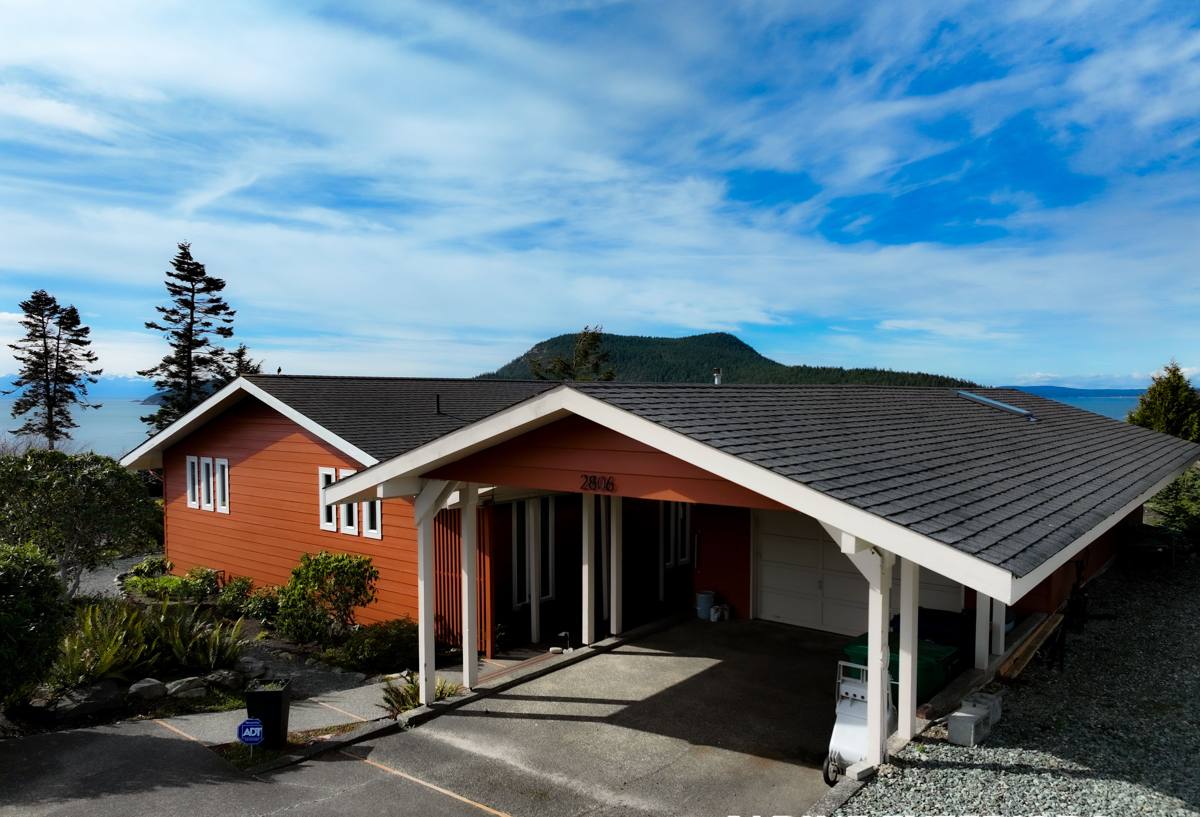
Flounder Bay sits on the west side of Fidalgo Island, close enough to the water that salt air is simply part of daily life for the homes there. That's a different set of demands than a house tucked inland in Anacortes or over toward Burlington. Wind off Rosario Strait carries moisture and salt onto siding and trim year-round, and the marine layer that rolls through Skagit County keeps exterior surfaces damp longer than most homeowners realize. We've built our approach around what actually happens to a house in a spot like this, not a generic checklist.
Anacortes Exterior Co works siding, roofing, windows, and decks as a connected system rather than four separate jobs. A house near Flounder Bay fails at the seams — where trim meets siding, where a deck ledger meets the wall, where flashing meets a window frame — far more often than it fails in the middle of a flat wall. That's where we spend our attention.
What Salt Air and Coastal Weather Do to a House Here
Three things define the climate load on a Flounder Bay exterior: salt-laden air, driving wind-driven rain, and a moss season that runs longer than most people expect in the Pacific Northwest. Each one attacks a house differently, and each one shows up on a different part of the building.
Salt Air and Corrosion
Airborne salt accelerates corrosion on anything metal — fasteners, flashing, gutter hangers, hinges. It also degrades paint film faster than inland exposure does, which is why homes closer to the water tend to need repainting or refinishing on a shorter cycle than homes a few miles east. Cheap or under-spec'd metal components fail first, and once a fastener starts rusting behind siding, the damage is hidden until it's already spread.
Wind-Driven Rain
Anacortes gets plenty of rain that falls straight down, which is manageable for most siding and roofing systems. Wind-driven rain is a different problem — it gets pushed sideways and upward under laps, around window flanges, and behind trim boards. A house exposed to open water and prevailing wind, like many in the Flounder Bay area, takes this kind of rain more often than a sheltered inland lot. The building envelope has to be detailed to shed water that's moving in more than one direction at once.
Moss, Algae, and Prolonged Dampness
Skagit County's mild, wet winters and shaded, humid summers give moss and algae a long growing season on roofs, north-facing siding, and anywhere airflow is limited. Left unaddressed, sustained moss growth holds moisture against roofing material and siding surfaces, which shortens the life of both. It's not usually a cosmetic issue by the time a homeowner notices it — it's already been trapping water for months.
Siding: Why We Install Only James Hardie Fiber Cement
We made a deliberate decision to install James Hardie fiber cement siding exclusively, and we don't install vinyl, LP SmartSide, Cemplank, Allura, primed spruce, or cedar. That's not a marketing position — it's a standard we hold because of what we've seen happen to other materials in exactly this kind of coastal, wet Pacific Northwest climate.
Fiber cement is non-combustible and dimensionally stable, meaning it doesn't expand, contract, or absorb moisture the way wood-based or engineered-wood products do. In a salt-air, high-moisture environment like Flounder Bay, that stability matters more than it does in a drier climate — swelling, warping, and edge deterioration are the failure modes we're trying to avoid from the start. James Hardie's ColorPlus factory finish is baked on and engineered to hold color and resist fading and moisture intrusion better than field-applied paint, which reduces how often a homeowner has to think about repainting a house that's already taking a beating from the wind.
James Hardie also builds climate-specific HZ product lines, engineered for different moisture and temperature exposures across the country. That regional engineering, combined with a strong transferable warranty, is why we standardized on this one manufacturer rather than offering several options. We'd rather install one product correctly and stand behind it fully than offer a menu of materials with different long-term risk profiles.
Siding Options Compared for This Climate
| Material | Moisture Behavior | Maintenance in Salt Air | Our Position |
|---|---|---|---|
| James Hardie fiber cement | Dimensionally stable, resists swelling and rot | Low; factory finish holds up well | What we install |
| Vinyl | Can warp/distort with heat and impact; seams can allow moisture behind panel | Low upkeep but limited repair options once damaged | Not installed by us |
| LP SmartSide (engineered wood) | Wood-based; more sensitive to sustained moisture exposure at cut edges and seams | Requires diligent caulking/paint maintenance | Not installed by us |
| Cedar | Natural material; absorbs moisture, prone to movement, rot, and pest issues over time | High; needs regular refinishing | Not installed by us |
| Primed spruce | Softwood; vulnerable to moisture intrusion once primer coat is compromised | High; short repaint cycle in wet climates | Not installed by us |
Roofing for Wind, Rain, and Moss Exposure
Roofing near the water gets tested by both wind uplift and sustained wet conditions. We pay close attention to flashing details at valleys, chimneys, and roof-to-wall transitions, since those are the points where wind-driven rain finds a way in. Proper attic and roof ventilation also matters more here than people assume — trapped moisture underneath a roof deck accelerates decay and gives moss and algae exactly the damp environment they need to establish.
For a coastal property, we also think about roofing material choice, gutter sizing, and downspout placement together, since undersized or poorly placed drainage sends water right back toward the siding and foundation instead of away from the house.
Windows: Sealing Out Salt and Wind
Window failures near Flounder Bay are rarely about the glass — they're about the flashing and sealant around the frame. Wind-driven rain pushes water toward every gap, and salt air degrades cheap sealants faster than inland exposure does. We install windows with proper flashing integration into the wall assembly rather than relying on caulk alone to do the job long-term. That's a detail that's invisible once the trim goes back on, but it's the difference between a window that stays dry for twenty years and one that starts showing rot at the sill in five.
Decks Built to Handle Coastal Exposure
A deck near the water faces the same salt air and moisture cycling as the siding, but with the added stress of foot traffic, standing water, and ledger connections that tie directly into the house. We pay particular attention to the ledger flashing where a deck attaches to the home, since that's a common point for hidden water intrusion into the wall structure behind it. Fastener selection matters too — in a salt-air environment, using hardware rated for corrosion resistance isn't optional, it's the baseline.
What We Check on Every Coastal Deck Project
- Ledger board flashing and its connection to the home's water-resistive barrier
- Corrosion-resistant fasteners and structural hardware rated for coastal exposure
- Proper gapping and drainage so water doesn't pool between boards
- Railing post connections, since these take direct wind load off the water
- Clearance and airflow underneath the deck to discourage sustained dampness and moss
How We Approach a Flounder Bay Exterior Project
Every project starts with an honest look at the house — not just the siding or roof surface, but what's happening underneath at the seams, transitions, and penetrations. For a coastal property, we're specifically checking for early signs of moisture intrusion around windows, deck ledgers, and roof-to-wall junctions before we ever talk about materials or colors.
From there, we scope the work around the building envelope as a whole. If we're re-siding a home, we're also looking at the flashing details around every window and door opening, because installing new Hardie siding over compromised flashing just resets the clock on the same failure. The same logic applies to roofing and decks — the visible material is only as good as the water management underneath it.
Signs a Flounder Bay Home May Need Exterior Attention
- Persistent moss or algae streaking on north-facing siding or roof slopes
- Soft or discolored trim around windows and doors
- Visible rust staining near fasteners, flashing, or hardware
- Paint that's peeling or bubbling faster than expected for its age
- A deck ledger area that stays damp longer than the surrounding structure
- Gutters that overflow or direct water back toward the wall instead of away from it
Why a Local Crew Matters in This Kind of Microclimate
Anacortes isn't uniform. A house a few blocks inland can face noticeably different wind and moisture exposure than one closer to open water near Flounder Bay. A crew that works across Skagit County regularly sees that difference and details accordingly — flashing choices, fastener selection, and even siding fastening patterns can shift based on how exposed a specific lot is. That's local knowledge that doesn't come from a manufacturer's install manual alone; it comes from working on houses in this specific stretch of coastline and seeing what holds up and what doesn't.
It also matters for accountability. A local company is still here next year and the year after if a warranty question comes up, and we're not learning the quirks of Anacortes weather for the first time on your project.
Planning an Exterior Project Around the Weather Window
Timing matters more here than in a drier climate. Siding, roofing, and deck work go faster and hold up better when installed during drier stretches, and scheduling around Skagit County's wetter months reduces the risk of moisture getting trapped behind new material during installation. We plan project sequencing with that in mind, rather than treating every month of the year the same.
If you're weighing a siding, roofing, window, or deck project for a home near Flounder Bay, we're happy to take a look and talk through what your specific exposure calls for. Reach out for a free, no-pressure estimate — there's a form below to get started.