 Anacortes Exterior
 Cap Sante: A Great View, a Tough Exterior Environment
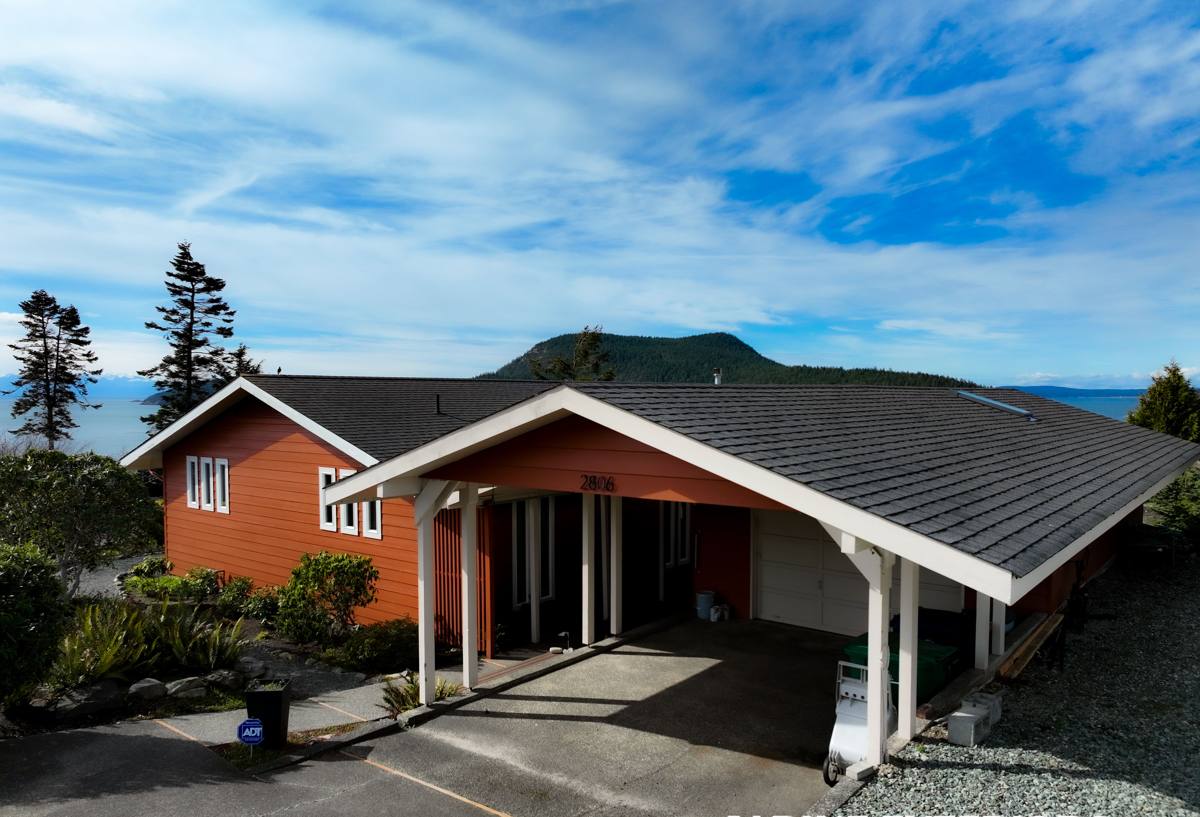
Cap Sante sits close to the water, with many homes catching wind and salt spray off Fidalgo Bay and the surrounding channels. That elevated, exposed position is part of what makes the neighborhood desirable — and part of what makes it hard on siding, roofing, trim, and decking. Homes here take a different kind of weathering than houses tucked inland in Anacortes or further into Skagit County. Wind-driven rain hits harder, salt air accelerates corrosion on fasteners and metal components, and the shaded, moisture-holding pockets around mature landscaping keep moss and algae active for a large part of the year.
None of that means a home in Cap Sante needs constant repair. It means the materials and installation details matter more here than they would in a drier, more sheltered part of the county. We work on exteriors throughout Anacortes, and the calls we get from this area follow a pattern: siding that's holding moisture at the bottom courses, roofing with moss buildup in shaded valleys, windows that have started fogging or leaking at the corners, and decks that are graying and softening faster than the homeowner expected.
What the Local Climate Actually Does to a House
Salt Air and Corrosion
Salt-laden air is more corrosive to fasteners, flashing, and metal roofing components than plain rain. Over years, unprotected or poor-quality metal on a home's exterior — nail heads, hinges, gutter hardware, flashing seams — can pit and corrode faster than inland homes ever see. This is one reason material choice and fastener choice matter as much as the labor itself.
Driving Rain
Wind off the water doesn't just drop rain straight down — it drives it sideways into wall assemblies, under trim, and behind poorly lapped siding joints. A siding system with weak water-management detailing will eventually let moisture behind the cladding, where it can sit against sheathing and framing far longer than anyone notices from the outside.
Moss and Biological Growth
Anacortes' long wet season, combined with shade from mature trees common on Cap Sante lots, keeps north-facing roof slopes, fences, and siding damp for extended stretches. Moss and algae aren't just cosmetic — sustained moisture under moss mats degrades roofing material and can telegraph into rot at the roof deck if left unaddressed for years.
Siding: Why We Only Install James Hardie
Siding is the first line of defense against everything described above, which is why we standardized on James Hardie fiber cement and don't install vinyl, LP SmartSide, primed wood, or other fiber cement brands. It's not that those products can't work anywhere — it's that in a salt-air, high-rain environment like Cap Sante, the trade-offs stack up against the homeowner over a 20-30 year ownership window.
- Non-combustible core: Hardie's fiber cement doesn't feed a fire the way wood-based products can, which matters as much for insurance conversations as for safety.
- Moisture-resistant by composition: Fiber cement doesn't absorb and swell the way engineered wood siding can when water gets past a joint or a poorly caulked seam.
- ColorPlus factory finish: A baked-on finish resists fading and chipping better than field-applied paint, which matters in a coastal environment where color and caulk lines take a beating.
- Climate-engineered HZ product lines: Hardie makes region-specific formulations; the HZ5 line is built for wetter, harsher climates like ours, rather than a one-size-fits-all product.
- Transferable, longer-term warranty: A warranty that survives a sale matters in a desirable area like Cap Sante, where homes turn over and buyers ask pointed questions about exterior condition.
We're honest that Hardie siding costs more up front than vinyl or engineered wood, and that it requires a crew that knows the product's specific installation requirements — proper clearances, correct fastening patterns, and factory-finish touch-up procedures. Done wrong, any siding product will fail early. Done right, Hardie gives a Cap Sante home a cladding system built for the exact conditions it will face.
Roofing for a Salt-Air, Shade-Heavy Lot
Roofing in this neighborhood has to account for two things at once: wind exposure on the water-facing sides of a house, and moss/moisture retention on the shaded sides. We look at both when we evaluate a roof here, not just obvious damage.
- Flashing condition around chimneys, skylights, and roof-to-wall transitions — the most common leak points on coastal homes
- Moss and organic buildup in valleys and on north-facing slopes, and whether it's already begun lifting shingle edges
- Fastener and metal component condition, since salt air corrodes exposed metal faster than inland exposure
- Gutter and downspout capacity for the volume of wind-driven rain the property actually receives
Roof replacement or repair decisions should be based on the actual condition of the decking and underlayment, not just shingle age — a roof that looks tired from the ground can still have sound decking underneath, or the reverse.
Windows: Sealing Out Wind-Driven Rain
Older or poorly installed windows are one of the more common failure points we see on exposed lots. Wind-driven rain finds gaps at the corners of window units and at the flashing tie-in to the wall assembly long before a homeowner notices a leak indoors — by the time staining shows up on interior trim, water has often been getting into the wall cavity for a while. Replacement window work has to get the flashing and water-management detail right, not just drop in a new sash. We also factor in energy performance, since a home exposed to constant wind loses heat faster through an underperforming window than a sheltered inland home would.
Decks: Built for Grey Days, Not Just Sunny Ones
A deck on a shaded, damp Cap Sante lot ages differently than a deck in full sun. Decking boards that stay damp longer are more prone to graying, mildew, and softening at fastener points, and ledger board connections need careful flashing to keep water from tracking back into the house structure. We build and repair decks with attention to drainage, ledger flashing, and material selection suited to a lot that may not dry out fully for months at a stretch during the wet season.
Cost Factors: What Actually Drives the Number
Every exterior project on a coastal Anacortes lot has a few cost drivers that are easy to overlook when comparing bids. This table covers the big ones.
| Factor | Why It Matters Here |
|---|---|
| Wall/roof exposure to wind and salt | Water-facing sides need more careful flashing and fastener detailing, which affects labor time |
| Existing moisture damage | Hidden rot behind old siding or under moss-covered roofing adds repair scope once uncovered |
| Access and lot slope | Many Cap Sante lots have grade changes that affect staging, scaffolding, and material handling |
| Material choice | Hardie fiber cement costs more up front than vinyl but reduces long-term repainting and repair cycles |
| Tree cover and shade | More shade means more moss management built into the roofing and siding plan |
Why a Local Crew Matters Here
A contractor working out of a different climate zone doesn't build the same instincts about wind direction, moss patterns, and salt exposure that a crew working Skagit County exteriors year-round does. We know which sides of a Cap Sante home typically take the worst weather, what a healthy versus failing Hardie installation looks like a few years in, and how the Anacortes wet season timeline affects scheduling for siding, roofing, window, and deck work. That local pattern recognition is part of what a homeowner is paying for when they hire a crew that works this specific area, not just "the Pacific Northwest" broadly.
A Simple Exterior Health Checklist
Homeowners can catch a lot of early warning signs themselves between professional inspections. Walk the exterior once or twice a year and look for:
- Moss or algae buildup on north-facing roof slopes, fences, or siding that hasn't been cleaned in over a year
- Soft or discolored siding near the bottom courses, especially close to grade or sprinkler spray
- Rust streaks below fasteners, flashing, or gutter hangers
- Fogging or condensation between window panes, or visible gaps at window corners
- Deck boards that stay damp long after rain has stopped, or soft spots near ledger connections
- Gutters overflowing or sagging during heavy rain events
Catching any of these early is almost always cheaper than waiting until they become structural repairs.
Get a Straightforward Look at Your Exterior
If you're weighing siding, roofing, window, or deck work on a Cap Sante property, we're happy to come take a direct look and tell you honestly what we see — what needs attention now, what can wait, and what a Hardie-based exterior plan would look like for your specific lot. No pressure, no upsell script. Reach out for a free estimate below.