 Anacortes Exterior
 Cap Sante Sits Right Where Weather and Salt Air Meet
Homes on and around Cap Sante get a version of Anacortes weather that inland Skagit County doesn't see in the same combination. The bluff sits above the marina and the channel, which means wind off the water reaches these homes with less to slow it down, salt-laden air is a daily fact of life rather than an occasional one, and driving rain during winter storms hits siding at an angle instead of falling straight down. Add in the shaded, damp stretches that never fully dry out under mature trees or on north-facing walls, and you've got a set of conditions that will find every weakness in a siding job faster than most parts of the country.
That's not a reason to avoid siding your home well — it's a reason to be precise about the material and the installation. Siding that's marginal in Mount Vernon or Burlington can fail outright in a few years on a Cap Sante elevation that faces the water. We install exclusively James Hardie fiber cement siding, and on a site like this, the reasons why matter more than they would somewhere more sheltered.
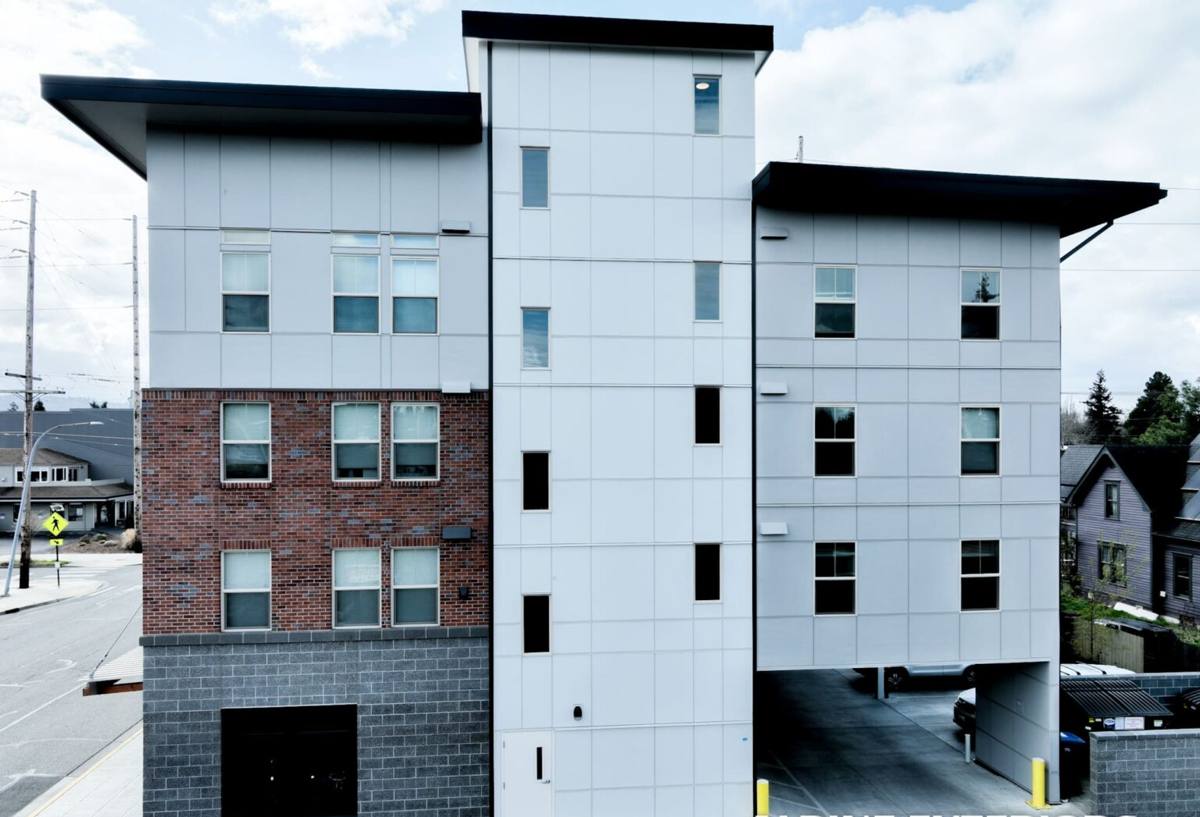
What Salt Air, Driving Rain, and Moss Actually Do to Siding
Each of these three factors stresses siding in a different way, and a correct installation has to answer all three at once.
Salt Air
Airborne salt is corrosive to exposed metal fasteners, flashing, and trim, and it accelerates the breakdown of finishes that aren't engineered for it. Paint films that hold up fine twenty miles inland can chalk, fade, or lift years early this close to the water. Salt residue also holds moisture against a surface longer than plain rain does, which compounds any weakness in the siding's water resistance.
Driving, Wind-Driven Rain
Rain that comes in at an angle, rather than falling straight down, gets pushed up under laps, into seams, and behind trim that would stay dry in calmer weather. This is where installation detail — not the siding material alone — decides whether a wall stays dry. A product installed with the wrong gaps, laps, or flashing will let wind-driven rain in no matter how good the siding itself is.
Moss and Prolonged Dampness
Skagit County's long wet season, combined with shade from trees and neighboring structures, keeps some wall sections damp for extended stretches, especially north- and west-facing elevations. Moss and algae don't just look bad — sustained dampness under organic growth is what rots wood-based siding and traps moisture against fasteners and trim. Siding that can't shed water quickly, or that absorbs moisture into its core, loses this fight over time.
Why We Only Install James Hardie Fiber Cement Here
We don't install vinyl, LP SmartSide, primed wood, cedar, or other fiber cement brands, and on a site with this exposure, the trade-offs are easier to see than on a sheltered inland lot.
| Material | How It Handles This Climate | Long-Term Concern on a Water-Exposed Site |
|---|---|---|
| Vinyl siding | Sheds rain if installed correctly, but panels expand and contract with temperature swings and can warp or crack under wind loads and UV exposure | Seams and laps loosen over time near constant wind; color is baked in and fades — no refinishing option |
| Wood or primed spruce | Traditional look, but wood is organic material that absorbs moisture | Salt air and prolonged dampness accelerate rot, paint failure, and pest entry points; highest ongoing maintenance |
| Other fiber cement brands | Similar core material, but factory finish systems, HZ climate engineering, and warranty structures vary by manufacturer | We don't have the same install specs, finish testing history, or warranty backing on other brands, so we don't put our name on jobs using them |
| James Hardie fiber cement | Non-combustible, engineered for moisture resistance, available in an HZ5 formulation for Pacific Northwest/marine climates | Correct installation and factory ColorPlus finish are what deliver the long service life — both are things we control |
Fiber cement itself isn't magic — it's cement, sand, and cellulose fiber, and it resists rot and salt-driven finish failure in a way organic materials can't. But the installation is what actually keeps water out of the wall assembly, which is why we treat the install process as seriously as the product choice.
What a Correct Installation Looks Like on a Cap Sante Home
Moisture Management Starts Before the Siding Goes Up
On a site facing wind-driven rain, the water-resistive barrier and flashing details behind the siding matter as much as the siding itself. That means a continuous drainage plane, correctly lapped and taped house wrap or building paper, and flashing at every window, door, and horizontal trim transition that directs water back out rather than behind the cladding. Any gap or shortcut here shows up as a leak years later, usually after the damage is already inside the wall.
Fastening, Gaps, and Trim Details
James Hardie publishes specific fastener types, spacing, and clearance requirements, and they exist for a reason — get them wrong and you create the entry points that wind-driven rain and salt air will exploit. On a Cap Sante install, we hold to:
- Corrosion-resistant fasteners rated for the coastal environment, not generic interior-grade hardware
- Correct minimum clearance between siding and grade, roof lines, decks, and other flat surfaces so water can't wick upward
- Proper gaps at butt joints and around penetrations, sealed with a quality sealant rated for exterior, marine-adjacent use
- Flashing integrated with the drainage plane at every horizontal trim board and window head, not just caulked over the top
- Correct nailing pattern and depth — overdriven or underdriven fasteners both compromise the board's ability to move and shed water properly
None of this is unusual for a fiber cement install anywhere, but on a wind- and salt-exposed elevation, the margin for error is smaller. A gap or missed flashing detail that might go unnoticed for a decade on a sheltered inland wall can start causing problems within a couple of wet seasons here.
Choosing the Right Hardie Line and Finish for This Site
James Hardie makes region-specific formulations, and for Anacortes and the rest of the Puget Sound region, that means the HZ5 product line, engineered for wet, moderate-temperature marine climates rather than the freeze-thaw or high-heat formulations used elsewhere in the country. Beyond the base product, the finish matters just as much on a salt-exposed wall.
| Finish Option | What It Means for a Cap Sante Home |
|---|---|
| ColorPlus factory finish | Baked-on, multi-coat finish applied under controlled conditions, formulated to resist fading and hold up against UV and salt exposure better than field-applied paint |
| Field-applied paint | Gives more color flexibility later, but the finish is only as good as the site conditions and prep on install day — a real disadvantage in a humid, salt-air environment |
For most Cap Sante homeowners, ColorPlus is the more sensible choice specifically because of the environment: it removes site conditions and painter variability from the equation on a wall that's already working hard against salt and moisture.
Our Process, Start to Finish
- On-site assessment. We walk the exterior, note which elevations take the worst weather, check existing moisture damage or trim rot, and look at drainage around the foundation.
- Written estimate and product plan. You get a clear scope: which Hardie products, which finish, what trim and flashing work is included, and a real timeline.
- Tear-off and inspection. Removing the old siding lets us actually see the sheathing and framing underneath — this is where hidden moisture damage from a prior installation often turns up.
- Water-resistive barrier and flashing. This is the step that determines whether the wall stays dry for the next 30-plus years, and we don't rush it.
- Siding installation. Installed to James Hardie's fastening and clearance specifications, with attention to the elevations that face wind and rain directly.
- Trim, caulking, and final detail work. Every joint and penetration sealed correctly, not just caulked over gaps.
- Walkthrough. We go over the finished work with you before calling the job done.
What It Costs and What Drives the Price
Every home is different, and we'll only give you a real number after seeing your house, but these are the main factors that move the price on a Cap Sante project:
| Factor | Why It Matters |
|---|---|
| Extent of tear-off and existing damage | Rot or moisture damage found under old siding adds sheathing or framing repair before new siding can go on |
| Home size and wall complexity | More corners, dormers, and trim transitions mean more flashing detail and labor time |
| Product line and finish | ColorPlus factory finish versus field paint, and any upgraded trim or accent boards, shift material cost |
| Access and site conditions | Steep lots, limited staging space, or difficult access around a bluff-adjacent property can affect labor time |
| Scope beyond siding | Trim replacement, window flashing corrections, or repairs to water-damaged sheathing found during tear-off |
Broadly, fiber cement siding is a mid-to-upper range investment compared to vinyl, reflecting both material cost and the labor-intensive install it requires to be done right. We'll walk through exact numbers for your home during the estimate.
Living With Fiber Cement Siding in a Salt-Air, Moss-Prone Spot
Correctly installed James Hardie siding is low-maintenance, not zero-maintenance. A little seasonal attention goes a long way toward protecting the investment:
- Rinse salt residue and grime off exterior walls with a garden hose periodically — a soft wash, not high-pressure blasting that can force water behind trim
- Check caulking at trim joints and penetrations annually and have any cracked or shrunken sealant redone before the wet season
- Keep gutters clear so overflow doesn't run down siding faces or pool near the base of walls
- Trim back vegetation and tree cover where practical on shaded elevations to reduce prolonged dampness and moss buildup
- Watch for moss or algae staining on north-facing or shaded walls and treat it early rather than letting it sit for a season
- Confirm clearance between siding and grade, decks, and roof lines stays intact as landscaping or hardscaping changes over time
Why a Crew That Already Works Cap Sante Matters
The installation details that matter most here — fastener corrosion resistance, flashing at every transition, correct clearances, drainage behind the cladding — are the same details a crew unfamiliar with this kind of exposure is most likely to treat as optional. A contractor who mostly works sheltered, inland Skagit County jobs may not weight those details the same way on a bluff-facing wall that takes wind-driven rain and salt air every week of the year. We know which elevations on a Cap Sante lot take the worst of the weather before we even start the estimate, because we've seen the pattern on homes like yours before.
If you're planning a siding project on Cap Sante, we're glad to walk your home, look at what the current siding and trim are telling us, and put together a straightforward, no-pressure estimate for a James Hardie installation built for this exact environment.