 Anacortes Exterior
 Two Products, One Category — What's Actually Being Compared
Cemplank and James Hardie siding both fall under the same umbrella: fiber cement. Both are made from a mix of Portland cement, sand, and cellulose fibers, cured under pressure and heat, and both are marketed as low-maintenance alternatives to wood or vinyl siding. On paper, that makes them sound interchangeable. In practice, they're built by different manufacturers with different formulations, different finishing processes, and different track records — and those differences matter more once the siding is on the wall and facing a Puget Sound winter.
We get asked about Cemplank often enough that it's worth a straight answer instead of a sales pitch. Cemplank, manufactured by Allura, is generally sold as a value-tier fiber cement product, frequently through big-box retailers and general distributors. James Hardie is the product we install exclusively on every siding job we take on in Anacortes and the rest of Skagit County. This page explains why.
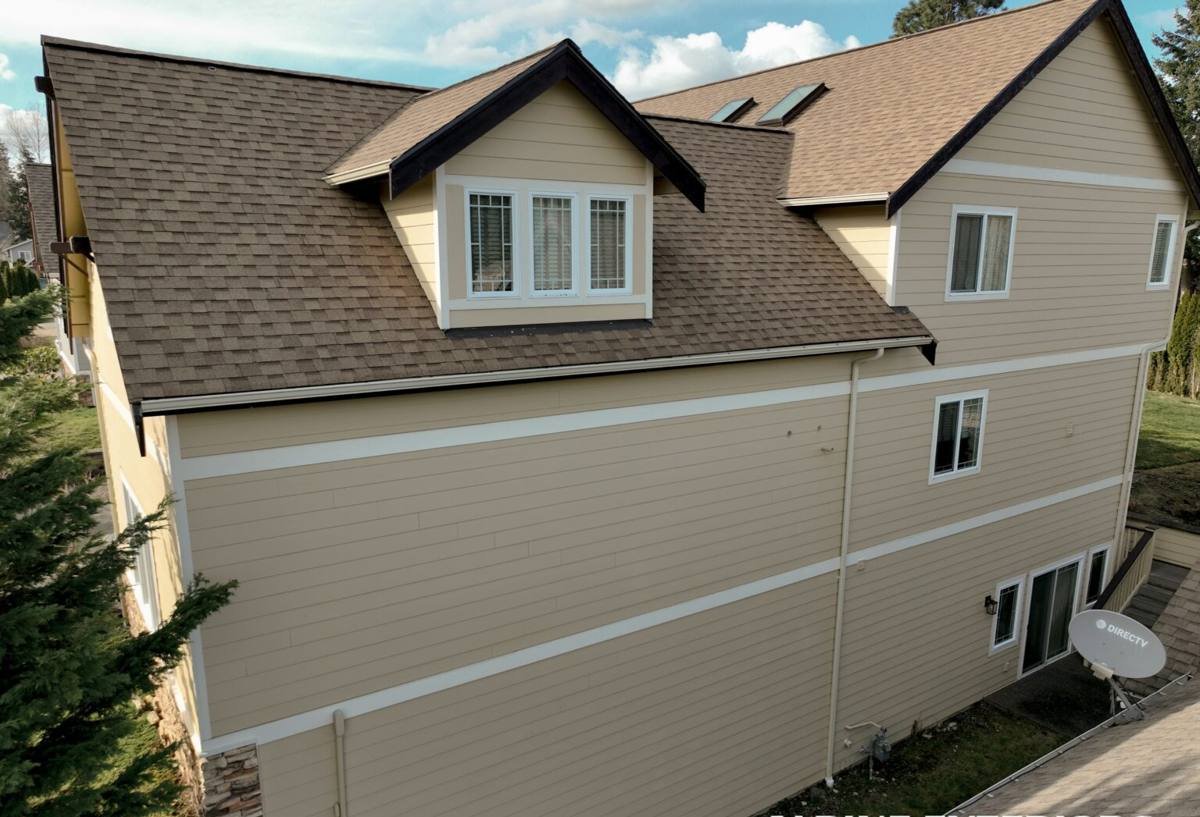
What Cemplank Gets Right
Fiber cement as a category earns its reputation. Compared to wood, it doesn't rot or attract insects. Compared to vinyl, it doesn't warp in heat or crack in a hard freeze, and it holds paint the way a rigid substrate should. Cemplank shares those baseline advantages. It's a genuine fiber cement product, not a composite imitation, and it's produced to recognized ASTM standards for the category. For a homeowner working with a tight budget who still wants to move off wood or vinyl, it's not a bad product on its own terms.
Where it runs into trouble isn't the base material — it's everything built around it: the finish, the climate engineering, the warranty backing, and the support network once the siding is on the house.
Where the Differences Show Up
| Factor | Cemplank | James Hardie |
|---|---|---|
| Factory finish | Primarily primed, field-painted by the installer | ColorPlus baked-on factory finish, multiple coats cured before it leaves the plant |
| Climate-specific engineering | General-purpose formulation | HZ5 product line engineered specifically for wet, high-moisture regions like ours |
| Warranty structure | Limited, product-specific, less standardized transfer terms | Non-prorated limited warranty on the substrate, separate finish warranty, transferable to a new owner |
| Color/finish warranty | Tied to whatever paint is field-applied | Finish warranty backed by the factory coating itself |
| Distribution model | General retail and distribution | Trained, certified installer network with manufacturer-backed support |
Factory Finish: ColorPlus vs. Primed-for-Paint
This is the single biggest practical difference for a homeowner, and it's the one that shows up years down the road rather than on installation day. Cemplank is typically sold primed, which means the color coat is applied on-site by whoever installs it — a painter, a contractor's crew, or occasionally the homeowner. Field paint on fiber cement can perform fine, but its longevity depends entirely on surface prep, weather conditions during application, and the quality of paint used. There's no factory backing that finish.
Hardie's ColorPlus technology bakes the color into the board at the plant, under controlled conditions, with a finish that's tested and warrantied as part of the product itself. That's not a marketing detail — it's the difference between a house that needs repainting on a normal cycle and one where the color is engineered to hold up for a much longer stretch before it needs attention. In a region where driving rain and long stretches of overcast, damp weather are the norm, a factory-cured finish has a real advantage over field-applied paint fighting to cure in marginal conditions.
Why This Matters More Here Than Elsewhere
Anacortes sits right on the water, which means salt air is a constant, low-grade stressor on any exterior finish. Add Skagit County's long moss season and months of driving rain, and you've got a climate that's actively testing the weakest link in a siding system every single week of the year. A finish that's cured and tested at the factory is simply a better bet against that combination than one that depends on a painter getting ideal drying conditions on a job site next to the Sound.
Climate Engineering: Why HZ5 Matters in Skagit County
Fiber cement doesn't behave identically everywhere. Moisture cycling, freeze-thaw patterns, and humidity all affect how a cementitious product performs over decades. Hardie engineers its HZ (HardieZone) product lines specifically around regional climate data — HZ5 is formulated for higher-moisture, wetter regions, which describes western Washington accurately. That's a formulation decision made for our specific weather pattern, not a generic national spec applied everywhere.
Cemplank doesn't offer that same tier of regional engineering. It's a solid general-purpose fiber cement product, but it isn't built around the specific moisture and humidity profile of a marine climate the way Hardie's regional lines are. For a house a few blocks from salt water, that distinction is worth taking seriously.
Warranty and What "Transferable" Actually Means
Every siding warranty sounds reassuring in a brochure. The real question is what happens when you actually need it — and who's still standing behind it in fifteen or twenty years. Hardie's warranty structure is non-prorated on the substrate for the life of the coverage period, and it's transferable to a subsequent homeowner, which matters directly for resale value. Buyers and their inspectors recognize the Hardie name and know what that warranty covers.
Cemplank's warranty coverage exists, but it's structured differently and doesn't carry the same national recognition or standardized transfer process. That's not a knock on the paperwork — it's a practical reality: a warranty is only as useful as the ease of using it, and Hardie's claim process and installer network are far more established in this region.
Availability, Installer Support, and Long-Term Parts Matching
Ten or fifteen years from now, if a section of siding gets damaged — a fallen branch, a ladder mishap, storm debris — you'll want to match it. Hardie's colors, profiles, and product lines are consistent and widely stocked through an established distributor and installer network in western Washington. Cemplank's retail-driven distribution model means availability and exact color matching down the road is less predictable, especially years after a specific product run.
We've also built our installation process, flashing details, and crew training around Hardie's published specifications. That's not a small thing. Fiber cement is installation-sensitive — gaps, fastener placement, clearance from grade, and flashing details all affect how the product performs over time, regardless of brand. Standardizing on one manufacturer's spec sheet means our crews aren't relearning installation tolerances from job to job.
Why We Standardized on Hardie
We don't install Cemplank, LP SmartSide, vinyl, Allura panel products, or primed spruce and cedar. It's not that every one of those products is unusable — it's that we made a decision to build our crew's expertise, our warranty backing, and our reputation around one manufacturer's system: James Hardie. That means:
- ColorPlus factory finish warrantied against the elements, not dependent on field paint quality
- HZ5 formulation engineered for our wet, marine climate specifically
- Non-combustible fiber cement, a real consideration during dry-season fire concerns
- A transferable warranty that holds weight at resale
- Consistent product availability for future repairs and color matching
- Installation specs our crews have trained on and installed to consistently, job after job
That's the whole reason for this page. We'd rather tell you plainly why we passed on a product than sell you on something we don't fully stand behind.
What to Ask Any Siding Contractor Before You Sign
Whether you end up going with us or another contractor, these are the questions worth asking about any fiber cement quote:
- Is the color factory-applied, or will it be primed and field-painted?
- Is the specific product line engineered for a wet, coastal climate, or is it a general-purpose formulation?
- Is the warranty transferable to a future homeowner, and what's the actual claims process?
- Will this exact product and color still be available for repairs in ten to fifteen years?
- Is the installer certified or trained specifically on this manufacturer's installation spec?
- What's covered if the installation itself fails, separate from the material warranty?
Get a Straight Answer for Your Home
Every house on the water in Anacortes, and every house tucked into the county's damp, moss-prone tree cover, is fighting the same combination of salt air, rain, and time. We'd rather walk your specific siding through what we'd actually recommend than send you a generic quote. If you'd like a free, no-pressure estimate, the form below gets you a straight assessment — no obligation, no pressure to choose a product we wouldn't put on our own homes.