 Anacortes Exterior
 Exterior Work in Edison's Coastal Farmland Setting
Edison sits in the low, flat farmland of the Samish Bay area in Skagit County, close enough to saltwater that the air itself becomes part of what a home's exterior has to withstand. It's a different exposure than a hillside home a few miles inland: the combination of open fields, tidal flats, and marine wind means moisture moves through this area differently, and it settles onto siding, trim, roofing, and deck lumber in ways that homeowners further from the water rarely have to think about. Anacortes Exterior Co works this corner of Skagit County regularly, and we've learned to size up a house here by what the land and the bay are doing to it, not just by what the building looks like from the road.
A home in Edison isn't fighting the same battle as a home in downtown Anacortes or one tucked into the trees outside Mount Vernon. Salt-laden air corrodes fasteners and finishes faster. Driving rain off open water finds every gap in flashing and caulk. And the shaded, damp stretches of the year turn north-facing walls and shaded rooflines into long-running moss farms if nothing is done about it. Good exterior work here means designing for all three of those pressures at once, not just picking materials and hoping for the best.
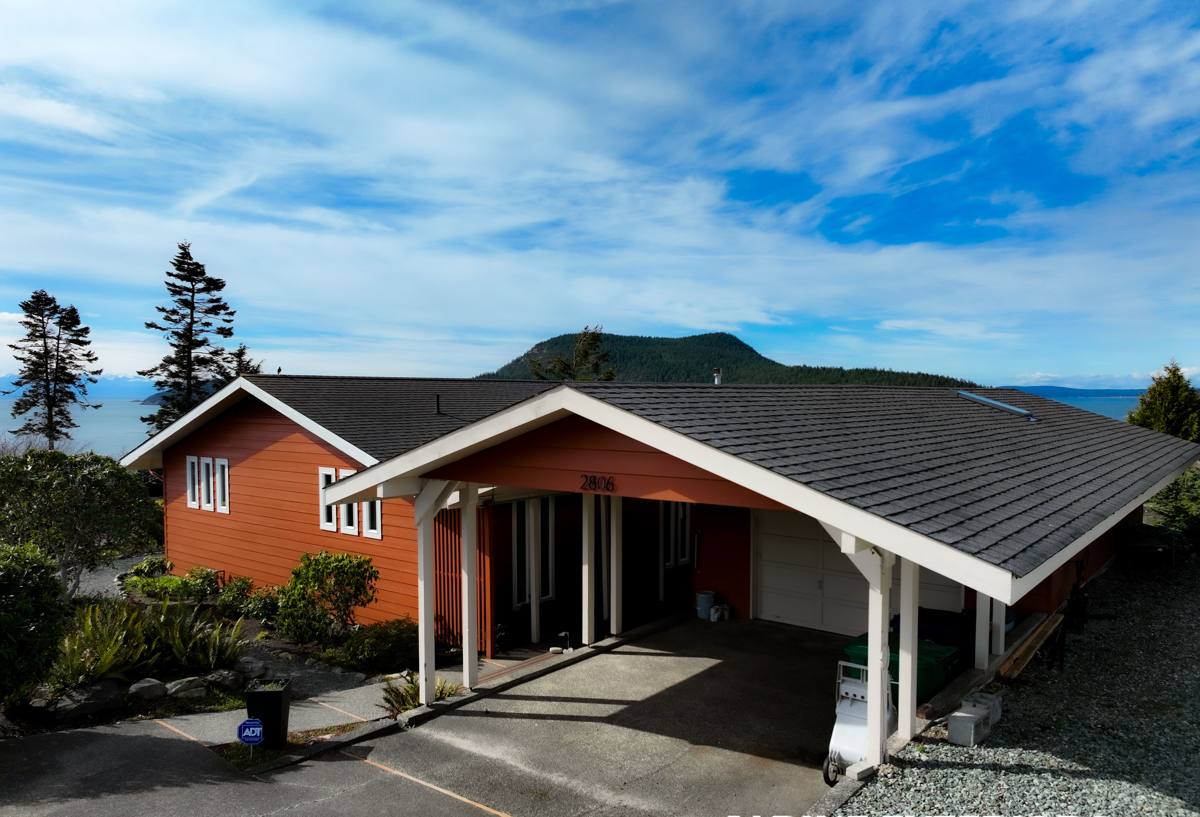
What the Climate Actually Does to Edison Homes
Salt Air and Corrosion
Proximity to Samish Bay and Padilla Bay means a steady low-level dose of salt in the air, especially on windier days. Over years, that salt accelerates corrosion on anything metal — nail heads, flashing, gutter fasteners, hinges, and lower-grade trim accessories. It also degrades cheaper paint films and finishes faster than the same products would wear a few miles inland. This is one of the reasons we're particular about the fasteners and flashing details we use on coastal-adjacent jobs; the wrong hardware choice shows up as rust streaks and failed seals years before it should.
Driving Rain
Storms coming off open water tend to push rain sideways, not straight down. That matters enormously for exterior work, because sideways-driven rain finds horizontal siding laps, window and door flashing, and deck ledger connections that would never see water in a calmer, more sheltered location. A house can look fine in dry weather and still be taking on moisture at every marginal flashing detail during a windy winter storm.
Moss, Shade, and Standing Moisture
Edison's flat terrain and tree lines create plenty of shaded, slow-drying wall and roof sections. Combined with our long wet season, that's exactly the recipe moss and algae need. Moss on a roof holds moisture against shingles and accelerates granule loss; moss and algae streaking on siding is mostly cosmetic but is also a signal that a surface is staying wet longer than it should, which matters for anything with wood content underneath a coating.
Siding: Why We Only Install James Hardie
Anacortes Exterior Co installs James Hardie fiber cement siding exclusively. We don't install vinyl, LP SmartSide, Cemplank, Allura, primed spruce, or cedar, and that's a deliberate professional standard, not a sales preference. In an environment like Edison's — salt air, sustained moisture, and a long moss season — the material behind the paint matters as much as the paint itself.
- Vinyl can perform reasonably well in mild climates, but it expands and contracts with temperature swings, can warp under sustained UV and heat exposure, and its seams and J-channels give driving rain more opportunities to find a way behind the cladding.
- LP SmartSide, Cemplank, and Allura are wood-strand or fiber cement products with their own trade-offs — some are more moisture-sensitive at cut edges, some have less field history in Pacific Northwest coastal conditions, and warranty structures vary in ways that matter over a 20-30 year ownership horizon.
- Primed spruce and cedar are natural wood products. They can look beautiful, but they require a maintenance commitment — recoating, caulk inspection, and prompt repair of any moisture intrusion — that most homeowners underestimate until the siding is already showing rot at the bottom courses.
James Hardie fiber cement is non-combustible, dimensionally stable across our temperature swings, and comes from the factory with a ColorPlus finish that's engineered to hold up to UV and moisture far longer than field-applied paint. Hardie's HZ product lines are formulated specifically for regions with heavy moisture exposure, which is exactly what a bay-adjacent property in Skagit County deals with year-round. The transferable warranty also matters to homeowners who may sell within a decade or two — it's a real asset attached to the house, not just the original owner.
Roofing for a Wet, Shaded Climate
Roofing in Edison has to account for both driving rain and moss. That means careful attention to underlayment, valley flashing, and ventilation — a roof that can't breathe traps moisture in the attic and accelerates deterioration from the inside out. We look at ridge and soffit ventilation balance on every roof we touch here, because in a climate this wet, a roof that's merely "watertight" but poorly ventilated will still age faster than it should. Moss prevention starts with keeping shaded sections clear of debris and, where the roof design allows it, using zinc or copper strips at the ridge to discourage regrowth over time.
Signs an Edison Roof Needs Attention
- Moss or algae streaking, especially on north-facing or shaded slopes
- Granule buildup in gutters, a sign shingles are wearing faster than expected
- Dark staining along valleys or around flashing, often the first visible sign of a slow leak
- Soft or spongy decking felt underfoot in an attic inspection
- Sagging or uneven roof lines, which can indicate long-term moisture damage to the structure below
Windows: Sealing Against Driving Rain
Window performance in Edison is as much about installation as it is about the window unit itself. Flashing details around window openings are one of the most common failure points we find on older homes in this area — a window that's sealed correctly can shrug off sideways rain for decades, while one with a shortcut flashing job will show water staining on interior sills within a few wet seasons. When we replace windows here, we treat the flashing and integration with the siding system as equally important as the window's energy performance, because in this climate, keeping water out matters more than any efficiency spec on the label.
Decks: Built for Standing Moisture and Salt Exposure
Decks in Edison face a tough combination: ground-level moisture from the surrounding low, flat terrain, plus salt air accelerating corrosion on fasteners and hardware. Ledger board connections — where the deck attaches to the house — are the single most important structural detail on any deck, and they're also the detail most likely to trap and hold water if flashed incorrectly. We pay close attention to ledger flashing, joist hardware selection, and drainage beneath the deck surface, since standing water under a deck in this climate rarely dries out on its own between storms.
Cost Factors to Understand Before You Budget
| Factor | Why It Matters in Edison |
|---|---|
| Existing moisture damage | Hidden rot behind old siding or around windows adds repair scope before new material goes on |
| Flashing and detail work | Driving rain exposure means flashing quality drives long-term performance more than material choice alone |
| Roof pitch and shading | Steeper or heavily shaded roofs take longer to treat for moss and may need extra ventilation work |
| Fastener and hardware grade | Salt air exposure calls for corrosion-resistant fasteners, which costs more upfront but avoids early failure |
| Access and site conditions | Rural lot layouts and setbacks in the Edison area can affect equipment access and staging |
Why a Local Crew Matters Here
A crew that mostly works dry, sheltered inland jobs can miss the details that matter most on a property like this. Knowing how far driving rain typically pushes moisture past a wall plane, how aggressively moss returns in a shaded Skagit County microclimate, and which fastener grades hold up against salt air isn't generic knowledge — it's learned by working this specific stretch of coastline season after season. Anacortes Exterior Co treats Edison as part of our regular service area, not an occasional trip, which means our crews already understand the exposure before they ever price the job.
What to Expect When You Work With Us
- An on-site inspection that looks at moisture history, not just surface appearance
- Straight talk about which repairs are urgent versus which can be scheduled
- James Hardie siding installed to manufacturer specification, including the flashing and clearance details that actually determine long-term performance
- Roofing, window, and deck work that accounts for salt air, driving rain, and moss exposure specific to this part of Skagit County
- A clear, itemized estimate before any work begins
If your home in the Edison area is showing moss buildup, water staining, or aging siding, we're happy to take a look and give you an honest read on what it needs. Reach out for a free, no-pressure estimate — there's no obligation, just a clear picture of where things stand.