 Anacortes Exterior
 Roofing in Edison's Climate: What Skagit County Weather Does to a Roof
Edison sits in one of the wetter, windier corners of Skagit County, close enough to Samish Bay and the Salish Sea that salt-laden air is a constant factor in how building materials age here. Add in the long stretch of low-angle winter sun, months of steady drizzle, and the shaded, damp conditions that let moss and algae take hold on north-facing slopes, and you get a roofing environment that's genuinely harder on materials than what you'd find twenty miles inland. Fasteners corrode faster near open water. Underlayment gets tested by wind-driven rain that doesn't fall straight down — it drives sideways under poorly lapped shingles and undersized flashing. And moss doesn't just look bad; its root structure lifts shingle edges and holds moisture against the roof deck long after a storm has passed.
None of this means Edison homes need exotic materials or unusual construction. It means the details that get skipped on a rushed job — proper underlayment coverage, correctly lapped flashing, adequate ventilation — matter more here than they would in a drier, calmer climate. A roof replacement done right for this area is built with those specific stresses in mind from the first nail.
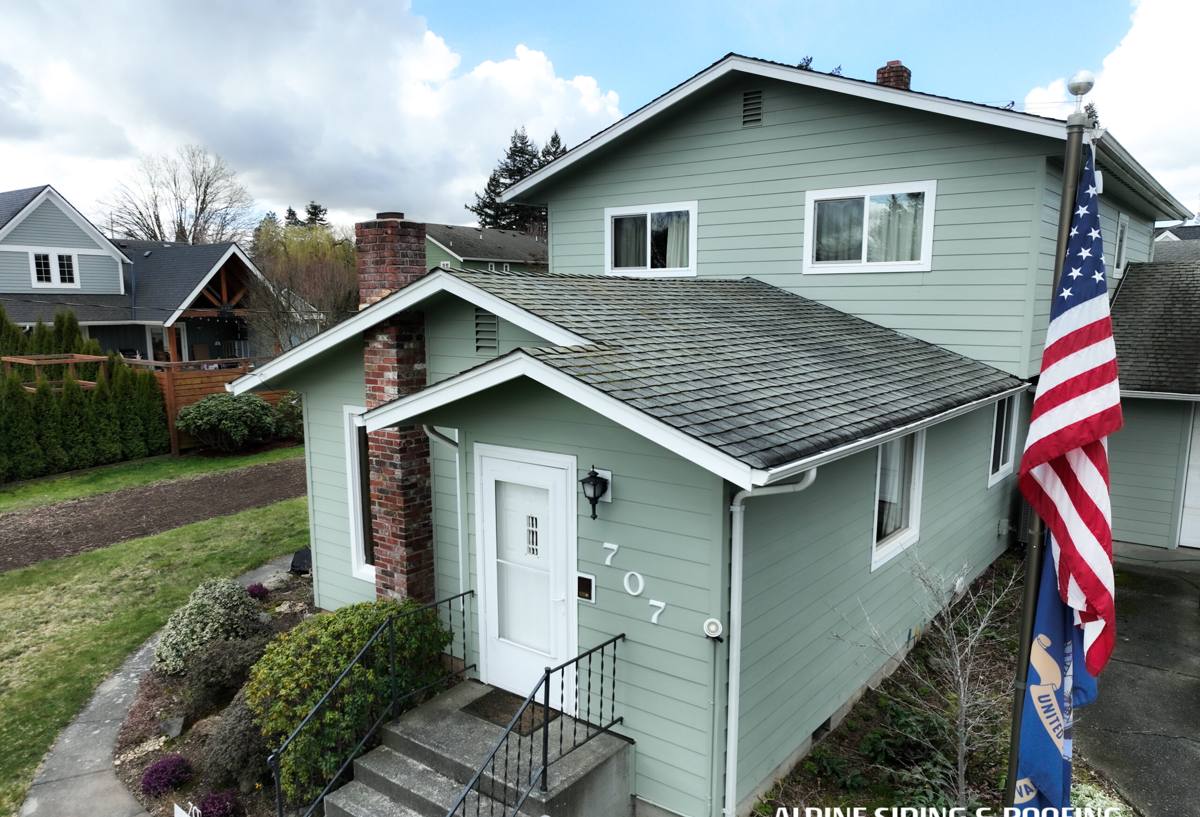
Signs an Edison Home Needs a Roof Replacement, Not Just a Repair
A lot of roofs get patched for years past the point where patching still makes financial sense. Here's what usually tips the decision toward full replacement rather than another repair:
- Granule loss heavy enough that you can see bare, shiny patches of asphalt on multiple slopes, not just one storm-damaged spot
- Shingles that are cupping, curling, or cracking across a wide area rather than isolated spots
- Moss or algae established deeply enough that scraping it off would damage the shingles underneath
- Soft spots or sagging in the roof deck when walked, which usually means water has reached the plywood
- Recurring leaks in different locations each season — a sign the underlayment and flashing system as a whole is failing, not just one bad spot
- A roof at or past 20-25 years old for asphalt composition shingle, even if it looks okay from the ground
If only one or two of these apply and the roof is otherwise mid-life, a targeted repair is often the honest answer, and we'll tell you that. Replacement makes sense when the underlying materials — deck, underlayment, and flashing — are wearing out together, not just the visible shingle layer.
What a Correct Roof Replacement Involves
Tear-Off and Deck Inspection
We remove the existing roofing down to the deck rather than layering new shingles over old — a full tear-off is the only way to actually inspect the plywood or OSB underneath for rot, soft spots, and delamination, all of which are more common on homes near the water where humidity stays higher year-round. Any damaged sheathing gets replaced before anything new goes down. Roofing over a compromised deck just hides the problem for a few more years.
Underlayment and Water Protection
Given how much wind-driven rain this area gets off the bay, underlayment coverage isn't a place to cut corners. We use synthetic underlayment across the full roof and add self-adhered ice-and-water barrier at the eaves, valleys, and any low-slope transitions — the spots where water is most likely to back up or drive in sideways during a winter storm.
Ventilation
Balanced intake and exhaust ventilation keeps the attic dry and temperature-stable, which matters for two reasons in this climate: it prevents condensation from building up under the deck during our long damp stretches, and it slows the conditions that let moss take hold by keeping the roof surface from staying cold and wet longer than it needs to. A roof can be installed perfectly and still underperform if the attic underneath is trapping moisture.
Flashing Details
Most roof leaks that show up years later trace back to flashing, not the shingles themselves — chimneys, skylights, sidewalls, and valleys are where water finds a way in if the metal isn't lapped and sealed correctly. We fabricate and install new flashing as part of every replacement rather than reusing old pieces, since flashing corrodes faster than shingles in salt-air conditions and rarely outlasts the roofing around it.
Material Options for Edison Homes
Most homes in this area are well served by a quality asphalt composition shingle, but the right choice depends on your roof's exposure, slope, and how much long-term maintenance you want to take on.
| Material | Typical Lifespan | Moss/Algae Resistance | Maintenance | Notes for This Area |
|---|---|---|---|---|
| Standard asphalt composition shingle | 20-25 years | Moderate; better with algae-resistant granules | Periodic moss treatment recommended | Cost-effective, widely used, good match for most homes |
| Algae-resistant composition shingle | 25-30 years | Good — copper-infused granules slow growth | Lower, but not maintenance-free | Worth the upgrade cost on shaded, north-facing roofs |
| Standing seam metal | 40-plus years | Very good — smooth surface sheds moss readily | Low | Higher upfront cost; excellent in high-wind, high-moisture exposure |
| Wood shake | 25-30 years with upkeep | Poor without diligent maintenance | High — requires regular treatment | Attractive but a real commitment near the water; we'll walk through the trade-offs honestly |
We don't push any one product line. What we push is matching the material to the specific roof — its slope, sun exposure, and how much upkeep the homeowner actually wants to do — and being upfront about the maintenance a material demands before you commit to it, not after.
Our Process, Start to Finish
- On-site inspection: we walk the roof (weather permitting) or use a drone survey, check the attic for ventilation and moisture issues, and photograph anything relevant to the estimate.
- Written estimate: a clear breakdown of material, labor, tear-off, disposal, and any deck repair contingency, with no vague allowances buried in the fine print.
- Scheduling around weather: Skagit County's rain patterns mean we plan replacements for realistic dry windows and keep materials tarped and protected if conditions turn mid-job.
- Tear-off and deck repair: old roofing removed, deck inspected and repaired as needed, debris contained and hauled off daily.
- Installation: underlayment, flashing, ventilation, and roofing material installed to manufacturer specifications and local code.
- Final walkthrough: we review the finished roof with you, confirm gutters and downspouts are clear of debris from the job, and go over warranty paperwork.
Moss, Algae, and Salt Air: Long-Term Roof Care
A new roof still needs some attention in this climate. Moss spores are constantly present in the air here, and any shaded or north-facing slope will eventually pick up growth without occasional treatment. We recommend a gentle moss treatment (never pressure washing, which strips granules and shortens shingle life) every couple of years on shaded roofs, and keeping gutters clear so water isn't sitting against the roof edge. Homes closer to open water should also have flashing and exposed fasteners checked periodically, since salt air accelerates corrosion faster than most homeowners expect. None of this is a large time investment — it's the difference between a roof that reaches its full rated lifespan and one that needs premature repair.
Permits, Timeline, and What to Expect During the Job
Most residential roof replacements in unincorporated Skagit County require a building permit, and we handle that paperwork as part of the job rather than leaving it to the homeowner. A typical single-family roof replacement takes one to three days depending on size, roof complexity, and weather — steeper roofs, multiple ridge lines, and extensive flashing work all add time. During the job, expect noise, some debris fall in the yard immediately around the house (we protect landscaping and use tarps), and a magnetic sweep for stray nails as a final step before we consider the job complete.
Why a Crew That Already Works Edison Matters
Roofing crews that only occasionally work this part of Skagit County tend to under-spec for conditions that are routine here — light underlayment coverage, standard fasteners where corrosion-resistant ones would hold up better, or ventilation calculated for a drier climate. A crew that regularly works Edison and the surrounding Bow and Samish Bay area builds with the local exposure as a given, not an afterthought, and knows which slopes on which orientations tend to develop moss first. That familiarity also means faster, more accurate estimates, since the climate factors that change a roofing spec are already understood going in rather than discovered mid-project.
Checklist: What to Ask Before You Sign a Roofing Contract
- Is the estimate a full tear-off, or does it include re-roofing over existing layers?
- What underlayment and ice-and-water barrier coverage is included, and where specifically?
- Is flashing being replaced or reused, and at which locations (chimney, valleys, sidewalls)?
- Does the estimate include attic ventilation review, or just the visible roofing surface?
- What's the manufacturer warranty versus the workmanship warranty, and what's covered under each?
- Who pulls the building permit, and is that cost included?
- What happens if hidden deck damage is found once tear-off starts?
A contractor who answers these clearly and in writing, before any work starts, is one worth trusting with a roof over your head for the next two to three decades.
If your Edison home's roof is showing its age or you just want an honest read on where it stands, we're glad to come take a look. Use the form below to request a free, no-pressure estimate — no obligation, just a straight answer about what your roof actually needs.