 Anacortes Exterior
 Conway's Exterior Challenge: Water, Salt, and Shade
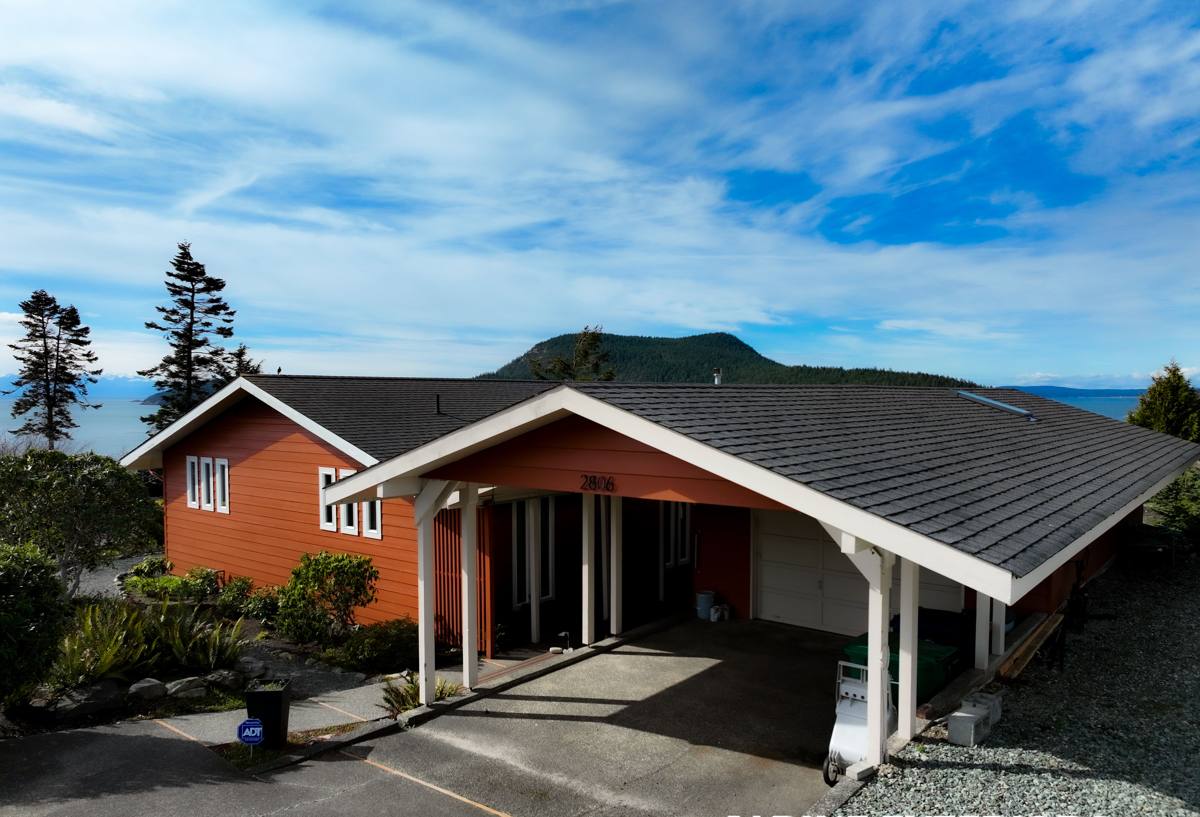
Conway sits in the low-lying delta country of Skagit County, close enough to the water and the surrounding farmland that homes here take on a different kind of weather stress than a house twenty miles inland. The air carries more moisture and a faint but persistent trace of salt off the nearby estuary, wind-driven rain finds its way into every seam and lap on the west and south sides of a house, and the tree cover and low winter sun angle common to this part of the county mean shaded roof and wall sections stay damp for days after a storm passes. None of that is dramatic on its own. It's the accumulation, year after year, that separates exteriors that hold up for decades from ones that need patchwork repair every few years.
We've worked on homes throughout Anacortes and the surrounding Skagit County communities long enough to see which materials and installation habits actually hold up in this environment versus which ones look fine in a showroom but struggle once they've spent a few winters absorbing Pacific Northwest weather. That experience shapes everything we recommend for a Conway property, from the siding on the walls to the shingles overhead.
What Salt Air and Driving Rain Actually Do to a House
Moisture Intrusion
Wind-driven rain doesn't fall straight down — it gets pushed sideways into siding laps, window flashing, and roof-to-wall transitions. Over time, any gap in the water-management details behind the visible surface becomes a path for moisture to reach the sheathing. Once that happens, the damage is often invisible until it's expensive: soft trim, stained interior walls, or rot discovered during a remodel.
Salt-Influenced Corrosion and Wear
Proximity to tidal water and estuary air means metal fasteners, flashing, and hardware corrode faster than they would twenty miles inland. Materials and fastener specs that are "fine" in a dry inland town aren't always the right call this close to the water.
Moss, Algae, and Prolonged Dampness
Shaded roof slopes and north-facing siding in Conway's tree-lined and farmland-adjacent lots stay wet longer after rain events. That extended dampness is exactly what moss and algae need to establish, and once moss gets a foothold on a roof or under a siding lap, it holds moisture against the surface and accelerates whatever material is underneath.
Siding That's Built for This: Why We Only Install James Hardie
We made a deliberate decision as a company to install James Hardie fiber cement siding exclusively — not vinyl, not LP SmartSide, not primed spruce or cedar, not other fiber cement brands. That's not a marketing position; it's a standard we hold because of what we've seen play out on real houses in this climate over time.
Vinyl siding is inexpensive and easy to install, but it's a thin plastic product that expands and contracts with temperature swings, can warp or crack in wind, and traps moisture behind it if the water-resistive barrier underneath isn't detailed correctly. Wood and engineered wood products like LP SmartSide use wood fiber as their base material, which means their long-term performance depends heavily on paint maintenance and correct field-cutting and sealing — miss a step, and the areas exposed to standing moisture or salt-laden air are the first to show it. Cedar is a beautiful natural product, but it requires ongoing staining or painting and is genuinely vulnerable to moisture absorption, insect activity, and rot if maintenance lapses even for a couple of seasons.
James Hardie fiber cement siding is cement, sand, and cellulose fiber — it doesn't rot, it isn't attractive to insects, and it holds up to direct moisture exposure far better than wood-based products. It's also non-combustible, which matters increasingly to homeowners and insurers alike. Hardie's ColorPlus factory-applied finish is baked on under controlled conditions, so the color holds up more consistently than field-applied paint and comes with its own finish warranty. And Hardie engineers specific product lines (HZ5, HZ10) for different climate zones, so what goes on a Skagit County home is manufactured with this region's moisture and temperature profile in mind rather than a generic national spec.
None of that makes fiber cement maintenance-free — it still needs correctly caulked joints, proper flashing, and periodic inspection — but it removes the rot risk and paint-dependency that make wood-based sidings a harder long-term bet in a wet, salt-touched climate.
Roofing for a Long Moss Season
Conway's mix of shaded lots and consistent moisture means roofs here fight moss and algae growth more than roofs in drier parts of the state. The right roofing approach starts with material selection and ventilation, not just shingles. Proper attic and roof ventilation keeps deck temperatures more even and reduces the trapped moisture that helps moss take hold from underneath as well as on the surface. Underlayment quality and correct flashing at every valley, chimney, and roof-to-wall intersection matter more here than in a dry climate, because those are the exact points where driving rain tests a roof system.
We also pay close attention to gutter and downspout capacity on Conway homes — undersized or clogged gutters during a heavy rain event push water back under the roof edge and siding starter courses, which is one of the most common causes of hidden rot we find on older homes in this area.
Windows That Hold Up to Wind-Driven Rain
Older single-pane or poorly flashed windows are a common weak point on homes in this part of Skagit County. Wind-driven rain doesn't need a large gap to find its way behind trim and into wall framing — a compromised sill flashing or a bead of failed caulk is enough over time. When we replace windows, correct flashing integration with the surrounding wall assembly is as important as the window unit itself. A high-quality window installed with poor flashing details will still leak; a modest window installed correctly will outperform it. We also talk with Conway homeowners about energy performance, since the same wind exposure that drives rain into gaps also drives heat loss through older frames.
Decks Built for Wet Ground and Standing Moisture
Decks in Conway's low-lying, moisture-retentive setting face two challenges at once: rain from above and, on many lots, damp ground and vegetation below. Ledger board attachment and flashing where a deck meets the house is one of the most safety-critical details in residential construction, and it's also one of the most common places we find deferred maintenance issues on existing decks. Proper spacing between deck boards, correct joist flashing tape, and material choices suited to sustained dampness all extend the life of a deck significantly compared to a build that only accounts for looks.
Comparing Siding Options for a Coastal Skagit County Climate
| Factor | James Hardie Fiber Cement | Vinyl | Wood / Cedar | LP SmartSide |
|---|---|---|---|---|
| Moisture & rot resistance | Excellent — cement-based, not organic | Good if installed tight, can trap moisture behind it | Vulnerable without diligent maintenance | Wood-based; edges vulnerable if cut/sealed incorrectly |
| Moss/algae resistance on surface | Strong with factory finish | Moderate | Weak — organic surface | Moderate, paint-dependent |
| Maintenance burden | Low — occasional wash, caulk checks | Low, but repairs are patch-and-hope | High — regular staining/painting required | Moderate to high |
| Fire resistance | Non-combustible | Melts/deforms under heat | Combustible | Combustible (wood-based) |
| Finish warranty | Factory ColorPlus finish warranty | Varies by manufacturer | None — dependent on your own upkeep | Varies by manufacturer |
Why a Local Crew Makes the Difference
A lot of exterior failure isn't a bad material — it's a generic installation approach applied to a specific climate. Flashing details, fastener choices, ventilation strategy, and even which side of a house needs the most attention all shift depending on where a home sits relative to sun, wind, and water exposure. A crew that works throughout Anacortes and the surrounding Skagit County area regularly sees how these choices play out over years on real homes, not just at the moment of installation. That's the difference between an exterior that's installed to a spec sheet and one that's installed for the specific weather it's going to face for the next thirty years.
A Simple Seasonal Checklist for Conway Homeowners
- Walk the exterior after the first major fall storm and look for moss starting on north-facing roof slopes or siding
- Check that gutters and downspouts are clear and directing water away from the foundation and siding base
- Look at caulking around windows and doors for cracking or gaps once a year
- Inspect deck ledger boards and joist connections for staining or softness
- Trim back vegetation that keeps siding or roof sections shaded and damp
- Have flashing at roof valleys and wall transitions checked every few years, even if nothing looks obviously wrong
Ready When You Are
If you're noticing moss creeping across a roof slope, siding that's starting to show its age, drafty windows, or a deck that needs more than a fresh coat of stain, we're happy to take a look and talk through honest options — no pressure, no upsell. Fill out the form below for a free estimate on siding, roofing, windows, or decks for your Conway home.