 Anacortes Exterior
 Windows Built for What Conway Actually Deals With
Conway sits low in the Skagit Valley, close enough to the river and tidal flats that the air rarely stays dry for long. Homes here take on a steady diet of moisture — fog off the water, driving rain that comes sideways in a west wind, and a moss and mildew season that can run eight or nine months out of the year. Windows are one of the first places that shows up. A window that's fine in a drier inland town can fail early here: seals give out sooner, frames hold moisture longer, and glass that isn't rated for this climate fogs between the panes within a few years instead of lasting decades.
Energy-efficient windows aren't just about a lower power bill, though that's real too. In this climate, the same features that cut heat loss — tight seals, quality glazing, correctly flashed frames — are also what keeps water out of your wall cavity. Get the efficiency right and you usually get the durability right along with it.
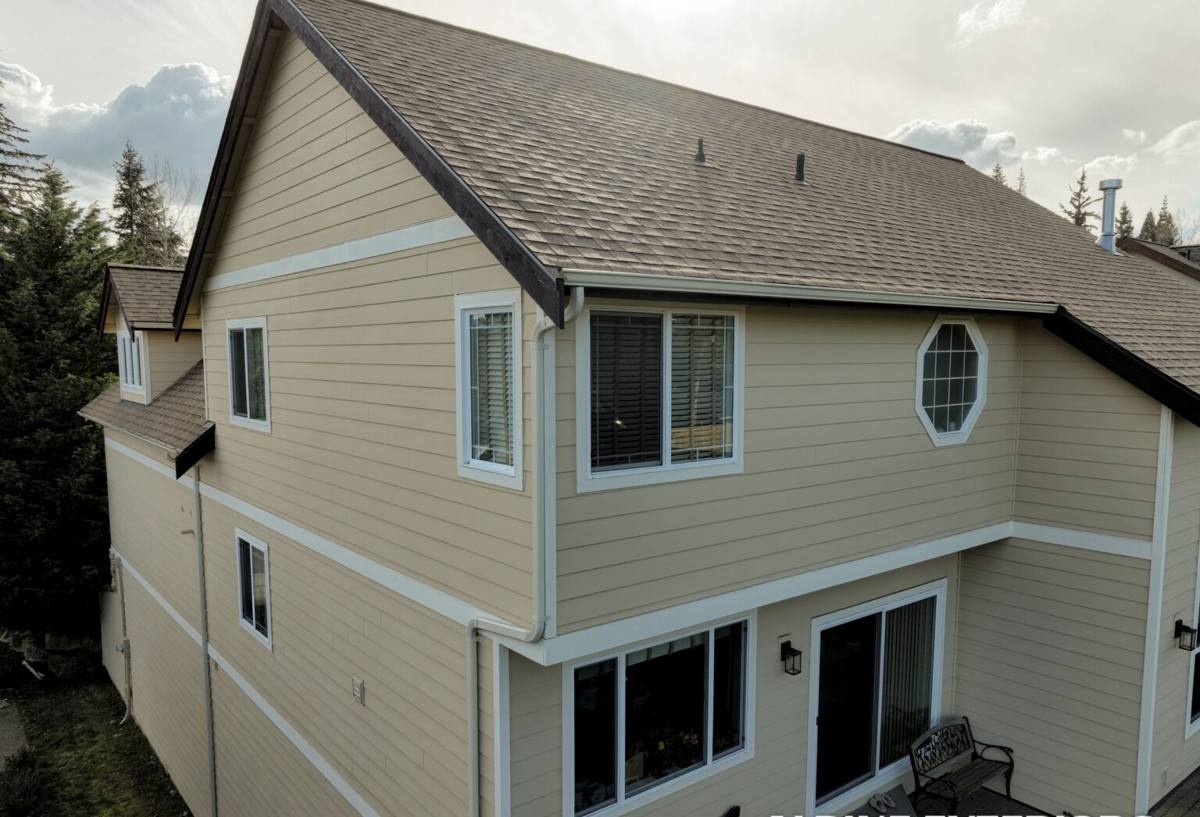
What "Energy-Efficient" Actually Means Here
Energy-efficient windows aren't defined by a sticker; they're defined by a few measurable properties that matter differently depending on climate. For a Skagit County home, three numbers matter most:
U-Factor
This measures how much heat the window lets escape. Lower is better. In a region with mild but persistent cold, damp winters, a low U-factor keeps heating costs down and reduces the cold-glass effect that leads to condensation on the interior pane — a problem that shows up constantly in homes near the water table.
Solar Heat Gain Coefficient (SHGC)
This measures how much solar heat passes through the glass. Western Washington doesn't get the intense summer sun some regions do, so we're less focused on blocking heat gain and more focused on balancing it — enough SHGC to get some free warmth on clear days, without turning a south-facing room into a greenhouse during the rare hot stretch.
Air Leakage Rating
This is the one that matters most for wind-driven rain. A window with a poor air leakage rating doesn't just waste energy — it's the same gap that lets water intrude during a hard blow off the water. We treat this number as seriously as the U-factor for any Conway installation.
Common Window Problems We See on Conway Homes
Because of the moisture load here, certain failures show up more often than they would in a drier part of the state:
- Fogged or "blown" double-pane glass — the seal between panes has failed and moisture has gotten between the glass, usually from age or a seal that was never rated for this level of humidity.
- Soft or discolored wood framing — older wood-frame windows that have absorbed moisture over years, especially on north- and west-facing walls that get the most driving rain.
- Moss and algae staining on sills and exterior trim — cosmetic at first, but a sign that water is sitting where it shouldn't and the surface isn't drying out between rain events.
- Interior condensation and mildew at the corners of the frame — often a sign of a poor air leakage rating or a cold spot from inadequate glazing.
- Sticking or misaligned sashes — swelling from repeated wet-dry cycles, common on older single-hung and double-hung windows.
None of these are unusual for a house of a certain age in this part of Skagit County — they're just what this climate does to windows over time. The question is whether the replacement addresses the cause or just swaps in new glass that will eventually see the same problems.
What a Correct Installation Actually Involves
The window unit itself is maybe half the job. The other half — flashing, sealing, and integration with the wall assembly — is what determines whether that window is still performing well in fifteen years. This is also where we see the most corners cut on past installs we're called out to fix.
| Step | Why It Matters in This Climate |
|---|---|
| Removing and inspecting the old frame and sill | Catches hidden rot or moisture damage before it's sealed behind a new window |
| Correct flashing sequence (sill pan, jamb, head flashing) | Directs wind-driven rain away from the wall cavity instead of trapping it |
| Weather-resistive barrier integration | Keeps the window tied properly into the house wrap so water can't track behind it |
| Low-expansion foam and backer rod at the frame gap | Insulates without over-compressing the frame, which can warp vinyl units |
| Exterior sealant rated for UV and moisture exposure | Standard caulk breaks down faster under near-constant damp conditions |
| Interior air seal and trim reinstallation | Closes the air leakage path that drives both energy loss and condensation |
Skip the flashing step or use the wrong sealant, and you can install the most efficient window on the market and still get water intrusion within a couple of wet seasons. This is why we treat installation technique as equally important as the product itself.
Choosing Materials That Hold Up in Skagit County
Frame material affects both energy performance and how the window ages in a damp climate. There's no single right answer for every home — it depends on your budget, your home's style, and how much upkeep you want to take on.
| Frame Material | Moisture Resistance | Maintenance | Notes |
|---|---|---|---|
| Vinyl | Very good — won't rot or corrode | Low | Most common choice locally; good value, wide color range |
| Fiberglass | Excellent — very stable in wet/dry cycles | Low | Higher upfront cost, holds up especially well to temperature swings |
| Wood-clad | Good on exterior clad face, wood interior needs protection | Moderate to high | We're honest with clients that the interior wood face needs periodic attention in a humid climate |
| Aluminum | Poor thermal performance, prone to condensation | Low | We generally steer clients away from bare aluminum frames here — the thermal bridging makes condensation and heat loss hard to avoid in this climate |
For most Conway homes, we recommend vinyl or fiberglass frames with dual-pane, low-E glass rated for the Pacific Northwest — argon-filled units are standard practice at this point and worth the modest cost difference. If your home has a specific architectural style where wood-clad windows make sense, we'll walk you through the maintenance trade-off honestly rather than talk you out of it or into it.
How We Approach a Conway Window Job
1. On-Site Assessment
We look at more than the glass — sill condition, existing flashing (or lack of it), signs of past water intrusion, and how each window is oriented relative to prevailing wind and rain. West- and south-facing units usually need the most attention.
2. Precise Measurement and Product Selection
We measure for exact fit rather than "close enough," since gaps are where both energy loss and water problems start. We'll walk you through frame material and glass package options based on your budget and how that wall has performed historically.
3. Removal and Prep
Old units come out carefully so we can inspect the rough opening for hidden rot or past water damage — a common find in older Skagit Valley homes — and address it before anything new goes in.
4. Installation and Flashing
New units go in with proper sill pan and flashing integration, low-expansion foam insulation, and exterior sealant rated for sustained moisture exposure.
5. Final Check and Cleanup
We test operation on every unit, confirm a clean air seal, and leave the site clean. We're also straightforward about what to expect going forward — how to spot early signs of trouble and what routine upkeep looks like in this climate.
Signs Your Conway Home May Need New Windows Soon
- Visible fog or moisture trapped between panes of double-pane glass
- Drafts you can feel near the frame on a windy day
- Condensation forming on the inside of the glass regularly, even in mild weather
- Soft spots, discoloration, or moss buildup on wood sills or trim
- Windows that are hard to open, close, or lock properly
- Noticeably higher heating bills compared to similar homes nearby
- Visible daylight or gaps around the frame from outside
Any one of these on its own might not mean full replacement — sometimes it's a re-seal or a repair to the flashing. We'll tell you honestly which situation you're in rather than push a full replacement when a repair will do.
Why It Matters to Hire a Crew That Already Works in This Area
Window installation guidance from a manufacturer's manual is written for a generic climate. It doesn't account for what a west-facing wall in the Skagit Valley sees during a winter storm, or how quickly moss establishes on a north-facing sill that doesn't get afternoon sun. A crew that regularly works Conway and the surrounding Anacortes and Skagit County area has already seen how different orientations, frame materials, and installation shortcuts hold up — or don't — in this specific mix of salt air, rain, and humidity. That's the difference between a window that looks right on installation day and one that's still performing well in year fifteen.
If you're weighing whether your windows need attention, or you're ready to plan a replacement, we're happy to take a look and give you a straight assessment — no pressure, no upsell. Fill out the form below for a free estimate on energy-efficient window installation for your Conway home.