 Anacortes Exterior
 Every roof in Skagit County is fighting a slow, three-front war: salt-laden air rolling off the Salish Sea, driving rain that comes sideways off winter storms, and a moss season that can run nine months out of the year in shaded, north-facing sections. None of that means your roof is failing today. It does mean that "how long will this last" is a more complicated question here than it is fifty miles inland, and it's worth understanding the real signs of wear before you're standing in a bucket-lined attic during an atmospheric river event.
This page walks through what actually shortens roof life in this region, how to tell repair from replace, and what a full replacement involves so you're not guessing when a contractor tells you it's time.
The Warning Signs Worth Taking Seriously
Most roofs don't fail all at once. They send signals for months or years before a leak actually shows up inside the house. The trouble is that a lot of those signals are easy to miss from the ground.
Granule Loss and Shingle Wear
Asphalt shingles are coated in mineral granules that block UV light and shed water. As a roof ages, those granules wash off in the gutters and downspouts — a small amount is normal, but consistent gritty buildup means the shingle's protective layer is thinning. Bald patches, curling edges, or shingles that look cupped rather than flat are all signs the material has passed its useful life, even if there's no active leak yet.
Moss, Algae, and Dark Streaking
Anacortes' marine layer keeps roofs damp longer than drier inland climates, and shaded roof planes under fir and cedar cover barely dry out between rains. Moss doesn't just look bad — its root structure lifts shingle edges and holds moisture against the roof deck, which accelerates rot underneath. Dark algae streaking is mostly cosmetic, but heavy, unmanaged moss growth is a real structural concern, not just a maintenance nuisance.
Leaks, Stains, and Attic Moisture
A brown ceiling stain is the roof telling you it already failed somewhere — the leak point is often several feet away from the stain itself, since water travels along the underlayment or framing before it drips through. Musty attic smells, visible daylight through the roof deck, or damp insulation are earlier warning signs than a ceiling stain, and worth a look before they become one.
Sagging or Soft Decking
Walk the roofline from the street and look for dips or waves rather than a straight ridge. Sagging usually means the roof deck underneath has absorbed water and softened, or that structural framing has been under load stress for years. This is one of the few signs that should move you from "get it looked at eventually" to "get it looked at soon."
Age, Even Without Visible Damage
Roofing materials degrade from UV exposure and thermal cycling whether or not they show it yet. A roof past its expected service life is a bigger risk during any given storm, even if it looks fine in July. Insurance carriers increasingly ask for roof age on renewal, and a roof nearing the end of its rated life can affect coverage or premiums well before it actually fails.
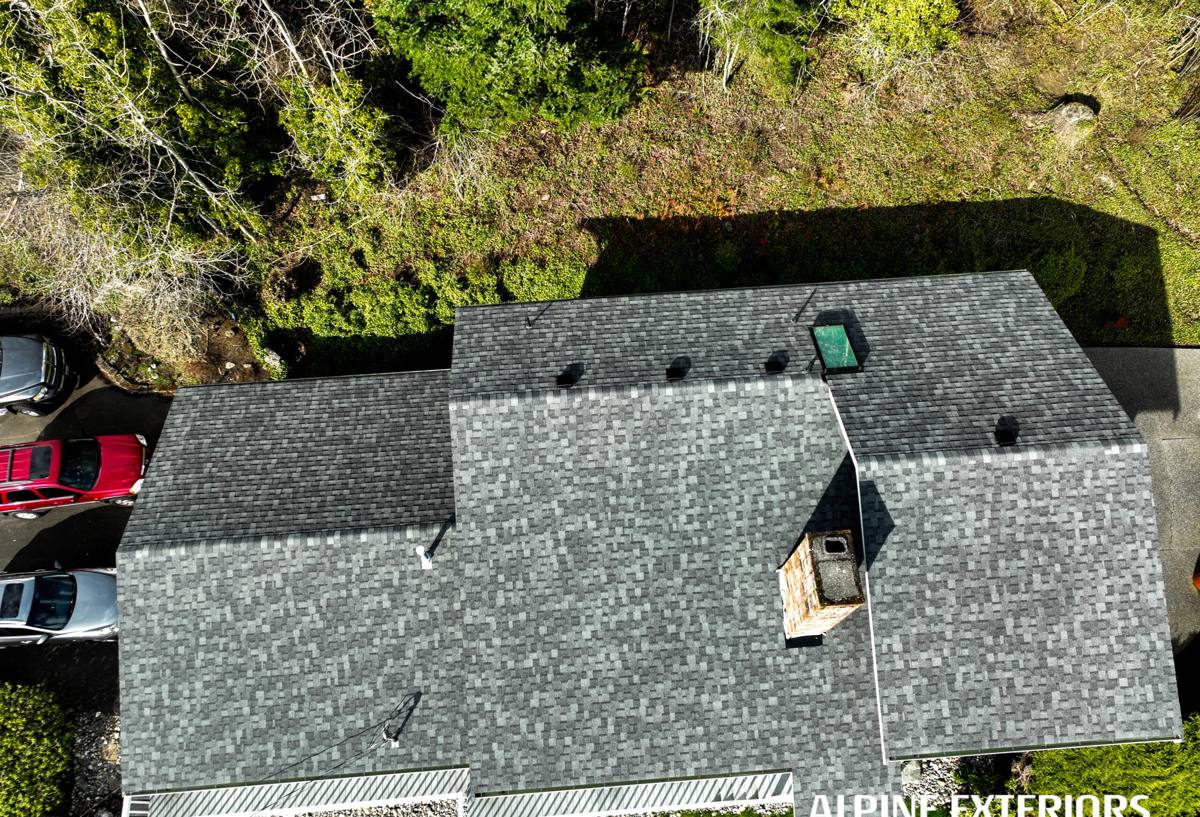
Typical Roofing Material Lifespans
Lifespan numbers from manufacturers assume ideal conditions. Coastal Skagit County exposure — salt air, sustained moisture, and moss pressure — tends to land actual performance toward the lower end of these ranges, especially on north-facing or heavily shaded roof planes.
| Material | Typical Lifespan | Local Notes |
|---|---|---|
| 3-tab asphalt shingle | 15–20 years | Least wind and moss resistance; often the first to show granule loss here |
| Architectural (laminate) shingle | 25–30 years | Heavier profile handles wind-driven rain better; still needs moss management |
| Wood shake / shingle | 20–30 years with upkeep | Attractive but high-maintenance in a damp climate; moss and rot risk is significant without regular treatment |
| Standing seam metal | 40–60 years | Sheds moisture and moss well; higher upfront cost, minimal maintenance |
| Concrete or clay tile | 40–50+ years | Durable against weather but heavy — requires the structure to be engineered for the load |
Repair vs. Replace: How to Think About It
Not every issue means a full tear-off. A localized leak around a single flashing point, a handful of cracked shingles from a windstorm, or moss buildup on one section can often be addressed as a repair. Replacement makes more sense when the damage is widespread, the roof is already near or past its rated lifespan, or repairs are becoming a recurring cost rather than a one-time fix.
- Roof is within the last 15–20% of its material's expected lifespan
- You've had two or more leak repairs in the last two to three years
- Granule loss, curling, or cracking is spread across multiple roof planes, not one isolated spot
- There's visible sagging or soft spots when walking the roof
- Moss or algae has been recurring despite cleaning
- You're planning to sell within the next few years and want to avoid a buyer-requested credit or contingency
- Energy bills have crept up, which can point to failing attic ventilation tied to the roof system
What Speeds Up Roof Aging in Skagit County
A roof of the same material and age will typically wear differently here than it would in a dry inland climate. A few local factors matter more than homeowners expect:
Salt Air and Corrosion
Anacortes' proximity to Rosario Strait and the broader Salish Sea means metal flashing, fasteners, and vents are exposed to salt-laden air, which accelerates corrosion compared to inland installations. Roofing components rated for coastal exposure hold up meaningfully better than standard-grade hardware in this environment.
Driving Rain and Wind-Driven Water
Winter storms here don't just drop rain straight down — wind pushes it sideways under shingle edges and around flashing details that would stay dry in a calmer climate. This is why proper underlayment, ice-and-water barrier at vulnerable points, and correctly lapped flashing matter more here than the shingle brand printed on the wrapper.
The Long Moss Season
Shaded, tree-covered lots throughout Skagit County keep roof surfaces damp for extended stretches, giving moss a long growing window. Left untreated, moss holds water against the roof surface well past when it would otherwise dry, shortening the life of the shingle beneath it and, over time, the decking underneath that.
What a Full Roof Replacement Involves
A proper replacement is more than swapping old shingles for new ones. The steps that actually determine how long the new roof lasts happen underneath the visible surface:
- Tear-off: Complete removal of old roofing material down to the deck, rather than layering new shingles over old ones.
- Deck inspection and repair: Any water-damaged or rotted plywood/OSB sheathing gets replaced before new material goes down — skipping this step is one of the most common sources of premature failure.
- Underlayment and ice-and-water barrier: A synthetic or felt underlayment across the field, with self-adhering ice-and-water membrane at eaves, valleys, and other vulnerable transitions.
- Flashing: New step flashing, valley flashing, and counterflashing around chimneys, skylights, and wall intersections — old, reused flashing is a common weak point.
- Ventilation: Ridge and soffit ventilation sized correctly for the attic, which affects both roof longevity and energy efficiency.
- Field installation: New shingles, shakes, metal panels, or tile installed to manufacturer spec and local wind/rain exposure requirements.
Permits, Timing, and Planning Ahead
Roof replacement in Anacortes and unincorporated Skagit County typically requires a building permit, and the review can take longer during the busy spring and summer construction season. Scheduling a replacement in fall or early winter — before the heaviest storm activity — sometimes means a shorter wait for both permitting and contractor availability, though roofing work itself can be done safely across most of the year here with the right crew and materials.
If You're Already Replacing the Roof, Look at the Siding Too
Roof and siding age on similar timelines, especially on homes exposed to the same salt air and moisture. If crews are already on site with staging and equipment for a roof replacement, it's often a practical time to have aging siding evaluated as well — particularly wood, vinyl, or older fiber cement products showing cracking, moisture damage, or paint failure. When siding replacement does come up, our standard is James Hardie fiber cement: it's non-combustible, holds its factory ColorPlus finish far longer than field-painted wood siding, and is engineered in HZ product lines specifically for wet, coastal climates like this one. We won't tell every homeowner they need new siding just because they need a new roof — but it's worth a look while the ladders are already up.
Choosing a Roofing Contractor
Roofing has a lower barrier to entry than a lot of trades, which means quality varies widely. A few things worth checking before signing anything:
- Active Washington State contractor license and liability insurance, verifiable through the L&I lookup
- A written scope that specifies tear-off, decking repair terms, underlayment type, and flashing details — not just "new roof"
- Manufacturer certification if you're getting an extended or non-prorated warranty tied to a specific product line
- Local references or completed jobs in the area, since coastal exposure installation details differ from inland work
- A clear explanation of what happens if hidden deck damage is found once tear-off starts
If you're seeing granule loss, persistent moss, staining, or you simply don't know how old your roof is, we're happy to take a look and give you a straight answer — including telling you if a repair is all you need. Reach out for a free, no-pressure estimate and we'll walk the roof with you.