 Anacortes Exterior
 Sedro-Woolley's Exterior Climate Challenges
Sedro-Woolley sits inland from Anacortes, up the Skagit River valley toward the foothills of the North Cascades. That location changes the weather picture a little compared to the coast: homes here see less direct salt air than properties right on Fidalgo Bay, but they often get more total rainfall, thanks to the way Pacific storms push moisture up the valley and it gets wrung out against the foothills. The result is a long wet season, heavier tree cover in a lot of neighborhoods, and conditions that are close to ideal for moss, algae, and mildew to take hold on siding, roofs, and anything shaded or north-facing.
None of this is dramatic, day-to-day. It's cumulative. A house that looks fine in July can be hiding soft trim, a moss-choked roof valley, or a window that's been letting in slow moisture for a couple of winters. Skagit County's damp, mild climate rewards exteriors that were built and installed to actually handle sustained moisture — and it punishes the ones that were built for a drier region and shipped here anyway.
What This Means for Different Parts of the House
Siding takes on constant damp-dry cycling and, on shaded lots, ongoing moss and algae growth. Roofs deal with moss in the valleys and around penetrations, plus the slow granule loss that comes with year-round wet conditions. Windows are exposed to driving, wind-blown rain more often than a dry-climate home ever sees, which stresses seals and flashing. Decks sit outside in the wet for most of the year, and any spot where water isn't shedding cleanly becomes a rot risk fast.
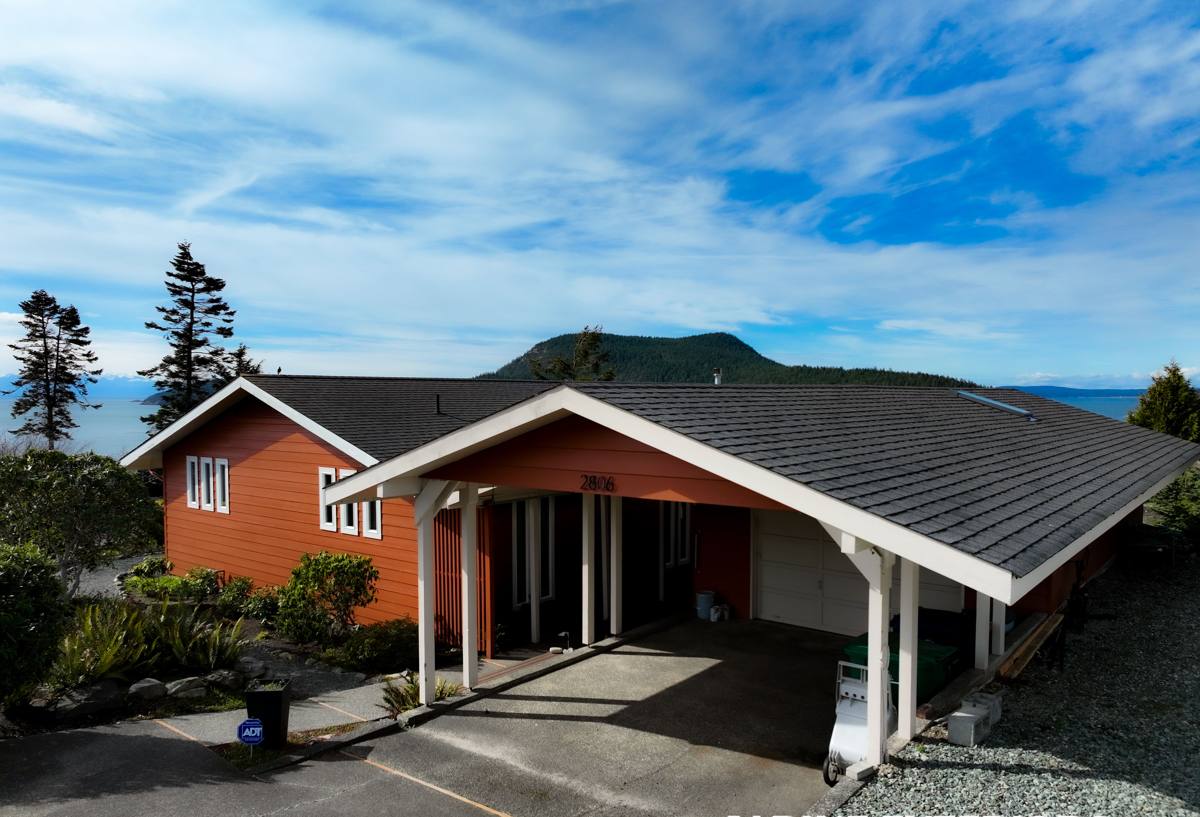
Siding That Holds Up: Why We Only Install James Hardie
We install James Hardie fiber cement siding exclusively. We don't offer LP SmartSide, vinyl, Cemplank, Allura, primed spruce, or cedar — not because those products have no merits, but because after years of doing this work in Skagit County's climate, we standardized on the one siding system we're confident will still be doing its job in twenty or thirty years without becoming a maintenance project.
The Trade-Offs With Other Products
Vinyl siding is affordable and low-maintenance in the sense that it doesn't need painting, but it can warp or become brittle over time, and its seams and J-channels give moisture more places to find a way behind the cladding. Wood siding — cedar or primed spruce — is genuinely beautiful, but it needs consistent repainting and caulking to survive a climate this wet, and skipped maintenance shows up fast as rot. LP SmartSide, Cemplank, and Allura are all reasonable engineered or fiber cement products, but we've made our own call: one system, installed the same way every time, backed by one manufacturer's warranty, is easier to stand behind and easier for homeowners to maintain.
Why Hardie Specifically
James Hardie fiber cement is non-combustible, doesn't support moss and algae growth the way wood-based products can, and holds a factory-applied ColorPlus finish that resists fading without needing a repaint every several years. Hardie also makes climate-engineered HZ product lines suited to the Pacific Northwest's wet, moderate climate, and backs the material with a strong transferable warranty. None of that replaces good installation — flashing, gapping, and fastening still have to be done to spec — but it gives us a product foundation worth building on.
Roofing for Skagit County's Rain and Moss
Sedro-Woolley's tree cover and valley humidity mean moss isn't a rare problem — it's an expected one, especially on north-facing slopes and anywhere shade lingers most of the day. A roof that's neglected in this climate can see moss working under shingle edges, granule loss accelerating, and moisture finding its way into valleys and around vents and chimneys.
We evaluate roofs for ventilation, flashing condition, and moss/organic growth, not just visible shingle wear. Good attic ventilation matters as much as the shingles themselves here — trapped moisture from the inside is just as damaging as rain from the outside, and it's an easy thing to miss on a surface inspection.
Windows: Sealing Out Moisture and Drafts
Wind-driven rain is a regular feature of storms coming up the Skagit valley, and older windows or poorly flashed replacements are where that rain finds its way in. Failed seals, foggy double-pane glass, and soft trim around window openings are common symptoms we see on homes that haven't had windows addressed in a decade or two.
Window work isn't just about the unit itself — flashing and integration with the surrounding siding is where a lot of leaks actually originate. We treat window replacement and siding work as connected, because a window installed without proper flashing into new siding just moves the moisture problem behind the wall instead of solving it.
Decks Built for Wet-Weather Durability
Decks in this area spend most of the year exposed to rain, and the details that get overlooked — ledger board flashing, joist protection, gaps between deck boards for drainage — are exactly the things that determine whether a deck lasts fifteen years or thirty. Standing water and trapped moisture at the ledger connection are the most common source of structural deck problems we run into, more than the decking material itself.
We build and repair decks with drainage and structural moisture protection as the starting point, then move on to the decking material and railing choices that fit the house and the budget.
Why a Local Anacortes-Based Crew Matters
We're based in Anacortes and work throughout Skagit County, including Sedro-Woolley. That matters for a few practical reasons. We're familiar with how the local climate varies even within a short drive — a shaded, tree-lined lot in Sedro-Woolley behaves differently than an open lot closer to the water — and we've seen how that plays out on real roofs, siding jobs, and decks over time. We're also close enough to actually be responsive: for warranty questions, follow-up, or something that needs a second look, we're not a crew that packed up and left the state.
A local crew also means familiarity with the permitting and inspection expectations that apply across Skagit County jurisdictions, so a project doesn't stall on paperwork that a traveling contractor might not know to plan for.
What to Expect When You Work With Us
We start with an on-site look at the exterior — siding, roof, windows, and decks as relevant — and talk through what we're actually seeing, not just what's due for replacement on a schedule. From there we walk through material options (which, for siding, means Hardie product lines and colors), a realistic timeline, and a written scope so there's no ambiguity about what's included.
During the work itself, the details that don't show up in a walk-by inspection — flashing, house wrap integration, fastening patterns, ventilation — get the same attention as the visible finish, because those are the details that determine whether the job holds up through the next twenty wet seasons.
Cost Factors for Sedro-Woolley Exterior Projects
Every home is different, but the factors below tend to drive cost across siding, roofing, window, and deck projects in this area.
| Factor | Why It Matters Locally |
|---|---|
| Existing moisture damage | Damp valley climate means hidden rot behind old siding or trim is more common than in drier regions |
| Tree cover and shade | Heavier shade means more moss/algae exposure, which can affect prep work and long-term maintenance needs |
| Roof pitch and access | Affects labor time and safety setup, same as anywhere, but steeper valleys collect more moss and debris |
| Window count and flashing condition | Poorly flashed existing windows may need more integration work with new siding |
| Deck structure age | Ledger and joist condition often drives cost more than the decking material choice itself |
| Material selection | Hardie board profile and color selection affects material cost but not installation standards |
A Homeowner's Exterior Checklist
A few things worth checking on your own before deciding whether it's time for an estimate:
- Visible moss or algae streaking on siding or roof, especially on shaded or north-facing sides
- Soft or spongy siding, trim, or decking when pressed
- Paint that's peeling, bubbling, or repeatedly failing in the same spots
- Window condensation between panes, or drafts you can feel near the frame
- Water staining on interior ceilings or walls near the roofline
- Deck boards that feel soft near the house, or visible gaps at the ledger connection
- Granule buildup in gutters, a sign of accelerating roof wear
If any of that sounds familiar, or you're just weighing what your home will need in the next few years, we're happy to take a look. A free, no-pressure estimate gets you a clear picture of what your Sedro-Woolley home's exterior actually needs — no obligation, just straight answers.