 Anacortes Exterior
 An Island Climate, Not Just a Ferry Ride Away
Guemes Island sits just across the water from Anacortes, but the short ferry crossing puts homes there into a different exposure category than most of Skagit County. Being surrounded by the water of Rosario Strait and the Guemes Channel means near-constant airflow off saltwater, more direct exposure to wind-driven rain, and a longer damp season than inland neighborhoods get. Add in the tree cover that shades much of the island and you get a climate that's genuinely harder on exterior materials than a typical mainland lot a few miles away.
None of this makes the island a bad place to own a home — it's one of the reasons people choose to live there. But it does mean the exterior envelope has to work harder, and the materials and installation details that get away with mediocre performance elsewhere tend to get exposed faster on Guemes. We've built our whole approach to siding, roofing, windows, and decks around that reality rather than a one-size-fits-all standard.
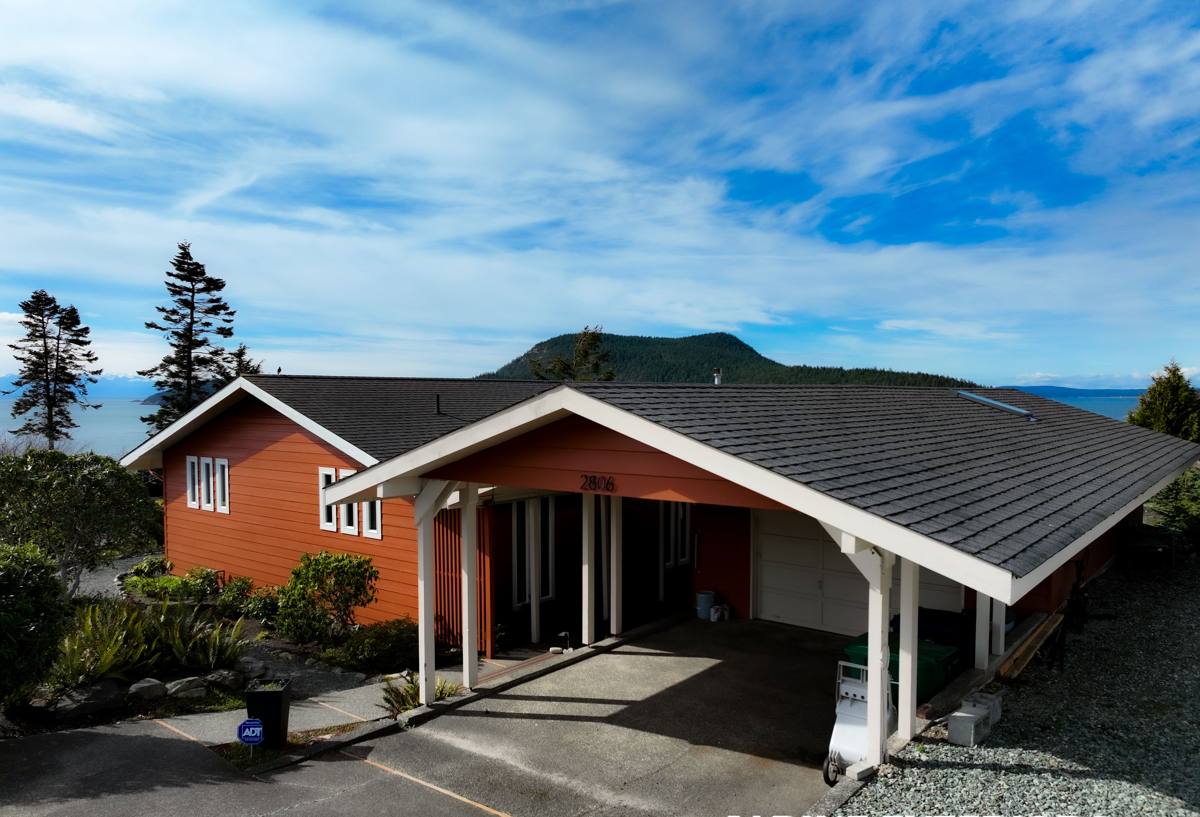
What Salt Air and Marine Exposure Actually Do to a House
Corrosion and Fastener Failure
Salt-laden air accelerates corrosion on anything metal — nails, screws, flashing, gutter hardware, even lower-grade hinges and hardware on doors and windows. On a mainland home this might show up as light surface rust after a decade. Closer to open water, it can compromise fasteners and flashing years earlier, which is exactly the kind of failure that doesn't show on the surface until water has already gotten behind the siding.
Moisture That Doesn't Fully Dry Out
Driving rain off the water pushes moisture into joints, seams, and end cuts that a calmer inland rain wouldn't reach as hard or as often. Combine that with tree-shaded lots that don't get much direct sun and wind to help surfaces dry, and you get wall assemblies that stay damp longer between storms. Materials and coatings that depend on regular drying cycles to hold up simply don't get as many of those cycles on parts of Guemes Island.
Moss, Algae, and Organic Growth
Shade, moisture, and mild temperatures are exactly what moss and algae need. Roofs, north-facing siding, and deck surfaces on shaded island lots can carry a green tint for a large part of the year if the materials and design don't account for it. Moss holds moisture against a surface long after the rain has stopped, which is a slow but steady threat to roofing and siding underneath it.
Siding for Guemes Island: Why We Only Install James Hardie
We install James Hardie fiber cement siding exclusively — not vinyl, not LP SmartSide, not Cemplank or Allura, not primed wood. That's a deliberate standard, and it matters more on an island lot than almost anywhere else we work.
- Non-combustible core: fiber cement doesn't feed a fire the way wood-based products can, which matters on a mostly rural island where response times are longer than in town.
- Engineered for wet climates: Hardie's HZ5 product line is formulated for the Pacific Northwest's moisture and temperature swings, not a generic national spec.
- Factory-applied ColorPlus finish: baked-on color resists the fading and moisture intrusion that field-applied paint struggles with, especially in shaded, damp conditions where paint film breaks down faster.
- Dimensionally stable: fiber cement doesn't swell, cup, or rot the way wood-based siding can when it stays damp for extended stretches.
We won't pretend other siding products don't have their place. Vinyl is inexpensive and low-maintenance in mild conditions; wood-based composite siding can look good going up. But on marine-exposed, shaded lots, the trade-offs of those products — moisture sensitivity at seams, coating longevity, or long-term dimensional movement — show up faster than they would on a dry, sunny inland lot. Fiber cement's track record in exactly this kind of climate is why we standardized on it and why it's what we recommend when a Guemes Island homeowner is ready to re-side.
Roofing That Handles Rain and Resists Moss
A roof on a shaded, moisture-heavy lot needs more than just watertight shingles — it needs a system that sheds water fast and doesn't hold onto growth. That means attention to underlayment quality, proper flashing at every penetration and valley, adequate ventilation to help the roof deck dry, and, where a homeowner wants it, roofing products or treatments that resist moss and algae growth. We also pay close attention to gutters and downspouts on island homes, since driving rain off the water can overwhelm undersized or poorly pitched systems that would be perfectly fine on a calmer inland roof.
Windows: The First Line Against Wind-Driven Rain
Windows on marine-exposed walls take a different kind of punishment than windows tucked into a sheltered inland elevation. Wind pushes rain sideways and upward against the glass and frame, testing seals and flashing details that a calmer site would rarely stress. When we replace windows on Guemes Island homes, we're paying particular attention to:
- Proper flashing integration with the wall assembly and siding, so water is directed out and down rather than trapped behind the frame
- Quality of weatherstripping and seals rated for wind-driven rain exposure
- Frame materials that hold up to salt air without pitting or corroding hardware
- Correct sill pan and drainage details at the rough opening — the detail most likely to be skipped and most likely to cause a slow leak years later
Good windows installed with mediocre flashing details will eventually leak on an exposed lot. The window brand matters less than the installation discipline behind it.
Decks: Built to Survive Shade and Salt
Decks on Guemes Island face a tough combination — salt air corroding fasteners and hardware, shade slowing down drying time, and moss finding a foothold on any surface that stays damp. We build and repair decks with corrosion-resistant fasteners and hardware rated for coastal exposure, proper spacing and drainage so water doesn't pool between boards, and decking materials chosen for how they'll actually perform in shaded, damp conditions rather than how they look on a sunny showroom sample.
Comparing Exterior Materials for Marine-Exposed, Shaded Lots
| Factor | Vinyl Siding | Wood-Based Composite | James Hardie Fiber Cement |
|---|---|---|---|
| Moisture tolerance | Good, but seams and J-channels can trap water | Sensitive to prolonged dampness at seams and ends | Engineered for wet, marine climates |
| Salt air resistance | Fair; can become brittle over time | Fair to poor if coatings fail | Strong; non-organic core doesn't corrode |
| Finish durability in shade | Color can fade unevenly | Field-applied paint/coatings need more frequent upkeep in low-sun areas | Factory ColorPlus finish holds up without regular repainting |
| Fire resistance | Melts/deforms under heat | Combustible | Non-combustible core |
| Typical maintenance | Low, but limited repair options if damaged | Moderate to high — recoating, caulking, moisture checks | Low — periodic caulk and inspection, no repainting cycle |
What a Guemes Island Exterior Project Looks Like
Every project we take on the island starts with a straightforward walk-around: checking siding and trim for early moisture damage, looking at flashing and fastener condition, assessing roof and gutter performance, and noting where shade and exposure are working against the current materials. From there we scope the work — whether that's a full siding replacement, a roofing upgrade, window replacement on the worst-exposed elevation, or deck repair — around what the site actually needs rather than a generic package.
Logistics on an island project are also a little different than a job in town. Ferry schedules affect crew and material timing, and we plan around that up front rather than letting it surprise a homeowner mid-project. A crew that's worked on the island before knows to batch trips, stage materials efficiently, and keep a tight schedule so the ferry dependency doesn't turn into wasted days.
A Quick Homeowner Checklist for Island Exteriors
- Inspect north-facing and shaded siding and roofing for moss or persistent green staining at least once a year
- Check exposed fasteners and metal hardware (gutters, flashing, deck hardware) for early corrosion
- Clear gutters and downspouts more often than an inland home would need — debris plus driving rain overwhelms clogged systems fast
- Watch for soft spots or discoloration around window frames, a common early sign of a flashing failure
- Keep vegetation trimmed back from siding and roof edges to improve airflow and drying
Why a Local Crew Matters Here
A contractor based in Anacortes who regularly works on Guemes Island understands the exposure differences that a crew unfamiliar with the area might miss — the difference between a sheltered inland wall and a shaded, water-facing elevation, or why a fastener spec that's fine in town isn't fine a quarter mile from the strait. That knowledge shows up in the small decisions: which elevation gets extra flashing attention, which fastener grade goes on an exposed deck, how a roofing system is detailed to shed water fast in a low-sun spot. It also means straightforward, honest scheduling around the ferry rather than surprises.
If you own a home on Guemes Island and want a straightforward look at how your siding, roofing, windows, or deck are holding up against the salt air and rain, we're happy to come take a look. Reach out for a free, no-pressure estimate using the form below.