 Anacortes Exterior
 Deck Repair Built Around How Guemes Island Actually Wears
Guemes Island sits right off Anacortes in Skagit County, and a deck out there ages differently than one a few miles inland. The salt air off the water accelerates corrosion on anything metal — fasteners, brackets, railing hardware — well before it would fail on a similar deck in town. Add in the driving rain that comes through in fall and winter, plus a moss season that can stretch from October into May in the Pacific Northwest, and you've got a structure that's constantly fighting moisture, biological growth, and slow metal fatigue at the same time. None of that means a Guemes Island deck is doomed to fail early. It means the repair work has to actually account for the environment instead of treating it like any other job.
This page covers what deck repair specifically looks like for Guemes Island homes: the damage patterns we see out there, what a repair has to include to actually hold up, and why the logistics of working on an island change how the job gets planned.
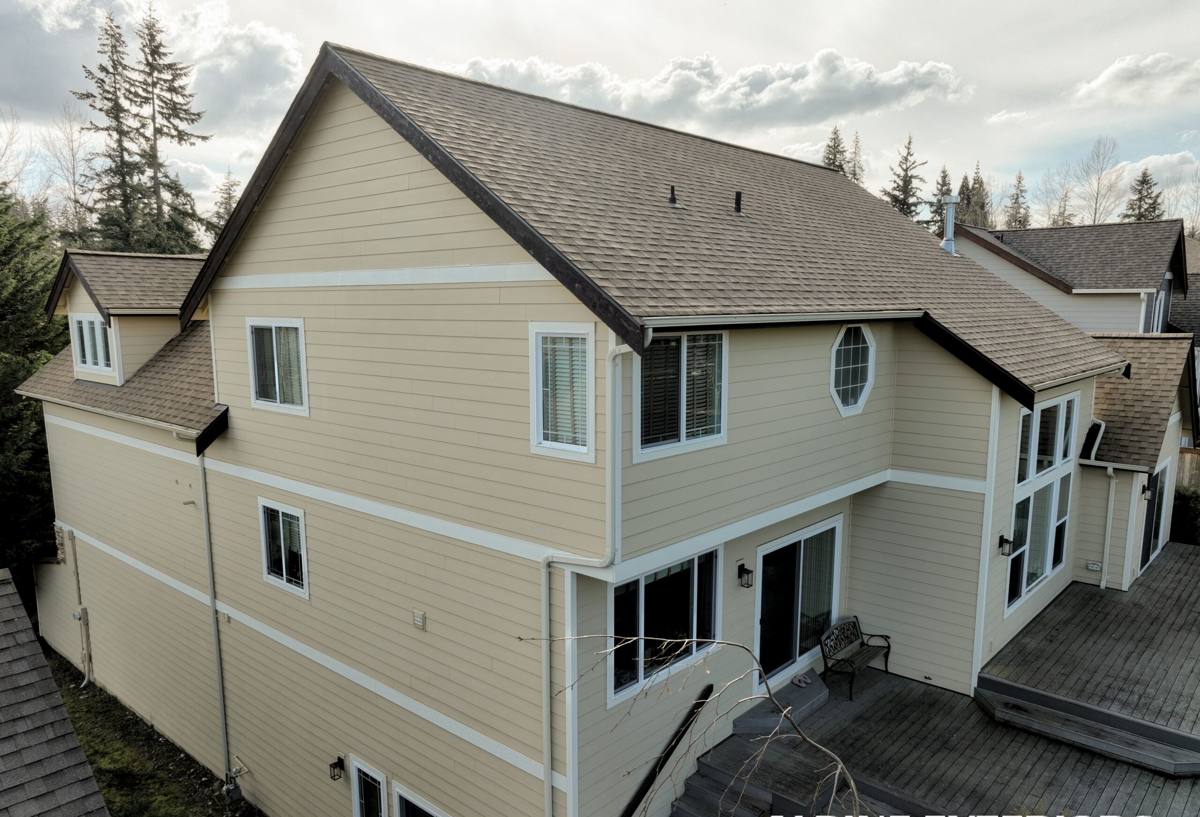
Why Island Decks Take a Different Kind of Beating
Salt Air and Metal Fatigue
Airborne salt doesn't just affect waterfront homes — it travels with the wind and settles on surfaces across the island, including decks set back from the shoreline. The fasteners, joist hangers, and structural screws holding a deck together are usually the first thing to show it. Standard coated deck screws can start losing their protective layer within a few years in a salt-exposed environment, and once that coating is compromised, corrosion moves fast. A deck can look structurally fine on the surface while its fastener system is quietly failing underneath.
Driving Rain and Moisture Intrusion
Skagit County gets its share of wind-driven rain, and on an island with less tree cover in some spots, that rain hits decks at angles that push water into places it shouldn't go — ledger board connections, under railing posts, into end grain on decking boards. Repeated soaking and drying cycles are what actually rot wood, more than any single storm.
The Long Moss Season
Moss and algae need shade, moisture, and time — Guemes Island offers all three for much of the year. Beyond the obvious slip hazard, moss holds moisture against the decking surface long after the surrounding area has dried out, which speeds up rot in wood decking and can stain and degrade composite surfaces if it's left to build up season after season.
Where We Typically Find the Damage
On repair calls out to Guemes Island, the same handful of problem areas come up again and again:
- Ledger board connection — where the deck attaches to the house is the single most common source of hidden rot, especially if flashing was skipped or installed poorly originally
- Fastener corrosion — rusted or degraded screws and bolts, sometimes visible as rust streaking down the decking boards
- Joist and beam soft spots — usually found by probing with a screwdriver or awl, not by looking
- Moss and algae buildup — on decking surfaces, stair treads, and anywhere shaded and damp most of the year
- Railing post rot — where posts meet the deck frame, a spot that traps water if not properly flashed
- Stair stringer wear — high-traffic, high-exposure component that takes a beating from both foot traffic and weather
What a Correct Repair Actually Involves
A deck repair that's going to hold up in this environment isn't just swapping out a few obviously bad boards. It starts with an actual structural check, not a visual walk-through:
Inspection First
We check the ledger board connection and flashing, probe joists and beams for soft or spongy wood, check fastener condition throughout (not just at a few sample points), and look at railing post attachment. Surface-level repairs on a deck with a compromised ledger or rotted joists just delay a bigger, more expensive problem.
Matching Fasteners to the Environment
For salt-air exposure, we don't use standard-grade coated screws for structural connections. Stainless steel or hot-dip galvanized hardware costs more up front but is the difference between hardware that lasts and hardware you're replacing again in a few years.
Flashing and Water Management
If the ledger board flashing is missing, damaged, or was never installed correctly, that gets addressed as part of the repair — not skipped because it's the harder, less visible part of the job. Water management at the ledger is the single biggest factor in whether a deck repair actually lasts.
Board Replacement Done Right
Whether we're replacing wood decking or composite boards, matching board spacing and fastening pattern to allow for proper drainage and airflow underneath matters as much as the material choice itself. Tight, poorly spaced boards trap moisture regardless of what they're made of.
Repair vs. Replacement — What Tips the Decision
| Factor | Repair Usually Makes Sense | Replacement Usually Makes Sense |
|---|---|---|
| Structural frame (joists, beams) | Isolated soft spots, otherwise sound | Widespread rot or repeated past patching |
| Ledger board | Flashing failure caught early, wood still solid | Ledger itself is rotted or pulling away from house |
| Decking surface | Scattered board failures, frame is sound | Most boards cupping, splitting, or moss-stained through |
| Fasteners | Corrosion limited to a few connections | Rust streaking widespread across the deck |
| Deck age | Under 15-20 years, one clear problem area | Original build was never flashed or built to current standards |
Most decks we look at on Guemes Island fall somewhere in the middle — a sound frame with a few compromised areas that need real attention, not a full teardown. The inspection is what tells us which side of that line a given deck is actually on.
Why the Ferry Changes How We Plan the Job
Working on Guemes Island means factoring in ferry scheduling from the start. Materials, crew, and equipment all need to cross on a set schedule, which means a repair job here gets planned with the delivery of lumber, fasteners, and hardware locked in before we ever start, not sourced mid-project. A crew that hasn't worked the island before can lose real time mid-job to a forgotten part sitting on the mainland waiting for the next crossing. We plan Guemes Island repairs with that logistics reality built in — materials staged ahead of time, the scope confirmed before the ferry trip, and enough flexibility in scheduling to work around ferry timing rather than fight it.
What to Check Before You Call Anyone
A quick homeowner walk-around can tell you a lot before you even schedule an inspection:
- Bounce test — does any section of the deck feel springy or soft underfoot?
- Look under the deck at the ledger board connection for staining, gaps, or visible rot
- Check railing posts for movement when you push on them firmly
- Look for rust streaking below fasteners or metal hardware
- Check for moss or algae buildup on stair treads and shaded sections of decking
- Probe any suspicious boards with a screwdriver — solid wood resists, rotted wood gives easily
If any of those raise a flag, it's worth having someone look at the structure, not just the surface.
Maintenance That Actually Extends the Life of an Island Deck
Between repairs, a few habits go a long way in this climate. Keeping moss and debris off the decking surface through the wet months prevents the trapped-moisture problem that drives most rot. Checking the ledger flashing and railing connections once a year — even just a visual look — catches small issues while they're still small. And re-sealing or refinishing wood decking on a regular schedule matters more here than in a drier climate, since the wood is spending more of the year wet than dry.
Why a Crew That Already Works Guemes Island Matters
Deck repair here isn't a different trade than deck repair anywhere else in Skagit County — it's the same trade applied with the right respect for salt exposure, moisture, and moss that define the island's conditions. A crew that's already worked Guemes Island knows to spec stainless or galvanized fasteners without being asked, knows to check flashing before it's requested, and knows how to plan a job around the ferry instead of discovering that problem mid-project. That familiarity shows up in fewer surprises, fewer delays, and a repair that's actually built for where it sits.
If you've got a deck on Guemes Island that's showing some of these signs, we're happy to come take a look. The estimate is free, there's no pressure to move forward, and you'll get a straight answer on whether it's a repair or something bigger.