 Anacortes Exterior
 Vinyl Siding Isn't a Bad Product — It's a Bad Fit for This Coast
We get asked about vinyl siding constantly, usually by homeowners comparing bids and wondering why our number looks different from a vinyl quote down the road. So let's be straightforward about it: vinyl siding is not junk. It's inexpensive, it's fast to install, it never needs painting, and for a lot of the country it does a perfectly reasonable job for a couple of decades. We simply don't install it here, and we think Anacortes homeowners deserve to know exactly why before they sign a contract.
This isn't a knock on the manufacturers or the installers who work with it. It's a statement about what we've decided our name goes on, and about the specific conditions Skagit County throws at exterior siding that make vinyl a harder sell here than it is in, say, inland Spokane or the Midwest.
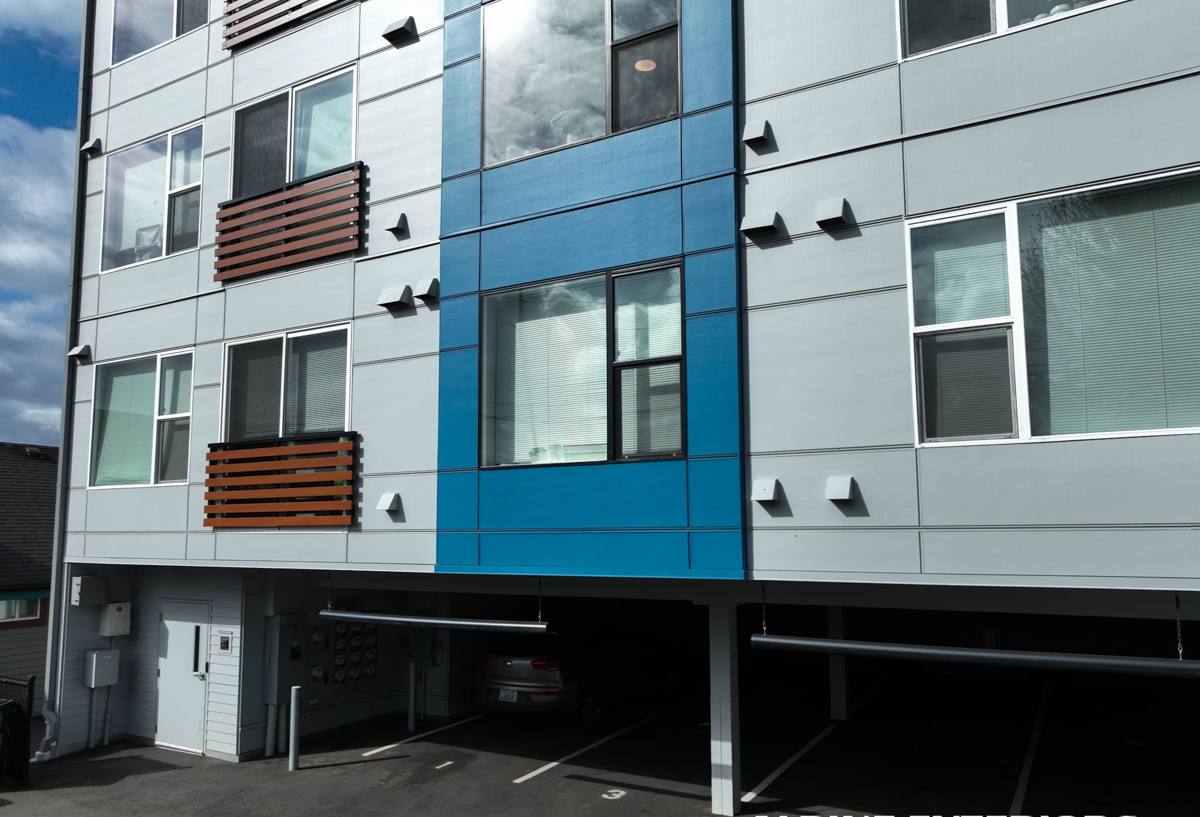
What Vinyl Actually Gets Right
Before we get into the trade-offs, credit where it's due:
- Low upfront cost — vinyl is typically the cheapest siding material per square foot on the market.
- No painting required — the color is baked into the panel, not applied as a coating.
- Fast installation — panels snap together and install quickly compared to fiber cement.
- Widely available — nearly every siding crew in the country has installed it, so labor is easy to find.
If your budget is the deciding factor and you're planning to move in five years, vinyl isn't an unreasonable choice in a lot of markets. The problem is that Anacortes isn't a lot of markets — it's a marine environment, and marine environments are exactly where vinyl's weaknesses show up fastest.
Salt Air Doesn't Damage Vinyl the Way It Damages Metal — But It Does Something Else
Vinyl doesn't corrode the way fasteners and flashing can. But it does react to the combination of salt-laden air and UV exposure that's constant this close to Rosario Strait and the Guemes Channel. Salt residue settles into the panel's surface texture and, combined with the moisture that never fully leaves the air here, accelerates the chalking and fading that all vinyl eventually experiences. On a south or west-facing wall that catches both sun and salt spray, that fading is rarely even — you end up with a lighter, blotchier appearance on the exposed elevations years before the rest of the house.
Because vinyl's color is a solid extrusion, there's no refinishing option when this happens. Repainting vinyl is possible but it voids most manufacturer warranties and rarely looks factory-clean. With Hardie's ColorPlus finish, by contrast, the coating is baked on in a controlled factory process specifically engineered to resist UV and moisture fading, and it comes with its own multi-year finish warranty separate from the substrate warranty.
Driving Rain and the Water-Behind-the-Panel Problem
Anacortes doesn't just get rain — it gets rain pushed sideways by wind off the water, which is a different load on a wall system than vertical rainfall. Vinyl siding is designed as a rain-screen material, meaning it's never intended to be fully watertight on its own. Water is expected to get behind the panels, and the system relies on a drainage plane and weep holes at the bottom of each course to let it back out.
That design works fine when it's installed exactly to spec, with the right overlap, the right fastener placement (vinyl has to hang loosely enough to expand and contract, never nailed tight), and proper flashing at every penetration. The problem is installation sensitivity: vinyl siding is genuinely easy to install badly and still have it look fine for the first year or two. Overdriven nails, missing weep gaps, or house wrap that's been compromised during installation don't show up as a visible problem immediately — they show up three or four winters later as soft sheathing, and by then the siding has to come off to find out why.
Moss Season Adds a Maintenance Job Vinyl Owners Don't Expect
Anyone who's lived in Skagit County through a full winter knows moss doesn't wait to be invited. It colonizes north-facing walls, shaded siding runs under eaves, and anywhere airflow is limited between houses. Vinyl's textured surface — the wood-grain embossing most panels have — gives moss and algae more surface area to grip than a smoother material would. Once established, that growth holds moisture directly against the panel, which is the opposite of what you want on a material that's already relying on drainage to stay dry behind the wall.
Cleaning it off means soft washing with the right dilution and pressure — too aggressive and you can crack or dislodge panels, since vinyl becomes noticeably more brittle in cold temperatures. That brittleness is its own issue in winter: a stray branch or a ladder bump that would leave a scuff on fiber cement can crack a vinyl panel outright when temperatures drop into the 30s, which they regularly do here between November and February.
Side-by-Side: What You're Actually Comparing
| Factor | Vinyl Siding | James Hardie Fiber Cement |
|---|---|---|
| Upfront cost | Lowest of common siding materials | Higher material and labor cost |
| Combustibility | Melts/deforms near heat sources | Non-combustible |
| Cold-weather brittleness | Cracks more easily below freezing | Stable across our temperature range |
| UV/salt fading | Chalks and fades unevenly over time | ColorPlus finish engineered against fade |
| Moisture handling | Rain-screen only; relies on perfect drainage details | Engineered HZ5 formulation for wet climates |
| Repainting/refinishing | Possible but voids most warranties | Can be repainted; ColorPlus also self-warranted |
| Typical warranty | Prorated, often reduced at resale | Non-prorated, transferable to one subsequent owner |
The Warranty Structure Is Where the Difference Really Shows Up
Most vinyl warranties look impressive on paper — lifetime coverage is a common headline — but read the fine print and you'll usually find they're prorated after the first several years, meaning the payout shrinks the longer you've owned the product, and coverage often steps down sharply or disappears entirely when the home changes hands. That matters in a market like Anacortes where a lot of homes turn over between retirees and younger families relocating for the ferry commute or the refineries; a warranty that resets to nothing at resale isn't much of a safety net for the person actually living in the house ten years from now.
James Hardie's warranty structure is built differently — non-prorated coverage for a long term, with transferability to one subsequent owner built into the standard terms. That's a meaningful difference when you're thinking about resale value, not just install-day cost.
Why We Standardized on James Hardie Instead
We made a decision a while back to stop installing every product a homeowner might ask for and instead install one system we can stand behind completely: James Hardie fiber cement, in the HZ product lines engineered specifically for wetter, milder climates like ours. It's non-combustible, it holds paint and factory finish far more consistently over decades, it doesn't rely on loose-hanging panels and weep holes to manage water, and it simply holds up better to the specific combination of salt air, wind-driven rain, and moss growth that defines a Skagit County exterior.
It costs more up front. We're not going to pretend otherwise. But we'd rather explain that honestly at the estimate stage than install something cheaper today that turns into a bigger problem — for you or for us — in year six or seven.
Questions Worth Asking Any Siding Contractor
- Is the warranty prorated, and does it transfer to a new owner if I sell?
- What happens to this material in a hard freeze or a wind-driven rain event?
- How is water managed behind the panels, and who's responsible if that detail fails?
- Can the color be refreshed later, or am I locked into whatever fades first?
- Has this specific product been used successfully on homes near the water in this county?
What This Means for Your Project
If you're planning a siding replacement in Anacortes, Fidalgo Island, or anywhere else in Skagit County exposed to the water, we'd rather have this conversation with you up front than have you find out the hard way which corners a cheaper material cuts. We're happy to walk your specific house, point out where the salt exposure and moss risk are worst, and explain exactly why we'd put Hardie on those walls instead of vinyl.
If you'd like an honest, no-pressure estimate and a straight answer about what your home actually needs, use the form below to get started.