 Anacortes Exterior
 Building on Fidalgo Island's West Side
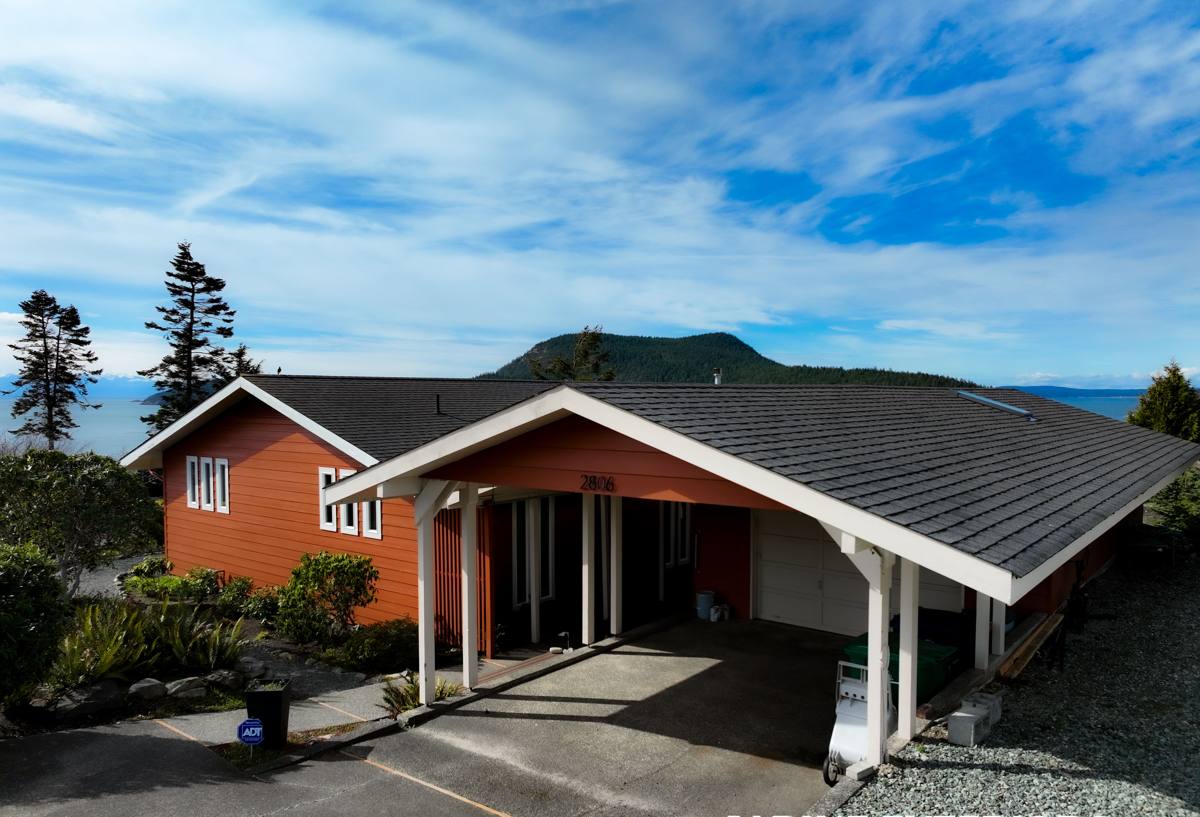
Skyline sits on the west side of Fidalgo Island, close enough to the water that the marine layer is part of daily life. Homes here get a mix of open exposure to wind off Rosario Strait, morning fog that burns off slow under tree cover, and long stretches of the year where surfaces simply don't fully dry out. That combination is harder on a building envelope than most homeowners realize until they're dealing with peeling paint, soft trim, or a roof that's shed more granules than it should have by year ten.
We work on homes throughout Anacortes and Skagit County, and Skyline comes with its own particular mix of conditions: salt-laden air, wind-driven rain that finds every gap in flashing and trim, and enough shade from mature evergreens that moss and algae get a real foothold on roofs and siding alike. None of that is a reason to over-build or over-spend on a house — it's a reason to be deliberate about material choice and installation detail, which is the whole basis of how we approach exterior work out here.
What the Marine Climate Actually Does to a House
Salt air and corrosion
Proximity to saltwater accelerates corrosion on anything metal that isn't rated for it — fasteners, flashing, gutter hangers, even cheap window hardware. Over years, this shows up as rust streaks on siding, failed fasteners that let panels shift, and flashing that corrodes from the inside out where you can't see it until water starts tracking behind the wall. It's a slow problem, which is exactly why it gets missed during routine maintenance.
Driving rain and wind-driven moisture
Anacortes doesn't get the heaviest rainfall totals in the state, but wind off the strait pushes rain sideways into walls, not just down onto roofs. That means water finds its way into any gap around windows, at butt joints in siding, and under poorly lapped trim. A material or installation method that works fine in a calm, dry climate can fail here simply because the water is coming in at an angle most builders don't design for.
Moss, algae, and extended shade
Tree cover that makes Skyline lots attractive also keeps roofs and north-facing siding damp longer after every rain. Moss doesn't just look bad — it holds moisture against roofing material and can work its way under shingle edges, and algae staining on siding is a sign that the surface is retaining moisture rather than shedding it. Products and finishes that resist this matter more here than in a drier, more open neighborhood.
Why We Only Install James Hardie Fiber Cement Siding
We made a deliberate decision years ago to install James Hardie fiber cement exclusively, and not vinyl, not LP SmartSide, not primed spruce or cedar, not other fiber cement brands. That's not a marketing position — it's what held up best against exactly the conditions Skyline throws at a house.
- Non-combustible core: fiber cement doesn't burn, which matters anywhere near dry summer conditions and doesn't hurt anywhere else either.
- ColorPlus factory finish: baked-on color resists fading and holds up to salt air and UV far better than field-applied paint, which is usually the first thing to fail on wood or engineered wood siding in this climate.
- Engineered for the Pacific Northwest: Hardie's HZ10 product line is specifically formulated for wetter, cooler climates like ours, with moisture and freeze-thaw performance that generic siding isn't tested against.
- Doesn't feed moss and algae the way wood-based products can: the cement composition doesn't provide the same organic food source that wood fiber does.
- A real transferable warranty backed by a manufacturer with decades of track record on coastal and marine-climate installations, not just inland suburban ones.
We're honest that fiber cement costs more upfront than vinyl and takes more skill to install correctly than most engineered wood products. What you get in exchange is a siding system that isn't the thing failing first on your house fifteen years from now.
Roofing for Skyline Homes
Roof choice on the west side of Fidalgo Island has to account for wind exposure and extended damp periods, not just rain volume. We look at a few things specific to homes in this area: how much shade the roof sits under, how exposed the ridge and edges are to wind, and whether the existing ventilation is actually moving air or just technically present. Underperforming ventilation is one of the more common issues we find on Skyline reroofs — it accelerates moss growth and shortens shingle life even when the shingles themselves are fine.
We install roofing systems matched to the exposure of the specific lot, with attention to proper underlayment, ice-and-water protection at vulnerable transitions, and flashing details that account for wind-driven rain rather than just straight-down rainfall. On a wooded lot, we'll also talk through moss prevention and maintenance realistically — there's no roofing material that eliminates moss risk under heavy tree cover, but some hold up to cleaning and treatment far better than others.
Windows: Often the Weakest Point in the Envelope
On older Skyline homes, windows are frequently the first place wind-driven moisture gets into the wall assembly. Original aluminum-frame windows from decades past corrode in salt air and lose their seal integrity; even some newer vinyl windows aren't rated for the wind exposure a waterfront-adjacent lot actually sees. When we replace windows, we're not just swapping glass — we're addressing the flashing and integration with the siding around the opening, because a good window installed with poor flashing detail will leak just as much as a bad window.
We pay particular attention to window integration whenever we're also doing siding work, since that's the point where most water intrusion problems on this type of home actually originate.
Decks in a Wet, Wooded Environment
Decks on shaded, damp lots take a beating from standing moisture, moss, and the freeze-thaw cycles that come with a Pacific Northwest winter. We build and repair decks with attention to drainage, ledger flashing, and fastener corrosion resistance — the same salt-air and moisture concerns that drive our siding choices apply directly to deck framing and fasteners too.
Comparing Siding Options for a Marine Climate
| Factor | Vinyl | LP SmartSide / Engineered Wood | Cedar | James Hardie Fiber Cement |
|---|---|---|---|---|
| Moisture tolerance | Doesn't absorb water, but seams and edges can trap it | Vulnerable if edges aren't sealed and maintained | Absorbs moisture; requires diligent maintenance | Engineered for wet climates, HZ10 line rated for PNW |
| Finish durability | Fades over time, can warp in heat | Field-applied or factory finish, needs recoating cycles | Needs regular refinishing | ColorPlus factory finish resists fade and chalking |
| Fire resistance | Melts/deforms | Combustible wood-based core | Combustible | Non-combustible core |
| Moss/algae resistance | Can trap moisture behind panels | Organic material can support growth if finish fails | Organic material, prone to growth | Cement composition doesn't feed organic growth the same way |
| Typical warranty | Prorated, varies widely by brand | Manufacturer-specific, often shorter | None beyond installer workmanship | Long-term, transferable manufacturer warranty |
What to Look for in a Local Exterior Contractor
Skagit County has plenty of contractors who'll quote a siding or roofing job, but not all of them build for what this specific climate does to a house over ten or twenty years. A few things worth checking before hiring anyone for exterior work in Skyline or elsewhere on Fidalgo Island:
- Do they have current WA state contractor licensing and carry liability insurance and bonding?
- Can they explain their flashing and moisture-management details specifically, not just the visible product they're installing?
- Do they have manufacturer certification for the siding or roofing system they're proposing?
- Are they willing to walk the property and point out existing moisture, ventilation, or corrosion issues before quoting, rather than just measuring for a number?
- Do they offer a written, transferable warranty — and can they explain what voids it?
- Are they based locally and familiar with this specific stretch of coastline, or working from a generalized regional playbook?
How We Approach a Skyline Project
We start with an on-site look at the house, not a phone estimate — moisture issues, ventilation, and flashing problems don't show up in a photo. From there we talk through what's actually driving any performance issues (age, product choice, installation gaps, tree cover, exposure), and put together a plan that addresses the cause, not just the surface. For siding, that means James Hardie exclusively, installed to manufacturer spec with attention to the flashing and window integration points that matter most in this climate. For roofing, windows, and decks, it means matching the system and details to how exposed and shaded the specific lot actually is.
If you're weighing a siding, roofing, window, or deck project for a home in Skyline or elsewhere around Anacortes, we're happy to take a look and give you a straightforward, no-pressure estimate — just fill out the form below.