 Anacortes Exterior
 Why Skyline Decks Wear Out Faster Than the Brochure Says
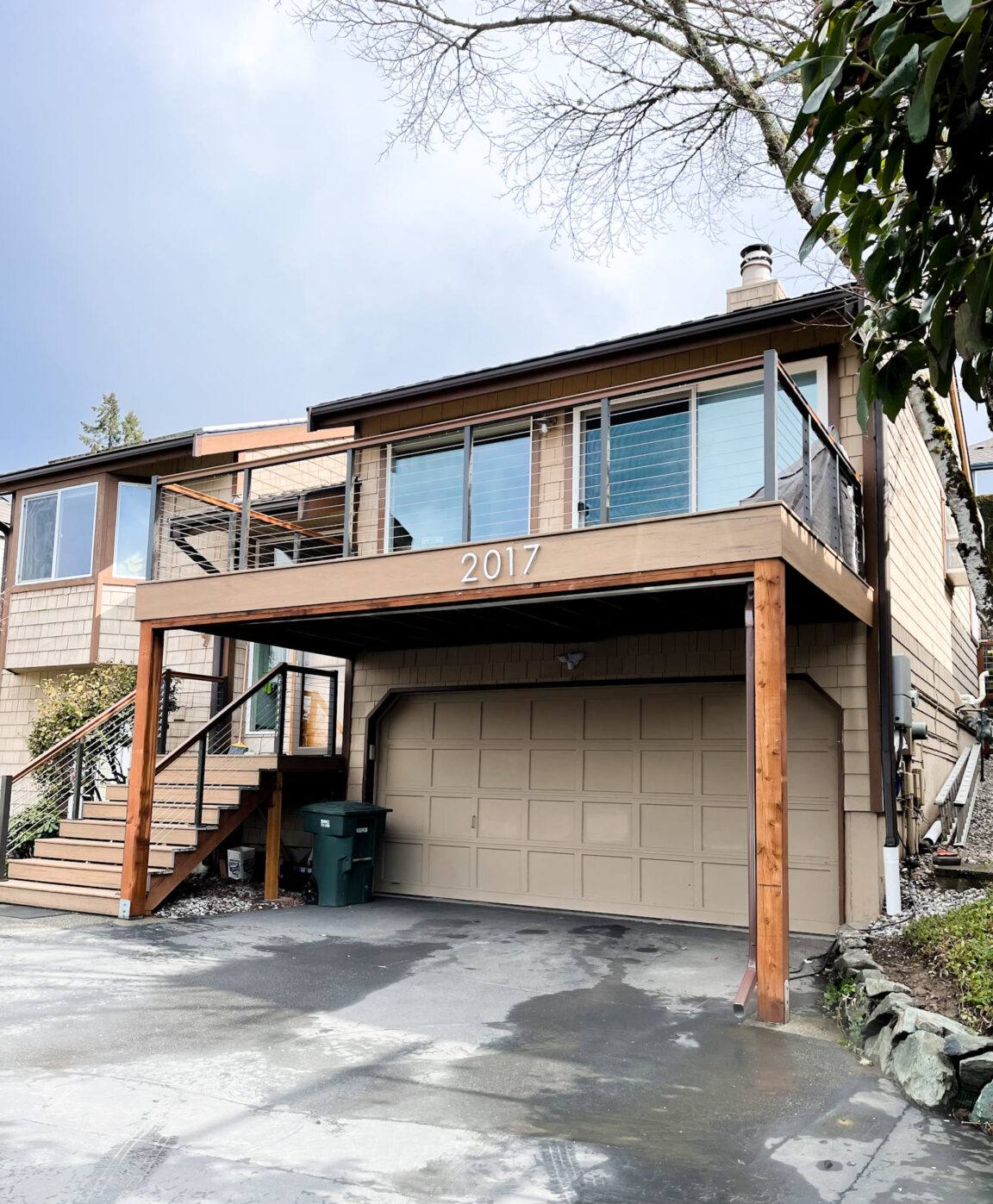
Homes in Skyline sit up on elevated, view-oriented lots overlooking the water, which is exactly why the decks up there take a beating that flatland, inland decks don't. The same exposure that gives you a great view also means more direct wind, more wind-driven rain hitting the deck surface and rail assemblies at an angle instead of straight down, and steady salt air drifting in off the water. Salt doesn't just sit on the surface — it works into fastener heads, connector hardware, and any exposed end-grain, accelerating corrosion in ways a homeowner further inland never has to think about.
Add in the long moss season that Anacortes and the rest of Skagit County deal with every fall through spring, and you get a deck that's rarely fully dry. Moss and algae hold moisture against the decking boards and framing below, which is where rot actually starts — not on the surface where it's visible, but underneath, in ledger connections and joist tops that nobody looks at until there's a problem.
Signs a Skyline Deck Needs Replacement, Not Another Repair
Repair makes sense when the problem is isolated — a cracked board, a loose rail, a single soft spot. Replacement becomes the honest recommendation when the issues are systemic. On elevated, exposed lots like the ones common to Skyline, we typically see the underlying structure fail before the visible decking does, which is why a surface-level look can be misleading.
- Soft or spongy spots when you walk the deck, especially near the house or at board ends
- Fasteners that are rust-streaked, backing out, or snapping off when tested
- Persistent moss or dark staining that comes back within weeks of cleaning
- Visible gaps, cupping, or splitting concentrated on the side of the deck that faces the water or prevailing wind
- A ledger board (where the deck attaches to the house) that shows any separation, staining, or soft wood
- Railings that flex or wiggle under normal pressure — this is a safety issue, not a cosmetic one
- A deck older than 15-20 years that has never had the substructure inspected
If you're only seeing one or two of these, a repair may genuinely be enough — we'll tell you that if it's true. Replacement gets recommended when the framing itself is compromised, because at that point new decking boards on old, failing joists is just delaying the same conversation a year or two down the road.
What a Correct Deck Replacement Involves in This Climate
Full Tear-Off and Structural Inspection
We don't reface over questionable framing. A proper replacement starts with removing the decking down to the joists and ledger, so we can actually see what's underneath — corrosion on hardware, soft or discolored wood, undersized or improperly spaced joists from an older build. This is also when we check the ledger board flashing, since a poorly flashed ledger is one of the most common hidden failure points on homes exposed to driving rain.
Rebuilding the Substructure to Handle Exposure
On a wind- and salt-exposed lot, the framing gets treated as seriously as the decking. That means stainless steel or heavy hot-dip galvanized fasteners and structural connectors rather than standard coated hardware, proper ledger flashing that directs water away from the house rather than trapping it, and joist spacing and blocking that meets code for the actual decking material going down — composite and PVC boards often have tighter span requirements than lumber.
Decking Material Selection
Material choice matters more here than in a sheltered backyard setting. We'll walk through the honest trade-offs of each option for your specific exposure rather than pushing whatever's easiest to install.
| Material | How It Handles Salt Air & Moisture | Moss/Algae Resistance | Maintenance |
|---|---|---|---|
| Pressure-treated lumber | Good if properly sealed and re-sealed; hardware corrosion is the main risk | Needs regular cleaning and treatment to resist growth | Annual cleaning, periodic staining/sealing |
| Composite decking | Very good; doesn't absorb moisture the way wood does | Better resistance, but still needs periodic cleaning in shaded, damp areas | Occasional washing; no staining or sealing |
| PVC/capped polymer | Excellent; fully moisture-resistant material | Best resistance among common options | Lowest; mostly rinsing off debris and pollen |
| Cedar | Naturally moisture-resistant wood, but still an organic surface | Moderate; benefits from an oil or sealant on a regular cycle | More frequent than composite or PVC |
None of these are "wrong" choices — they're a trade-off between upfront cost and long-term maintenance. What we won't do is install a premium capped board over a substructure that isn't built to the same standard, because the framing is what actually determines how long the deck lasts.
Structural Considerations Specific to Skyline's Terrain
Many of the lots up on Skyline are sloped or stepped, with decks that sit well above grade to work with the terrain and preserve the view. That changes a few things compared to a low, ground-level deck:
- Footings need to be sized and set to local frost depth and soil conditions, not just code minimums for a flat lot
- Taller decks put more load on posts and connections, so post-to-beam and post-to-footing hardware has to be rated for the height and exposure, not just the span
- Guardrail height and baluster spacing become a real safety issue on elevated decks — this is enforced in the building code for a reason
- Wind uplift on an elevated, exposed structure is a real design factor, which is part of why proper joist hangers and structural screws matter more here than on a sheltered, low deck
We size and engineer around the actual site conditions rather than defaulting to a generic spec sheet, because a deck built for a sheltered inland yard and a deck built for an elevated, wind-exposed Skyline lot are not the same project even if they're the same square footage.
Our Deck Replacement Process
- On-site assessment. We inspect the existing deck, ledger, and framing in person, and talk through what you actually use the space for.
- Honest scope and estimate. You get a clear breakdown of what's being replaced, the material options that fit your budget and exposure, and a straightforward price — no vague allowances.
- Permitting. We handle the permit application and coordinate any required inspections so you're not the one chasing paperwork.
- Tear-off and disposal. The old deck comes down and off your property; we don't leave debris piled up for weeks.
- Framing and structural work. New or reinforced joists, ledger flashing, footings, and hardware suited to the exposure.
- Decking, rail, and finish work. Installed to the manufacturer's specifications for fastening and spacing, which matters for both appearance and warranty coverage.
- Final walkthrough. We go over the finished deck with you before calling the job done.
Permits and Code Considerations
Deck replacement projects in the City of Anacortes and unincorporated parts of Skagit County generally require a building permit, particularly when the work involves the structural framing, footings, or a deck attached to the house — which describes most replacements. Permit requirements and inspection timing can shift the overall schedule, so we build that into the estimate up front rather than surprising you with delays mid-project. If your deck sits within a shoreline or critical areas overlay common to some elevated, water-view lots in this area, that can also affect what's allowed — we'll flag it during the assessment if it applies to your property.
What Actually Drives the Cost
| Factor | Why It Matters |
|---|---|
| Deck size and shape | Square footage and complexity (multiple levels, angles, built-in features) directly affect material and labor |
| Height above grade | Taller decks need more substantial framing, footings, and guardrail work |
| Decking material | Pressure-treated lumber, composite, and PVC span a wide price range and affect long-term maintenance cost |
| Substructure condition | How much of the existing framing, footings, or ledger needs full replacement versus reinforcement |
| Hardware and fastener grade | Stainless or heavy galvanized hardware for salt-air exposure costs more but avoids early corrosion failures |
| Permit and inspection requirements | Adds time and a modest fee, but protects you if you ever sell the home |
We're not going to quote a per-square-foot number here that would be dishonest without seeing your specific deck — but we will give you a real, itemized number after the on-site assessment, and explain every line in it.
Keeping a New Deck Ahead of the Moss Season
A well-built deck still needs some ongoing attention in this climate. A short seasonal routine goes a long way toward protecting the investment:
- Sweep debris and standing leaves off the deck regularly through fall, since trapped organic matter is what feeds moss growth
- Rinse or gently wash the surface a couple of times a year, especially shaded areas that stay damp longer
- Check that gaps between boards stay clear so water can drain instead of pooling
- Inspect railings and stairs once a year for any looseness, especially after a hard windstorm
- For wood decking, keep to a sealing or staining schedule rather than waiting until it visibly needs it
Why Local Build Experience on Skyline Specifically Matters
A crew that has already worked on Skyline knows the kind of exposure these lots get, the terrain challenges of building on a slope, and what the City of Anacortes and Skagit County actually require for permits on elevated, attached decks — before the project starts, not as a surprise partway through. That familiarity shows up in the details: the hardware grade specified from the start, the ledger flashing done right the first time, footings sized for the real soil and slope conditions instead of a generic assumption. It's the difference between a deck that needs attention again in five years and one that holds up through another decade of salt air, wind, and wet winters.
If your deck is showing wear, or you just want an honest opinion on whether it needs repair or full replacement, we're happy to come take a look. Reach out for a free, no-pressure estimate using the form below.