 Anacortes Exterior
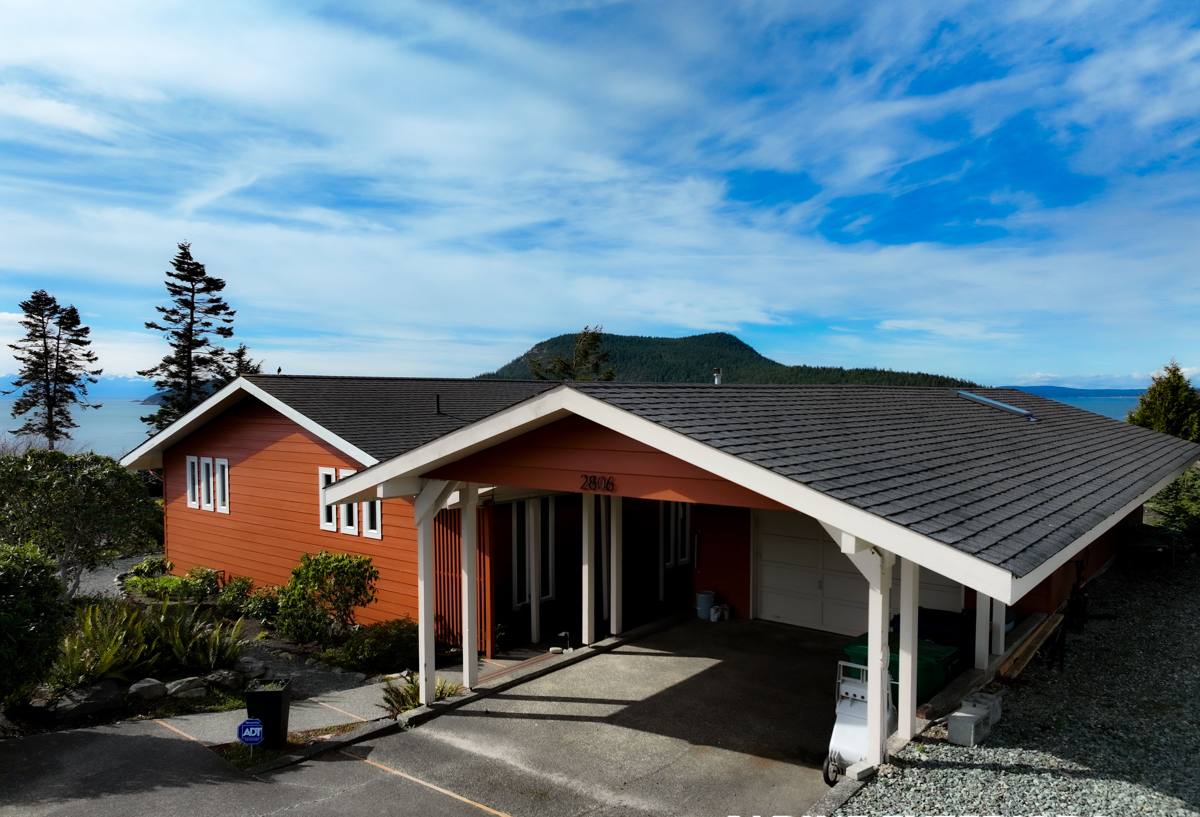
 Fidalgo Island sits at the edge of Skagit County where the water is never far away — and that proximity to the Salish Sea shapes almost everything about how a home ages here. Homes on and around the island deal with a combination that inland Skagit County properties don't face in the same way: salt-laden air, driving rain that comes in sideways off the water, and a moss season that can run from fall through spring. We're a local exterior crew that works this area regularly, and this page walks through what that climate actually does to a home's exterior and how our siding, roofing, window, and deck work is built around it.
What the Island Climate Does to a Home's Exterior
Salt air is the big one. Airborne salt accelerates corrosion on fasteners, flashing, and any exposed metal, and it breaks down certain siding and trim materials faster than the same products would wear in a drier, inland location. Add in wind-driven rain — the kind that doesn't just fall straight down but gets pushed sideways into wall assemblies, window seams, and roof edges — and you get a home that's under near-constant moisture pressure for much of the year.
Then there's moss. Skagit County's damp, mild winters and shaded, tree-lined lots are close to ideal moss-growing conditions, and Fidalgo Island's tree cover and marine humidity make it worse. Moss holds moisture against roofing and siding surfaces long after the rain has stopped, which is exactly the kind of prolonged dampness that causes rot, staining, and premature material failure if it isn't managed.
None of this means a home on Fidalgo Island is doomed to constant repairs — it means the materials and installation details matter more here than they would somewhere with a gentler climate. That's the lens we bring to every job on the island.
Siding: Why We Only Install James Hardie
We install James Hardie fiber cement siding exclusively. We don't install vinyl, LP SmartSide, Cemplank, Allura, primed spruce, or cedar, and on a property exposed to salt air and driving rain, that's not a marketing position — it's a practical one.
Vinyl siding is a petroleum-based plastic product. It's inexpensive and low-maintenance in the sense that it never needs painting, but it can become brittle with prolonged UV and salt exposure, and it's installed as a "loose" system that isn't designed to be a primary water barrier — it relies heavily on what's behind it. Wood-based composite siding products, and untreated cedar or spruce siding, are organic materials at their core, which means they're vulnerable to moisture absorption, swelling, and rot if the finish is compromised or maintenance lapses — a real risk in a place where the siding rarely gets a long stretch to fully dry out.
James Hardie fiber cement is made from cement, sand, and cellulose fiber. It doesn't rot, it isn't attractive to pests, and it's non-combustible, which matters given Washington's increasing wildfire risk even in western parts of the state. Hardie's ColorPlus factory-applied finish is baked on under controlled conditions and backed by its own finish warranty, which is a meaningfully different proposition than a field-applied paint job that has to cure and hold up against salt air from day one. Hardie also engineers specific product lines (HZ5) for climates like ours, with moisture and freeze-thaw performance built into the formulation rather than added on as an afterthought.
We're not going to tell you Hardie is maintenance-free — no siding is. But it gives a home on Fidalgo Island a siding system that's engineered for the exact conditions the island produces, backed by a strong transferable warranty, and it's what we put our name behind.
What Correct Installation Looks Like Here
- Proper rainscreen or drainage plane behind the siding so any moisture that gets past the cladding has somewhere to go
- Correctly flashed windows, doors, and penetrations — the majority of siding failures trace back to flashing details, not the siding material itself
- Manufacturer-specified fastener spacing and clearance from grade, decks, and roof lines
- Caulking and sealant used only where Hardie's install guide calls for it, not as a substitute for proper flashing
Roofing: Standing Up to Salt Air and Moss
A roof on Fidalgo Island fights a two-front battle: wind-driven rain trying to find its way under shingles and flashing, and moss trying to hold moisture against the surface once it lands. We look at both when we're up on a roof.
Underlayment and flashing quality matter more here than the shingle brand printed on the wrapper. Ice-and-water shield or high-quality synthetic underlayment at eaves, valleys, and penetrations gives a roof a second line of defense when wind pushes rain uphill under the shingle tabs — something that happens more often on an exposed, waterfront-adjacent property than it does further inland. We also pay attention to ventilation, since a poorly ventilated attic traps moisture that condenses and works against the roof deck from underneath, independent of what the weather is doing outside.
On the moss side, the honest answer is that moss control is partly a maintenance conversation, not just an installation one. Roof design, tree cover, and gutter condition all affect how fast moss re-establishes after a cleaning. We'll talk through what's realistic for a given roof and property rather than promising a moss-free roof that no roofing material can actually deliver in this climate.
Windows: Keeping Wind-Driven Rain Out
Windows fail on marine-exposed homes for a predictable reason: the seal and flashing around the window give out before the window unit itself does. Wind-driven rain doesn't need much of a gap to find its way behind trim and into a wall cavity, and once water gets behind a window, the damage is often hidden until it's significant — soft trim, stained drywall, or worse, structural rot around the rough opening.
When we replace windows, the flashing and integration with the surrounding siding matters as much as the window product itself. That's part of why we don't treat window replacement as a standalone job disconnected from the siding around it — a window installed correctly into a properly flashed wall assembly is a very different thing from a window dropped into an old opening with a bead of caulk and called done.
Decks: Built for Marine Exposure
Decks on Fidalgo Island take a beating from the same salt air and moisture that affects siding and roofing, plus direct UV exposure and, often, ground-level moisture from shaded, damp yards. Fasteners and structural hardware are a real consideration here — corrosion-resistant, rated fasteners aren't optional in a salt-air environment, they're a baseline requirement if you don't want hardware failing years before the decking material does.
Ledger board flashing, proper drainage under and around the deck structure, and material choice (whether that's a quality wood or a composite decking product) all factor into how a deck holds up here. We build decks with the same climate-first mindset we bring to siding and roofing — the visible material is only part of the story.
Why a Local Crew Matters
A lot of exterior problems on Fidalgo Island aren't caused by bad materials — they're caused by details that don't account for the actual conditions the home sits in. A crew that mostly works drier, inland jobs can install a technically correct assembly that still underperforms on a waterfront-exposed property, simply because the margin for error is smaller here.
Working Anacortes and the surrounding Skagit County area regularly means we see how homes on this island actually age — where moss builds up first, which wall exposures take the worst of the wind-driven rain, which older installations are starting to show their age and why. That's not something you get from a spec sheet; it comes from doing the work here repeatedly and paying attention to the results.
What to Expect From Our Process
We start with an on-site look at the home — not just the siding, roof, windows, or deck in isolation, but how they interact, since water problems often show up at the seams between systems rather than in the middle of a wall or roof field. From there we'll walk through what we're seeing, what we'd recommend, and why, in plain terms. If James Hardie siding is part of the scope, we'll talk through product lines, colors, and what correct installation involves for the specific exposure your home has. There's no pressure and no inflated scope — we'll tell you what actually needs attention and what can wait.
| Factor | Why It Matters on Fidalgo Island |
|---|---|
| Wall exposure (south/west vs. sheltered) | Exposed walls take the most wind-driven rain and UV; they often need attention sooner |
| Tree cover and shade | Drives moss growth and slows drying time on roofing and siding |
| Age and condition of existing flashing | Flashing failures are the leading cause of hidden water damage, regardless of siding material |
| Fastener and hardware material | Salt air corrodes standard fasteners faster; corrosion-resistant hardware is a must |
| Existing siding material | Wood-based and vinyl siding often show climate-related wear sooner than fiber cement |
| Roof ventilation | Poor ventilation traps moisture from the inside, working against the roof independent of weather |
A Practical Checklist for Fidalgo Island Homeowners
- Check south- and west-facing siding for staining, softness, or cracking, especially near ground level and roof lines
- Look at roof valleys and eaves for moss buildup after the wet season and have it professionally cleared rather than pressure-washed
- Inspect window trim and caulking annually for gaps, cracking, or discoloration that suggests water intrusion
- Check deck fasteners and structural hardware for rust or corrosion, particularly on older or unrated fasteners
- Clear gutters and downspouts before the fall rains so wind-driven water isn't compounded by overflow at the roofline
- Have flashing at windows, doors, and roof penetrations checked whenever siding or roofing work is being considered
Serving Fidalgo Island and the Anacortes Area
Whether it's a full siding replacement with James Hardie fiber cement, a roof that needs to hold up to another moss season, windows that are letting wind-driven rain through, or a deck that needs to be built to handle salt air and moisture, we bring the same climate-informed approach to every job on Fidalgo Island. Skagit County's marine environment isn't a reason to avoid exterior work — it's a reason to make sure it's done with the right materials and the right details the first time.
If you're weighing a siding, roofing, window, or deck project on Fidalgo Island, we're happy to take a look and give you a straight, no-pressure estimate — use the form below to get started.