 Anacortes Exterior
 Fiber Cement Siding on Fidalgo Island: A Different Kind of Weather Problem
Fidalgo Island sits right where Skagit County meets the Salish Sea, and that location shapes everything about how a home's exterior ages here. Homes close to the water deal with salt-laden air that settles on siding, trim, and fasteners year-round. Add driving rain off Rosario Strait and Guemes Channel, a long wet season that stretches from fall through spring, and a north Puget Sound climate mild enough that moss and algae rarely get a hard freeze to knock them back, and you have a combination that punishes the wrong siding choice fast.
We install fiber cement siding on homes across Anacortes, and the properties on Fidalgo Island get a specific version of that install — one that accounts for salt exposure, wind-driven moisture, and a growing season for moss that basically never stops. This page covers what that actually means in practice, not marketing language about "weatherproof" siding.
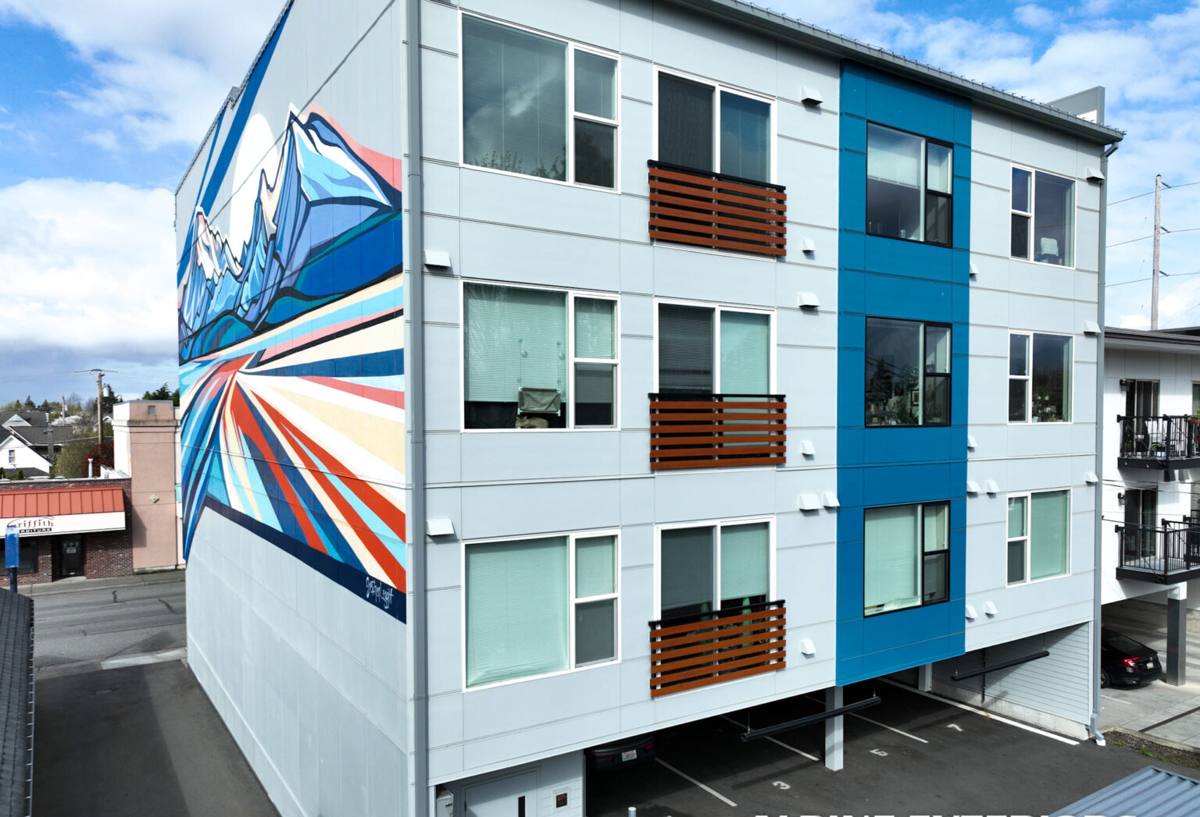
Why Salt Air and Moss Change the Calculus
Salt Air and Fasteners
Salt air accelerates corrosion on anything metal that isn't rated for coastal exposure — nail heads, flashing, trim fasteners, even some hose bibs and light fixtures. On a standard siding job inland, corner-cutting on fastener grade might not show up for a decade. On Fidalgo Island, especially on homes with a water-facing exposure, it shows up as rust streaks and failed fasteners much sooner. Every fastener we drive into fiber cement siding here is corrosion-resistant, and we don't substitute a cheaper fastener spec to save money on a bid.
Moss, Algae, and Moisture Retention
The maritime climate here means siding rarely gets a long dry stretch to fully shed moisture, especially on north-facing walls and anywhere shaded by mature trees or a neighboring structure. That's the environment moss and algae like. Fiber cement doesn't feed mold and mildew growth the way wood-based products can, but growth still forms on the surface of any siding in the right conditions — the real defense is a factory finish that resists staining and a paint film that doesn't need to be reapplied every few years to keep doing its job.
Wind-Driven Rain
Storms coming off the water don't just drop rain — they push it sideways into wall assemblies, seams, and penetrations. A siding product can be excellent and still fail a home if the water-resistive barrier, flashing details, and joint treatment behind it aren't done correctly. This is where most siding problems on the island actually originate — not the product, but the installation behind it.
Why We Only Install James Hardie Fiber Cement
We standardized on James Hardie for every siding job we do, including here on Fidalgo Island, for reasons that matter more in this climate than in a drier one:
- Non-combustible core. Fiber cement doesn't burn, which matters on any home but carries extra weight for properties near wildland vegetation or with wood-heavy neighboring structures.
- ColorPlus factory finish. The color is baked on at the factory under controlled conditions, producing a more consistent, better-adhered finish than field-applied paint — which matters when your siding is dealing with salt air and near-constant moisture cycling.
- HZ5 engineering for this region. James Hardie makes climate-specific product lines, and the HZ5 formulation is engineered for the wetter, more humid conditions of the Pacific Northwest rather than a generic national product.
- Moisture behavior. Fiber cement is dimensionally stable and doesn't swell, cup, or rot the way wood-based siding can when it stays damp for weeks at a stretch, which is a normal winter here.
- Warranty structure. James Hardie backs its siding with a strong, transferable limited warranty — a real consideration on the island where properties change hands and buyers want documented exterior work.
We don't install LP SmartSide, vinyl, Cemplank, Allura, primed spruce, or cedar. Those are legitimate products with their own advocates, but we made a professional decision to specialize in one system we can install to spec every time, warranty with confidence, and stand behind on a coastal Skagit County home. That specialization is also why our crews know the specific flashing, fastening, and joint details that matter on a water-exposed wall — we're not relearning a new product's quirks on your house.
What a Correct Fiber Cement Install Actually Involves
The siding board itself is only part of the system. On Fidalgo Island, the details behind and around it are what determine whether the wall performs for 30+ years or starts showing problems in five.
Before the Siding Goes Up
- Inspect and repair any sheathing damage found once old siding is removed — common on homes that have had slow moisture intrusion for years
- Install or verify a continuous water-resistive barrier (weather-resistant house wrap) with correctly lapped and taped seams
- Detail flashing at every window, door, and penetration so water is directed out, not trapped behind the cladding
- Confirm proper rainscreen or drainage gap where the wall assembly calls for it, so any incidental moisture can drain and dry
During Installation
- Correct fastener type, spacing, and embedment per James Hardie's published installation instructions — this is what keeps the warranty valid
- Proper clearance between siding and grade, decks, roof lines, and other surfaces so the board isn't sitting in standing water or snow
- Correctly caulked and sealed joints using compatible sealants, not whatever's on the truck
- Factory-mitered or properly field-cut corners and trim, finished to match the ColorPlus system
Skipping any one of these steps doesn't usually cause an immediate, visible problem. It shows up two, five, or ten years later as a stained wall, a soft spot in the sheathing, or a warranty claim that gets denied because the installation didn't meet manufacturer spec. That gap between "looks fine on install day" and "performs correctly for 30 years" is exactly why installation quality matters as much as the product choice.
Our Process for a Fidalgo Island Siding Job
- On-site assessment. We look at exposure direction, existing moisture damage, trim and flashing condition, and any site-specific factors — proximity to water, tree cover, shaded walls.
- Written estimate. Clear scope, product line and color, and what's included — tear-off, sheathing repair if needed, house wrap, flashing, and the Hardie install itself.
- Sheathing and barrier work. Any rot or damage found during tear-off gets repaired before anything goes back up — no siding over a compromised wall.
- Installation to manufacturer spec. Fastening, flashing, and joint details done per James Hardie's instructions, not shortcuts.
- Final walkthrough. We go over the finished job with you before calling it done.
Why a Local Crew Matters Here
A siding crew that only occasionally works this part of Skagit County can install a technically fine product and still miss what this specific climate does to a wall over time. Working Anacortes and Fidalgo Island regularly means we've seen how salt exposure behaves on west- and south-facing walls versus sheltered ones, which older homes in the area tend to have moisture issues behind the siding from a prior install, and how much drainage detail a given wall actually needs based on its exposure. That's not something you get from a general contractor passing through for one job — it comes from doing this work in this specific environment repeatedly.
Cost Factors for a Fidalgo Island Siding Job
Every home is different, and we don't quote a number without seeing the house. But these are the main factors that move a bid up or down:
| Factor | Why It Matters |
|---|---|
| Sheathing/framing repair needed | Moisture damage found at tear-off adds labor and material before new siding can go on |
| Home size and wall complexity | More corners, gables, and trim detail means more labor hours |
| Water/wind exposure of the site | Higher-exposure walls may need additional flashing or drainage detailing |
| Existing siding type | Tear-off and disposal costs vary by what's currently on the house |
| Trim and accessory scope | Fascia, soffit, and trim work done alongside siding affects total project cost |
| Access and site conditions | Tight lots, slopes, or limited equipment access can add time |
Signs Your Current Siding May Be Failing
- Soft or spongy spots when you press on the siding surface
- Paint that's peeling, bubbling, or failing faster than expected
- Persistent moss or algae staining that returns quickly after cleaning
- Visible gaps, warping, or separation at seams and corners
- Rust streaking from fasteners or trim hardware
- Musty smell or visible staining on interior walls that share an exterior wall
If you're seeing any of these on a Fidalgo Island home, it's worth having it looked at before the damage spreads to the sheathing or framing behind it.
If you're considering new siding on a Fidalgo Island property, we're happy to come take a look and give you a straightforward, no-pressure estimate — no obligation, just an honest read on your home's exterior and what it actually needs. Use the form below to get started.