 Anacortes Exterior
 Ship Harbor's Exterior Challenge
Ship Harbor sits close to the water on Fidalgo Island, near the ferry terminal and the marina, with a lot of homes catching wind and moisture off Rosario Strait almost year-round. That proximity to open water is part of what makes the area beautiful, and it's also exactly what makes exterior materials work harder here than they would ten miles inland. Salt-laden air, wind-driven rain that comes in sideways during winter storms, and long stretches of gray, damp weather that never quite let anything fully dry out — that's the environment every exterior surface on a Ship Harbor home has to survive, season after season.
We're based in Anacortes and work throughout Skagit County, but Ship Harbor gets a specific kind of attention from us because the conditions are more aggressive than a standard Puget Sound suburb. A siding, roofing, window, or deck job that's built to a generic spec sheet often underperforms out here. One that's built with this exposure in mind holds up the way it's supposed to.
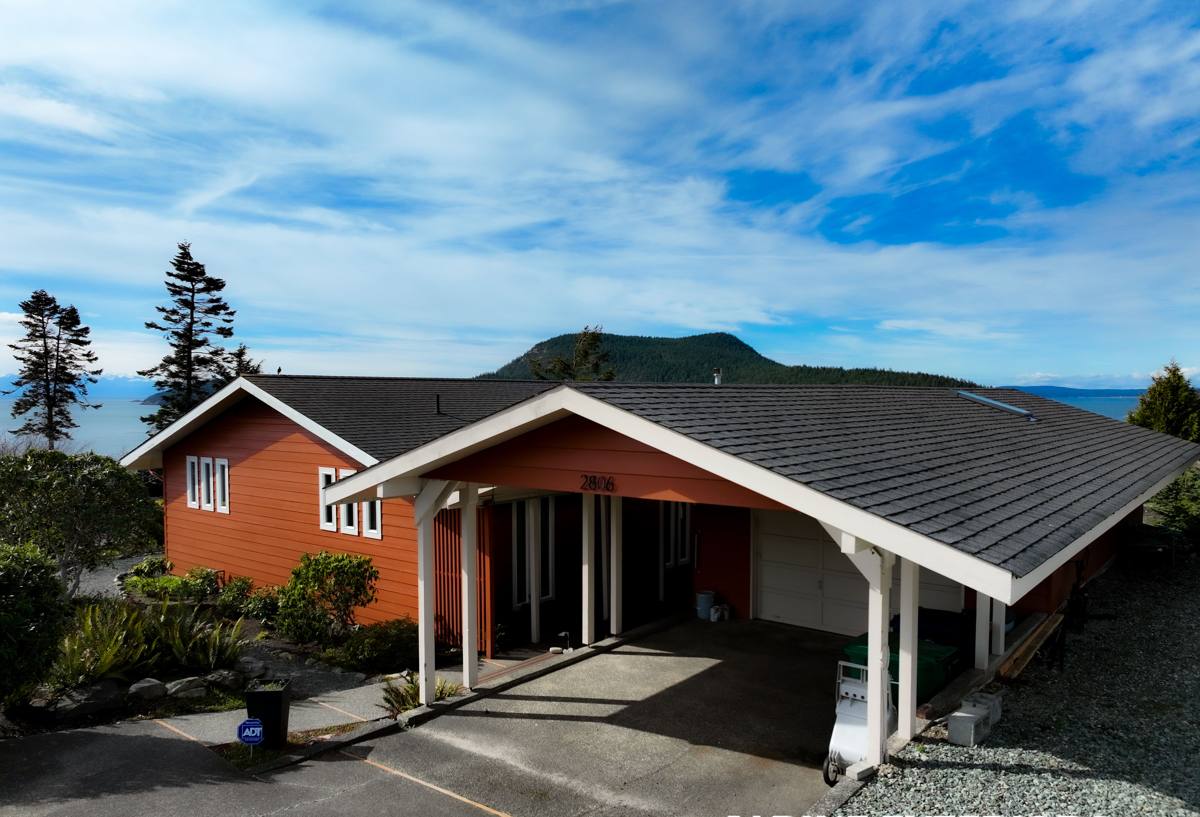
Salt Air, Wind-Driven Rain, and Moss: What They Do to a Home
It helps to understand the actual mechanisms at work, not just the general idea that "the weather is rough near the water."
Salt Air
Airborne salt is corrosive to exposed metal fasteners, flashing, and hardware, and it accelerates the breakdown of finishes that aren't rated for marine or near-marine exposure. Paint chalks and fades faster. Caulk joints degrade sooner. Cheap or mismatched fasteners can start showing rust streaks within a few years in a spot like Ship Harbor, where they might take a decade to show the same wear further inland.
Wind-Driven Rain
Rain that falls straight down is a manageable problem — gravity does most of the work of shedding it. Rain that's being pushed sideways by wind off the strait is a different problem entirely. It gets forced into laps, seams, and joints that were only ever designed to handle water moving downward. This is why house wrap details, flashing at windows and doors, and siding installation gaps matter so much more here than in a sheltered inland lot.
Moss and Prolonged Dampness
Skagit County's wet season runs long, and Ship Harbor's exposure means surfaces often stay damp longer than they would with more sun and wind exposure to dry them out. That extended dampness is exactly what moss and algae need to take hold — on roofs, on shaded siding, in deck boards that don't get enough airflow underneath. Left alone, moss holds moisture against the surface it's growing on, which is where real damage starts.
Siding for Ship Harbor Homes
We install James Hardie fiber cement siding exclusively. That's not a marketing preference — it's a decision built around what actually holds up in conditions like this.
Fiber cement doesn't rot, and it isn't a food source for the moss and mildew that thrive in a damp, salt-tinged environment the way wood-based products can be. It's also non-combustible, which matters given how dry Skagit County summers have trended in recent years even alongside our wet winters. Hardie's ColorPlus factory-applied finish is baked on and warranted against fading and peeling, so you're not depending on a field-applied paint job to hold up against salt air and UV — the two things that wear ordinary paint down fastest near the water.
We specifically do not install vinyl siding, LP SmartSide, Cemplank, Allura, or primed wood siding on Ship Harbor homes. Each of those products has legitimate uses somewhere, but none of them is the product we're willing to stand behind in this exposure. Vinyl can warp and become brittle with UV and temperature swings and it isn't rated for the kind of impact and wind-driven moisture Ship Harbor sees. Engineered wood products depend on an intact factory coating to keep moisture out — any breach at a cut edge, fastener hole, or joint becomes a slow, hidden moisture entry point, and those are hard to catch early. Primed wood siding needs a maintenance schedule most homeowners don't realize they're signing up for, and salt air shortens that schedule considerably. Hardie's HZ5 product line, in particular, is engineered for the kind of climate zone Ship Harbor sits in.
Roofing in a Marine Climate
A roof near Ship Harbor deals with the same wind-driven rain and moss pressure as the siding, plus the added stress of salt-laden gusts coming straight off the water. We look at a few things specifically for homes in this area:
- Fastener and flashing corrosion resistance — standard-grade metal doesn't last as long here
- Underlayment quality, since wind-driven rain can work its way under marginal underlayment at eaves and valleys
- Ventilation, because a roof deck that can't breathe stays damp longer and invites moss and rot
- Edge and valley detailing, where most wind-driven leaks actually originate
Moss removal and prevention treatments are also a bigger part of roof maintenance in Ship Harbor than they'd be on a drier, more inland Skagit County property, and we factor that into what we recommend for roof type and slope when a full replacement is on the table.
Windows That Hold Up to Wind and Moisture
Window failures near the water are rarely about the glass itself — they're almost always about the flashing and installation detail around the window opening. Wind-driven rain finds any gap in that seal, and once water gets behind a window frame, it can sit there and do damage for months before it shows up as a stain or soft spot on an interior wall. When we install or replace windows in Ship Harbor, we pay close attention to:
- Proper flashing integration with the house wrap, so water is directed out and down, never trapped
- Sealant compatibility and joint detailing rated for sustained wind-driven exposure
- Frame material performance in salt air, since some finishes corrode or chalk faster near the water
Energy performance matters too, but out here, keeping water out of the wall assembly is the first job a window installation has to get right.
Decks: Built for Wet Winters
Decks in Ship Harbor spend most of the year wet, shaded, or both, depending on orientation and tree cover. That combination is hard on ledger board connections, fasteners, and any decking material that isn't built to handle standing moisture. We build and rebuild decks with attention to:
- Proper ledger flashing so the deck-to-house connection doesn't become a hidden moisture trap
- Fastener selection that resists corrosion in salt air rather than just meeting minimum code
- Airflow underneath the deck to reduce the moss and mildew buildup that comes with constant dampness
- Material choice suited to how much sun exposure — or lack of it — a given deck actually gets
Why a Local Crew Matters in Ship Harbor
A lot of exterior problems in this area aren't visible from the street. They show up as a soft spot behind a window, moss creeping under a shaded eave, or a fastener bleeding rust down a wall a few years after installation. A crew that works across Skagit County regularly, rather than one visiting from out of the area for a single job, is more likely to catch these patterns early and build in the extra detailing this exposure requires from the start — not as an upsell after something's already failed.
We're not guessing at what Ship Harbor's climate does to a house. We see it on every job in the area, and we adjust installation details accordingly rather than treating every property in Skagit County the same.
Siding Material Comparison for a Salt-Air, High-Moisture Exposure
| Material | Moisture Behavior | Salt Air / Coastal Durability | Maintenance Burden |
|---|---|---|---|
| James Hardie Fiber Cement | Does not rot or swell; not an organic food source for moss/mildew | Engineered climate-specific product lines; factory finish resists fading | Low — occasional wash, no repainting cycle needed |
| Vinyl Siding | Sheds water but can warp with temperature swings | Can become brittle over time in sustained UV and salt exposure | Low, but limited lifespan in harsh exposure and prone to visible wear |
| LP SmartSide / Engineered Wood | Wood-based core; depends on intact coating to resist moisture | Cut edges and fastener points are vulnerable if coating is breached | Moderate — coating and caulk need periodic inspection |
| Primed Wood / Cedar | Absorbs moisture readily; prone to swelling and rot over time | Salt air accelerates finish breakdown and organic growth | High — regular repainting/resealing schedule required |
Homeowner Checklist: Signs Your Exterior Needs Attention
If you're not sure whether your home needs a look, these are the early warning signs we see most often on Ship Harbor properties:
- Moss or dark streaking on north- or west-facing siding and roof sections
- Rust staining running down from fasteners, flashing, or gutter hangers
- Soft or discolored trim around windows and doors
- Paint that's chalking, peeling, or fading faster than expected on one side of the house
- A deck ledger board area that stays visibly damp longer than the rest of the deck
- Gaps or separation at caulked joints around windows, corners, or siding laps
Any one of these on its own might be minor. A combination of a few, especially on the water-facing side of a home, is usually a sign it's worth having someone take a real look before the next wet season.
What to Expect When You Call Us
We start with a walk-around of the property, looking at siding, roofline, window flashing, and any deck structures, paying particular attention to the sides of the home most exposed to wind and rain off the water. From there we give you a straightforward assessment of what's holding up fine, what's showing early wear, and what actually needs replacement now versus what can wait. There's no pressure to do everything at once — a lot of Ship Harbor homeowners tackle siding, roofing, windows, and decks in stages as budget allows, and we're glad to work that way.
If your home is due for new siding, we'll walk you through why we install James Hardie exclusively and what that looks like for your specific house — color options, product line, and installation detailing suited to your exposure. If you're set on a different siding material, we're happy to explain our reasoning, but it's not a product we install.
If you're a Ship Harbor homeowner thinking about siding, roofing, windows, or a deck project, we'd be glad to take a look and give you a free, no-pressure estimate. Fill out the form below and we'll get in touch.