 Anacortes Exterior
 Deck Repair Built for Ship Harbor's Marine Climate
Ship Harbor sits close enough to the water that homes here take a different kind of weathering than decks a few miles inland in Anacortes. Salt-laden air moves through constantly, driving rain comes in sideways off the strait during fall and winter storms, and the long gray stretch from October through April keeps everything damp far longer than most homeowners expect. A deck that would hold up fine in a drier part of Skagit County can develop real problems here in half the time.
We repair decks in this area regularly, and the failure patterns are consistent enough that we can usually spot the underlying cause within a few minutes of walking the structure. This page covers what actually goes wrong with Ship Harbor decks, what a correct repair looks like, and how we handle the job from first look to final walkthrough.
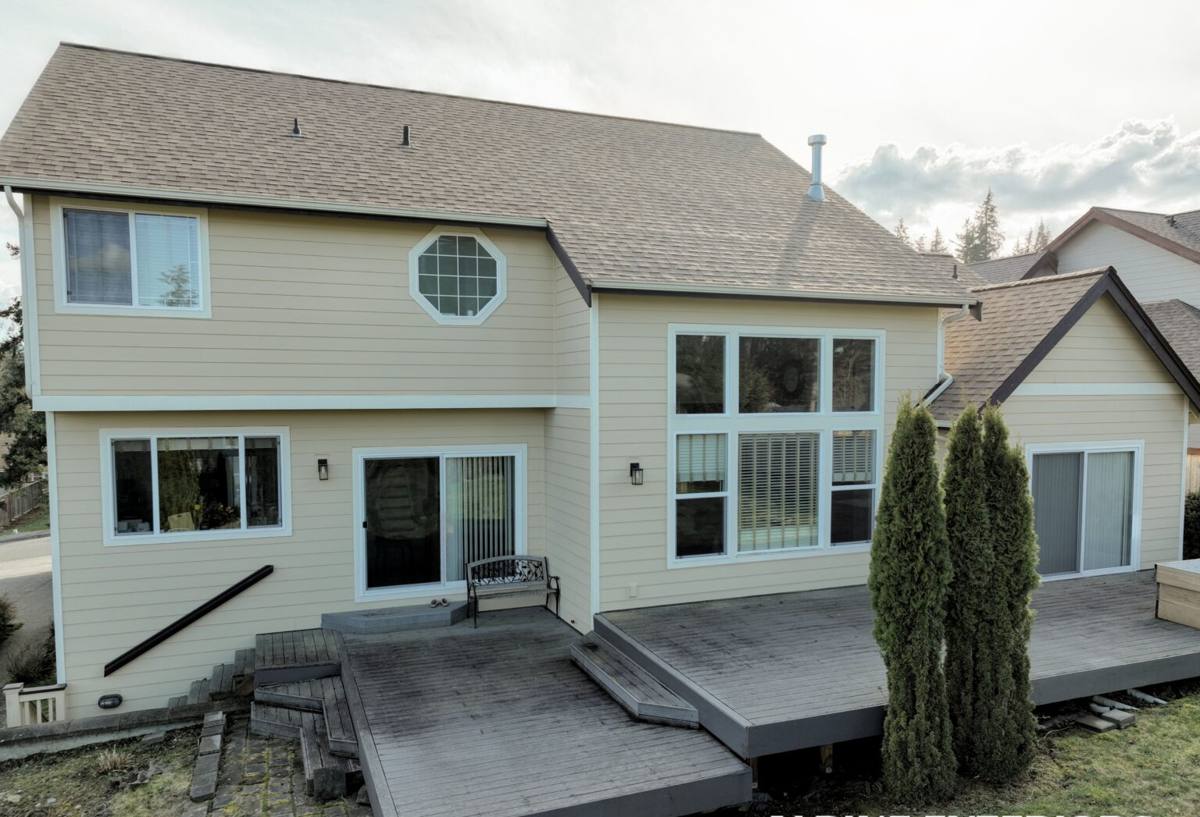
What the Salt Air and Rain Actually Do to a Deck
Corrosion Before Rot
In a lot of Northwest climates, wood rot is the first thing to fail. Near Ship Harbor's waterfront exposure, metal fasteners and hardware often go first. Standard galvanized nails, screws, and joist hangers can start corroding years earlier here than they would inland, and once a fastener weakens, the wood around it starts moving, which lets in more moisture, which accelerates the rot. It becomes a cycle that's easy to miss until a board feels spongy or a railing starts to wiggle.
Moss and Trapped Moisture
The long moss season isn't just cosmetic. Moss holds water against the decking surface far longer than open air would, which softens wood fibers, degrades finishes, and creates a slip hazard that gets worse every wet month it's left alone. Moss also tends to colonize the gaps between boards first, which is exactly where drainage is supposed to happen.
Driving Rain and Ledger Connections
Wind-driven rain doesn't fall straight down — it gets pushed sideways into the joint where the deck attaches to the house. That ledger board connection is the single most safety-critical part of most decks, and it's also the part most exposed to wind-blown moisture in a storm. When flashing at this joint is missing, undersized, or has failed, water works its way behind it and rots the ledger and the rim joist from the inside, often with no visible sign until the damage is advanced.
Warning Signs a Ship Harbor Deck Needs Repair
- Decking boards that feel soft, spongy, or spring back slowly when you step on them
- Visible moss, algae, or dark staining on boards, posts, or stair treads
- Rust streaking below screws, nails, or metal joist hangers
- Railings or guardrail posts that flex, wobble, or feel loose when pushed
- Gaps opening up between the deck and the house siding
- Stairs that feel bouncy or treads that have separated from stringers
- Fasteners backing out ("popping") above the surface of the boards
- Standing water on the deck surface after rain instead of draining off
Any one of these on its own might be minor. Two or more together, especially near the ledger or a support post, usually means the structure needs a real inspection rather than a cosmetic fix.
What a Correct Deck Repair Actually Involves
Start Below the Surface
A repair that only addresses what's visible on top often misses what's actually failing underneath. Before we touch decking boards, we check the structural bones: ledger attachment and flashing, joist hangers and connectors, post bases, and footings. Anacortes soil holds moisture well into summer in shaded, low-airflow spots, and post bottoms set too close to grade are a common failure point on older decks in this area.
Fastener and Hardware Upgrades
If a deck is coming apart because of corroded original hardware, replacing decking without upgrading the fasteners just resets the clock on the same failure. Where we find standard-grade hardware that's corroding, we replace it with fasteners and connectors rated for exterior and coastal-adjacent exposure.
Flashing and Water Management
Any repair that touches the ledger connection is also a chance to correct the flashing detail if it's inadequate. Getting water diverted away from the house-to-deck joint is one of the highest-value things we can do on a repair, because it protects both the deck structure and the wall assembly behind it.
Board Replacement Done Right
Individual board replacement only works well when the framing underneath is sound and dry. We match spacing and fastening patterns to the existing deck, and we won't fasten new boards to a joist that's still wet or partially rotted — that just buries a problem under new material.
Repair or Replace? How We Help You Decide
| Factor | Usually Repair | Usually Replace |
|---|---|---|
| Structural framing (joists, ledger, posts) | Solid, only isolated soft spots | Widespread rot or corrosion at multiple connections |
| Decking surface | A few damaged or cupped boards | Most boards weathered, split, or moss-stained throughout |
| Railings and stairs | Loose but structurally sound posts | Posts rotted at the base or undersized for current code |
| Age and design | Under 15-20 years, reasonable original build | Old enough that materials and connectors are outdated |
| Overall footprint | Homeowner is happy with the current layout | Layout no longer fits how the space is used |
Most of the decks we look at in this area fall into a middle zone — sound framing with a handful of real problem areas. That's the best-case scenario for a repair, and it's more common than a full teardown once the structure is actually inspected rather than judged from the surface.
Materials We Use for Repairs in This Climate
| Material | Where It Fits | Trade-Off to Know |
|---|---|---|
| Pressure-treated lumber | Framing repairs, joists, posts | Needs to stay coated/sealed on exposed cuts to keep its protection intact |
| Cedar decking | Board replacement matching an existing cedar deck | Natural rot resistance, but still needs regular finish maintenance in this rainfall |
| Composite decking | Board replacement where low maintenance matters most | Higher upfront cost; moss and algae still need occasional cleaning, they just don't rot the board |
| Stainless or coated fasteners | Any repair, especially near the water | Costs more than standard hardware, but it's the difference-maker for corrosion resistance |
We don't push composite decking as a universal fix — it's a genuinely good option for some homeowners and unnecessary for others. If your framing is sound and you like the look and feel of wood, a well-fastened wood repair with the right hardware can last a long time out here too. We'll walk through the real trade-offs for your specific deck rather than defaulting to whatever's easiest to sell.
Our Deck Repair Process
- On-site inspection. We walk the full deck — surface, framing, ledger, posts, and footings — and check moisture levels in areas that look questionable.
- Written scope and estimate. You get a clear breakdown of what needs repair, what's optional, and honest ranges for cost before any work starts.
- Repair the structure first. Framing, hardware, and flashing issues get addressed before any cosmetic work happens on top.
- Surface repair or replacement. Damaged boards, railings, or stair components get replaced and fastened to match the existing deck.
- Final walkthrough. We check the deck together, point out anything we noticed for future maintenance, and answer questions before we consider the job done.
Keeping a Repaired Deck in Good Shape
A repair holds up a lot longer with a small amount of seasonal upkeep, especially given how long moss season runs here:
- Sweep debris and standing moss off the deck surface before the wet season sets in each fall
- Keep gaps between boards clear so water can actually drain through
- Check railings and stair connections for looseness once a year
- Re-seal or re-stain wood decking on the manufacturer's recommended schedule, not just when it looks faded
- Watch for new rust streaking near fasteners — it's an early sign, not a cosmetic issue
Why a Local Ship Harbor Crew Makes a Difference
Deck problems near the water don't look like deck problems inland, and a crew that mostly works drier parts of the county can miss the early signs of salt-air corrosion or underestimate how much a moss-covered surface has already softened the wood underneath. Working in and around Anacortes and Skagit County day to day means we see the same climate stress on deck after deck, and we know which failure points to check first instead of guessing.
It also means we're close by if a repair needs a follow-up visit or if something else turns up once we're into the structure — which happens more often here than homeowners expect, simply because moisture damage likes to hide.
Get a Straight Answer on Your Deck
If your deck near Ship Harbor has soft spots, loose railings, rust stains, or just feels like it's past due for a real look, we're glad to come take a look and give you an honest assessment. Fill out the form below for a free, no-pressure estimate — we'll tell you what we actually find, not just what's easiest to sell.