 Anacortes Exterior
 Cedar siding has a certain pull. It's a real wood product with genuine warmth, it smells the way people expect a Pacific Northwest home to smell when it's freshly milled, and it has a long history in this region. We understand why homeowners in Anacortes ask about it. But we don't install cedar siding, and we think homeowners considering it deserve a straight, unhyped explanation of what owning it actually involves — not a sales pitch against it, just the maintenance truth, from a contractor who has to stand behind whatever goes on the wall.
What Cedar Siding Gets Right
Cedar is a legitimately good building material in a lot of respects. It has natural oils that resist decay and insects better than most softwoods, it's lightweight and workable, and it takes stain or paint well when it's properly prepped. It's also renewable, and a lot of people simply prefer the look and feel of real wood over any manufactured product, no matter how good the manufactured product's wood-grain texture is. None of that is in dispute. Cedar earned its reputation honestly, and on a dry, well-protected wall in the right climate, it can look good for a long time.
The issue isn't whether cedar is a "bad" product. It's whether it's a realistic match for what a home in this specific part of Washington has to deal with, year after year, and what that match costs a homeowner in time and money once the siding is up.
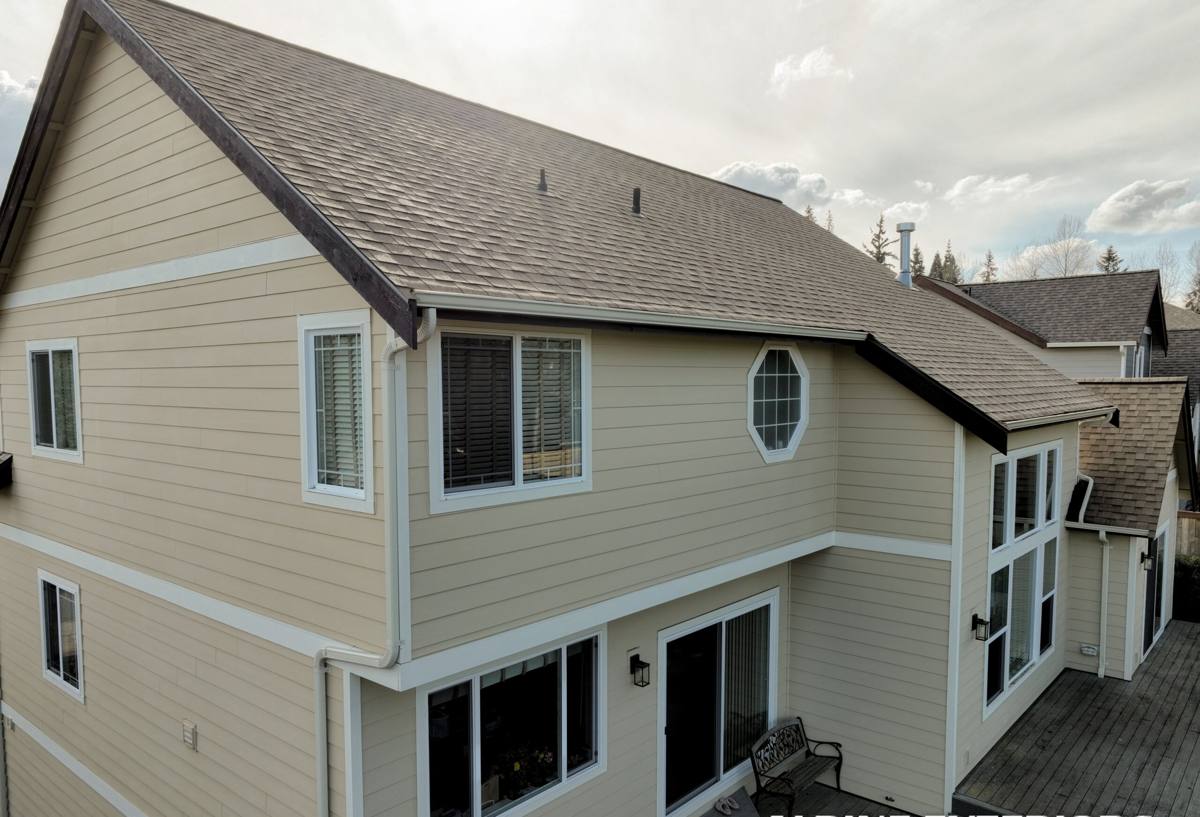
The Maintenance Cedar Requires Everywhere
Even in a mild, dry climate, cedar siding is a maintenance commitment, not a set-it-and-forget-it product. Left unfinished, cedar weathers to gray and starts breaking down at the surface. Finished, it needs that finish renewed on a schedule — stain typically every 3 to 5 years, paint somewhat longer, but neither is a one-time job. Every seam, joint, and fastener is a spot where water can get behind the finish and start working on the wood from the inside, which is often where cedar problems actually begin rather than on the exposed face.
Cedar also moves. It expands and contracts with moisture and temperature, which over time can open up joints, pop nails, and create the kind of small gaps that let water in behind boards that still look fine from the ground. None of this makes cedar unusual among wood products — it's simply what wood does. But it means the maintenance clock never really stops.
What Anacortes and Skagit County Add to the Equation
Anacortes sits right on the water, and that changes cedar's math considerably. Salt air is corrosive to fasteners and hard on finishes generally, and it accelerates the breakdown of the protective coatings that cedar depends on to keep water out. A stain or paint job that might hold up for five years inland can start failing sooner on a wall that takes regular salt spray, especially on west- and south-facing elevations exposed to weather off the water.
Skagit County's pattern of driving rain is the other half of the problem. Wind-driven rain doesn't just wet a wall surface — it finds its way into seams, under trim, and behind poorly lapped boards, and cedar's tendency to move with moisture makes those entry points worse over time, not better. Add in a moss season that can stretch across much of the year in this climate, and cedar's difficulties compound: moss and algae hold moisture against the wood surface for extended periods, which is exactly the condition that leads to rot, and removing established moss without damaging the finish or the wood underneath takes real care.
None of this means cedar "fails" in this climate. Plenty of cedar-sided homes around Anacortes are still standing and still look reasonable. What it means is that the maintenance burden cedar carries everywhere gets heavier here, and the interval between "looks fine" and "needs real money spent on it" tends to shrink.
The Maintenance Schedule Nobody Mentions at the Sale
When cedar siding is being sold, the conversation is usually about the look, not the ongoing labor and cost. Here's a more realistic picture of what upkeep looks like over time, compared to what we install instead:
| Maintenance Task | Cedar Siding | James Hardie Fiber Cement (ColorPlus) |
|---|---|---|
| Refinishing / repainting cycle | Every 3-5 years (stain) or 7-10 years (paint), sooner on salt-exposed walls | ColorPlus factory finish typically holds well beyond a decade before repainting is needed |
| Moss and algae treatment | Regular cleaning required; moss holds moisture against bare wood | Cleanable surface; moisture doesn't drive the same rot risk into the substrate |
| Caulking and joint inspection | Annual inspection recommended as boards move with moisture | Less movement; joints stay more stable over time when installed to spec |
| Insect and rot risk | Ongoing risk, especially at end grain, seams, and ground-contact areas | Fiber cement is not a food source for insects and doesn't rot |
| Fire exposure | Combustible wood product | Non-combustible material |
The point of that table isn't to shame cedar. It's to show, side by side, why a homeowner who picks cedar is signing up for a fundamentally different relationship with their siding than one who picks fiber cement — more frequent attention, more cost spread out over the life of the product, and less forgiveness if that attention slips for a year or two.
Repair and Replacement Realities
When cedar does develop a problem — a rotted board, a section that took on water behind the finish, insect damage at a corner — the repair isn't always simple. Matching weathered cedar's color and grain with new board stock is harder than people expect, especially years after the original installation, and a patch repair can look noticeably different until the new wood weathers in, which can take a season or more. If rot has spread behind the siding into sheathing or framing, the repair scope grows well past the cost of the boards themselves.
There's also a labor reality worth being honest about: because cedar upkeep is ongoing rather than one-time, the total cost of owning cedar siding over 20 or 30 years often includes several rounds of refinishing, board replacement, and caulking work that a homeowner doesn't fully see coming when they're comparing upfront material prices.
Questions Worth Asking Before You Choose Cedar
- Who is going to handle refinishing every few years, and what does that cost when it's not a one-time expense?
- How exposed is your specific wall orientation to salt air and driving rain off the water?
- Does your homeowners insurance treat combustible siding any differently, and have you asked?
- Do you have a contractor who will actually maintain the siding down the road, or just the one who installed it once?
- Are you comparing the installed price today, or the total cost of ownership over 20-plus years?
Fire and Insurance Considerations
Cedar is a combustible wood product, which matters more to some homeowners than others depending on their situation, their insurance carrier, and their proximity to vegetation. It's worth a direct conversation with your insurance provider about how they treat combustible versus non-combustible siding on your specific policy, since that can factor into premiums in ways that aren't always obvious until you ask. This isn't a scare tactic — it's a real, factual difference between wood siding and a non-combustible fiber cement product, and it belongs in the decision alongside appearance and maintenance.
Why We Install James Hardie Fiber Cement Instead
We install one siding product: James Hardie fiber cement. It's non-combustible, it doesn't carry cedar's ongoing refinishing schedule, and it's built to handle sustained moisture exposure without the rot risk that comes with a real wood substrate. The ColorPlus factory finish is baked on in a controlled environment and backed by its own warranty against fading and peeling — a real advantage against the salt air and long wet stretches that wear down site-applied wood finishes faster here than in a drier inland climate.
Hardie also builds region-specific HZ product lines engineered for the kind of moisture and temperature swings Anacortes and the rest of Skagit County see, rather than selling the same generic product everywhere. It carries a strong transferable warranty, which matters to homeowners who may sell the home down the road and don't want to hand a buyer a maintenance schedule instead of a selling point. Installed to manufacturer spec — correct flashing, fastening, and clearances — it's the product we trust to look the way it looked on day one for far longer than cedar realistically will in this environment.
Our Standard, Not a Sales Pitch
We're not going to tell you cedar siding is a mistake on every home — there are settings, budgets, and priorities where a homeowner decides the look is worth the upkeep, and that's a legitimate choice to make with eyes open. What we will tell you is that we've made a deliberate decision, based on what we see happen to wood siding in this climate, to install only James Hardie fiber cement. That's a professional standard we're willing to put our workmanship warranty behind, not a knock on everyone who chooses wood.
If you're weighing siding options for a home in Anacortes or elsewhere in Skagit County, we're glad to take a look at your specific exposure — sun, wind, moss risk, current siding condition — and give you an honest read on what makes sense for your house. Reach out for a free, no-pressure estimate.