 Anacortes Exterior
 Exterior Work in Burlington: A Skagit County Perspective
Burlington sits inland from Anacortes in the Skagit Valley, but don't let the distance from saltwater fool you into thinking the climate is gentler here. Homes in this part of Skagit County deal with a long, wet fall-through-spring stretch, humid valley air that keeps surfaces damp longer than you'd expect, and enough moisture-driven growth on north-facing walls and rooflines to keep any exterior honest. Add the occasional wind event funneling through the valley and, closer to the water, a trace of salt air carried in off Padilla Bay and the Sound, and you've got a climate that's steadily hard on building materials rather than dramatically hard on them. That steady pressure is what wears out the wrong siding, roofing, or window choice years before it should fail.
We work across Anacortes and the surrounding Skagit County communities, including Burlington, and we see the same patterns on houses here that we see closer to the water: moss creeping across shaded roof slopes, paint and caulk failing at trim joints first, and siding that looked fine from the curb but was quietly absorbing moisture at the bottom courses. None of that is unusual for this region. It's just what happens when a house sits through decade after decade of Pacific Northwest weather without the right materials and maintenance behind it.
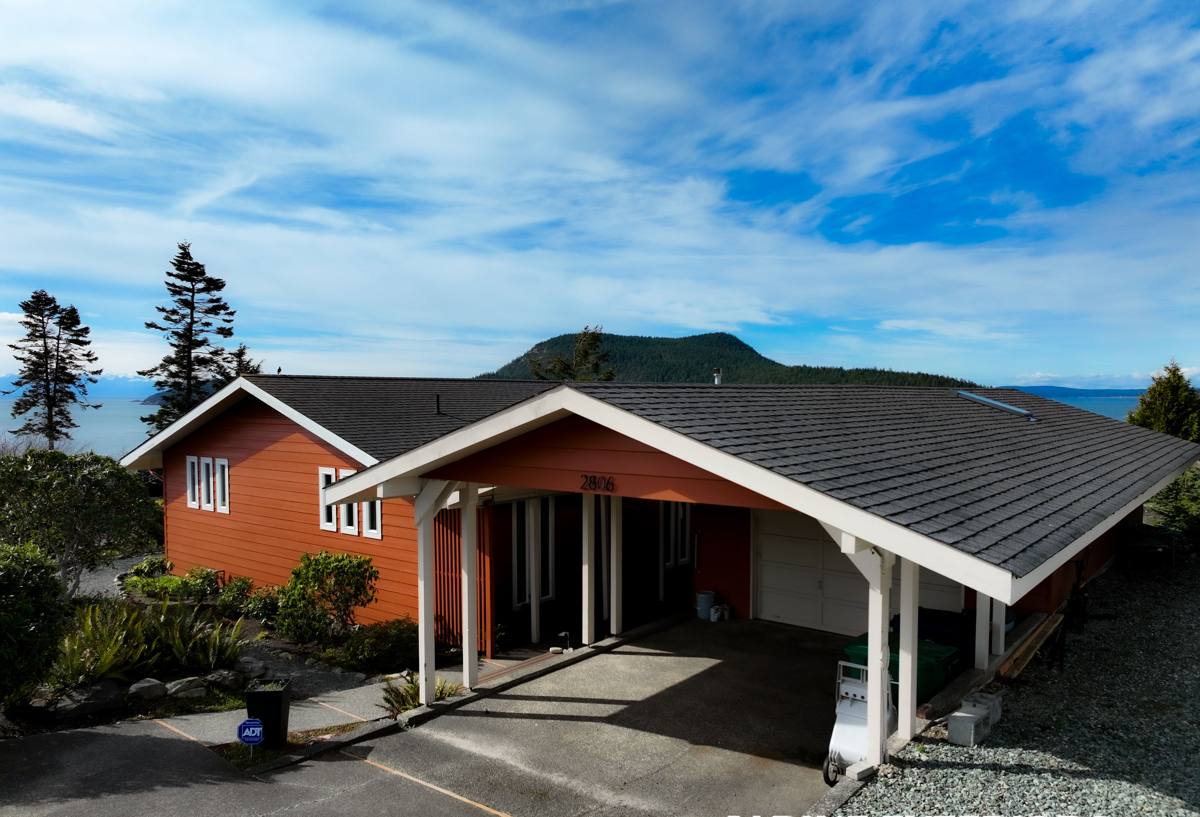
What the Local Climate Does to a House
Rain That Doesn't Let Up
Skagit Valley doesn't get the heaviest rainfall totals in the state, but it gets a lot of days where it's just wet — drizzle, fog, and low cloud cover that keep exterior surfaces damp for extended stretches. Materials that handle a hard, short downpour fine can still struggle with weeks of sustained dampness, because that's when water finds its way into seams, fastener holes, and unsealed edges.
Moss and Organic Growth
Shaded roofs and north- or west-facing siding in this area grow moss and algae readily, especially where trees overhang the roofline or block afternoon sun. Left alone, moss holds moisture against roofing material and can work under shingle edges. On siding, algae staining is mostly cosmetic, but it's also a signal that a wall isn't drying out between rain events — worth paying attention to.
Salt-Influenced Air
Burlington isn't right on the water the way Anacortes is, but weather systems moving through the valley from Padilla Bay and the Sound still carry some salt-laden moisture. It's a milder version of what waterfront homes face, but over enough years it still accelerates corrosion on fasteners, flashing, and hardware that isn't rated for it.
Temperature Swings and Wood Movement
The valley sees a wider day-to-night and season-to-season temperature range than the immediate coastline. Wood-based products expand and contract with that swing, and repeated cycles are part of why caulked joints and painted seams on traditional wood or engineered wood siding need more frequent upkeep here than in a drier climate.
Siding: Why We Only Install James Hardie
Siding is the single biggest factor in how well a Burlington home stands up to this climate, and it's also the product most homeowners get talked into the wrong direction on. We made a deliberate decision years ago to install only James Hardie fiber cement siding — not vinyl, not LP SmartSide, not Cemplank, Allura, primed spruce, or cedar. That's not a marketing position; it's a maintenance and performance call based on what actually holds up out here.
What Rules Out the Alternatives
- Vinyl siding is affordable and low-maintenance in dry climates, but it can warp or buckle with temperature swings, it's a poor fire barrier, and cracked or faded panels are hard to color-match years later.
- LP SmartSide is an engineered wood product — solid where installed and maintained perfectly, but wood-based siding is inherently more vulnerable to sustained moisture exposure at cut edges and seams, which is exactly the condition this valley delivers for months at a time.
- Cemplank and Allura are also fiber cement, and reasonable products on paper. We standardized on one manufacturer instead of stocking several so our crews install one system to spec every time, and homeowners get one warranty structure and one factory finish process we know inside and out.
- Primed spruce and cedar look great fresh off the truck, but both are real wood facing real Northwest rain — they demand a repaint or reseal cycle far more often than fiber cement, and any gap in that maintenance shows up fast as rot.
Why Hardie Specifically
James Hardie fiber cement is non-combustible, dimensionally stable across the temperature swings common in the valley, and it comes with a factory-applied ColorPlus finish that's baked on rather than field-painted — which matters when your painting window is limited by how much dry weather you actually get. Hardie also engineers specific product lines (its HZ5 line, for example) for regions with more moisture exposure, and backs installations with a strong transferable warranty when installed to spec. For a Burlington home that's going to sit through forty or more of these wet seasons, that combination is what actually lowers the long-term cost of ownership, even if the upfront number isn't the cheapest option on the table.
Roofing: Standing Up to Moss Season
Roofs here take a slow, cumulative beating rather than one dramatic failure. The biggest threats are moss and organic debris holding moisture against the roof surface, fasteners and flashing corroding faster than they should, and valleys or transitions that were never properly sealed in the first place. A roof replacement or repair in this area needs to account for shaded, slow-drying sections differently than sun-exposed ones, and it needs corrosion-resistant flashing and fasteners as a baseline, not an upgrade.
Regular moss removal and gutter clearing extend a roof's life more than almost anything else a homeowner can do between full inspections. If it's been several years since anyone got up on the roof to check flashing and look for early moss colonization, that's usually the first thing worth having a local crew take a look at.
Windows: Sealing Out a Wet Valley
Old or poorly sealed windows are one of the most common sources of hidden moisture intrusion in Skagit Valley homes. Condensation between panes, soft trim around a window frame, or a persistent draft are all signs that the seal has failed, and once water is getting behind a window frame it's usually damaging the wall structure around it before anyone notices from inside. Replacement windows installed correctly — with proper flashing integration into the surrounding wall assembly — do more for a home's long-term durability here than almost any cosmetic upgrade, because they close off one of the main paths water uses to get into the wall cavity.
Decks: Built for Wet Feet, Not Just Wet Weather
A deck in this climate spends a large share of the year damp underfoot, which makes ledger board attachment, proper drainage, and decking material choice more important here than in drier regions. Composite decking has become popular locally because it doesn't need the yearly sanding and sealing that wood decking demands, but the structural framing underneath — the part nobody sees — still needs to be built and flashed correctly regardless of what decking material sits on top. A deck that traps water against a house wall is a siding and framing problem waiting to happen, not just a deck problem.
Planning an Exterior Project in Burlington
Cost Factors to Expect
| Project | What Drives the Cost |
|---|---|
| Siding replacement | Home size, number of stories, trim detail, tear-off of old material |
| Roofing | Roof pitch and complexity, number of valleys/penetrations, decking condition underneath |
| Window replacement | Number of openings, frame material, whether flashing/trim needs rebuilding |
| Decking | Square footage, framing condition, decking material selected |
A Practical Pre-Project Checklist
- Walk the exterior after a rain and note any siding, trim, or window areas that stay damp longer than the rest of the house
- Check shaded roof slopes and gutters for moss buildup or standing debris
- Look for soft or discolored trim around windows and doors — a sign of moisture getting behind the surface
- Inspect deck ledger boards and framing for staining or soft wood before deciding on a resurfacing versus a rebuild
- Ask any contractor bidding the work which specific products they install and why — and whether they stand behind one system or several
Why a Local Crew Matters
A contractor working across Anacortes and Skagit County day in and day out knows how this specific valley climate behaves differently from Seattle, from the outer coast, or from the drier side of the state. That's not a small thing — flashing details, siding clearances, and moisture management all need to be tuned to what a Burlington roof and wall assembly actually face over a full year, not to a generic regional average. Local crews also carry accountability that out-of-area contractors often don't: they're going to be working in this same community next year and the year after, which keeps workmanship honest.
If you're weighing a siding, roofing, window, or deck project on a Burlington home, we're glad to take a look and talk through what your house specifically needs. Reach out for a free, no-pressure estimate using the form below.