 Anacortes Exterior
 Storm Damage Roofing in Burlington: A Different Kind of Wear
Burlington sits inland from Anacortes in the Skagit Valley, close enough to the water to catch the same salt-laden air and driving rain that hit the coast, but with its own mix of open farmland wind exposure and river-valley humidity. That combination is hard on roofs. A roof here doesn't just get "old" the way a roof in a dry climate does — it gets worn down by a specific set of forces: wind that drives rain sideways under shingle edges, salt air that speeds up corrosion on metal fasteners and flashing, and a moss season that runs long enough to hold moisture against the roof deck for months at a time.
Storm damage repair in this area isn't a one-size-fits-all job. A roof that took a hit in a windstorm needs a different diagnostic approach than one that's been slowly compromised by trapped moisture under a mat of moss. Getting that distinction right — and fixing the actual cause, not just the visible symptom — is what separates a repair that lasts from one you'll be paying for again next winter.
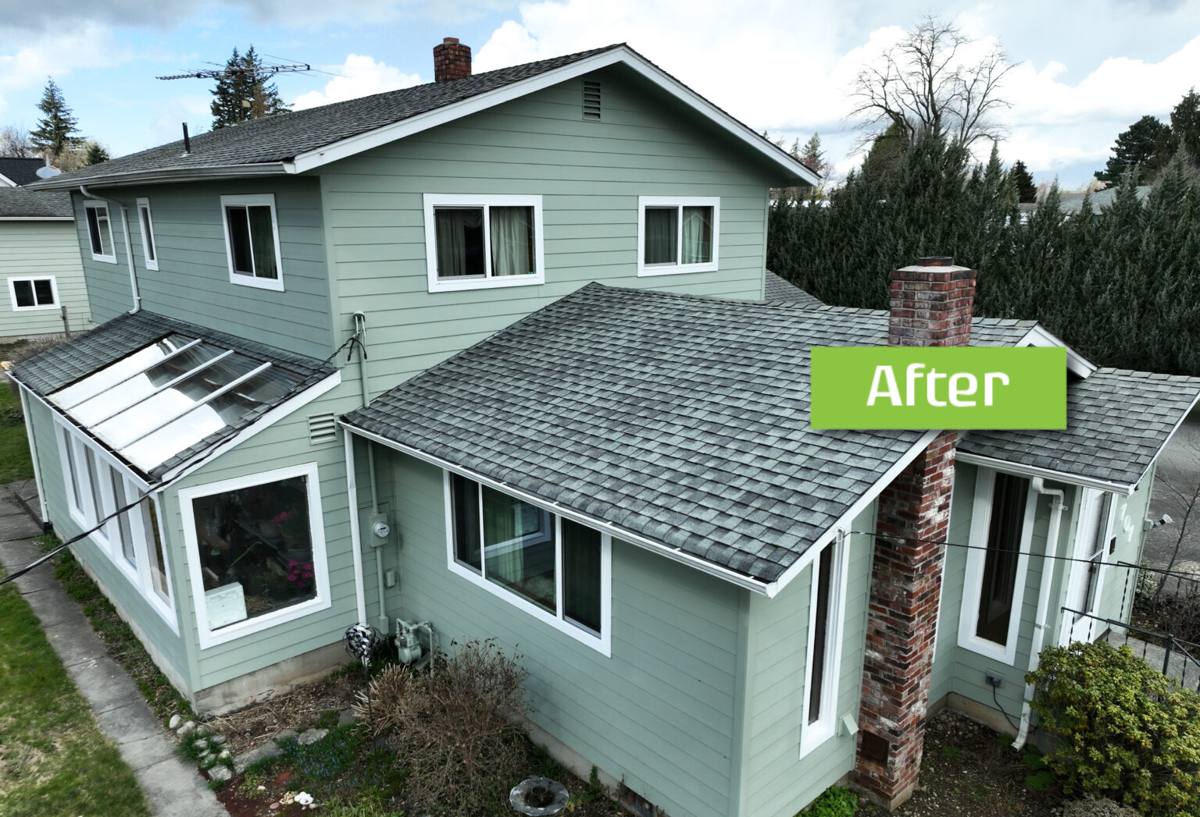
How Skagit County Storms Damage Roofs
Wind-Driven Rain
Pacific storms moving through Skagit County rarely deliver rain straight down. Wind pushes it sideways and upward under shingle tabs, around flashing edges, and into any gap that a calm-weather rain would never reach. Over time, or all at once during a strong blow, this is what causes water intrusion at ridges, valleys, and roof-to-wall transitions — areas that look fine from the ground but are the first to fail.
Salt Air and Corrosion
Even set back from the water, homes in this part of Skagit County get enough salt-laden air to accelerate corrosion on exposed metal — nail heads, flashing seams, gutter fasteners, and vent boots. Corroded fasteners lose their grip on shingles and metal panels, which is often the hidden reason a roof that "should" have years of life left starts leaking after a storm.
Moss and Trapped Moisture
Our wet season runs long, and moss doesn't need much encouragement to take hold on north-facing slopes and shaded sections of roof. Moss holds water against shingles and the roof deck below, which softens materials, lifts shingle edges, and creates entry points that a storm then exploits. A roof with an established moss problem is more vulnerable to storm damage than a clean one, even if the moss itself hasn't caused a leak yet.
Signs You May Have Storm Damage
Some storm damage is obvious. Most of it isn't. After any significant wind or rain event, it's worth checking for the following:
- Shingles that are cracked, curled, creased, or missing entirely
- Granules collecting in gutters or at downspout outlets
- Soft or spongy spots when the roof is walked (a sign of deck damage underneath)
- Water stains on interior ceilings or upper-wall areas, even faint ones
- Flashing that's bent, lifted, or separated from the roof plane around chimneys, vents, and walls
- Debris — branches, needles, moss clumps — built up in valleys where water is meant to flow freely
- Gutters pulling away from the fascia or sagging under debris weight
- Visible daylight through the attic roof deck (checked from inside, if accessible)
None of these guarantee a major problem, but any one of them is a reason to get a roof looked at rather than wait for a leak to show up inside the house.
What a Correct Storm Damage Repair Involves
A Real Inspection, Not a Guess
A proper storm damage repair starts on the roof, not from the ground with binoculars. That means checking the deck for soft spots, examining flashing at every penetration, and tracing water stains back to their actual entry point — which is often several feet from where the stain shows up inside.
Matching Materials, Not Just Patching
A repair that uses mismatched shingles, the wrong underlayment, or flashing that doesn't tie properly into the existing roof system creates a new weak point even as it fixes the old one. Correct repair work matches material type, weight, and profile as closely as possible, and integrates new flashing with the existing roof plane rather than caulking over the gap.
Underlayment and Deck Condition
If wind or trapped moisture has compromised the underlayment or deck, replacing shingles alone won't solve anything — water will find its way to the same soft spot again. Any section with deck damage needs to be cut back to solid material before new roofing goes on.
Ventilation Isn't Optional
Roofs that trap heat and moisture in the attic degrade faster and are more prone to ice and condensation issues in our climate. A storm repair is a natural point to check that intake and exhaust ventilation are working as they should, especially if moss or premature shingle wear suggests the roof has been running warmer or wetter than it should.
Repair or Replace? Key Factors
| Factor | Repair Usually Makes Sense | Replacement Usually Makes Sense |
|---|---|---|
| Roof age | Under 12-15 years, otherwise sound | Nearing or past expected shingle lifespan |
| Extent of damage | Localized to one section or slope | Widespread across multiple slopes |
| Deck condition | Solid, no rot or soft spots | Rot or soft decking in multiple areas |
| Prior repair history | First or second repair on this roof | Repeated repairs to the same areas |
| Moss/moisture history | Minor, addressed promptly | Long-term moss buildup with deck impact |
These are general guidelines, not hard rules — a roof's real condition only shows up on close inspection. But this is the framework worth thinking through before deciding which direction to go.
Our Storm Damage Repair Process
- Inspection and documentation. We get on the roof, assess the damage, and document what we find with photos, which also helps if you're filing an insurance claim.
- Temporary protection if needed. If there's active water intrusion, we prioritize stopping it — tarping or temporary flashing — before anything else.
- Honest scope and estimate. We tell you what actually needs repair, what's cosmetic, and what to keep an eye on. No upselling a full re-roof when a targeted repair will genuinely hold.
- The repair itself. Matching materials, proper flashing integration, deck repair where needed, and attention to ventilation.
- Final check and cleanup. We walk the repair, confirm it's watertight, and clear debris and old material from the property.
Insurance and Storm Damage Claims
Many storm-related roof repairs are covered under homeowner's insurance, particularly when there's a clear wind or storm event tied to the damage. We're not your insurance adjuster and won't promise a specific outcome on any claim, but we can provide clear documentation and photos of the damage we find, which is typically what an adjuster needs to evaluate a claim. If you're unsure whether damage is storm-related or gradual wear (which is usually not covered), an honest inspection is the place to start — we'll tell you what we actually see, not what makes the best insurance story.
Cost Factors for Burlington Storm Repairs
| Factor | Why It Matters |
|---|---|
| Size of damaged area | A single section repair costs far less than multi-slope damage |
| Deck condition | Rotted or soft decking adds material and labor beyond shingle replacement |
| Roof pitch and access | Steeper roofs and difficult access increase labor time and safety requirements |
| Material match availability | Older or discontinued shingle lines can be harder to match, sometimes affecting scope |
| Flashing and ventilation work | Correcting flashing or venting issues found during repair adds scope but prevents repeat failures |
We don't publish a flat price list because storm damage repair genuinely varies job to job — a fair estimate comes from seeing the actual damage, not a phone quote. What we can promise is a straightforward breakdown of what you're paying for and why.
Why Local Experience in Burlington Matters
A crew that regularly works roofs in Burlington and the wider Anacortes area already knows how salt air behaves on fasteners here, how long moss season really runs, and which roof details tend to fail first under our wind-driven rain patterns. That's not something you get from a national franchise cycling through a training manual — it comes from repairing roofs in this specific climate, season after season. It also means we're not learning on your roof; we're applying what we already know about how Skagit County weather wears down roofing systems, and building the repair to hold up against the next storm, not just this one.
If your roof took a hit in a recent storm, or you're seeing early warning signs like granule loss, lifted shingles, or moss creeping across a shaded slope, we're happy to take a look. Reach out for a free, no-pressure estimate — we'll give you a straight answer about what's actually going on and what it would take to fix it right.