 Anacortes Exterior
 Storm Damage Roof Repair for Oak Harbor Homes
When a system blows through the Salish Sea and pushes wind and rain sideways across Fidalgo and Whidbey Island, Oak Harbor roofs take it on the chin. We get calls in the days after almost every significant storm — some for obvious damage like torn-off shingles or a leak dripping into a bedroom ceiling, and just as many from homeowners who noticed something looked "off" from the driveway and want a straight answer before it becomes a bigger problem. This page is about that specific job: storm damage roof repair, done right, for homes in and around Oak Harbor.
We're not going to pad this out with generic roofing advice. Storm damage repair is its own category of work — it starts with figuring out what actually happened to the roof, not just patching the spot that's leaking.
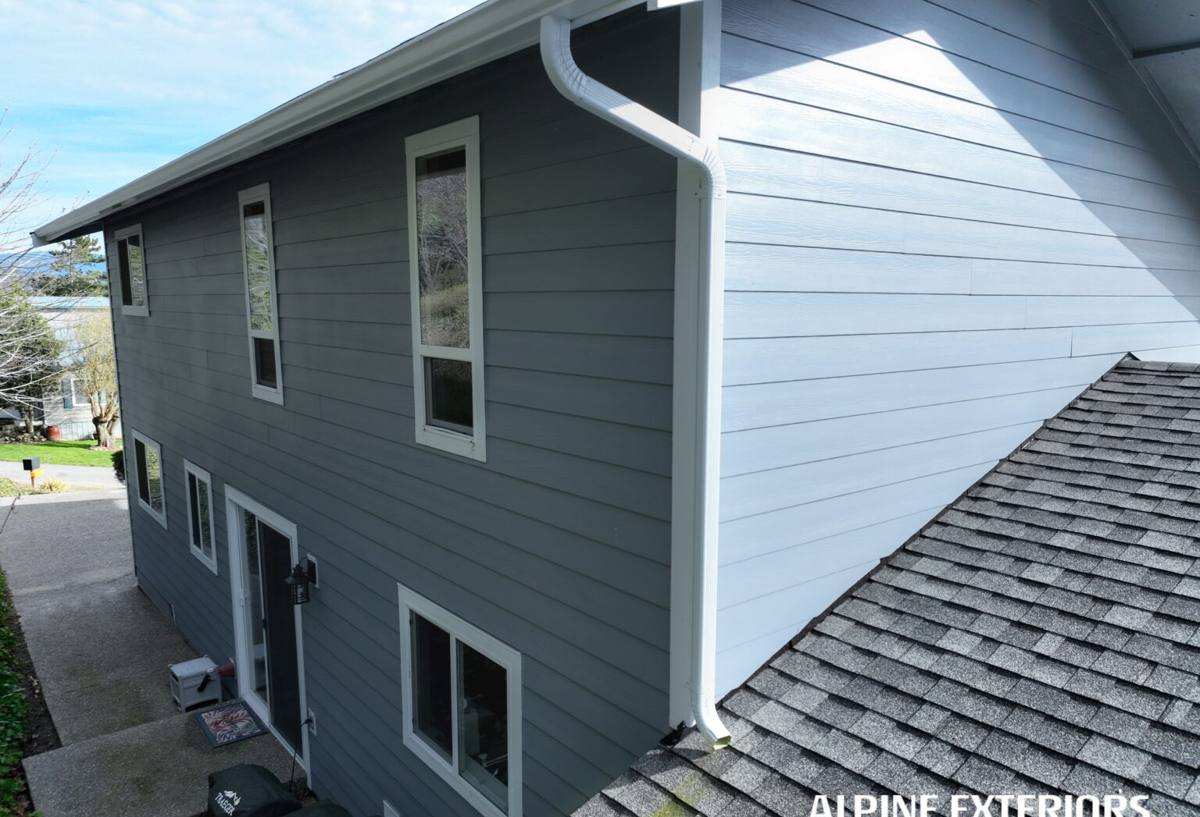
Why Storms Hit Oak Harbor Roofs Differently
Oak Harbor sits close to open water, and that changes what a roof deals with over its lifetime compared to a roof further inland. Three things stack up here that we plan around on every storm call:
Salt Air and Metal Fatigue
Salt-laden air moving off the water accelerates corrosion on exposed metal — flashing, fasteners, gutter hardware, and any exposed nail heads. A fastener that's already lost some of its coating from years of salt exposure is more likely to back out or shear during high wind, which is one reason storm damage sometimes shows up at points that look unrelated to where the wind actually hit hardest.
Driving, Wind-Blown Rain
Rain that comes in mostly straight down is manageable for almost any roof system. Rain that's being driven sideways by sustained wind finds every marginal seal — old pipe boots, hairline cracks in flashing cement, lifted shingle tabs — and pushes water uphill and sideways under the roofing rather than letting gravity carry it off. That's why storm leaks often appear several feet from where the actual opening is.
A Long Moss and Debris Season
Skagit and Island County both see a moss season that runs long compared to drier parts of the state. Moss and organic debris hold moisture against shingles and shingle mat, which softens them over time and makes them more prone to tearing or losing granules in high wind. A roof that was already carrying a moss load going into a storm is at higher risk of wind damage than a clean one, even if the shingles themselves aren't old.
What Actually Counts as Storm Damage
Not every roof problem that shows up after a storm was caused by the storm — and that distinction matters for how we handle the repair and, if you're pursuing one, an insurance claim. We look for a few specific patterns:
Wind Damage
Creased, lifted, or missing shingles, usually concentrated on the side of the roof that faced the wind. Wind damage tends to have a directional pattern — you'll often see it worse on one slope than another.
Impact Damage
Dents, punctures, or bruising from tree limbs, branches, or wind-blown debris. This is usually localized rather than spread across the whole roof, and it's the kind of damage that's easiest to point to and explain.
Water Intrusion Without Visible Exterior Damage
Sometimes the shingles look fine from the ground but water is getting in anyway — through a flashing seam that opened up under wind pressure, a chimney or vent boot that finally gave out, or a ridge cap that lifted just enough to let wind-driven rain underneath. This is the category that requires the most careful inspection, because the entry point and the leak location are rarely the same spot.
Pre-Existing Wear That a Storm Exposed
A roof near the end of its service life, or one with a moss and debris buildup, can fail during a storm even without unusual wind speeds. We'll tell you honestly when that's what we're looking at, rather than calling it storm damage it isn't — that distinction affects whether a repair or a fuller re-roof conversation makes sense.
What a Correct Storm Repair Involves
A storm repair done right isn't just replacing the shingles you can see are missing. It's a sequence:
1. Inspection Before Any Repair Decision
We walk the roof (or inspect closely from a ladder when conditions don't allow safe roof access) and check the decking, underlayment, flashing, vent boots, and ridge — not just the shingle field. Storm damage hides in the details, and a repair that only addresses the visible shingle loss can leave a leak path in place.
2. Decking Check
If water has been getting in for any length of time, the plywood or OSB decking underneath can be softened or delaminated. Shingles laid over compromised decking won't seal or lie flat correctly, and the repair won't hold. Any soft decking gets identified and replaced as part of the job, not discovered later.
3. Underlayment and Flashing
The underlayment and flashing are what actually stop water when wind drives rain sideways under the shingle surface. We replace underlayment in the repair area and pay particular attention to valley flashing, step flashing at walls and chimneys, and pipe boots — these are the most common failure points in a wind-driven rain event.
4. Matching Materials Where Possible
For a spot repair, we source shingles that match your existing roof as closely as the manufacturer's current lineup allows. Exact color matches aren't always possible on an older roof due to normal weathering and product line changes, and we'll tell you that up front rather than promising a seamless blend we can't deliver.
5. Cleanup and Final Check
Nails, torn shingle fragments, and granules get cleared from gutters and the ground. We do a final water-path check around the repair area before calling the job done.
Our Process, Start to Finish
- Contact and initial description. Tell us what you're seeing — a leak, missing shingles, debris on the roof, anything visible from the ground.
- Scheduling the inspection. We prioritize active leaks and safety hazards (loose material, exposed decking) ahead of cosmetic-only concerns.
- On-site inspection and honest assessment. We identify the cause, the extent, and whether we're looking at a spot repair or something larger.
- Written scope and estimate. You get a clear explanation of what needs to happen and why, before any work starts.
- Temporary protection if needed. If there's an active leak or exposed decking and the full repair can't happen immediately, we'll discuss tarping or temporary covering to stop further water intrusion.
- Repair work. Decking, underlayment, flashing, and shingle work performed in that order, not skipped.
- Final walkthrough. We show you what was done and what to watch for going forward.
Repair or Replacement — How We Help You Decide
Not every storm-damaged roof needs a full replacement, and not every roof is a good candidate for another patch. Here's how we generally think about it:
| Factor | Leans Toward Repair | Leans Toward Replacement |
|---|---|---|
| Age of existing roof | Under roughly 12–15 years, in otherwise sound condition | Near or past typical asphalt shingle service life |
| Extent of damage | Localized to one slope or a small area | Spread across multiple slopes or repeated storm hits |
| Decking condition | Solid, dry decking under the affected area | Widespread soft spots or delamination found during inspection |
| Shingle match availability | Close match available for a clean patch | Discontinued product or heavy fading makes matching impractical |
| Moss/debris history | Roof was reasonably clean going into the storm | Long-standing moss load contributed to the failure |
We'll walk you through where your roof falls on these points rather than defaulting to the more expensive answer. Plenty of storm calls end with a targeted repair and nothing more.
Storm Damage and Insurance Claims
Many storm repairs in this area go through a homeowner's insurance policy, since wind and impact damage are typically covered perils. A few practical notes from having done this before:
- Document what you can see from the ground with photos before any repair or tarping happens, if it's safe to do so.
- An inspection report that clearly separates storm-caused damage from pre-existing wear helps your claim move faster and avoids disputes later.
- We can provide a written scope and photos to support a claim, but the claim decision itself is between you and your insurer — we won't promise a specific outcome.
- Be cautious of anyone going door-to-door after a storm pushing immediate contracts or upfront payment before any inspection has happened. That pattern is common after regional storms and isn't how a straightforward repair should start.
Why It Matters That Your Crew Already Works Oak Harbor
A crew that regularly works this stretch of Skagit and Island County knows what a normal roof here looks like versus what storm damage looks like, because we've seen both many times over. That matters in a few concrete ways: we're not guessing at how salt air has aged your flashing and fasteners, we're not surprised by how far wind-driven rain can travel under a shingle before it shows up as a ceiling stain, and we're not scheduling around a long drive every time a follow-up question comes up after the repair. When a storm rolls through this area, we're already positioned to respond to Oak Harbor calls quickly rather than fitting you in around a route built somewhere else.
After a Storm: What to Check From the Ground
You don't need to get on the roof yourself. From the ground or a window, here's what's worth noting and passing along when you call:
- Shingles or shingle pieces in the yard or gutters
- Visible gaps, curling, or discoloration on any roof slope
- Sagging or uneven lines along the roof edge or ridge
- New water stains on interior ceilings or upper walls
- Debris, branches, or heavy moss buildup sitting on the roof
- Damaged or disconnected gutters and downspouts
- Any flashing that looks bent, lifted, or missing around chimneys and vents
Any one of these is worth a call, even if there's no active leak yet. Catching wind damage before the next storm system is what keeps a repair small.
If you've had a storm come through Oak Harbor and you're not sure what you're looking at, we're glad to take a look. We offer a free, no-pressure estimate — we'll tell you honestly what we find, what it needs, and what it doesn't, using the form below.