 Anacortes Exterior
 West Anacortes Sits Right at the Edge of the Weather
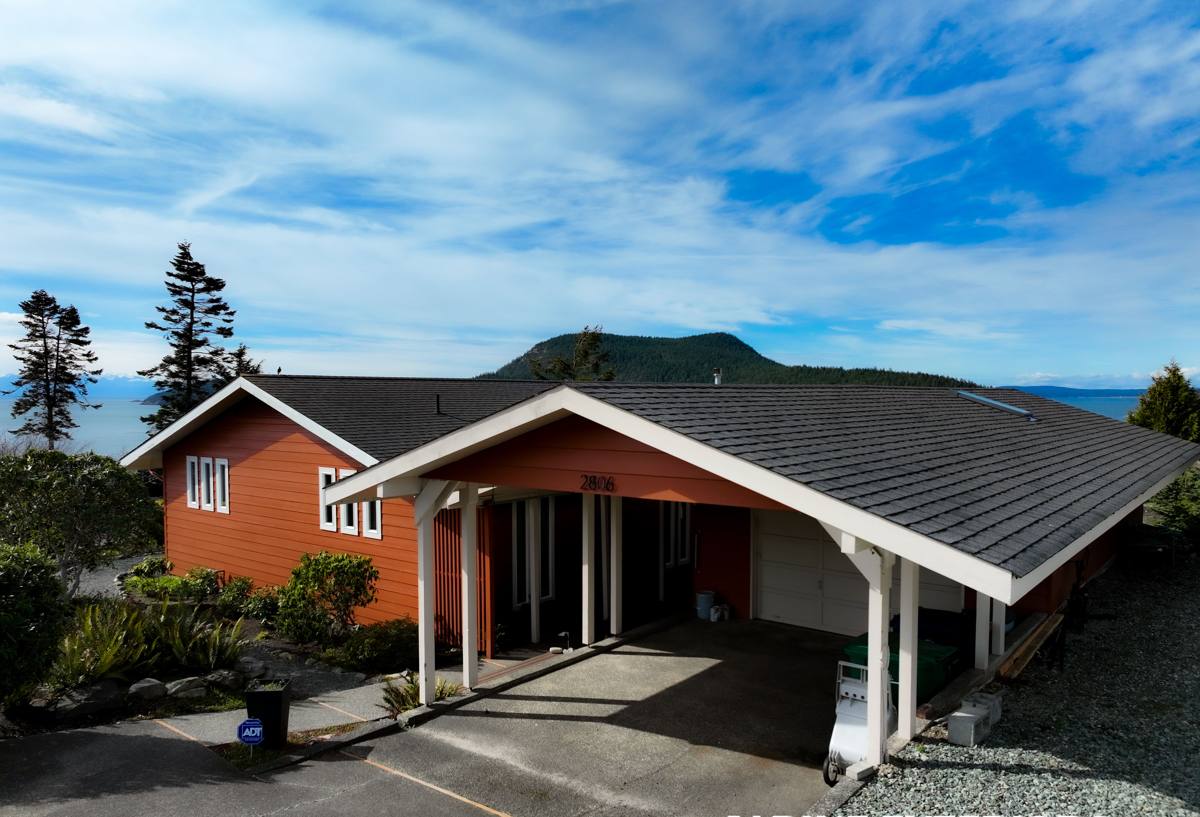
Homes on the west side of Anacortes catch the full brunt of what Rosario Strait and Guemes Channel send inland. That proximity to open water means salt-laden air moving across siding and trim almost daily, driving rain that comes in sideways during winter storms, and a moss season that can stretch from October well into spring. It's a beautiful place to live, but it's a demanding place to own an exterior. Materials that perform fine forty miles inland in the Skagit Valley often show their limits here years earlier.
We work on homes throughout West Anacortes regularly enough to know which failure patterns show up first — swollen trim boards, moss creeping under shake and shingle edges, caulked joints that let go after a couple of freeze-thaw cycles, and paint that chalks and peels faster than it should. None of that is inevitable. It's a function of what the exterior is made of and how it was installed.
Salt Air, Driving Rain, and Moss: What They Actually Do to a House
Salt Air
Airborne salt is corrosive to exposed metal fasteners and flashing, and it accelerates the breakdown of lower-grade paints and coatings. Over years, it dulls finishes and can pit unprotected metal trim and hardware faster than homeowners expect.
Driving Rain
Wind-driven rain doesn't just fall — it pushes sideways into laps, seams, and butt joints. A siding system with a marginal water-management design will eventually let moisture behind the cladding, where it can sit against sheathing and framing far longer than anyone notices from the outside.
Moss and Sustained Dampness
Skagit County's long wet season keeps north- and west-facing exterior surfaces damp for extended stretches. Moss and algae take hold on rough or porous surfaces, roofs, and shaded siding runs, and left alone they hold moisture against the material underneath it, which shortens its useful life.
Why We Standardized on James Hardie Fiber Cement Siding
We install James Hardie fiber cement siding exclusively. We don't install vinyl, LP SmartSide, Cemplank, Allura, primed spruce, or cedar. That's a deliberate standard, not a lack of options, and it comes from watching how each of those materials actually holds up in a climate like this one.
Wood-based products — cedar and primed spruce among them — need consistent, ongoing maintenance to keep moisture out, and in a marine climate with a long wet season, that maintenance window is smaller and the consequences of skipping it show up faster. Vinyl siding is low-maintenance in a different sense, but it's a thinner, more temperature-sensitive material that can warp or crack under wind loading and impact, and it isn't fire-resistant. Engineered wood products like LP SmartSide use a treated wood-strand substrate; when installed and maintained correctly they perform reasonably well, but the wood-based core is still more sensitive to sustained moisture exposure than a cement-based product. Cemplank and Allura are also fiber cement, so they share Hardie's core material chemistry, but we've standardized crews, flashing details, fastener schedules, and warranty paperwork around one manufacturer's engineered system rather than splitting our installation standards across several.
James Hardie's fiber cement is non-combustible, holds up to sustained moisture exposure without swelling or rotting, and its ColorPlus factory finish is baked on under controlled conditions rather than field-applied — which matters in a climate where field-applied paint has to cure in unpredictable weather. The HZ5 product line is engineered for climates with more moisture and freeze-thaw cycling, which fits West Anacortes better than a generic siding spec. It also carries a strong transferable warranty, which matters if you plan to sell.
Roofing Built for a Wet, Mossy Climate
Roofs on the west side of Anacortes deal with the same driving rain and moss pressure as siding, but with higher stakes — a roof failure shows up as an interior leak, not just a cosmetic issue. We pay close attention to underlayment quality, flashing at every penetration and valley, and ventilation, since a roof deck that can't breathe traps moisture and accelerates moss growth and shingle degradation from underneath. Proper edge and valley metal work, done with corrosion-resistant fasteners, matters more here than it does further inland.
Windows That Keep Salt Air and Moisture on the Outside
Old or poorly sealed windows are one of the most common paths for wind-driven rain and salt-laden moisture to work into a wall assembly. When we replace windows, we're paying as much attention to flashing and integration with the surrounding siding as we are to the window unit itself — a good window installed with a poor moisture seal will still cause problems. For West Anacortes homes, we look closely at west- and south-facing exposures, which take the most direct weather, and make sure sill pans, flashing tape, and sealant details are done to spec rather than shortcut.
Decks Built for Coastal Exposure
Decks on the west side of town are exposed to the same salt air and rain as the siding above them, plus standing water and UV exposure that siding doesn't deal with. Fasteners and hardware need to be corrosion-resistant, ledger connections need to be properly flashed to keep water out of the house framing, and decking material choice should account for how much direct weather and moisture exposure the deck actually gets. We build decks to shed water rather than trap it against framing, which is where most deck failures in this climate actually start.
What a Correctly Built Exterior Looks Like Here
| Exterior Component | Key Coastal Risk | What We Prioritize |
|---|---|---|
| Siding | Moisture intrusion, salt exposure, moss | James Hardie HZ5 fiber cement, correct flashing and fastener spec |
| Roofing | Wind-driven rain, moss, poor ventilation | Quality underlayment, valley/penetration flashing, ridge and soffit ventilation |
| Windows | Wind-driven rain intrusion at the frame | Sill pan flashing, proper tape and sealant integration with siding |
| Decks | Standing water, corroded hardware, ledger rot | Corrosion-resistant fasteners, flashed ledger connections, drainage |
The common thread across all four is water management. A house exterior isn't one material doing all the work — it's a system of surfaces, seams, and flashing details that either move water away from the structure or let it collect. West Anacortes weather finds every gap in that system faster than most inland Skagit County neighborhoods do.
Why a Local Crew Matters Here
A crew that mostly works drier inland jobs doesn't always carry the same instincts for flashing details, fastener selection, and moisture sequencing that a marine-exposed job needs. We work in Anacortes and around Skagit County regularly, which means we've seen how specific exposures — west-facing walls, low decks near grade, north-side roof valleys that stay shaded and damp — actually age over time on real houses, not just in a spec sheet. That local pattern recognition shapes decisions on-site that a generic installation approach wouldn't catch.
What to Look For Before You Hire
- Manufacturer-specific training or certification for the siding system being installed, not just general carpentry experience
- A written scope that names the flashing and water-management details, not just the finish material
- Local references or completed work in Anacortes or elsewhere in Skagit County
- Proper licensing, bonding, and insurance, verifiable through Washington State's contractor lookup
- A clear explanation of why they're recommending one siding material over another for your specific exposure
- A warranty that's actually transferable if you sell the home
Our Process, Start to Finish
We start with a walk-around assessment of the exterior as it stands today — siding condition, trim, roof edges, window seals, and any deck framing that's exposed to weather — so we're solving the actual problems on your house rather than applying a one-size template. From there we put together a scope that's specific about materials, flashing details, and sequencing, and we walk you through why each choice fits your exposure. Work is scheduled around Skagit County's weather windows where possible, since installation quality depends on doing flashing and sealant work in reasonable conditions, not rushing it between storms.
If your home is on the west side of Anacortes and dealing with siding that's showing its age, a roof that's collecting more moss every year, windows that let in drafts or moisture, or a deck that's starting to feel soft underfoot, we're happy to take a look. We offer a free, no-pressure estimate — walk the property with you, point out what we see, and give you honest options for what it would take to get it done right.