 Anacortes Exterior
 West Anacortes Roofs Take a Different Kind of Beating
West Anacortes sits close enough to the water that homes here deal with a combination of stresses most inland Skagit County roofs never see. Salt-laden air moves off the water and settles on shingles, flashing, and fasteners day after day. Add in driving rain that comes in sideways during winter storms, and a moss season that can run eight months or more in the shaded, damp spots on a roof, and you have a recipe for roofs that age faster than their paperwork says they should. We repair roofs across Anacortes, but West Anacortes jobs almost always involve some combination of these three factors, and treating them as an afterthought is how a small repair turns into a bigger one within a year or two.
None of this means West Anacortes homes need exotic materials or constant repair work. It means the repairs need to account for what's actually happening to the roof, not just patch the symptom.
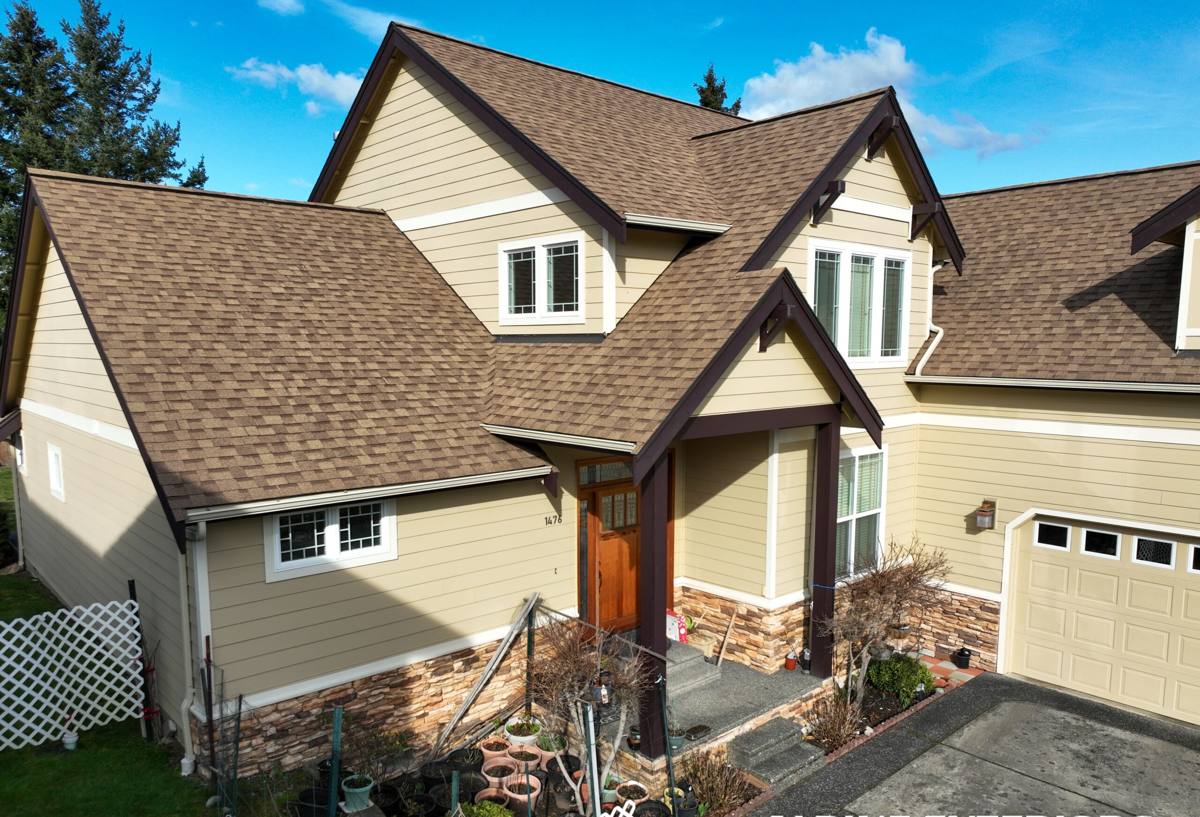
How Salt Air, Rain, and Moss Actually Damage a Roof
Salt Air and Metal Fasteners
Salt air accelerates corrosion on exposed metal — nail heads, flashing edges, vent boots with metal collars, and gutter hardware. A fastener that would last decades inland can start rusting and losing its grip years sooner this close to the water. Once fasteners weaken, shingles and flashing lift slightly in wind, and that's when water starts finding its way underneath.
Driving Rain and Wind-Driven Water
Straight-down rain is easy for a roof to shed. Driving rain that comes in at an angle is a different problem — it tests every seam, every flashing lap, and every shingle overlap for gaps that would never leak in calmer weather. Roofs with marginal flashing work or aging shingle seals often hold up fine most of the year and then leak specifically during the season's worst wind-driven storms.
Moss and Trapped Moisture
Moss doesn't just look bad. It holds moisture directly against the shingle surface, keeps that area from drying out between rains, and works its root structure under shingle edges as it grows. Over a long moss season, that constant dampness breaks down asphalt shingle granules faster and can rot the wood decking underneath in spots where moss has been established for a while. North-facing slopes and areas shaded by trees or neighboring structures are usually the worst offenders.
Signs a West Anacortes Roof Needs Repair, Not Just Watching
- Granules collecting in gutters or at the base of downspouts, especially after a storm
- Moss or dark streaking concentrated on north-facing or shaded roof sections
- Water stains on interior ceilings, especially near chimneys, skylights, or wall-roof intersections
- Curling, cupping, or lifted shingle edges, particularly on wind-exposed slopes
- Rust streaks below metal flashing or vent boots
- Soft spots or sponginess when walked on decking near valleys or penetrations
- Daylight visible through the roof deck from inside the attic
- Gutters overflowing during rain even though they were recently cleaned
Any one of these on its own might just need monitoring. Two or three together, especially combined with a roof that's over 12-15 years old, usually means it's worth a proper look before the next big storm.
What a Correct Roof Repair Actually Involves
A roof repair that actually holds up in this climate is more than sealing over a leak or swapping a few shingles. It starts with figuring out where water is actually entering, which is often several feet away from where the stain shows up inside, because water travels along the underside of decking before it drips down.
Diagnosis Before Patching
We trace the leak path, check flashing at every penetration near the affected area — chimneys, vents, skylights, valleys — and look at the condition of the surrounding shingles and decking, not just the spot that's obviously failing. A patch over a symptom without understanding the cause tends to fail again within a season or two, especially with the wind-driven rain this area gets.
Matching Materials and Technique
Good repair work matches the existing roofing material's type, weight, and where possible, color, so the repair blends in and performs the same as the surrounding roof. Flashing gets replaced with new material and properly lapped — never just caulked over old flashing, which is a common shortcut that fails within a year or two in this climate. Fasteners on repair work in this area should be corrosion-resistant given the salt air exposure.
Addressing the Underlying Cause
If moss caused the damage, the repair includes moss removal and addressing why it grew there in the first place — often trimming back overhanging branches or improving airflow to a shaded section, not just cleaning the surface and leaving the same conditions in place.
Our Roof Repair Process
- Inspection: We walk the roof (weather permitting) and check the attic from inside where accessible, looking at decking, insulation, and any staining that points to where water is actually entering.
- Honest assessment: We tell you what we find, including if a "repair" isn't the right call because the roof is past the point where patching makes sense. We'd rather say that upfront than sell a repair that won't last.
- Written estimate: Scope of work, materials, and price before anything starts. No surprise change orders for work we could see when we quoted it.
- The repair itself: Old damaged material removed, decking repaired or replaced if compromised, new flashing and shingles installed to match, and everything sealed correctly for wind-driven rain exposure.
- Cleanup and walkthrough: Debris and moss cleared, gutters checked, and we show you what was done before we consider the job finished.
Repair vs. Replacement: What Actually Drives the Decision
| Factor | Leans Toward Repair | Leans Toward Replacement |
|---|---|---|
| Roof age | Under 12-15 years, isolated issue | Approaching or past expected lifespan for the material |
| Extent of damage | Localized — one slope, one flashing detail, one section | Widespread granule loss, multiple leak points, decking rot in several areas |
| Moss/moisture history | First occurrence, caught early | Long-term moss exposure with confirmed decking damage in multiple spots |
| Underlying decking | Sound, no soft spots found | Soft or rotted decking beyond the immediate repair area |
| Cost over time | Repair cost is a fraction of full replacement | Repeated repairs are approaching what replacement would cost |
We'll always give you the honest read on which side of this table your roof falls on. A well-timed repair can add years to a roof's useful life; a repair on a roof that's already failing broadly just delays a bigger expense while risking interior damage in the meantime.
Materials We Commonly Repair in This Area
Most West Anacortes homes we work on are asphalt composition shingle, with a smaller number of cedar shake, metal, and flat or low-slope membrane roofs, especially on additions or garages. Each has different failure patterns worth knowing:
Asphalt Composition Shingle
The most common material locally. Repair work focuses on flashing, seal failure at shingle edges, and granule loss from age or moss. Matching the exact shingle profile and color as closely as possible matters for how the repair looks and how well it sheds water at the seams.
Cedar Shake
Cedar needs more active moss management than asphalt because its texture holds moisture longer. Repairs often involve replacing individual damaged shakes and addressing the moisture source, not just the visible section.
Metal Roofing
Generally holds up well to moss but is more sensitive to fastener and seam issues given salt air exposure. Repairs center on fastener replacement, sealant renewal at seams and penetrations, and addressing any early corrosion before it spreads.
Low-Slope and Flat Sections
Common on additions, porches, and garages. These need careful attention to seams and drainage — standing water from poor drainage is often the real cause behind what looks like a membrane failure.
Timing Repairs Around the Local Season
Late summer and early fall are the best window for roof repair in this part of Skagit County — dry enough for materials to seal properly, before the driving rain and long moss-growth stretch of fall and winter sets in. That said, a genuine leak shouldn't wait for ideal weather. We do repair work year-round, including temporary weatherproofing during a storm if needed, followed by the permanent fix once conditions allow.
Why It Matters to Hire a Crew That Already Works West Anacortes
A roofer who works this specific area regularly has already seen how salt air treats different fastener types, which shaded slopes tend to grow moss first, and how the local wind and rain patterns expose weak flashing details that a drier, more sheltered area would never reveal. That's not something you can fully substitute with general roofing experience from elsewhere. It shows up in small decisions — which fastener grade to use, where to add extra flashing detail on a section that looks fine but sits in a wind-exposed spot, how aggressively to address a moss problem before it becomes a decking problem — that add up to a repair that actually holds.
If you're dealing with a leak, visible moss buildup, or just want an honest look at a roof's condition before the next storm season, we're happy to come out, take a look, and give you a straight answer about what it needs. If you'd like a free, no-pressure estimate for roof repair in West Anacortes, use the form below and we'll get back to you.