 Anacortes Exterior
 Why Fidalgo Island Decks Fail Faster Than People Expect
Fidalgo Island sits right where the moisture off the water meets wind-driven rain, and that combination is hard on exterior wood. Salt-laden air corrodes fasteners and hardware from the inside out, often years before the boards themselves show real damage. Add in Anacortes's long stretch of gray, wet months and the moss and algae growth that comes with them, and you have a recipe for decks that look fine on the surface while the framing underneath is quietly losing integrity.
We see this pattern constantly on Fidalgo Island: a deck that's 12-18 years old, still walkable, but with soft spots near the ledger board, rusted-out joist hangers, and a slow moss buildup that's been trapping moisture against the boards for seasons. By the time it's visibly sagging or a board gives way underfoot, the structural members have usually been compromised for a while. Replacement at that point isn't about cosmetics — it's about safety.
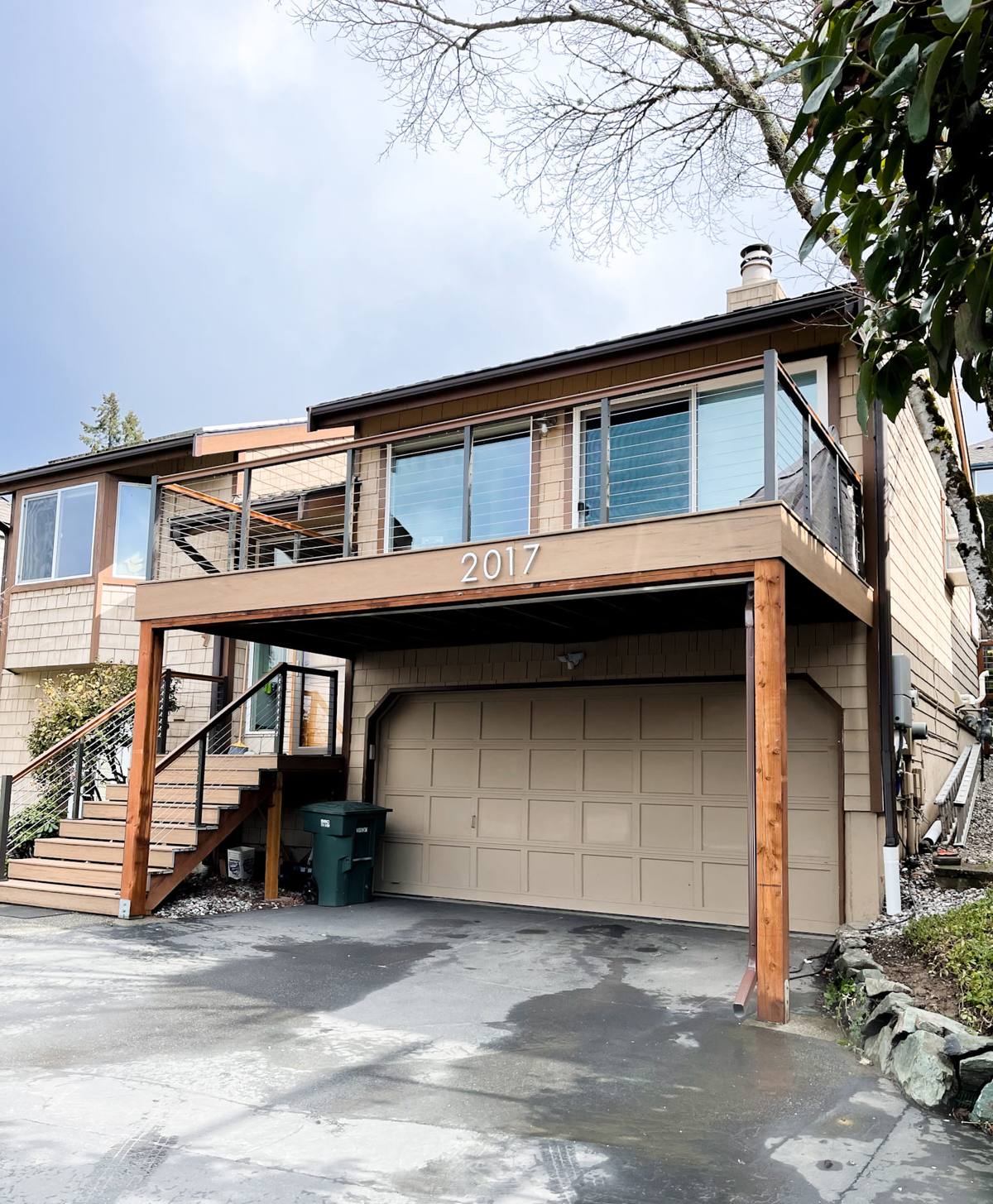
Repair or Replace? How We Make That Call
Not every tired deck needs a full teardown. Part of an honest assessment is figuring out whether the framing is sound enough to build on, or whether the whole system needs to come out. We look at a few things on every Fidalgo Island visit:
- Ledger board attachment — is it properly flashed and fastened to the house, or was it face-nailed with no flashing (a common shortcut on older builds)?
- Joist and beam condition — probing for soft or spongy wood, especially where boards overlap or where moss has held moisture against a surface for years
- Post and footing stability — checking for rot at grade level and whether footings meet current code depth and bearing requirements
- Fastener corrosion — salt air accelerates rust on older galvanized hardware faster than it does further inland
- Overall deflection and level — decks that have shifted or sagging noticeably usually indicate a structural issue, not just a surface one
If the framing is sound, a resurfacing or partial repair can make sense. But if we're finding rot at the ledger, corroded structural hardware, or footings that don't meet code, replacement is the honest recommendation — patching those issues doesn't actually solve them, it just delays a bigger problem.
What a Correct Deck Replacement Actually Involves
A deck replacement is a structural project, not just a materials swap. Doing it right on Fidalgo Island means addressing the specific ways this climate attacks a deck, not just rebuilding what was there before.
Ledger and Flashing
The ledger board connection to the house is the single most common failure point we find on older decks in this area. Proper flashing — installed correctly, layered with the house's water-resistive barrier rather than just caulked over — is what keeps water from working its way behind the siding and rotting the rim joist. This step gets skipped or done poorly more often than any other part of a deck build, and it's the one that causes the most expensive hidden damage.
Framing and Fasteners
Given the salt air here, we spec corrosion-resistant hardware — stainless steel or heavy-duty coated fasteners rated for coastal exposure — rather than standard galvanized connectors that degrade faster this close to the water. Joist spacing and beam sizing are set to current building code, not just matched to whatever was there before.
Footings
Skagit County has specific frost depth and footing requirements, and older decks were sometimes built on undersized or shallow footings that technically held but never met code. A replacement is the right time to bring footings up to current standard, especially if you're planning to add features like a hot tub or extend the deck's footprint.
Ventilation and Drainage
Moss thrives where air can't move and water sits. Proper joist spacing, gapping between boards, and grading underneath the deck so water sheds away from the house all reduce how much moisture gets trapped against the structure — which directly slows moss growth and wood decay.
Decking Material Options for This Climate
Material choice matters more here than in drier climates, because whatever you choose is going to spend months of the year wet, shaded, or both. Here's how the common options actually perform on Fidalgo Island:
| Material | Moss/Moisture Behavior | Maintenance | Typical Lifespan |
|---|---|---|---|
| Pressure-treated wood | Absorbs moisture, grows moss/algae readily without upkeep | Annual cleaning and periodic sealing/staining | 10-15 years before boards need replacing |
| Cedar | Naturally rot-resistant but still needs sealing to resist moss staining | Sealing every 1-2 years, regular cleaning | 15-20 years with upkeep |
| Composite decking | Doesn't rot, but surface moss/algae growth still needs washing off | Periodic washing, no staining/sealing required | 25-30 years, manufacturer-dependent |
| PVC decking | Non-porous, sheds water well, least prone to trapped moisture | Occasional washing | 25-30+ years, manufacturer-dependent |
We don't push one material on every job. Cedar gives a natural look homeowners often want on a wooded Fidalgo Island lot, and it can perform well if it's sealed on schedule — the trade-off is that upkeep is real and easy to fall behind on. Composite and PVC cost more up front but take moisture and moss largely out of the maintenance equation, which matters if you don't want to be re-sealing a deck every other year in a climate that gives you a short dry-weather window to do it in. We'll walk through the honest trade-offs for your specific site — sun exposure, tree cover, and how much upkeep you actually want to do — rather than defaulting to whatever's easiest to sell.
Our Deck Replacement Process
- On-site assessment — we inspect the existing structure, ledger, footings, and grading, and give you a straight answer on repair vs. replace
- Design and material selection — sizing, layout, railing style, and decking material chosen for your site's sun/shade and moisture exposure
- Permitting — Skagit County and City of Anacortes both require permits for most deck work; we handle that paperwork rather than leaving it on you
- Demo and disposal — full removal of the old deck, including hauling off old lumber and hardware
- Framing and flashing — ledger, footings, and structural framing built to code with corrosion-resistant hardware
- Decking, railing, and finish work — installed to manufacturer spec, with attention to board gapping and drainage
- Final walkthrough — we go over the finished deck with you, including what maintenance (if any) the material you chose will need
What Drives the Cost
Deck replacement pricing varies a lot based on size, material, and site conditions, so we won't quote a number without seeing the job. What we can tell you is what actually moves the price:
| Cost Factor | Why It Matters |
|---|---|
| Deck size and layout | Square footage and complexity of shape (multiple levels, angles) directly drive material and labor |
| Decking material | Composite and PVC cost more upfront than pressure-treated wood, but need far less ongoing maintenance |
| Structural condition underneath | Rotted framing, undersized footings, or a compromised ledger add work beyond the visible decking |
| Height and railing requirements | Elevated decks need code-compliant railings and sometimes additional structural bracing |
| Site access | Difficult access on sloped or tight Fidalgo Island lots can affect demo and material staging |
| Permitting | Permit fees and any required inspections are part of the project cost, not an add-on later |
Homeowner Maintenance Checklist for This Climate
Whatever material you choose, a few habits go a long way toward keeping a Fidalgo Island deck in good shape between now and its next major service:
- Sweep debris (needles, leaves) off the deck regularly — trapped organic matter holds moisture and feeds moss
- Wash the deck surface at least once a year, more often in shaded or north-facing areas prone to moss
- Check and clear drainage gaps between boards so water isn't pooling
- Inspect the ledger flashing area annually for any signs of staining or water intrusion into the siding above it
- For wood decking, keep sealing/staining on schedule — deferred maintenance is the single biggest reason wood decks fail early here
- Look underneath the deck once a year for soft framing, rust streaks on hardware, or standing water at post bases
Why a Fidalgo Island Crew Matters
Deck problems here follow patterns that are specific to this exposure — salt air corrosion on hardware, moss buildup on shaded north sides, ledger rot from driving rain that hits certain elevations harder than others. A crew that works Fidalgo Island regularly has already seen where those failures show up first on local homes, and builds accordingly instead of applying a generic approach and hoping it holds up. We also know the permitting process with the City of Anacortes and Skagit County, which keeps your project from stalling on paperwork.
If your deck is showing its age — soft spots, visible rot, persistent moss, or hardware that's clearly corroding — we're happy to take a look and give you a straight assessment of what it needs. Reach out for a free, no-pressure estimate using the form below.