 Anacortes Exterior
 Why Ship Harbor Roofs Take a Different Kind of Beating
Ship Harbor sits right where Fidalgo Island meets the water, and that location cuts both ways. It's one of the more scenic settings in Anacortes to live — and one of the harder places in Skagit County to keep a roof healthy. Salt-laden air off the harbor works into fasteners, flashing, and exposed metal year-round. Add the wooded, shaded lots common in this part of town and you get a roof that stays damp longer after every storm, which is exactly the recipe moss and algae need to take hold. On top of that, wind off the water tends to hit roof pitches here at angles a more sheltered, inland home never has to deal with. None of this means a roof here is doomed — it means the installation has to account for conditions a roof three miles inland simply doesn't face.
We've installed and repaired roofs across Anacortes and the surrounding Skagit County waterfront long enough to know which shortcuts show up as leaks in year three instead of year twenty. A new roof installation done right for a Ship Harbor home isn't just shingles on the deck — it's a system built specifically for salt exposure, driving rain off the water, and a moss season that can run most of the year.
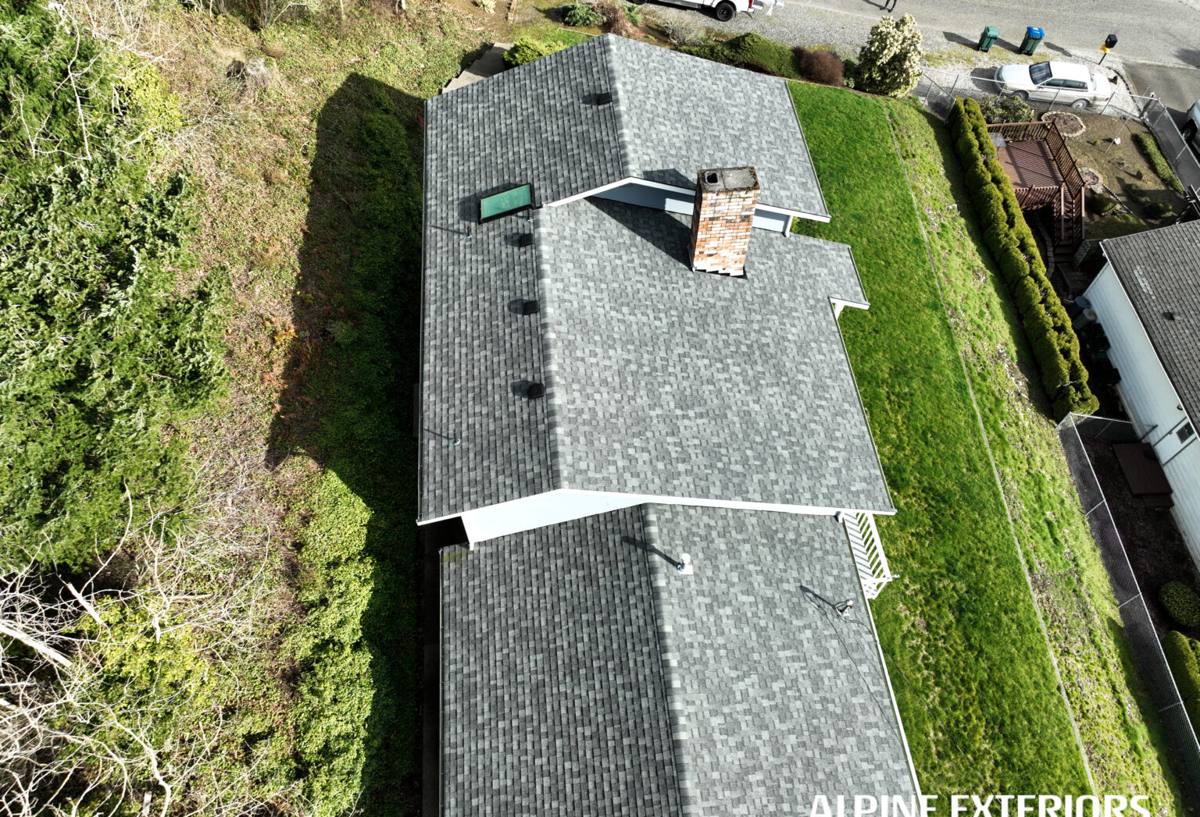
What "Correct" Actually Means on a New Roof Installation
A roof is a system, not a single product. The shingles or panels get the attention, but in a marine climate like this one, the parts underneath and around them matter just as much — sometimes more.
Underlayment Built for Wet Weather
Standard felt underlayment can work in dry climates. On Fidalgo Island, where driving rain off the water can push moisture sideways under lapped shingles, we install synthetic or self-adhered underlayment rated for high-moisture exposure, with extra coverage at eaves and valleys where water concentrates.
Flashing That Won't Corrode From the Inside Out
Salt air accelerates corrosion on the wrong metal. We use flashing and fasteners rated for coastal exposure at chimneys, skylights, sidewalls, and roof-to-wall transitions — the spots where most roof leaks actually start, regardless of how good the field shingles are.
Fasteners and Nailing Pattern
Under-driven or over-driven nails are a leading cause of early shingle failure, and it's worse in a climate with real wind off the water. Correct nailing pattern and pressure isn't glamorous work, but it's the difference between a roof that holds through a winter storm and one that doesn't.
Choosing a Roofing System That Fits This Climate
There's no single best roofing material for every home — the right choice depends on your roof's exposure, shade cover, budget, and how much maintenance you want to take on. Here's how the common options compare for a shaded, salt-air property like the ones around Ship Harbor.
| Roofing System | Typical Lifespan | Moss & Moisture Resistance | Maintenance Needs |
|---|---|---|---|
| Asphalt composition shingle | 20-30 years | Moderate — needs periodic cleaning in shaded, damp areas | Low to moderate |
| Standing seam metal | 40-60+ years | High — sheds water and debris quickly, resists moss growth well | Low |
| Synthetic/composite shake | 30-50 years | High when properly ventilated | Low to moderate |
| Cedar shake | 25-30 years | Lower in shaded, damp settings without regular upkeep | Higher — routine cleaning and treatment |
Asphalt composition shingle remains the most common choice because of upfront cost and the range of styles available, and a quality architectural shingle holds up well here when the underlayment and ventilation are done correctly. Standing seam metal costs more upfront but sheds moss and standing moisture better than any other option, worth weighing seriously on heavily shaded lots. Cedar shake has a natural look some homeowners want, but on a shaded, damp lot it demands far more upkeep to avoid rot and moss than the other options — a maintenance trade-off worth being upfront about rather than glossing over. We'll walk you through the honest trade-offs for your specific roof rather than pushing one system on every home.
Ventilation: The Part Homeowners Never See
Proper attic ventilation matters everywhere, but it matters more in a mild, damp coastal climate where the attic doesn't get the hard freeze-thaw cycles that force moisture out elsewhere. Without balanced intake and exhaust ventilation, warm, moist air gets trapped against the underside of the roof deck, which shortens the life of the decking, encourages mold, and can void a shingle manufacturer's warranty outright. Every new roof installation we perform includes a ventilation assessment — not an afterthought once the shingles are already on.
Balancing Intake and Exhaust
Intake and exhaust have to work as a pair. Soffit vents pull fresh air in at the eaves, and ridge vents let warm, moist air escape at the peak. If one side is undersized or blocked — often by insulation stuffed too far into the eaves during a past remodel — the whole system stops working, no matter how good the ridge vent looks from the ground. Part of our process is checking that intake and exhaust are actually balanced, not just present.
Moss, Algae, and Long-Term Roof Care
Moss doesn't just look bad. Its root structure lifts shingle edges, holds moisture against the roof deck, and opens the door to rot underneath. A well-installed roof with the right materials, ventilation, and slope handling resists moss far longer than a rushed one — but no roof in this climate is entirely moss-proof forever. A little seasonal care goes a long way:
- Keep overhanging branches trimmed back to let sunlight and air reach the roof surface
- Clear gutters and valleys before the fall rains set in, since trapped debris holds moisture directly against shingles
- Have moss physically removed rather than pressure-washed, which can strip granules and shorten shingle life
- Consider zinc or copper strips near the ridge on shaded roofs to slow future moss regrowth
- Schedule a roof check after major windstorms common to the area, since lifted or cracked shingles are easy to miss from the ground
Signs Your Roof Needs Full Replacement, Not Another Repair
Not every roofing problem calls for full replacement, but certain signs mean a repair is just delaying the inevitable. Granules collecting in gutters in large amounts usually mean shingles are past their functional life, not just aging cosmetically. Daylight visible through the attic roof deck, soft or spongy spots underfoot, or recurring leaks in different spots each season all point to a roof that's failing as a system rather than at one fixable point. Multiple layers of old roofing already on the deck can also push a homeowner toward full replacement, since code and warranty terms often limit how many layers can be installed.
Our Installation Process, Start to Finish
Homeowners in Ship Harbor are usually replacing a roof that's reached the end of its service life or was damaged by a storm, so we keep the process straightforward and clearly communicated from the first visit to the final walkthrough.
- On-site inspection — we assess the current roof, decking condition, ventilation, and any problem areas specific to your property's sun and wind exposure
- Written estimate — a clear scope of work and material options, with honest trade-offs explained rather than a single upsell
- Tear-off and deck inspection — old roofing removed, decking checked for soft spots or rot before anything new goes down
- Underlayment and flashing installation — the moisture-management layer that does the real work over the life of the roof
- Roofing material installation — installed to manufacturer specification and correct nailing pattern, not rushed to hit a daily quota
- Ventilation and final detailing — ridge and soffit ventilation confirmed, flashing sealed at every penetration
- Cleanup and final walkthrough — magnetic sweep for debris and a final review with you before we consider the job done
Permits, Codes, and Site Logistics in Skagit County
A full roof replacement typically requires a permit through the City of Anacortes, and code requirements around underlayment, ice barrier placement, and ventilation are specific to Washington's building code for this climate zone. We handle the permit process as part of the job, not as an add-on fee sprung on you later. Ship Harbor's mix of mature trees and waterfront exposure can also mean tighter staging areas or extra care around landscaping — something we plan for before the crew ever shows up, not something we figure out on tear-off day.
Why Local Ship Harbor Experience Matters
A roofing crew that's only worked drier, inland neighborhoods can install a technically fine roof that still underperforms here, simply because they didn't plan for salt exposure, shade-driven moss, or the way wind off the water hits certain roof pitches. Working regularly around Anacortes and the rest of Skagit County's coastal areas means we've seen which flashing details fail first in this environment, which materials actually hold up under tree cover near the water, and which shortcuts cost homeowners a second roof replacement a decade early. We've also learned which local suppliers stock materials rated for this exposure without a special order delaying the job. That experience shows up in the details you won't see once the roof is finished — but you'll feel it in how few problems come up after.
If your roof is aging, showing granule loss, or you're just planning ahead, we're happy to take a look and give you a straightforward, no-pressure estimate — no hard sell, just an honest read on what your roof actually needs. Use the form below to get started.