 Anacortes Exterior
 Exterior Work Built for the La Conner Waterfront
La Conner sits close enough to Skagit Bay and the Swinomish Channel that salt-laden air is simply part of daily life. That proximity to tidal water is what gives the area its character, but it's also what wears down siding, roofing, and window components faster than homes just a few miles inland. Add in the long, wet stretch of fall through spring that defines western Skagit County, and you've got a climate that's constantly testing every exterior surface on a house: freeze-thaw cycling in the coldest snaps, driving rain that finds every gap, and months of shade and moisture that let moss and algae take hold on roofs and siding alike.
Anacortes Exterior Co works throughout this stretch of Skagit County, and La Conner's combination of coastal exposure and small-town, older housing stock means we see a fairly specific set of problems repeat themselves. This page walks through what we typically find, how our siding, roofing, window, and deck work addresses it, and why we standardized on James Hardie fiber cement siding instead of the alternatives.
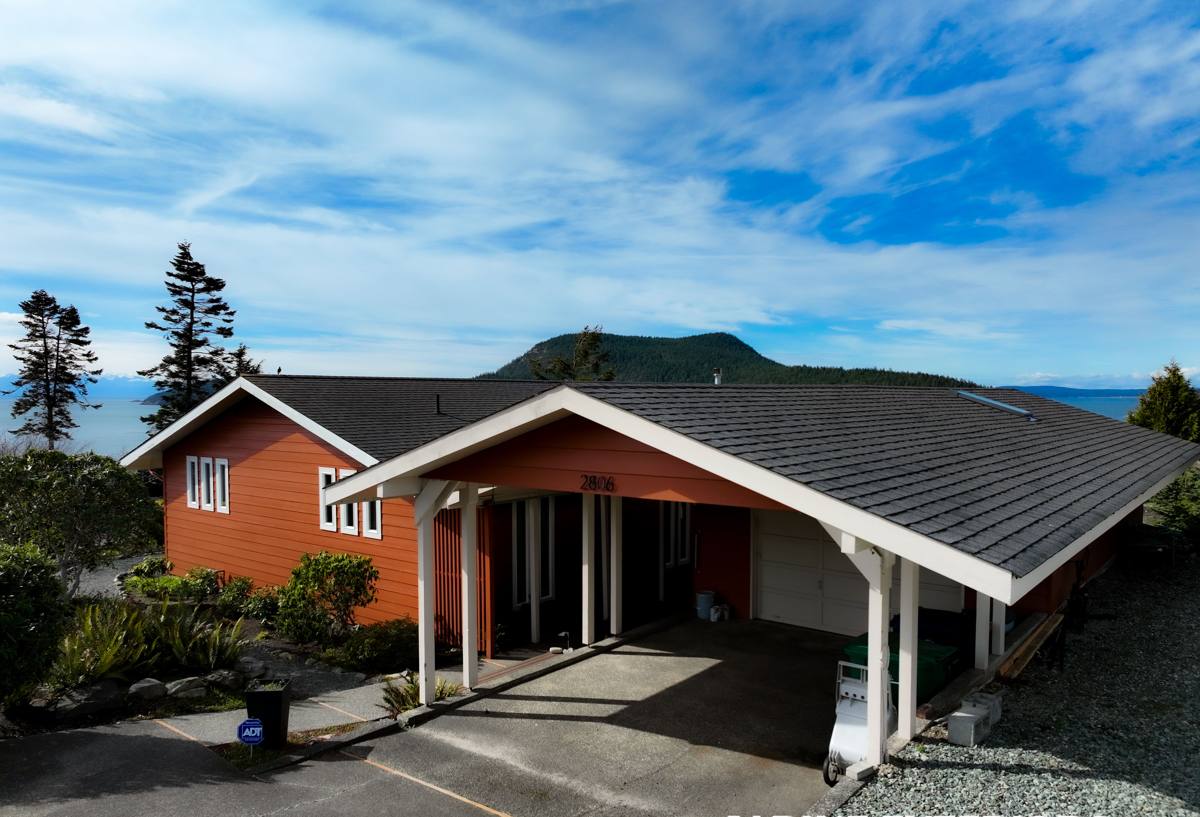
What the Climate Does to a La Conner Home
Salt Air and Metal Fatigue
Salt air doesn't just affect boats and dock hardware — it accelerates corrosion on exposed fasteners, flashing, gutters, and any metal trim on a house. Homes closer to the water tend to show rust streaks and fastener failure years before homes further inland, even when the underlying materials are otherwise similar. This is one reason flashing and fastener choice matters as much as the siding or roofing material itself in this area.
Driving Rain and Wind-Driven Moisture
Storms coming off the Sound and through the Skagit Valley often bring rain sideways rather than straight down. That matters because it pushes water into joints, laps, and penetrations that would stay dry in a calmer climate. Siding systems and roofing details that rely on gravity alone to shed water tend to underperform here — everything needs proper overlap, sealed penetrations, and flashing that accounts for wind-driven wetting, not just vertical rainfall.
Moss, Algae, and Shade
Between tree cover, marine humidity, and long overcast stretches, roofs and north-facing siding in La Conner spend a lot of the year damp. That's exactly the environment moss and algae need to establish. Left unchecked, moss on a roof holds moisture against shingles and can work under tabs and flashing over time; algae staining on siding is mostly cosmetic but is a sign that a surface is staying wet longer than it should.
Common Signs of Climate Wear We See in La Conner
- Rust streaking below fasteners, flashing, or gutter seams
- Moss buildup along roof valleys, north slopes, and shaded eaves
- Green or black algae staining on siding, especially the shaded side of the house
- Soft or delaminating trim boards, particularly around windows and corners
- Caulk failure and gapping at window and door trim after a few winters
- Warped or swollen wood siding panels near ground level or under downspouts
Siding: Why We Only Install James Hardie
Anacortes Exterior Co installs James Hardie fiber cement siding exclusively. We don't install vinyl, LP SmartSide, Cemplank, Allura, primed spruce, or cedar. That's a deliberate standard, not a lack of options, and it's worth explaining honestly rather than just asserting it.
Where the Alternatives Fall Short in This Climate
Vinyl siding is inexpensive and low-maintenance in mild conditions, but it's a petroleum-based product that becomes brittle in cold snaps and can warp or buckle in temperature swings — and it offers essentially no fire resistance. Wood-based composite products like LP SmartSide use engineered wood strand technology that performs reasonably well when properly maintained, but any wood-based product depends on an intact factory coating to keep moisture out; once that coating is compromised at a cut edge or fastener puncture, wood-based substrates are vulnerable to swelling and rot — a real risk given how much moisture La Conner sees. Primed spruce and cedar are traditional, attractive choices, but solid wood siding demands ongoing painting, caulking, and moisture vigilance that most homeowners underestimate, especially this close to salt water. Other fiber cement brands like Cemplank and Allura are legitimate products in the same general category as Hardie, but we've standardized on one manufacturer so we can guarantee installation consistency, warranty terms, and color-matched materials across every job.
Why James Hardie
James Hardie fiber cement is non-combustible, which matters increasingly in this region, and it doesn't rot, swell, or attract insects the way wood-based products can. Hardie's ColorPlus factory-baked finish resists fading and holds up to UV and salt air better than field-applied paint, and it comes with a substantial, transferable limited warranty on both the substrate and the finish. Hardie also engineers specific product lines (HZ5 and HZ10) for different climate zones, which lets us match the product to Skagit County's marine, high-moisture conditions rather than using a one-size-fits-all board. Installed to Hardie's specifications — correct fastening, clearances, and flashing — it's the most durable, lowest-maintenance option we can put on a La Conner home, and that's why it's the only siding we install.
| Factor | Vinyl | Wood / Engineered Wood | James Hardie Fiber Cement |
|---|---|---|---|
| Moisture resistance | Good, but seams can leak | Depends on coating integrity | Excellent when installed to spec |
| Fire resistance | Poor | Poor to moderate | Non-combustible |
| Maintenance | Low, but brittle over time | Regular painting/caulking | Low; factory finish holds up |
| Coastal/salt air performance | Moderate | Weaker without upkeep | Strong, climate-engineered lines |
| Warranty | Varies widely | Varies widely | Long-term, transferable |
Roofing in a Moss-Heavy Marine Climate
Roofing in La Conner has to handle two things at once: shedding heavy, wind-driven rain and resisting the moss and algae growth that comes with shade and humidity. We pay close attention to underlayment quality, valley and penetration flashing, and ventilation — a roof that's properly vented dries out faster between storms, which slows moss establishment. We also look at gutter and downspout sizing during roof work, since undersized or poorly pitched drainage is a common contributor to water backing up under shingles in heavy rain events.
Moss removal and prevention treatments can extend a roof's life, but they're not a substitute for correct installation. A roof installed with proper flashing and ventilation from the start will need far less aggressive moss management over its lifespan than one that's fighting a design flaw every winter.
Windows: Sealing Out Wind-Driven Rain
Window failures in this area rarely start with the glass — they start at the trim and flashing. Wind-driven rain finds gaps at the window's perimeter, and once water gets behind trim or under a sill, rot can develop out of sight for years before it shows up as soft wood or interior staining. When we replace or install windows, we treat the flashing and sealing details as seriously as the window unit itself, integrating them properly with the surrounding siding so water is directed out and down, not trapped.
Energy performance is a secondary but real benefit — modern window units cut drafts and reduce condensation on interior glass during the coldest, dampest stretches of the year, which is also when La Conner sees the most humidity indoors from heating a closed-up house.
Decks: Standing Up to Marine Weather Year-Round
Decks in La Conner take a beating from the same conditions as everything else — rain, humidity, and salt air — plus the added stress of direct sun exposure and foot traffic. Fastener corrosion is a common issue on older decks near the water, along with ledger board rot where a deck attaches to the house if flashing wasn't installed correctly. We build and repair decks with corrosion-resistant hardware and flashing details appropriate for a marine climate, and we pay particular attention to the ledger connection since that's where most structural deck failures actually originate.
Why a Local Crew Matters Here
A contractor who mostly works inland, drier parts of Skagit County can miss details that matter specifically near the water — fastener corrosion resistance, moss-prone roof geometry, flashing sized for wind-driven rain rather than just vertical rainfall. Working regularly in and around Anacortes and La Conner means we see how materials and installation details actually hold up in this specific environment over years, not just how they perform on paper or in a showroom.
Hiring the Right Contractor for a Coastal Skagit County Home
Whether you're working with us or getting other bids, a few things are worth checking before signing any contract for exterior work in a marine climate like La Conner's:
- Ask specifically how they handle flashing at windows, doors, and roof penetrations — not just what siding or roofing brand they use
- Confirm they use corrosion-resistant fasteners appropriate for coastal exposure
- Ask for their approach to ventilation on roofing jobs, since it directly affects moss and moisture buildup
- Verify licensing, bonding, and insurance, and get everything in writing
- Ask how warranties work — both manufacturer warranties and the contractor's own workmanship warranty
Get a No-Pressure Estimate
If you're noticing moss buildup, siding wear, or drafty windows on a La Conner home, we're happy to take a look and give you an honest read on what's going on and what it would take to fix it. There's no pressure and no obligation — just a straightforward assessment from a crew that works in this climate every day. Use the form below to request a free estimate.