 Anacortes Exterior
 La Conner's Siding Problem Isn't Like Anacortes Proper
La Conner sits low, close to the Swinomish Channel and the tidal flats that separate it from the rest of Skagit County. That waterfront position is why the town is beautiful and why its siding takes a beating. Homes here deal with a near-constant marine air layer, wind-driven rain that comes in sideways off the channel, and shaded, damp corners that never fully dry out between storms. Add in the region's long, wet shoulder seasons and you get a climate that's genuinely harder on exterior building materials than a few miles inland.
We install James Hardie fiber cement siding exclusively, and La Conner is one of the clearest examples of why that decision matters. Salt-laden air corrodes cheap fasteners and trim. Driving rain finds every gap in a poorly flashed wall. And moss — Skagit County's other constant companion — needs almost no encouragement to take hold on a shaded, moisture-retentive surface. A siding job here either accounts for all three or it starts failing early.
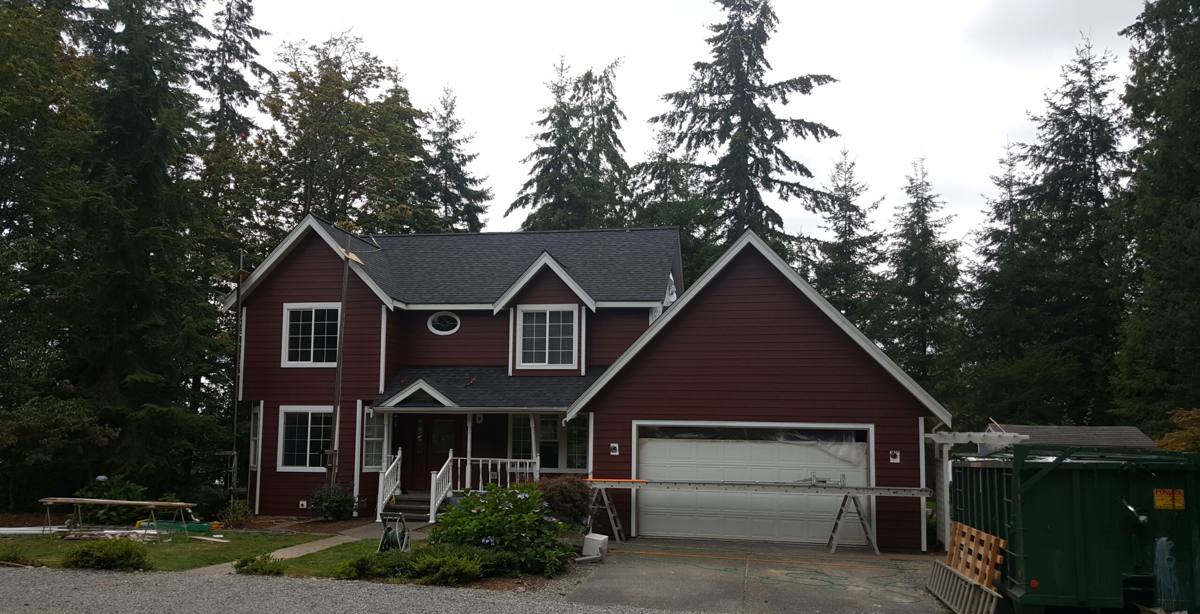
What Salt Air, Rain, and Moss Actually Do to a Wall
Salt Air
Airborne salt from the channel and the Sound settles on every exterior surface. On unprotected wood trim it accelerates checking and rot. On lower-grade fasteners and flashing it speeds up corrosion, which is how you end up with rust streaks bleeding down a wall long before the siding itself is due for replacement.
Driving Rain
Wind off open water doesn't just fall on a house — it pushes rain sideways into joints, laps, and butt seams. Any siding system that relies on face-sealing (caulk alone, rather than proper overlap and flashing) will eventually let water behind the cladding. Once moisture gets behind siding in a climate this consistently damp, it has very little chance to dry out before the next storm arrives.
Moss Season
Skagit County's mild, wet winters and shaded lots are close to ideal moss-growing conditions. Moss holds moisture directly against a wall surface for extended periods. On materials that absorb water or that use finishes prone to breaking down, sustained moss contact shortens the useful life of the siding and its paint film.
Why James Hardie Is the Right System for This Site Condition
James Hardie fiber cement is engineered from cement, sand, and cellulose fiber — it doesn't rot, it isn't a food source for moss or mildew the way wood-based products can be, and it holds up to sustained damp exposure far better than wood or wood-composite siding. Hardie also builds region-specific HZ5 product engineering for the Pacific Northwest's wet climate, which is what we specify on La Conner homes.
Just as important is the factory-applied ColorPlus finish. It's baked on under controlled conditions rather than field-sprayed, which gives it better adhesion and UV/moisture resistance than most site-applied paint — a real advantage when a wall spends half the year under a damp, shaded film of moss and algae. We don't install vinyl, LP SmartSide, primed wood, or other fiber cement brands on these homes; Hardie's combination of moisture-resistant engineering, factory finish, and long transferable warranty is why we standardized on it, especially in a microclimate like this one.
What a Correct Installation Involves Here
Fiber cement siding is only as good as the details behind it. A rushed or generic install can fail in this climate even with the right board on the wall. The parts that matter most in La Conner:
- Weather-resistive barrier and rainscreen detailing — a drainage gap behind the siding lets any incidental moisture escape instead of sitting against the wall, which matters more here than in a drier part of the county.
- Correct fastener spec — corrosion-resistant fasteners set to Hardie's exact pattern and depth, not generic nails driven too deep or too shallow.
- Proper flashing at every penetration — windows, doors, vents, and roof-to-wall transitions are where driving rain actually gets in; flashing has to shed water down and out, not rely on caulk to do the whole job.
- Manufacturer-spec gaps and clearances — Hardie panels need a gap from grade, roofing, and abutting trim so the board can't wick moisture from standing water or trapped debris.
- Caulking only where Hardie's instructions call for it — over-caulking traps water behind boards just as often as under-caulking lets it in.
None of this is unusual for a fiber cement job in theory — but it's the details a crew skips when they're not used to building for a wet marine site, and those are exactly the details that show up as problems two or three winters later.
How Our Process Works
- On-site inspection — we look at the current siding, trim condition, and the specific exposure of each wall (which sides take the worst wind-driven rain, where moss is already established, where past water damage shows).
- Product and profile selection — HardiePlank lap siding, HardieShingle, or HardiePanel depending on the home's style, plus trim and color selection from the ColorPlus palette.
- Removal and substrate check — old siding comes off and we check the sheathing underneath for rot or moisture damage before anything new goes up. This step is non-negotiable on a home that's had years of channel-side exposure.
- Weather barrier and drainage plane installation — set up correctly before a single piece of siding goes on.
- Hardie installation to manufacturer spec — fastener pattern, flashing, gaps, and joints installed to Hardie's published requirements, which is also what keeps the product warranty intact.
- Final detailing and cleanup — caulking only where specified, trim finished out, site cleaned up.
Choosing a Hardie Product Line for a La Conner Home
Not every Hardie profile is chosen the same way here — exposure and existing architecture both matter.
| Product Line | Best Fit For | Relevant to La Conner Because |
|---|---|---|
| HardiePlank Lap Siding | Traditional and craftsman-style homes, the most common replacement choice | Widest color and texture range; performs well on the exposed, wind-facing walls closest to the channel |
| HardieShingle | Homes with a cottage or shingle-style look | Gives a traditional coastal look without the moisture problems of real wood shingle in a damp marine climate |
| HardiePanel | Modern facades, accent walls, gable ends | Clean vertical lines that hold up well on shaded, moss-prone gable faces when installed with proper drainage |
| HardieTrim | Corner boards, window and door trim | Replaces rot-prone wood trim, which is usually the first thing to fail on an older channel-side home |
Living With Moss Season: What Homeowners Can Do
Even the right siding system benefits from basic upkeep in a climate this wet. None of this is complicated, but it's easy to let slide.
- Rinse siding gently once or twice a year to clear early moss and algae growth before it establishes — a garden hose is enough; skip the pressure washer on close range.
- Trim back vegetation and tree cover that keeps a wall section shaded and damp longer than the rest of the house.
- Keep gutters and downspouts clear so roof runoff isn't sheeting down a wall face during heavy rain.
- Check caulking at trim joints and penetrations annually — this is normal maintenance for any siding, but matters more given the rainfall here.
- Watch for streaking or discoloration near ground level, a common sign of splash-back from poor grading or missing clearance.
Why Local Installation Experience Matters
Generic siding crews that mostly work drier inland jobs don't always adjust their approach for a site like La Conner. A rainscreen gap that's optional forty miles east is not optional here. Flashing details that get away with being "good enough" elsewhere don't hold up against sustained wind-driven rain off the channel. A crew that already works this part of Skagit County knows which walls need the most attention before they even start the estimate, because they've seen how identical homes perform two streets over.
That local pattern recognition is worth as much as the product itself. The best fiber cement siding on the market still fails early if it's installed the same way you'd install it in a dry climate 200 miles from open water.
Get a Straight Answer for Your Home
If your current siding is showing moss buildup, rust streaking, soft spots, or paint failure, it's worth having someone look at it before another wet season adds to the damage. We'll walk your home, tell you honestly what we see, and explain what a proper James Hardie installation would involve for your specific exposure — no pressure, no upsell. Use the form below to request a free estimate.