 Anacortes Exterior
 Why Burlington Decks Wear Differently Than Decks Inland
Burlington sits a short drive from the salt water that surrounds Anacortes and Fidalgo Island, and that proximity matters more than most homeowners realize. Weather systems moving in off the Salish Sea don't stop at the water's edge — they carry salt-tinged moisture, driving rain, and near-constant humidity well into Skagit County. A deck built to a generic national standard doesn't hold up the same way here as it would in a dry inland climate. It holds up the way a deck built for this specific corner of Washington needs to.
Add in the region's long, gray moss season — stretching from fall through spring in a typical year — and you get a combination that quietly attacks decks from multiple directions at once: fasteners corrode faster, wood fibers stay damp longer between dry spells, and moss and algae hold moisture against boards and framing far longer than a quick rinse addresses. None of this means a deck is doomed. It means repairs done here need to account for conditions that a lot of contractors, especially ones who don't work this area regularly, tend to underestimate.
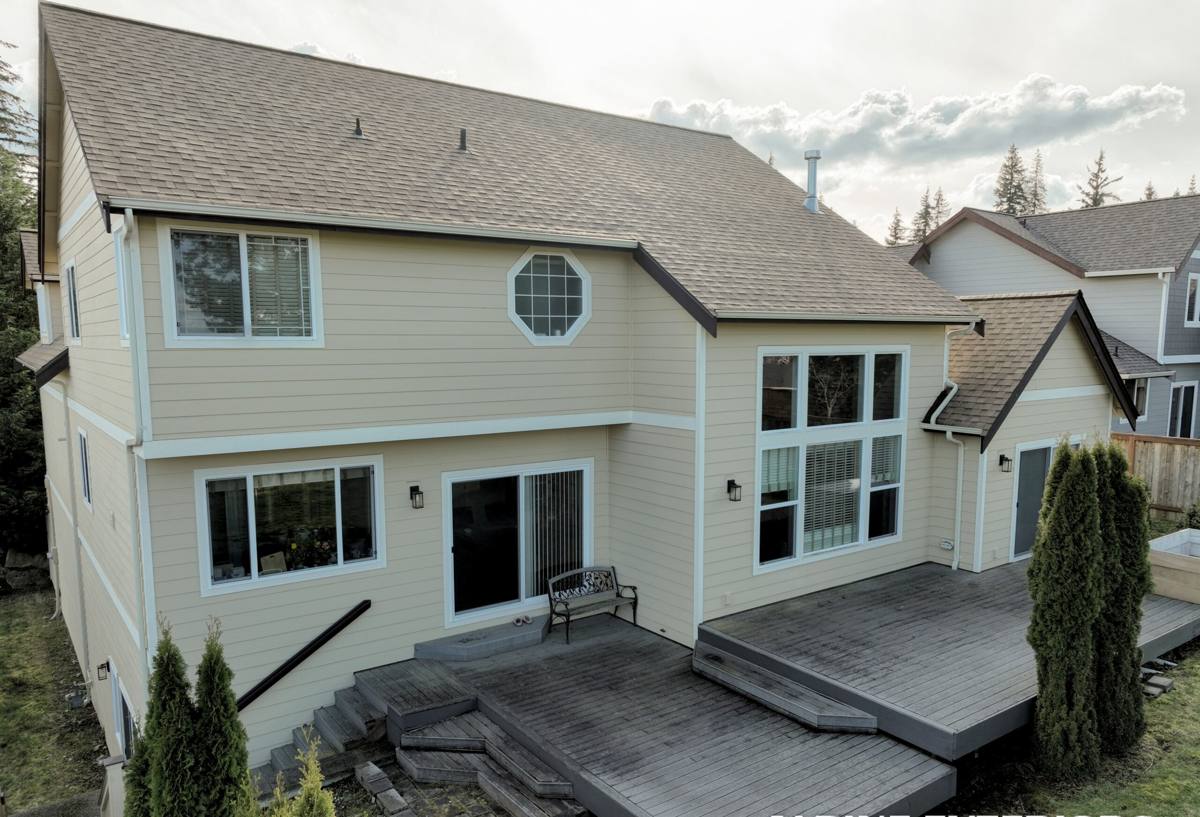
Signs Your Deck Needs Repair — And What Can Wait
Structural Red Flags
Some issues are urgent because they affect whether the deck is actually safe to stand on. These are the ones we prioritize on every inspection:
- Soft, spongy, or spring-loaded decking boards, especially near the house or at board ends
- Rust staining or streaking around fastener heads, which usually signals corrosion happening below the surface
- Any gap, crack, or separation where the deck meets the house at the ledger board
- Wobbly or loose railings and posts — a common problem after a wet winter
- Visible rot, dark staining, or a soft "give" when you press a screwdriver into framing members
- Stairs that flex, shift, or feel uneven underfoot
Cosmetic Issues That Can Wait
Graying wood, faded stain, surface mildew, and light moss on the boards are appearance issues, not safety issues, in most cases. They're worth addressing so they don't turn into bigger problems later, but they don't need emergency attention the way a soft board or a failing ledger connection does. Part of a good inspection is telling you honestly which category a given issue falls into, rather than treating everything as urgent.
What a Correct Deck Repair Actually Involves
The Ledger Board and Flashing
The ledger board — where the deck attaches to the house — is the single most important connection on the whole structure, and it's also the part most exposed to water running down the siding. Proper flashing above and behind the ledger keeps water from tracking behind the board and rotting it from the inside out, where it's invisible until the damage is severe. A repair that patches visible rot but skips checking the flashing behind it isn't a repair — it's a delay.
Framing and Joists
Joists and beams take the structural load, and once moisture gets into end grain or fastener holes, rot spreads along the grain faster than most people expect. A correct repair means removing compromised wood back to solid material, not just sistering a new board over a bad one and hoping it holds.
Decking Boards and Fasteners
Board replacement is the most visible part of a repair, but the fasteners matter just as much. In a salt-influenced, high-moisture climate, the wrong fastener corrodes years before the wood around it fails, which then loosens boards and creates the soft spots homeowners notice first.
Railings and Stairs
Railing posts are often under-built relative to the load they're expected to carry, especially on older decks. Repair work here usually means reinforcing post connections at the framing level, not just tightening what's already loose — a loose railing post is almost always a symptom of a weak connection underneath, not a hardware problem you can fix with a longer screw.
Matching Materials the Right Way
When we repair a section of deck, the goal is a repair that behaves the same way structurally and visually as the rest of the deck over time — not just a patch that matches on day one. That means thinking through material choice section by section rather than defaulting to whatever's fastest.
| Material | Best Use in Repairs | Climate Trade-Off Here |
|---|---|---|
| Pressure-treated lumber | Framing, joists, structural repairs | Reliable and affordable, but needs a real moisture-managed detail (flashing, gapping) to perform long-term in this climate |
| Cedar | Visible decking boards, railings on higher-end decks | Naturally rot-resistant and handles moisture well, but requires periodic sealing to control graying and moss uptake |
| Composite decking | Full or partial board replacement where low maintenance matters | Resists moss and moisture damage well, but section-repairs can be harder to color-match to older composite boards that have faded |
| Fasteners (galvanized vs. stainless) | All structural and surface connections | Stainless costs more upfront but resists the corrosion that salt-air and constant moisture accelerate on standard galvanized hardware |
There's no single "best" material for every repair — it depends on what the rest of the deck is built from, what the homeowner wants to maintain going forward, and which parts of the deck are structural versus cosmetic. We walk through those trade-offs honestly rather than pushing whatever's easiest for us to install.
How Our Repair Process Works
We keep the process straightforward because deck repair shouldn't feel like a mystery:
- Inspection. We check the ledger, framing, decking, and railings — not just the spot you called about — because problems in one area often start somewhere else.
- Honest scope. We tell you plainly what's structural and needs immediate attention versus what's cosmetic and can be scheduled on your timeline.
- Material selection. We match or upgrade materials based on what the existing deck can support and what you want out of it long-term.
- Repair work. We remove compromised material back to solid wood or framing, correct any moisture or flashing issues we find, and rebuild with fasteners rated for this climate.
- Finish and protection. Where applicable, we seal or finish repaired sections so they weather consistently with the rest of the deck.
Repair vs. Full Rebuild: What Actually Drives the Decision
Homeowners often assume a deck with visible problems needs full replacement. Often it doesn't. The decision usually comes down to how much of the structure — versus the surface — is affected.
| Factor | Favors Repair | Favors Rebuild |
|---|---|---|
| Ledger board condition | Sound, properly flashed | Rotted or improperly flashed with hidden water damage |
| Framing/joists | Isolated soft spots or localized rot | Widespread rot across multiple joists or beams |
| Age of structure | Under 15-20 years, built to a reasonable standard | Original construction quality was poor or deck is well past typical service life |
| Decking boards | Scattered bad boards among otherwise sound ones | Most boards showing rot, cupping, or fastener failure |
| Code/permit status | Existing structure meets current safety basics | Structure has known code or engineering deficiencies |
We'll tell you which column your deck falls into rather than defaulting to the more expensive option. A lot of decks that "look bad" from moss staining and gray wood are structurally sound underneath and just need targeted repair, not a rebuild.
Keeping a Repaired Deck in Good Shape
A repair is only as good as the maintenance that follows it, especially in a climate that never really dries out for long. A little seasonal attention goes a long way toward protecting the work:
- Sweep leaves and debris off the deck regularly — trapped organic matter is what feeds moss and holds moisture against boards
- Rinse off moss and algae before it gets a foothold, rather than waiting until it's established
- Check railings and stair connections once or twice a year for any new looseness
- Keep gutters and downspouts near the deck clear so runoff isn't draining directly onto or behind it
- Re-seal or re-stain wood decking on the schedule appropriate to the product — don't wait until it's visibly gray and dry
- Watch the area where the deck meets the house after heavy rain for any signs of water pooling or tracking behind siding
Why a Crew That Already Works Burlington Matters
Deck repair isn't just carpentry — it's carpentry that has to hold up against a specific set of conditions. A crew that works Anacortes and Burlington regularly already knows how fast moss establishes on shaded north-facing sections, which fastener types actually last against salt-influenced moisture, and how local ledger and flashing failures tend to show up before they become visible from the surface. That's the difference between a repair that's cosmetically fine for a season and one that's genuinely built to last in Skagit County conditions.
We also know that every deck repair here is really a decision about trade-offs — cost versus longevity, matching materials versus upgrading them, patching versus rebuilding a section properly. We'd rather walk you through those trade-offs honestly than oversell a bigger job than you need or under-scope a repair that won't hold.
Get a Free, No-Pressure Estimate
If your Burlington-area deck has soft spots, loose railings, rust staining, or you just haven't had it looked at in a while, we're happy to come take an honest look. There's no obligation and no pressure — just a straight assessment of what's going on and what it would take to fix it right. Use the form below to request your free estimate.