 Anacortes Exterior
 Exterior Work in Mount Vernon's Skagit Valley Climate
Mount Vernon sits in the Skagit Valley, close enough to the Salish Sea to share in the marine air that defines exterior wear across this part of Washington, but far enough inland to also deal with the valley's own damp, low-lying air. That combination is tougher on a home's exterior than either factor alone. Homeowners here deal with driving rain off Pacific storm systems, long stretches of overcast humidity, and a moss and mildew season that can run for much of the year on north-facing walls, rooflines, and shaded decks. None of this is dramatic weather — it's the slow, steady kind that finds every weak point in a home's exterior over years rather than days.
That's the environment we build for. As a Skagit County contractor based in Anacortes, we see the same patterns repeat on homes throughout Mount Vernon: siding that's failed at the bottom courses, moss colonizing north-facing roof slopes, window sills that have gone soft, and deck boards that never quite dry out between rains. Good exterior work in this valley isn't about picking the flashiest product — it's about choosing materials and installation methods that actually shed water and resist rot in a climate that rarely lets a house dry all the way out.
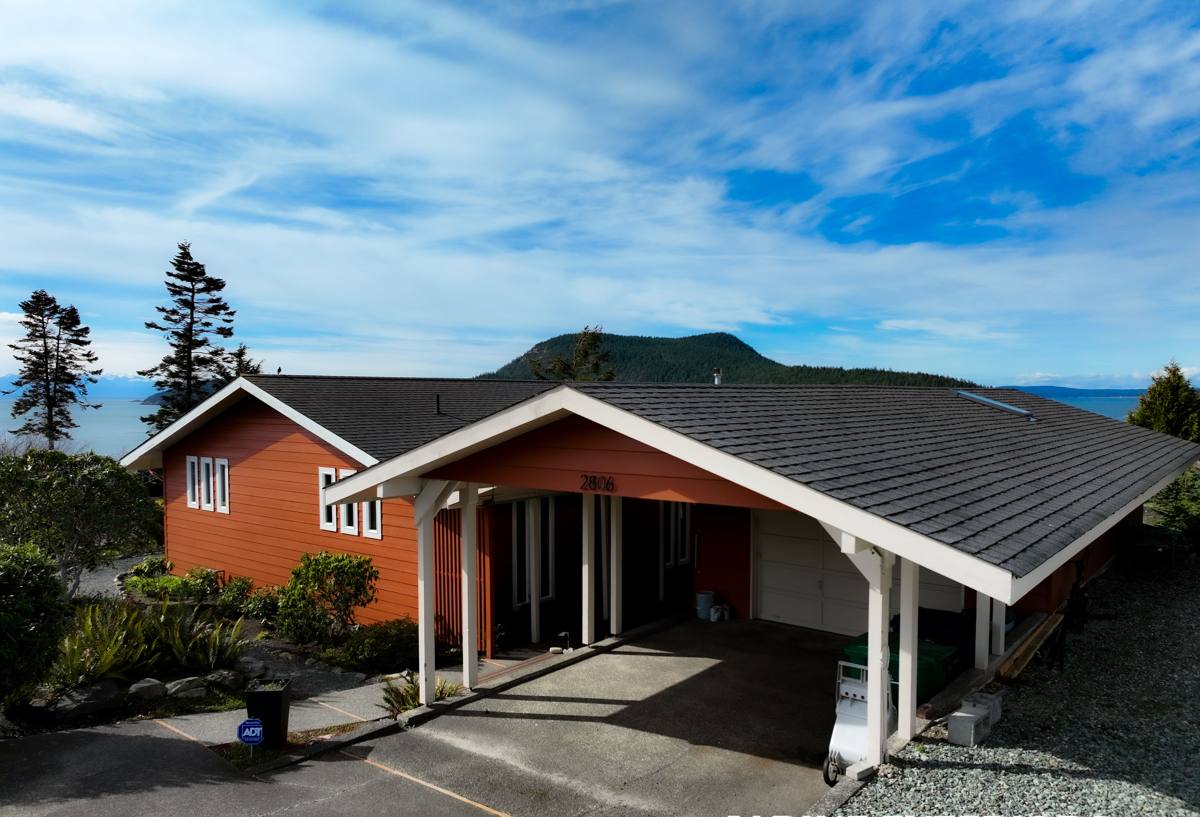
What Constant Moisture Does to a Home's Exterior
Siding
Wood-based and wood-adjacent siding products absorb moisture at seams, edges, and fastener holes. In a drier climate that moisture would evaporate quickly; in the Skagit Valley it often doesn't get the chance before the next rain arrives. Over time this leads to swelling, delamination, and rot — especially near ground level, under eaves with poor drainage, and on walls that face prevailing weather.
Roofing
Moss and algae growth on roofs isn't just cosmetic. Moss holds moisture against shingles and can lift edges over time, shortening the life of the roof and increasing the chance of leaks at valleys and penetrations. Roofs with poor ventilation or inadequate underlayment show this wear faster than properly detailed systems.
Windows
Window failures around here are rarely about the glass itself — they're about the seal, the flashing, and the sill. Once water finds a path behind trim or under a sill pan, it can sit there for months in this climate, leading to hidden rot in the framing long before anything looks wrong from outside.
Decks
Decks take the worst of it because they're horizontal, exposed, and often shaded by trees that keep them damp longer than any other part of the house. Ledger boards, joists, and the connections between them are the most common failure points, along with surface boards that trap water between planks.
Why We Only Install James Hardie Fiber Cement Siding
We get asked why we don't offer vinyl, LP SmartSide, cedar, or other engineered wood siding products. It's a fair question, and the honest answer is that in a climate like Mount Vernon's, we've made a professional decision to standardize on one product system we trust to perform over the long haul: James Hardie fiber cement siding.
Vinyl siding is inexpensive and low-maintenance in the sense that it doesn't need painting, but it's a thin plastic product that can warp in temperature swings, crack on impact, and fade unevenly over time — and it doesn't offer meaningful protection if there's ever a wildfire event nearby, which is a growing consideration across Washington. LP SmartSide and other engineered wood products use resin-treated wood strand technology that performs reasonably well when installation is flawless, but any gap in caulking, flashing, or edge sealing gives moisture a path into the wood substrate — and in a valley that stays damp this long, that margin for error is thin. Cedar and primed spruce are genuinely handsome materials, but they require an ongoing maintenance commitment — refinishing, caulking, and monitoring — that most homeowners underestimate when they choose them.
James Hardie fiber cement is a cement-and-cellulose composite that doesn't absorb water the way wood-based products do, doesn't warp like vinyl, and carries a factory-applied ColorPlus finish that's baked on rather than field-painted, which matters when your painting season is short and unpredictable. It's also non-combustible, which is an increasingly relevant consideration as fire risk expands across the state. That combination — moisture resistance, finish durability, and fire performance — is why it's the only siding system we put our name on.
| Factor | James Hardie Fiber Cement | Vinyl | LP SmartSide / Engineered Wood | Cedar / Primed Wood |
|---|---|---|---|---|
| Moisture resistance | High — cement-based, doesn't swell or rot | Doesn't absorb water, but seams can trap it | Moderate — depends heavily on sealed edges | Low to moderate — needs ongoing maintenance |
| Finish durability | Factory ColorPlus finish, long fade resistance | Can fade and chalk over time | Field-painted, needs repainting | Field-finished, needs repainting/staining |
| Fire resistance | Non-combustible | Combustible, can melt/deform | Combustible | Combustible |
| Typical maintenance | Occasional wash, caulk checks | Low, but limited repair options | Regular caulk/paint inspection | Frequent refinishing |
Roofing for Skagit County Homes
Roofing decisions in Mount Vernon come down to two things: how well the system sheds water at every seam, valley, and penetration, and how well it handles moss. We look at ventilation, underlayment quality, and flashing detail as much as the shingle or panel choice itself, because a premium roofing material installed with poor flashing will still leak. For homes with significant tree cover — common throughout the Skagit Valley — we also talk through moss management as an ongoing part of roof care, not a one-time fix.
Windows That Actually Keep Water Out
Replacing windows in this climate is as much about the flashing and sill pan detail as it is about the window unit itself. A high-quality window installed without proper sill pan flashing and integrated water management will eventually leak, while a well-detailed installation extends the life of both the window and the wall framing around it. We also talk with homeowners about energy performance, since Skagit Valley's damp, overcast winters put real demand on heating systems, and older single-pane or poorly sealed windows are often a bigger source of heat loss than people expect.
Decks Built for a Wet Valley
Decking in Mount Vernon needs to handle standing moisture, shade, and organic debris without trapping water against structural framing. That starts below the surface boards — proper joist spacing, flashing tape on ledger connections, and gaps that let air move and water drain are what determine whether a deck lasts. Surface material matters too: some composite decking products handle constant damp shade better than others, and we walk homeowners through the real trade-offs rather than just selling the most expensive option.
Why a Local Crew Matters Here
Exterior work done by a crew unfamiliar with this specific climate tends to show it within a few years — caulk joints that weren't built for this much rain, flashing details that work fine in a drier region but not here, or siding installed without the clearances fiber cement needs to perform properly in a wet environment. Being based in Anacortes and working throughout Skagit County means we see how materials and installation methods actually hold up here over time, not just how they're rated on a spec sheet. That local track record shapes every recommendation we make, from which underlayment goes under a roof to how a deck ledger gets flashed.
What Affects Project Cost
| Factor | Why It Matters |
|---|---|
| Home size and wall/roof complexity | More corners, dormers, and transitions mean more labor and material detailing |
| Existing damage or rot | Hidden moisture damage found during tear-off adds repair scope |
| Product line chosen | Hardie's HZ product lines and trim options vary in cost by climate zone and finish |
| Access and site conditions | Tree cover, slope, and staging space affect labor time |
| Scope bundling | Combining siding, roofing, window, or deck work can reduce overlapping costs |
A Seasonal Exterior Maintenance Checklist for Skagit Valley Homes
- Inspect roof valleys and north-facing slopes for moss buildup at least once a year
- Clear gutters and downspouts before the fall rains set in
- Check caulking around windows and siding seams annually for cracking or gaps
- Look for soft spots or staining at deck ledger boards and stair connections
- Keep vegetation and tree debris trimmed back from siding and roof edges
- Wash siding periodically to prevent long-term algae and mildew staining
- Watch for peeling paint or discoloration near ground level, a common early sign of moisture intrusion
Getting Started
If you're weighing siding, roofing, window, or deck work on a Mount Vernon home, we're glad to walk the property with you, point out what the climate has already done to your current exterior, and lay out honest options — no pressure, no upsell. Use the form below to request a free estimate.