 Anacortes Exterior
 Roofs in Mount Vernon Work Harder Than People Think
Mount Vernon sits inland along the Skagit River, but it still gets the full weather package that defines this part of Western Washington: long stretches of steady, driving rain from fall through spring, humid marine air that moves in off Puget Sound, and tree cover that keeps roofs shaded and damp for much of the year. That combination is exactly what moss, algae, and slow leaks need to get started. It's also why a roof that would be fine in a drier climate can develop real problems here after just a few seasons of neglect.
We're not describing a disaster scenario — most of what we fix in Mount Vernon is ordinary wear that got a head start because of the local climate. The goal of this page is to explain what that wear actually looks like, what a proper repair involves, and why it's worth having someone who already knows this area's roofs look at yours before a small problem turns into a ceiling stain.
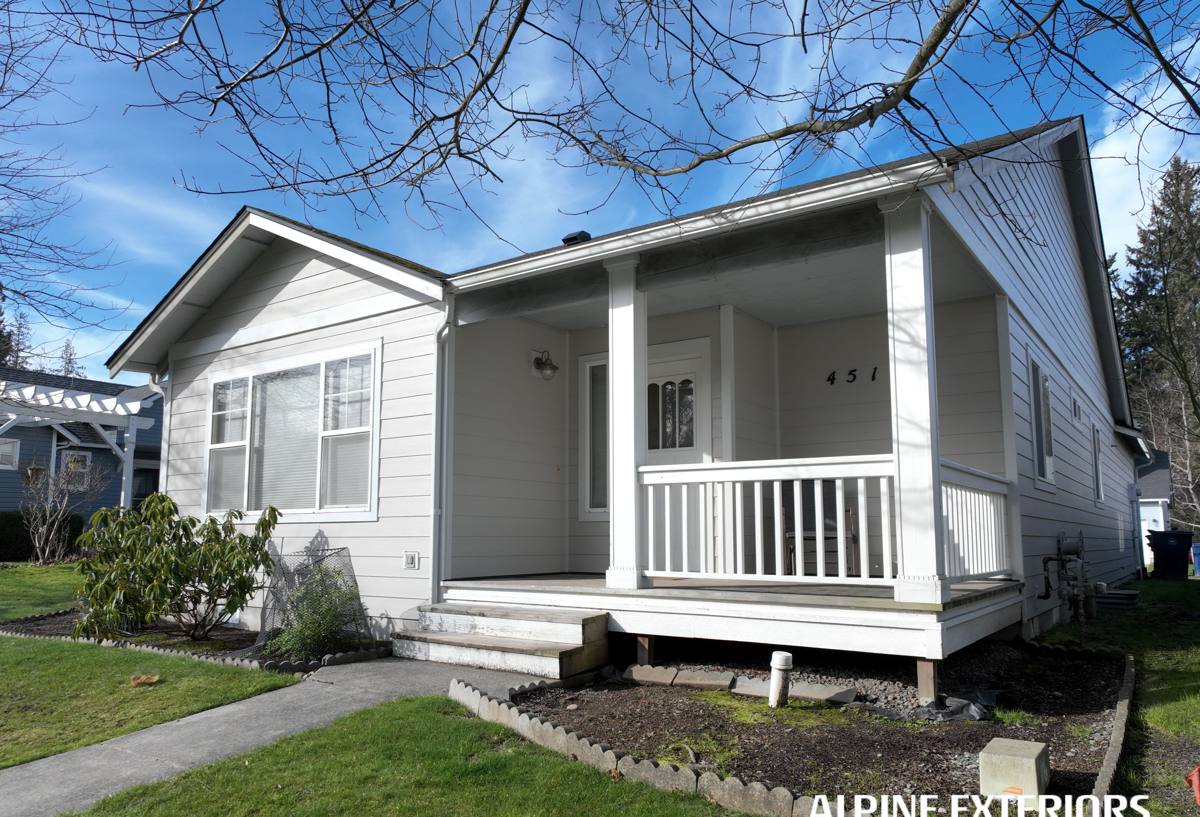
What the Skagit County Climate Does to a Roof Over Time
Moss and Organic Growth
Shaded, north-facing roof sections and anywhere debris collects (valleys, behind chimneys, along lower eaves) stay damp longer here than in sunnier climates. Moss takes hold in those spots, and as it grows it lifts shingle edges and holds moisture directly against the roofing material. Left alone through a full moss season, that moisture intrusion works its way under shingles and into the deck below.
Driving Rain and Wind-Driven Water
It's not just total rainfall — it's the direction. Storms moving through the Skagit Valley often push rain sideways into vertical surfaces: siding-to-roof transitions, chimney flashing, dormers, and skylight curbs. Flashing and sealant that would hold up fine against straight-down rain can fail under wind-driven water, which is why so many "mystery leaks" trace back to a flashing detail rather than the shingles themselves.
Humidity and Slow-Drying Materials
Even on days without active rain, the air here stays humid. Roofing materials, especially wood-based decking and older felt underlayment, dry out slowly. That extends the window during which minor moisture intrusion can cause rot, rather than just evaporating off before it does damage.
The Repair Issues We See Most Often in Mount Vernon
- Moss-lifted shingles along shaded slopes and roof valleys, especially on homes with mature trees nearby
- Failed flashing around chimneys, skylights, and roof-to-wall transitions where wind-driven rain gets pushed sideways
- Clogged or damaged valleys where two roof planes meet and debris naturally collects
- Worn pipe boot seals — the rubber collars around plumbing vents crack and shrink over time, and they're a very common source of ceiling leaks
- Gutter and edge issues that send water back under the roof edge instead of away from the house
- Granule loss and brittle shingles on older roofs, where UV exposure and moisture cycling have worn the material past the point of a simple patch
Most of these show up as small, localized problems first. Caught early, they're a repair. Ignored through a wet Skagit County winter, several of them turn into deck rot, insulation damage, or interior drywall repair — which costs a lot more than the roof work would have.
What a Correct Roof Repair Actually Involves
A roof repair isn't just "find the leak, seal it." A leak on the ceiling can show up feet away from where water is actually entering the roof, because water travels along the underlayment and framing before it drips. Doing the job right means tracing the problem to its actual source, not just patching where the stain appears.
What We Check Before Any Repair
- The roof deck condition underneath the damaged area — soft, delaminating, or stained decking needs to be addressed, not just covered
- Flashing at every penetration and transition near the problem area, not just the one that looks obviously bad
- Underlayment condition, especially on older roofs where the felt or synthetic barrier may have degraded
- Ventilation — poor attic airflow contributes to moisture buildup and can cause damage that looks like a roof leak but isn't
- Whether the surrounding shingles or roofing material are still in good enough shape to properly integrate a repair, or whether the section needs a larger patch
A repair that skips this diagnostic step is really just a bandage. It might buy a season or two, but if the underlying cause (bad flashing geometry, saturated decking, moss holding water against the surface) isn't addressed, the same leak often comes back in a different spot nearby.
Our Repair Process
- Inspection and diagnosis. We get on the roof (or use a camera where access is limited) and trace the actual water path, not just the visible symptom.
- Straight explanation. We show you what we found, what's causing it, and what it will take to fix — including if we think a full section replacement makes more sense than a patch.
- Written scope and price before any work starts, so there are no surprises.
- The repair itself — removing damaged material back to sound decking, correcting flashing details, replacing underlayment where needed, and matching shingles or roofing material as closely as possible to the existing roof.
- Cleanup and check. We clear debris and moss where it contributed to the problem, and check surrounding areas for related wear so you're not calling us back next month for the section right next to it.
Repair vs. Replacement: How We Help You Decide
Not every roof problem needs a full replacement, but not every roof problem should be patched indefinitely either. Here's how we generally weigh it:
| Factor | Leans Toward Repair | Leans Toward Replacement |
|---|---|---|
| Roof age | Under roughly 15 years, or well-maintained | At or past the material's expected service life |
| Extent of damage | Localized — one section, one flashing detail, one valley | Multiple areas, or damage spread across the roof |
| Deck condition | Solid decking under the damaged area | Soft, rotted, or repeatedly wet decking |
| Shingle condition nearby | Surrounding material still flexible and granule-intact | Widespread granule loss, curling, or brittleness |
| Repair history | First or second repair in that spot | Same area has needed repeated repairs |
We'll always tell you honestly which side of that table your roof falls on. A repair that's likely to fail again within a year isn't a good use of your money, and we'd rather say so upfront than sell you a patch we don't believe in.
Signs a Mount Vernon Homeowner Should Call for a Roof Repair
- Water stains on ceilings or upper interior walls, especially ones that appear or worsen during heavy rain
- Visible moss buildup on the roof surface, particularly in valleys or shaded slopes
- Granules collecting in gutters or at downspout outlets
- Shingles that look curled, cracked, or are visibly missing after a windstorm
- Daylight visible through the attic roof deck
- Soft or spongy spots when the roof is walked (a sign for a professional to check, not a DIY test)
- A musty smell in the attic, which often points to trapped moisture before a leak ever reaches the ceiling
If any of these sound familiar, it's worth having someone look before the next round of Skagit Valley rain finds the weak spot.
Materials and Roof Types We Work On
Mount Vernon has a mix of housing stock, from older homes with wood-frame roofs to newer builds, and we do repair work across the common roofing types found in the area: composition (asphalt) shingle, which is by far the most common; metal roofing; and cedar or wood shake on older homes. Each material fails differently and needs a different repair approach — a shingle repair and a metal panel repair aren't the same job, and treating them the same is how repairs fail early. We match technique and materials to what's actually on your roof rather than applying a one-size-fits-all fix.
For moss-prone roofs specifically, we also talk with homeowners about zinc or copper strips and periodic soft washing as part of a longer-term maintenance plan, since a repair addresses the current damage but doesn't stop moss from coming back if the conditions that caused it (shade, debris, moisture) haven't changed.
Why It Matters That We Already Work Mount Vernon Roofs
A crew that regularly works Skagit County roofs already knows how local weather patterns tend to attack a roof — which slopes hold moss longest, which flashing details fail first under wind-driven rain, and how fast a small deck leak can spread during a wet winter. That local pattern recognition speeds up diagnosis and helps avoid guesswork.
It also means we're realistic about timing. Roof repairs in this region are weather-dependent, and we plan around rain windows rather than promising a schedule the weather won't allow. A rushed repair done in the wrong conditions — sealant applied to a damp surface, for example — often fails faster than the original problem did.
Being local also means we're accountable after the job. If a repair doesn't hold up the way it should, we're not a crew that drove in from out of the area and is hard to reach — we're still working roofs down the street.
Get a Straight Look at Your Roof
If you're dealing with a leak, moss buildup, or storm damage on a Mount Vernon roof, we're happy to come take a look and give you a clear, no-pressure estimate — including an honest answer on whether a repair makes sense or whether you'd be better served by something more. Use the form below to get started.