 Anacortes Exterior
 Windows Built for Edison's Particular Kind of Weather
Edison sits on the flats between the Skagit Valley farmland and Samish Bay, close enough to the water that salt-laden air is a regular visitor and far enough into the county that fog, low cloud, and standing damp linger longer than they do a few miles inland. Add in the driving rain that comes off the Sound most of the year and the moss that takes hold anywhere shade and moisture sit together, and you have a climate that is genuinely hard on windows. Not dramatic, storm-driven damage — just slow, steady wear that shows up as fogged glass, soft trim, and frames that stick or swell years before they should.
Custom windows for an Edison property are not just about matching an odd-sized opening. They're about specifying glass, frame material, and installation details that are actually suited to this stretch of Skagit County, rather than whatever is fastest to order. That's the difference between a window that looks fine at handoff and one that still performs a decade later.
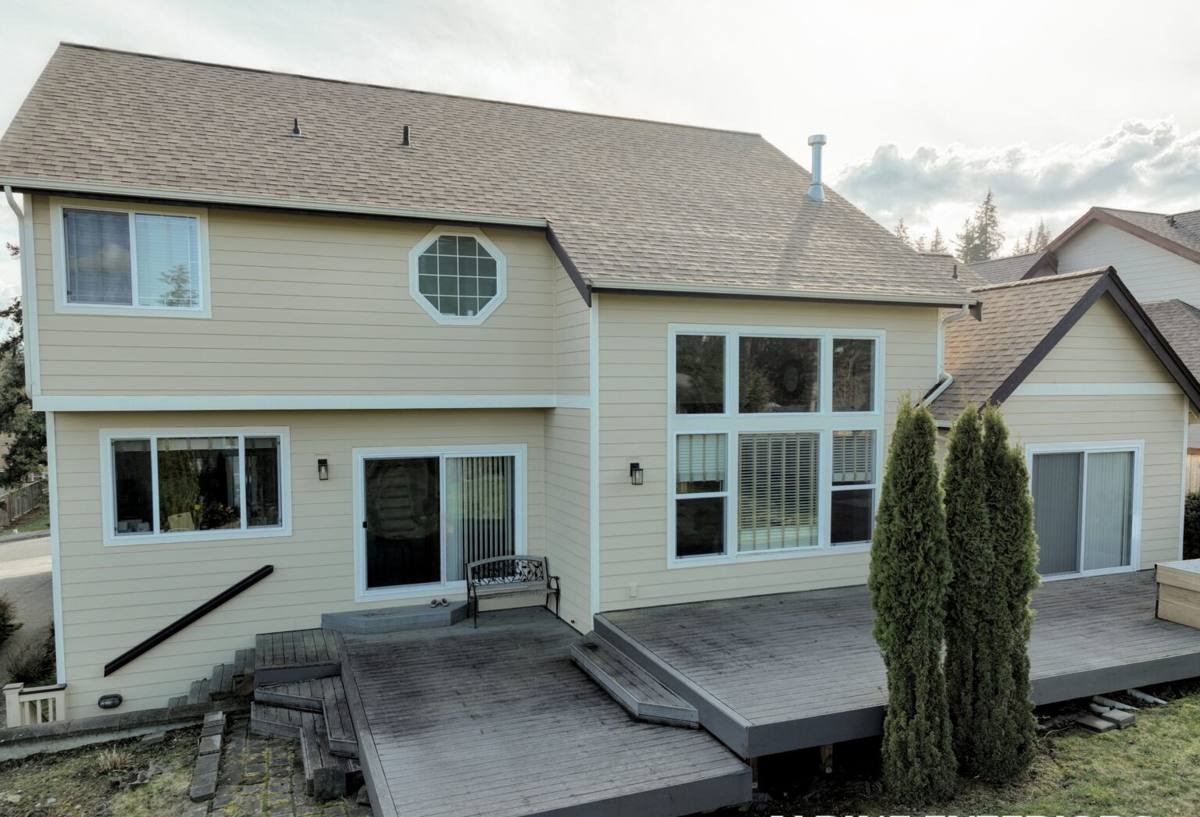
What Skagit County's Coastal Climate Does to Ordinary Windows
Salt Air and Slow Corrosion
Airborne salt from Samish Bay and the surrounding sloughs settles on hardware, screen frames, and any exposed metal fasteners. On its own it's a nuisance — a little pitting, a little discoloration. Combined with condensation, it accelerates corrosion on hinges, cranks, and balance systems well before the glass or vinyl itself shows any wear. Homes closest to open water and exposed hillside sites feel this first.
Driving Rain and Wind-Driven Water
Rain in this part of Skagit County rarely falls straight down. Wind pushes it sideways against west- and south-facing walls, which means the seal between window and wall does more work here than it would in a drier, calmer climate. A flashing detail that's "good enough" in a sheltered subdivision can fail outright on an exposed farmhouse wall near Edison.
Moss, Shade, and Trapped Moisture
Mature trees, hedgerows, and the shade thrown by outbuildings common to this area keep certain walls and sills damp for weeks at a stretch. Moss and algae take hold on sills, trim, and anywhere water is slow to shed, and that constant moisture is what rots wood trim and delaminates poor-quality composite sills long before the glass unit itself fails.
What "Custom" Really Means on an Edison Property
A lot of homes and outbuildings in and around Edison are older — farmhouses, converted barns, small studios and storefronts that have been repurposed over the years. Openings in these buildings are frequently out of square, undersized or oversized compared to today's standard window dimensions, and trimmed out in a way that doesn't match anything off a shelf. "Custom" in this context usually means one of a few things:
- Building or ordering a window sized precisely to an existing opening rather than resizing the opening to fit a stock window
- Matching a specific grille pattern, sightline, or sash proportion to preserve the character of an older or architecturally distinct home
- Combining shapes — an arched transom over a standard sash, or a picture window flanked by operable units — for a layout that doesn't come pre-packaged
- Specifying performance upgrades (glass package, frame material, weatherstripping) that a stock builder-grade window simply doesn't offer
None of that has to mean a home loses its character. The goal on an older Edison property is almost always to keep the look of the original opening while quietly upgrading everything behind the trim.
Choosing a Frame Material That Can Handle This Location
There's no single "best" window material — the right choice depends on exposure, budget, and how much upkeep a homeowner actually wants to take on. For a property with real salt-air and rain exposure, here's how the common options compare:
| Frame Material | Salt Air / Moisture Behavior | Maintenance | Typical Lifespan Here |
|---|---|---|---|
| Vinyl | Won't corrode or rot; performs consistently in salt air | Low — occasional cleaning | 20–30 years with quality welded corners |
| Fiberglass | Excellent — dimensionally stable, resists both moisture and salt | Low | 30+ years, holds paint well if color changes are wanted later |
| Aluminum-clad wood | Good on the exterior face, but any breach in the cladding exposes wood underneath to rot | Moderate — cladding seams need periodic inspection | 20–25 years, shorter in heavy shade or poor ventilation |
| Bare wood | Poor without diligent upkeep; the classic look but the highest exposure risk in this climate | High — repainting/sealing on a strict schedule | Highly variable, often under 15 years if maintenance lapses |
We'll spec bare wood or wood-clad where a homeowner wants a specific historic look and understands the upkeep involved, but for most Edison properties — especially anything with direct exposure to weather off the bay — vinyl or fiberglass simply holds up with far less maintenance burden. That's a trade-off we'll walk through honestly rather than upsell either direction.
What a Correct Installation Actually Involves
Most window failures we get called out to fix aren't a bad window — they're a window that was installed without the right water-management details underneath the trim. In a climate that pushes rain sideways into walls, those details matter more than the window itself.
- A sloped sill pan under the rough opening so any water that does get past the exterior seal drains back out, not into the wall cavity
- Flashing tape or membrane integrated correctly with the house wrap, shingled so water sheds downward and outward at every layer
- Backer rod and quality exterior sealant at the frame-to-siding joint, sized and tooled correctly rather than just caulked over gaps
- Proper shimming and squaring so the sash operates smoothly and the weatherstripping seats evenly for the life of the window
- Insulation in the gap between frame and rough opening — not stuffed, not skipped — to control condensation at the frame edge
Skip any one of these and the window can look perfect for a year or two before moisture finds its way in behind the trim, at which point the fix is far more invasive than the original install would have been.
How We Handle a Custom Window Project, Start to Finish
- On-site assessment. We measure existing openings, check for rot or settling around the frame, and look at sun and wind exposure on that particular wall.
- Material and glass selection. We talk through frame material, glass package, and grille or sash style based on the home's age, exposure, and your budget — no default upsell to the priciest option.
- Custom order or fabrication. Sizes and shapes that don't match stock dimensions get ordered or built to the exact opening, not forced into a standard size that leaves gaps to fill.
- Removal and prep. Old windows come out carefully, and we inspect the rough opening for hidden rot or water damage before anything new goes in — better to find and fix that now than seal it behind a new window.
- Installation with full flashing and sealing details. Sill pan, flashing, insulation, and sealant go in as a system, not as an afterthought.
- Final check and walkthrough. We test operation, check seals, and walk the finished work with you before calling the job done.
Signs Your Current Windows Are Already Losing the Fight
Because the damage here tends to be gradual, it's easy to miss until a window is well past the point of a simple fix. Worth checking for:
- Fogging or moisture trapped between panes of double-glazed units — a sign the seal has failed
- Sashes that stick, drag, or won't stay latched, often from swollen wood or corroded hardware
- Soft or spongy trim and sills, especially on shaded or west-facing walls
- Visible moss or dark staining building up on sills and lower trim
- Drafts or a noticeable temperature difference near the window on windy days
- Paint or finish peeling from the inside frame, which often points to condensation problems
Any one of these on its own isn't an emergency, but a window showing two or three of these signs is usually costing you more in heating loss and hidden trim damage than a replacement would cost to fix properly.
Why It Matters to Hire a Crew That Already Works in Edison
A window crew that hasn't worked much on this side of Skagit County will often treat every job the same way they would inland — same flashing approach, same material recommendations, regardless of how close a wall sits to open water or how much shade a sill gets. That's how you end up with a technically fine installation that still fails early, because it wasn't built for the exposure it's actually facing.
Working in and around Edison and the greater Anacortes area regularly means knowing which walls take the worst of the weather, which older building styles need extra care around the rough opening, and how Skagit County's permitting requirements apply to window replacement versus a full opening resize. It also means we're not guessing at lead times for custom sizes or scrambling to source materials that hold up in salt air — we already know what works here and what doesn't.
If your Edison home has windows that are fogging, sticking, or just past their working life, we're happy to take a look and give you a straight assessment — no pressure, no upsell, just what we'd actually recommend for your home and your budget. Use the form below to request a free estimate.