 Anacortes Exterior
 Two Very Different Materials, One Big Decision
If you're re-siding a home in Anacortes or anywhere else in Skagit County, you've almost certainly narrowed it down to two finalists: vinyl siding and fiber cement (the category James Hardie pioneered and still dominates). Both are legitimate, widely used products. Both show up on nice homes. But they behave very differently once they're on a wall facing Rosario Strait wind, weeks of steady drizzle, and the green film of moss that creeps over anything shaded and damp from October through May. This page walks through the honest differences — not marketing claims, just what each material actually does over 20-30 years in this specific climate.
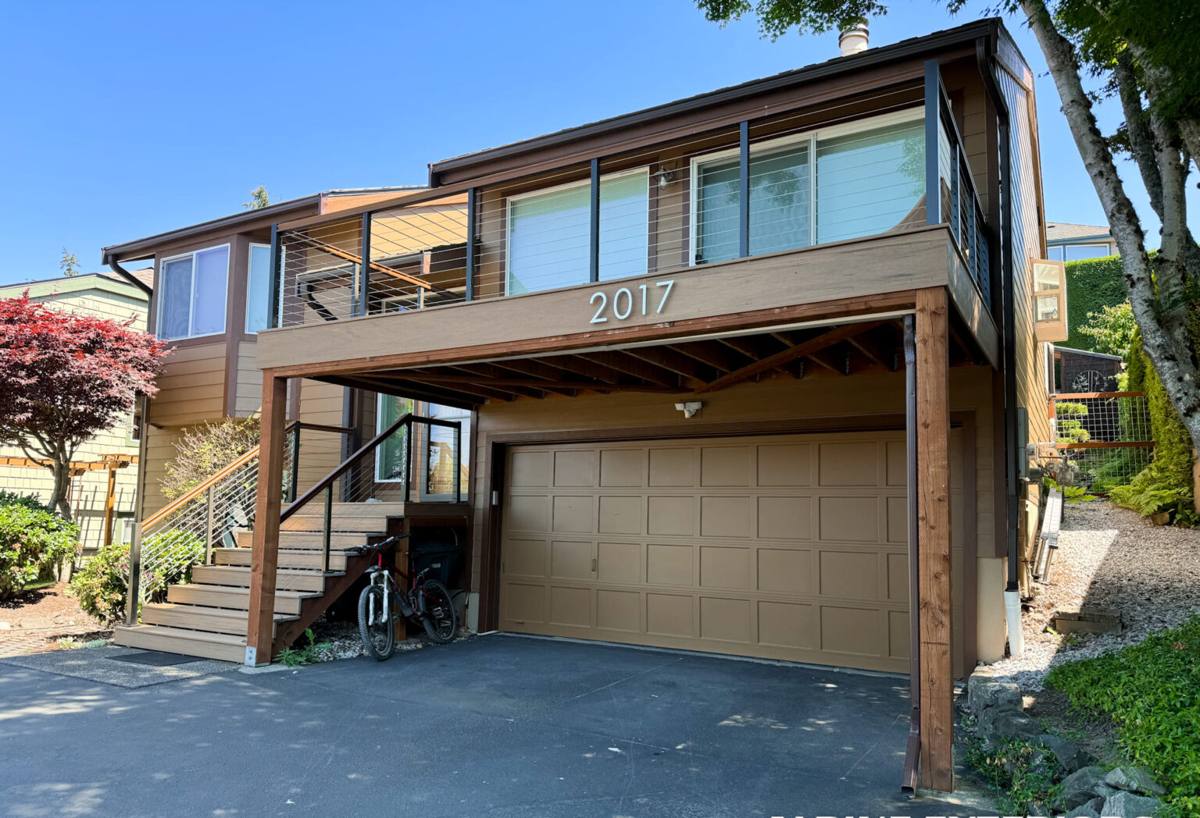
What Vinyl Siding Actually Is
Vinyl siding is extruded PVC plastic, formed into panels that interlock and hang loosely on a wall — it's designed to expand and contract with temperature, which is why it's never face-nailed tight. It's light, inexpensive relative to other claddings, and low-maintenance in the sense that it never needs painting. For a lot of the country, especially drier inland climates, it's a perfectly reasonable choice.
The trade-offs show up in a marine climate. Vinyl is a plastic product, and plastic gets brittle with age and UV exposure. In a spot like Anacortes, where wind off the water can drive rain sideways and gust hard enough to rattle loose panels, older vinyl becomes more prone to cracking, especially in cold snaps when it's already stiffer. Color is baked into the material itself rather than applied as a finish, and that color fades unevenly over time — south and west-facing walls fade faster than shaded north walls, so a 15-year-old vinyl home often shows a visible color mismatch between elevations.
Vinyl also isn't a water barrier by design — it's designed to shed most water while allowing some to get behind it, relying entirely on the water-resistive barrier (housewrap) underneath to do the real work. That's a fine system when installed correctly, but it means the quality of what's behind the vinyl matters as much as the vinyl itself, and a lot of vinyl failures we've seen aren't the panel's fault — they're trapped moisture issues from what's underneath.
What Fiber Cement Actually Is
Fiber cement is a composite of Portland cement, sand, and cellulose fiber, cured into rigid boards and panels. It's dense, heavy, and dimensionally stable — it doesn't expand and contract nearly as much as vinyl or wood with temperature swings, and it doesn't get brittle in cold weather. James Hardie, the product line we install exclusively, finishes most of its boards with a factory-applied finish called ColorPlus, which is baked on in a controlled environment rather than sprayed on-site or left to a job-site painter.
Because it's cement-based, fiber cement is non-combustible — a real consideration given how many summers now bring regional wildfire smoke to the Skagit Valley, even when the fires themselves are elsewhere. It also doesn't feed moss and mildew growth the way some organic-based sidings can, though nothing that sits outside in the Pacific Northwest is fully immune to surface growth — more on that below.
How Each Holds Up Against Anacortes-Specific Weather
Salt Air
Being surrounded by saltwater, Anacortes homes deal with airborne salt that accelerates corrosion of exposed metal fasteners and can leave a fine residue on exterior surfaces. Vinyl doesn't corrode, but its fasteners and trim accessories can, and salt film combined with UV exposure speeds up the chalking and fading vinyl already does naturally. Hardie board itself isn't affected by salt in the same way, though correct fastener selection (stainless or coated, per manufacturer spec) still matters on any product this close to the water.
Driving Rain
Wind-driven rain off the water finds every gap in a building envelope. Vinyl's loose-hanging, overlapping design is meant to shed most of this, but under sustained wind pressure, water can get pushed up and behind panels more than it would on a rigid, tightly-fastened board. Fiber cement, installed with proper flashing, house wrap, and caulking at penetrations, holds a tighter, more rigid plane that's less prone to wind infiltration at the seams.
Moss Season
From fall through spring, shaded north walls and anything under overhangs or trees collects moss and algae here almost regardless of material — that's a function of the Pacific Northwest's damp, low-light winters, not a specific product flaw. The real difference is how the material handles the moisture that moss and algae trap against it. Vinyl sheds surface growth reasonably well with an occasional wash. Fiber cement, being cement-based and non-organic, doesn't provide a food source for mildew, and its factory finish resists staining better over time than field-applied paint — but it still needs the occasional gentle cleaning like any exterior surface in this climate.
Side-by-Side Comparison
| Factor | Vinyl Siding | Fiber Cement (James Hardie) |
|---|---|---|
| Material | Extruded PVC plastic | Cement, sand, cellulose fiber |
| Fire resistance | Melts/deforms under heat | Non-combustible |
| Impact resistance | Can crack, especially when cold | Resists impact; won't dent |
| Color/finish | Color throughout material; fades unevenly by elevation | Factory-baked ColorPlus finish; more uniform long-term fade |
| Wind/rain performance | Loose-hung, relies on housewrap behind it | Rigid, tightly fastened plane |
| Repainting | Never repainted; replaced when faded/damaged | Can be repainted decades later if desired |
| Typical lifespan (installed to spec) | 20-30 years before visible fade/brittleness | 30-50+ years with proper install and care |
| Upfront material cost | Generally lower | Generally higher |
| Warranty structure | Varies widely by manufacturer and often prorated | Long, largely non-prorated manufacturer warranty; ColorPlus finish warranted separately |
Where Vinyl Genuinely Wins
We'd be dishonest if we didn't say this plainly: vinyl costs less upfront, it's lighter and faster for crews to install, and for a rental property, a quick flip, or a budget-constrained project, that math can make sense. There's no shame in choosing it with eyes open. Our position isn't that vinyl is a bad product — it's that we've chosen not to be the ones installing it, because it isn't the standard we want to stand behind on every home we touch, especially in a climate this hard on exteriors.
Why We Standardized on James Hardie
We install James Hardie fiber cement exclusively — no vinyl, no LP SmartSide, no unfinished wood siding. That's a deliberate business decision, not a default. Once you've replaced enough vinyl siding that's cracked from a cold snap, or scraped and repainted enough wood trim that rotted from years of Skagit County rain, it's hard to keep recommending products you know will bring the homeowner back to the same problem in a decade or two.
Hardie's HZ5 product line is specifically engineered for cold and moist climates like ours, and the ColorPlus factory finish means the color and the substrate cure together under controlled conditions rather than depending on field paint application and weather conditions on installation day. The warranty is also structured differently than most vinyl warranties — it's a long-term, largely non-prorated manufacturer warranty backing the boards, with the ColorPlus finish separately warranted, and it's transferable if the home sells, which matters to buyers doing due diligence in a coastal market.
None of that means fiber cement is maintenance-free or bulletproof. It has to be installed to manufacturer spec — correct fastener spacing, proper flashing at every window and penetration, correct clearance from grade and roof lines, and joints sealed the right way. Installed poorly, any siding product will fail early, fiber cement included. That's why we treat installation detail, not just material choice, as half the actual product.
What Correct Fiber Cement Installation Looks Like
- Weather-resistive barrier installed and lapped correctly before any siding goes up
- Proper flashing integrated at every window, door, and penetration — not just caulk
- Minimum clearance maintained from grade, decks, and roof lines to prevent wicking
- Fasteners matched to manufacturer spec (type, spacing, and corrosion resistance for coastal air)
- Butt joints and trim sealed with the correct sealant, not just painted over
- Panels and trim cut and primed on cut edges per manufacturer instructions
- Ventilation and rainscreen considerations addressed where the wall assembly calls for it
Maintenance Reality Check for Both Materials
Neither material is truly "install and forget" in this climate. Vinyl needs occasional washing to knock off algae and salt film, periodic inspection for cracked or loose panels (especially after windstorms), and eventual full replacement once fading and brittleness set in — there's no repainting a faded vinyl wall back to its original color. Fiber cement needs the same periodic gentle washing, inspection of caulked joints every few years, and touch-up where any damage exposes raw board — but it can be repainted decades down the road if the homeowner wants a color change, something vinyl simply can't do.
A Practical Way to Think About the Decision
- If you're planning to own the home for decades and want the lowest long-term cost of ownership, fiber cement's longevity and repaintability usually wins out
- If fire resistance matters to you given regional wildfire smoke seasons, fiber cement is non-combustible and vinyl is not
- If you're weighing resale value on a coastal property, a transferable long-term warranty on a non-combustible product is a meaningful selling point to future buyers
- If budget is the overriding constraint and the home won't be held long-term, vinyl remains a legitimate, honest option — just not one we install
Get an Honest Look at Your Home
Every home in Anacortes and around Skagit County has its own exposure — how much wind it takes off the water, how much shade it sits in, how the existing siding has actually held up. We're happy to walk your home, point out what we're seeing, and give you a straight answer on what James Hardie fiber cement would involve for your project. Reach out for a free, no-pressure estimate — there's a form right below this page.