 Anacortes Exterior
 Bow Sits in a Tough Spot for Outdoor Wood Structures
Bow doesn't get talked about as much as Anacortes proper, but anyone who's owned a deck out here for more than a few winters knows it takes its own kind of beating. You're close enough to Samish Bay and the open water to get salt-laden air moving through on a regular basis, and you're low enough in the valley that fog and standing moisture linger longer than they do up on higher ground. Add in Skagit County's long wet season — six-plus months where a deck rarely gets a full day to dry out — and you've got a combination that ages an ordinary deck faster than most manufacturer literature accounts for.
None of this means a deck in Bow is a bad idea. It means the deck has to be built with this specific environment in mind from the footings up, not just finished with a coat of sealant and called done.
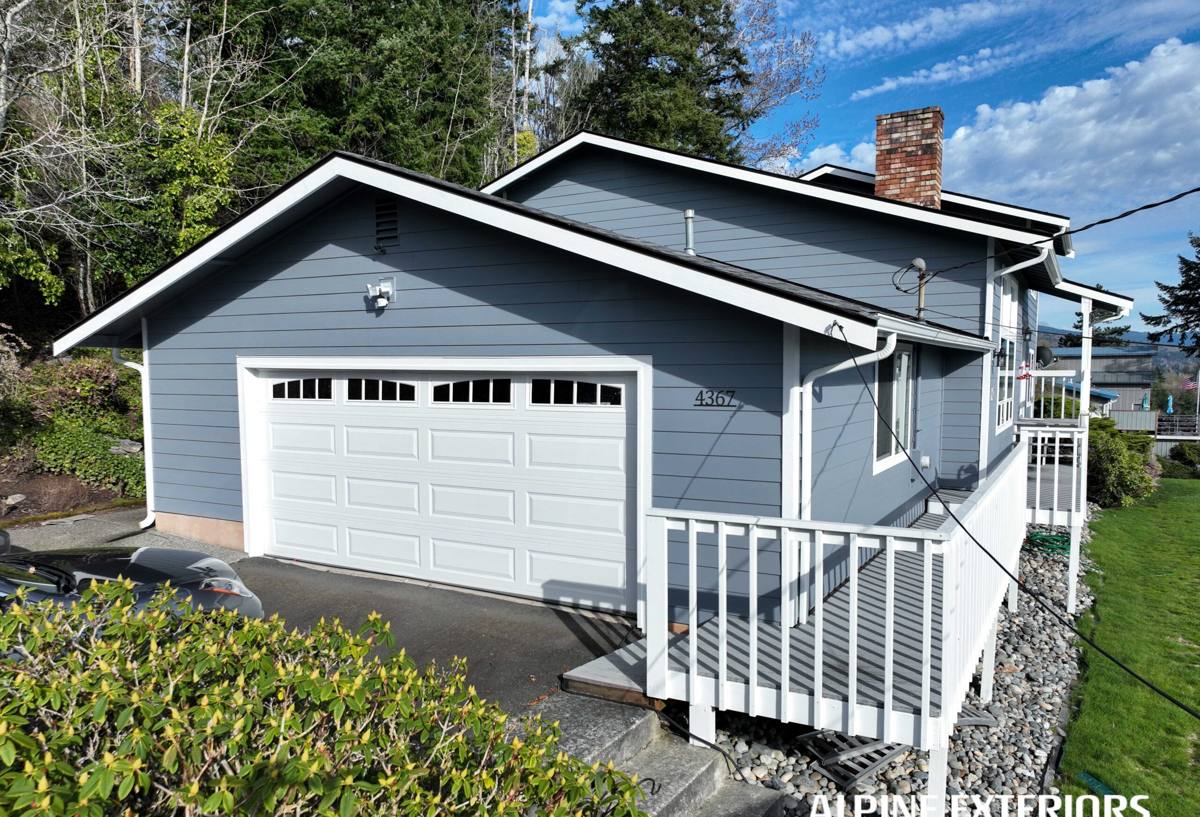
What Salt Air, Rain, and Moss Actually Do to a Deck
It helps to understand the failure points before talking about how to avoid them.
Salt Air and Metal Fasteners
Salt-carrying air accelerates corrosion on anything metal — nails, screws, joist hangers, bolts, post bases. A fastener rated for general outdoor use inland will corrode noticeably faster this close to the water. Once a fastener starts to rust, it loses holding strength long before the wood around it shows any visible damage, which is exactly what makes it dangerous — the deck can look fine while the connections underneath are quietly failing.
Driving Rain and Water Intrusion
Driving rain doesn't just fall on a deck, it gets pushed sideways into ledger connections, under railing posts, and into any gap where flashing wasn't done right. Water that gets behind a ledger board or into an unflashed post base doesn't dry out quickly in this climate — it sits there, and that's where rot starts, almost always from the inside out where you can't see it until it's advanced.
Moss and Prolonged Dampness
Skagit County's moss season is long, and decking that stays shaded or doesn't drain well becomes a moss farm. Moss holds moisture directly against the wood or composite surface, blocks airflow, and turns a deck surface slick and slippery underfoot. On wood decking it also traps moisture against the grain, which speeds up decay in exactly the spots where boards already see the least sun.
What a Correctly Built Deck Needs in This Climate
A deck built right for Bow isn't fundamentally different in concept from a deck anywhere else — it's the same structural principles, just executed with less tolerance for shortcuts. The things that matter most here:
- Corrosion-resistant fasteners and hardware rated for coastal exposure, not just standard exterior-grade
- Proper ledger flashing where the deck attaches to the house, so wind-driven rain can't work its way behind the board
- Post bases set above grade and detailed to shed water, not sit in it
- Decking material and gap spacing that actually lets the surface dry between rain events
- A slight, consistent slope away from the house so water doesn't pool on the deck surface
- Joist protection so the wood framing underneath isn't sitting exposed to standing moisture
Skip any one of these and you don't get an immediate failure — you get a deck that looks fine for a few years and then starts showing soft spots, rust streaks, or loose railings right around the time most homeowners assume a deck should still be in its prime.
Choosing Decking Material for a Bow Property
There's no single "correct" decking material — it depends on how much maintenance you want to take on versus what you're willing to spend up front. Here's how the common options actually compare in this specific climate, not in a showroom.
| Material | How It Handles Salt Air & Moisture | Moss & Maintenance | Realistic Lifespan Here |
|---|---|---|---|
| Cedar | Naturally decay-resistant but still needs sealed end grain and fasteners upgraded from standard | Needs regular cleaning and re-sealing to resist moss and graying | 15-20 years with consistent upkeep |
| Pressure-Treated Fir/Hem-Fir | Treatment resists rot but hardware still needs to be rated for treated lumber and coastal exposure | Moss grows readily if not cleaned; needs periodic sealing | 15-20 years with upkeep |
| Composite Decking | Doesn't absorb moisture into the board itself; less concern about internal rot | Still grows moss/algae on the surface if shaded and damp; needs occasional washing | 25-30 years, varies by product line |
| PVC Decking | Fully resists moisture absorption; best option where salt exposure is heaviest | Surface moss is a cleaning issue only, not a structural one | 25-30+ years |
Whatever the surface material, the framing underneath is where corners get cut on cheaper jobs — and it's the part that matters most in this climate, since it's the hardest to inspect and the most expensive to fix once it fails.
Framing, Fasteners, and Footings: The Part You Don't See
A deck's surface material gets all the attention, but the framing, fasteners, and footings determine whether it's actually safe in ten years. In Bow's soil and moisture conditions, footings need to be set to the depth required for frost and bearing, with post bases that keep the post end away from standing water rather than buried in it. Joist hangers and structural screws should be rated for coastal or treated-lumber use — using standard hardware here is one of the more common shortcuts we see on older or DIY-built decks, and it's usually the first thing showing rust when we're called out to look at a problem deck.
Ledger attachment deserves its own mention. This is the board that ties the deck structurally to the house, and it's also the single most common point of water intrusion and structural failure nationally — not just here. Correct flashing, proper fastener spacing, and a gap or flashing detail that lets any water that does get in drain back out rather than pool against the house band board is non-negotiable, especially with the amount of driving rain this area sees in the fall and winter.
Our Deck Building Process
Every deck we build follows the same basic sequence, adjusted for the specific site conditions:
- Site and structure assessment — checking grade, drainage direction, house band board condition, and any existing structure being replaced
- Design and material selection — sizing, layout, and decking material chosen based on your maintenance preference and budget, not just what's cheapest to install
- Permitting — pulling the required Skagit County or City of Anacortes permit before work starts, based on where the property falls
- Footings and framing — footings set to required depth, framing built with coastal-rated fasteners and hardware throughout
- Ledger and flashing detail — proper flashing at the house connection, checked before anything gets covered up
- Decking, railing, and stairs installed — with attention to drainage gaps and slope
- Final walkthrough — reviewing the finished deck with you, including what maintenance it will and won't need
We don't skip the permitting step even on smaller deck projects. An unpermitted deck can complicate a home sale later and, more practically, permitted work means the footings and framing get inspected before they're covered — which is exactly the part of the job that's hardest to verify after the fact.
Maintenance: What Actually Keeps a Bow Deck in Good Shape
A well-built deck still needs some ongoing attention in this climate. What we recommend to homeowners:
- Sweep off standing debris and needles regularly — trapped organic matter holds moisture and feeds moss
- Wash the surface at least once or twice a year to knock back moss and algae before it gets established
- Check railing posts and stair connections annually for looseness, which is often the first sign of a fastener or post base issue
- Re-seal wood decking on the schedule the product calls for — don't wait until it's visibly gray and worn
- Keep gutters and downspouts near the deck clear so runoff isn't dumping extra water onto or under the structure
- Have any soft spots, discoloration, or rust streaks looked at promptly rather than waiting for a full season
Composite and PVC decking cut down on several of these tasks but don't eliminate the need to check hardware and framing periodically — the surface material isn't what usually fails first.
Permits and Code Requirements in This Area
Deck construction here typically falls under Skagit County or City of Anacortes building code, depending on the property's exact location, and most decks above a certain height or attached to the house require a permit and inspection. Requirements commonly cover footing depth, guardrail height and baluster spacing, stair rise and run, and ledger attachment details. We handle the permit application and coordinate inspections as part of the build — it's a standard part of doing this work correctly, not an added extra.
Why It Matters That We Already Work in Bow
A lot of deck problems we get called to look at weren't built by incompetent crews — they were built by good general contractors who don't specialize in exterior work in this specific environment and used standard hardware and standard details that hold up fine in drier, inland climates. Bow's mix of salt air proximity, low-lying moisture, and long moss season isn't extreme, but it's specific enough that "standard" isn't always sufficient. Working this area regularly means we're not guessing at what holds up here — we're building to what we've actually seen succeed and fail over time in these exact conditions.
Cost Factors to Expect
Deck pricing varies with size, height off grade, material choice, and site access, so any real number needs a look at your property. In general terms, the biggest cost drivers are decking material (PVC and high-end composite cost more up front than wood but less over the deck's life), the complexity of footings and framing on sloped or hard-to-access sites, and railing style. We're glad to walk through these tradeoffs with you directly rather than quote blind.
If you're planning a new deck or replacing one that's showing its age, we're happy to come take a look and give you a straightforward, no-pressure estimate — just fill out the form below and we'll get in touch.