 Anacortes Exterior
 Why Mount Vernon Siding Wears Differently Than You'd Expect
Mount Vernon sits inland from Anacortes along the Skagit River, but "inland" in Skagit County doesn't mean dry. Marine air pushes in off the Salish Sea most of the year, valley fog settles low over farmland and neighborhoods alike, and driving rain off the Sound arrives in long, soaking systems rather than quick showers. Add a moss season that can stretch from fall through spring, and siding here takes on moisture in ways that inland Washington homes further from the water simply don't deal with.
That combination is hard on every siding material, but it's especially hard on anything that wasn't engineered for it. Wood and wood-composite products swell, absorb, and eventually rot at the seams. Vinyl doesn't rot, but it traps moisture behind it and hides problems until they're expensive. Repairing siding correctly in this climate means understanding not just what's damaged, but why it failed here in the first place.
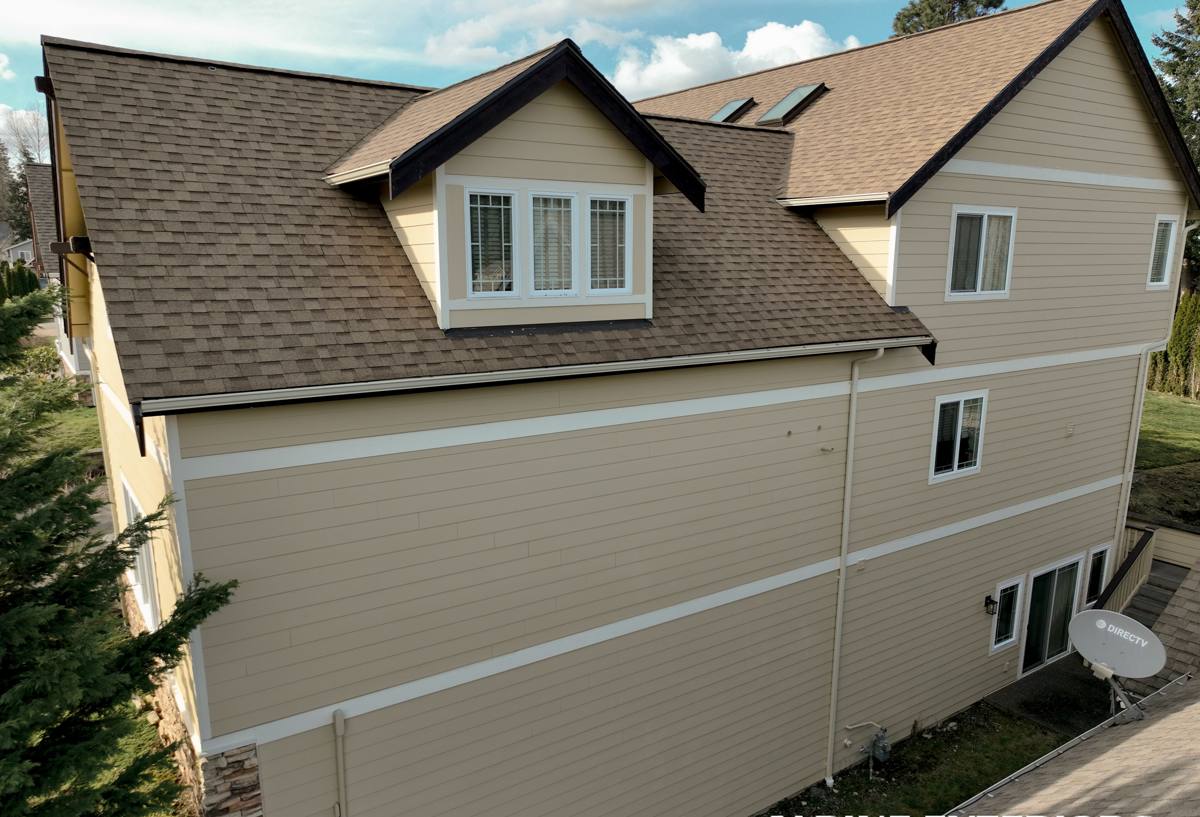
Signs Your Siding Needs Repair, Not a Full Tear-Off
Not every siding problem means starting over. Plenty of Mount Vernon homes have siding that's structurally sound overall but has isolated damage that a proper repair can resolve for years to come. The trick is telling the difference before money gets spent in the wrong place.
- Soft or spongy spots limited to one or two boards, usually near the bottom of a wall or below a window
- Dark staining or streaking that follows a seam, corner, or flashing line rather than spreading evenly
- Visible gaps, cracks, or separated joints where caulking has failed
- Isolated impact damage from storms, falling branches, or equipment
- Moss or algae buildup concentrated on shaded, north-facing, or tree-covered sections
- Paint or finish failure on specific boards while the rest of the wall still looks solid
If damage is scattered and contained, repair is usually the right call. If soft spots run continuously along a wall, or you find rot behind more than a couple of boards once we open things up, that's usually a sign the underlying moisture barrier has failed more broadly — and that changes the conversation.
Common Repair Issues We See on Mount Vernon Homes
Moisture Damage Near Grade
Siding installed too close to the ground, or without a proper gap and drainage path, wicks moisture up from soil and splash-back during Skagit County's wet months. This shows up as soft, discolored boards along the bottom courses of a home, often years before anything is visible higher up the wall.
Flashing and Trim Failures
Most localized rot we find traces back to a flashing detail, not the siding material itself — a window head flashing that was skipped, a J-channel that was caulked instead of properly lapped, or trim boards that were face-nailed without a drainage plane behind them. Fix the siding without fixing the water path behind it, and the same spot fails again.
Moss, Algae, and Surface Staining
Long moss season plus shaded, damp wall sections means organic growth is a fact of life here. On its own, surface moss is a maintenance issue. Left long enough, though, it holds moisture against the siding surface and accelerates whatever's underneath — which is why we treat staining as a signal to inspect, not just clean.
Impact and Storm Damage
Wind-driven debris, branch strikes, and general wear crack or dislodge individual boards. These repairs are usually straightforward, but matching the existing material and finish correctly is where quality separates a clean fix from an obvious patch.
Repair or Replace? How We Make That Call
Homeowners often assume any siding damage means a full replacement, or the opposite — that a quick patch will handle a problem that's actually much bigger underneath. Neither assumption is safe. We base the recommendation on what we actually find once we open up the damaged area, not on guesswork.
| Factor | Points Toward Repair | Points Toward Replacement |
|---|---|---|
| Extent of damage | Isolated to a few boards or one wall section | Recurring across multiple walls or elevations |
| Underlying sheathing | Dry, solid when probed | Soft, spongy, or visibly rotted |
| Age and condition of existing siding | Otherwise sound, recently maintained | Near end of service life, widespread wear |
| Material match | Compatible replacement material available | Discontinued product, poor color/profile match |
| Root cause | Single fixable event (impact, one flashing gap) | Systemic moisture management failure |
When repair is the right call, we say so and do the work. When we find rot has traveled behind the wall further than expected, we'll tell you exactly what we found before we recommend anything more expensive — including photos and a plain explanation, not a sales pitch.
What a Correct Siding Repair Actually Involves
Inspection and Moisture Testing
Every repair starts with pulling back the visible damage to see what's actually happening underneath. We check moisture content in the sheathing and framing, not just the siding surface, because surface damage is often the smallest part of the problem.
Correcting the Water Path
If the cause is a flashing or drainage issue, we fix that first. Replacing a board over an unresolved leak point just delays the next repair call — and in a climate that sees as much sustained rain as Skagit County, that delay is usually measured in one wet season, not several.
Matching Material and Finish
For the siding we install, James Hardie fiber cement, replacement boards and factory ColorPlus finishes are sourced to match existing product lines closely, so a repair reads as a repair, not a patchwork. Where a home has an older or discontinued siding product we don't carry, we'll be upfront about what a clean color and profile match realistically looks like — and where a small section of full replacement makes more visual sense than a mismatched patch.
Sealing and Finish Work
Proper caulking, fastening, and touch-up finishing finish the job. We use fasteners and sealants rated for the product and exposure, not whatever's fastest, because a repair that fails in two years costs more than doing it right the first time.
Our Process, Start to Finish
- On-site inspection of the damaged area and a broader check of the wall for related issues
- Moisture testing where rot or staining suggests water intrusion
- A clear, written explanation of what we found and what repair (or replacement) we recommend
- Sourcing matched material and scheduling the work
- Correcting any underlying flashing, drainage, or fastening issue before new siding goes on
- Final finish work, cleanup, and a walkthrough so you know exactly what was done and why
Why We Install Only James Hardie, Even for Repairs
We standardized on James Hardie fiber cement siding because it holds up to the exact conditions Skagit County throws at it: non-combustible, engineered moisture resistance, and a factory ColorPlus finish that doesn't rely on field-applied paint to keep weather out. When a repair calls for new material, that's what goes on the wall. It also means repairs we perform today will still have manufacturer-backed material and finish availability years from now, which matters when you're trying to match an existing repair down the line instead of starting over.
We won't tell you that every siding problem requires switching materials — plenty of good repairs happen on siding we didn't install. But when the honest answer is that a product's moisture behavior or maintenance demands are working against you in this climate, we'll say so plainly and explain what we'd do differently.
Why a Crew That Already Works Mount Vernon Matters
Siding repair is detail work, and the details that matter shift by neighborhood. A crew that regularly works Mount Vernon and the surrounding Skagit Valley already understands how valley fog and river humidity behave differently than the more direct marine exposure closer to the water in Anacortes, how local moss growth patterns run, and what permitting looks like with the City of Mount Vernon and Skagit County. That familiarity shows up in faster, more accurate diagnosis — and in repairs that account for how a home will actually weather here, not a generic climate assumption.
It also means a shorter wait when something needs attention. A repair left too long through another wet season is how a two-board fix turns into a much bigger one.
Get an Honest Look at Your Siding
If you're seeing soft spots, staining, or damage on your Mount Vernon home's siding, it's worth getting a straight answer before the next rainy season sets in. We'll inspect the area, tell you plainly whether it's a repair or something bigger, and give you a free, no-pressure estimate — use the form below to get started.