 Anacortes Exterior
 Roofing Built for Mount Vernon's Wet Valley Climate
Mount Vernon sits in the Skagit River valley, close enough to Puget Sound that moist marine air moves up the valley on a regular basis, and far enough inland to also catch heavier, longer rain events than you'll see right on the water. That combination is hard on roofs. Homes here deal with driving rain that gets pushed sideways under eaves, long stretches of overcast, damp weather that never quite dries a roof surface out, and a moss season that can run most of the year on north-facing slopes and shaded pitches. A roof that was installed correctly for a drier climate, or installed with shortcuts that don't show up right away, tends to fail here faster than the material's rated lifespan would suggest.
We're based in Anacortes and have worked roofs throughout Skagit County long enough to know which parts of a new roof installation matter most in this specific climate. It's not the shingle brand on the wrapper. It's the underlayment system, the flashing details, the ventilation, and the attention paid to the parts of the roof that never get photographed — the valleys, the transitions, the places where water actually tries to get in.
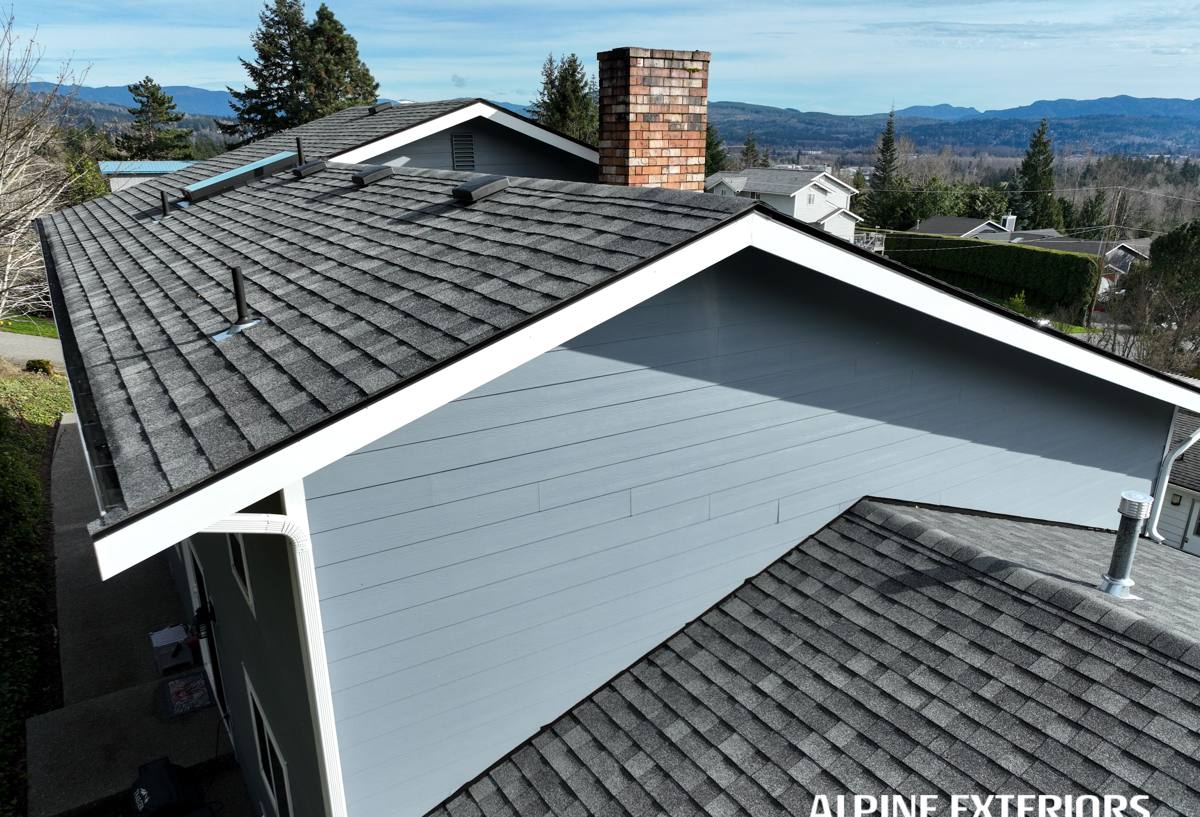
What a Correct New Roof Installation Actually Includes
"New roof" gets used loosely. A full, correct installation is a system of layered components working together, not just new shingles laid over what was there before. Here's what should happen on a proper tear-off and replacement:
Tear-Off and Deck Inspection
Old roofing comes off down to the sheathing so the deck can actually be inspected. In a valley climate, it's common to find soft or delaminated plywood or OSB around old flashing points, past leaks, or areas where ventilation was inadequate. Any compromised decking gets replaced before anything new goes down — covering over a bad deck just hides the problem under a new roof.
Underlayment and Water Barriers
This is where a lot of the real weatherproofing happens, and it's invisible once the job is done. Self-adhered ice-and-water membrane belongs at eaves, valleys, and around every penetration — chimneys, vent pipes, skylights — because those are the spots where wind-driven rain and standing water find their way in. The rest of the deck gets a synthetic underlayment as a secondary water barrier beneath the roofing material itself.
Flashing Details
Flashing is metal, not shingle material, at every transition: roof-to-wall, chimneys, dormers, skylights, and valleys. Reused old flashing is one of the most common corner-cuts in this trade, and it's one of the first places a roof starts leaking again, usually within a year or two. New flashing, properly lapped with the underlayment and roofing material, is not optional on a correct installation.
Ventilation
Intake at the eaves and exhaust at the ridge, balanced so air actually moves through the attic space. In a marine climate this matters more than people expect — poor ventilation traps moisture in the attic, which shortens the life of the decking from underneath and can contribute to the kind of moss and algae growth that shows up on the roof surface itself.
Choosing a Roofing Material for a Skagit Valley Home
There isn't one right material for every house. The right choice depends on your roof's pitch, how much shade and moss exposure it gets, your budget, and how long you plan to stay in the home. Here's an honest comparison of the options we typically install or discuss with homeowners in the Mount Vernon area:
| Material | Typical Lifespan | How It Handles This Climate | Trade-Offs |
|---|---|---|---|
| Architectural asphalt shingle | 25-30 years | Good performance with proper underlayment; algae-resistant granule options help with moss and dark streaking | Needs periodic moss and debris removal on shaded roofs to hit full lifespan |
| Standing seam metal | 40-50+ years | Sheds rain fast, resists moss better than shingles, handles wind-driven rain well | Higher upfront cost; requires an installer experienced with metal detailing |
| Synthetic/composite shingle | 30-50 years | Resists moisture absorption and moss better than wood, holds up to repeated wet-dry cycles | Product and installer availability varies; verify manufacturer warranty terms directly |
| Cedar shake | 20-30 years with upkeep | Traditional look but moisture-sensitive; needs consistent airflow underneath to avoid rot and moss | Highest maintenance burden in this climate; we're upfront with homeowners about that before they commit |
We don't push one product on every roof. We'll walk your specific roof with you, talk through pitch, shading, and how much upkeep you actually want to do, and give you a straight answer about what makes sense.
Our New Roof Installation Process
- On-site evaluation. We look at the existing roof, attic ventilation, and any problem areas before quoting anything.
- Written estimate. Material options, scope of work, and pricing laid out clearly, with no vague allowances.
- Scheduling around the weather. In Skagit County, timing a tear-off matters. We plan installs around forecast windows so your home isn't exposed to open sky longer than necessary.
- Tear-off and deck repair. Old material removed, deck inspected and repaired as needed.
- Underlayment, flashing, and ventilation installed. The system described above, not skipped or shortcut.
- Roofing material installed to manufacturer specification. Correct nailing patterns and exposure are what keep warranties valid.
- Final walkthrough and cleanup. Site cleared of debris and nails, and we go over the finished roof with you.
Moss, Moisture, and Long-Term Roof Health
Moss isn't just cosmetic here — it holds moisture against the roof surface, works its way under shingle edges, and accelerates granule loss. In a valley climate with limited direct sun on north- and east-facing slopes, moss can establish itself within a couple of years even on a well-installed roof. A correct new install reduces the problem with proper ventilation and, where appropriate, zinc or copper strips near the ridge that discourage regrowth as rain washes over them. But no roofing material is maintenance-free in Skagit County. Keeping gutters clear and having moss addressed before it builds up does more for your roof's lifespan than almost anything else you can do after installation.
Permits, Timeline, and What to Expect
A full roof replacement in Mount Vernon typically requires a building permit through the appropriate local jurisdiction, and we handle that process as part of the job rather than leaving it on the homeowner. Most straightforward residential re-roofs take a few days on site once material is on hand and weather cooperates; steeper or more complex rooflines, or jobs requiring significant deck repair, take longer. We'll give you a realistic window up front rather than an optimistic one that slips.
What Drives the Cost of a New Roof
Every roof is priced on its own specifics, but these are the factors that move the number most:
| Factor | Why It Matters |
|---|---|
| Roof size and pitch | Steeper roofs take longer and require more safety setup, which affects labor cost |
| Deck condition | Rot or delamination found at tear-off means added material and labor to replace sheathing |
| Material choice | Asphalt, metal, and synthetic products carry different material and labor costs |
| Number of penetrations and valleys | Chimneys, skylights, and dormers each add flashing work and labor time |
| Layers to remove | Tearing off multiple existing layers costs more than a single-layer tear-off |
As a general range, most straightforward asphalt shingle replacements on a typical single-family home run in the mid four figures to low five figures, with metal and larger or more complex roofs running higher. The only way to get a real number is a walk of your specific roof — we'd rather give you an accurate estimate than a lowball figure that changes once the tear-off starts.
Signs Your Roof Needs Replacement, Not Another Repair
Roof repairs make sense for isolated issues. Full replacement makes more sense when you're seeing several of these at once:
- Shingles that are cupping, cracking, or losing granules across large areas, not just one spot
- Daylight visible through the roof deck from inside the attic
- Soft or spongy spots when walking the roof, which usually means deck damage underneath
- Recurring leaks in different locations after past repairs
- Heavy, persistent moss coverage that keeps returning after cleaning
- A roof approaching or past the manufacturer's expected lifespan for its material
- Visible sagging along the ridge or roofline
Why a Crew That Already Works in Mount Vernon Matters
A new roof installation is only as good as the details nobody sees once it's finished — the flashing under the shingles, the underlayment lapped correctly at every valley, the ventilation balanced for a marine climate rather than a dry one. That kind of work comes from having actually done it, repeatedly, on homes dealing with the same rain and moss conditions yours does. We're an Anacortes-based crew that works Skagit County regularly, so we're not guessing at how a roof needs to be built to hold up here. We show up when we say we will, we're straightforward about what your roof actually needs, and we stand behind the work after the crew leaves.
If you're weighing repair versus replacement, comparing materials, or just want an honest look at what your roof needs, we're happy to come take a look. Reach out for a free, no-pressure estimate using the form below.