 Anacortes Exterior
 The Weather Mount Vernon Roofs Have to Handle
A roof in Mount Vernon works harder than it looks. The Skagit Valley sits close enough to the Salish Sea that salt-tinged marine air reaches homes here, and that air is quietly corrosive to exposed metal fasteners, flashing, and drip edge over time. Add in driving rain that comes sideways during winter storms, wind that funnels through the valley between the Cascades and the water, and a wet season that can stretch from October well into May, and you have conditions that ask more of a roof than a dry-climate installation ever would.
The biggest long-term issue isn't any single storm — it's the cumulative effect of moisture that never fully dries out. Shaded roof slopes, especially north-facing ones or those under mature trees, stay damp for days at a time during the wet months. That's exactly the environment moss and algae need to take hold, and it's why roofs in Skagit County tend to show moss growth and granule loss years before an identical roof in a drier part of the state would. None of this means asphalt shingles are the wrong choice for this area — they're still one of the most practical, cost-effective roofing systems available here. It means the installation details matter more than usual, because a roof that's "close enough" in a mild climate can fail early in this one.
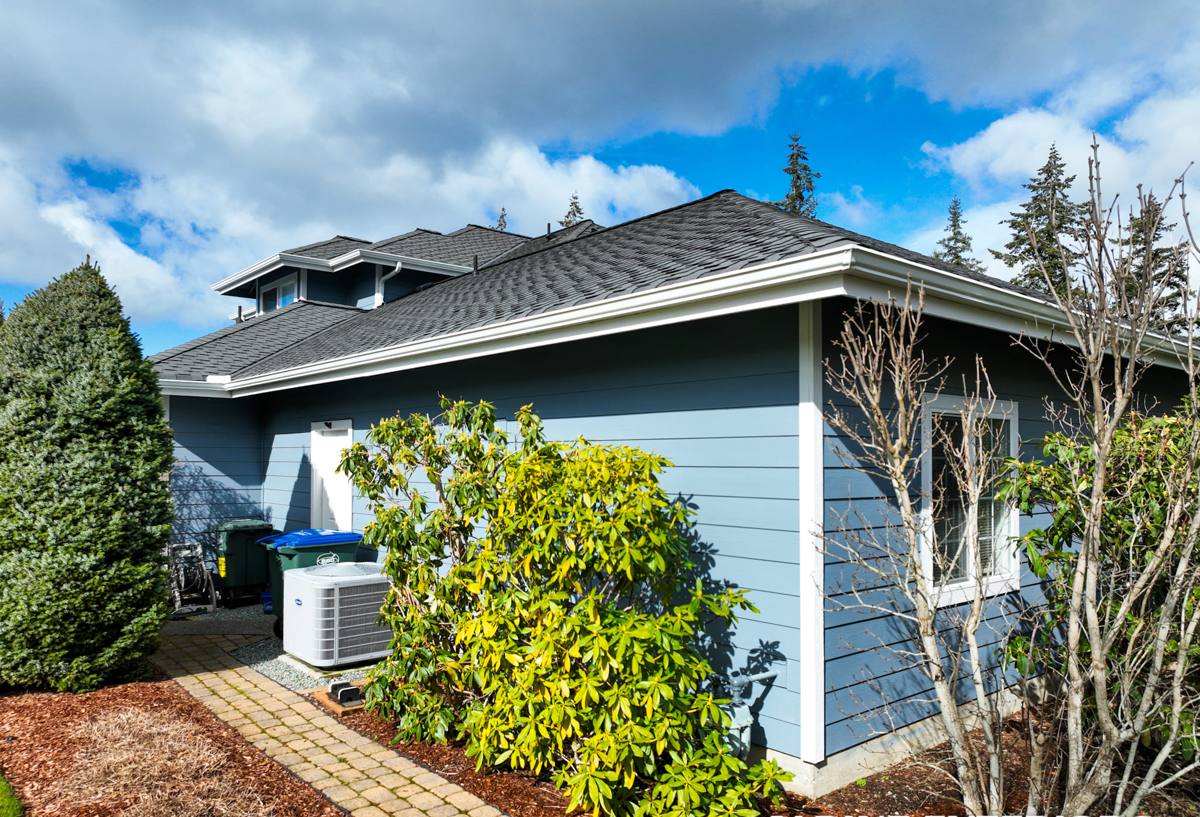
What a Correct Asphalt Shingle Installation Actually Includes
Shingles get all the attention, but they're only one layer of a roofing system. Most leaks we're called out to diagnose trace back to something underneath or around the shingles, not the shingles themselves.
Underlayment and Ice-and-Water Barrier
We install synthetic underlayment across the full deck as a secondary water barrier, and we add self-adhered ice-and-water membrane at eaves, valleys, and around every roof penetration — chimneys, vents, skylights. Ice damming isn't the main concern at our elevations; wind-driven rain is. In a strong storm off the water, rain can be pushed uphill under shingle tabs, and that membrane is what stops it from reaching the deck.
Flashing at Every Transition
Step flashing where a roof meets a wall, counterflashing at chimneys, valley metal, and apron flashing at eaves all need to be installed in the correct order relative to the underlayment and shingle courses, not just caulked into place afterward. Caulk is a maintenance item, not a waterproofing strategy — flashing done correctly the first time shouldn't depend on sealant staying intact for twenty years.
Nailing Pattern and Exposure
Every shingle has a manufacturer-specified nailing pattern and exposure that determines both its wind rating and whether its warranty is valid. In areas exposed to higher wind — open lots, hilltops, or homes near the water — we'll often move from four nails to six per shingle. It's a small labor difference that meaningfully changes how a roof performs in a windstorm.
Matching the Shingle to This Climate
Not every asphalt shingle product is built for the same conditions. For Mount Vernon homes, we generally steer the conversation toward laminate/architectural shingles with algae-resistant granules, but the right choice depends on the roof's exposure, the home's style, and budget. Here's how the common options compare for this climate specifically:
| Shingle Type | Typical Lifespan | Wind Rating | Moss/Algae Resistance | Best Fit Here |
|---|---|---|---|---|
| 3-Tab (standard) | 15–20 years | Lower | Standard granules only | Budget re-roofs, low-exposure slopes |
| Architectural/Laminate | 25–30+ years | Higher, thicker construction | Available with AR granules | Most Mount Vernon homes |
| Impact-Resistant (Class 4) | 25–30+ years | High | Available with AR granules | Homes wanting added durability, possible insurance discount |
| Algae-Resistant (AR) upgrade | Adds to base product life | Same as base shingle | Copper-infused granules resist streaking | Shaded or north-facing roofs |
Algae-resistant granules are worth the modest upcharge on most roofs in this area — they don't prevent moss, which is a different organism with different roots in debris and moisture, but they slow the black streaking that standard granules develop within a few wet seasons.
Ventilation: The Part of the Roof You Don't See
A shingle roof isn't just the layer you can see from the street — it's a system that needs to breathe. Warm, moist air from inside the house rises into the attic, and if it can't escape through a balanced system of soffit intake and ridge or roof-line exhaust vents, it condenses against the underside of the deck. Over a wet Skagit County winter, that trapped moisture can rot sheathing from the inside, feed mold growth, and shorten shingle life from underneath — problems that have nothing to do with how good the shingles are on top. When we quote a re-roof, we check existing ventilation and flag it if it's undersized or blocked, because installing new shingles over a poorly ventilated attic just delays the same problem.
Moss and Algae: Managing a Long Wet Season
Moss is more than a cosmetic issue. It roots into the granule surface and lifts shingle edges as it grows, creating small gaps where water can work its way underneath. Left long enough, moss holds moisture against the shingle and deck continuously, which is a slower but more serious problem than the black algae streaking that shows up on the same roofs.
Our standard approach is manual removal — soft brushing and treatment rather than high-pressure washing, which strips protective granules and can shorten shingle life faster than the moss it's removing. Zinc or copper strips installed near the ridge can help slow regrowth on the areas rainwater washes across, but they're a supplement to periodic cleaning, not a substitute for it. On roofs with heavy shade from overhanging trees, the honest recommendation is often to address the shade — trimming back branches — alongside any roof work, since no shingle treatment fully offsets a roof that never gets sun or airflow.
Our Process for a Mount Vernon Re-Roof
We keep the process straightforward and communicate at each stage, since a roof project is disruptive enough without surprises.
- Inspection and photos — we walk the roof, check the attic for ventilation and moisture signs, and document conditions before any work is quoted.
- Written estimate with options — shingle type, upgrades like AR granules or impact resistance, and a clear scope of what's included.
- Tear-off vs. overlay decision — we'll tell you honestly whether your existing roof can support an overlay or needs a full tear-off; in this climate, a full tear-off is usually the right call so we can inspect and repair the deck.
- Deck inspection and repair — any soft, rotted, or delaminated sheathing gets replaced before underlayment goes down.
- Underlayment, flashing, and shingle installation — installed to manufacturer specification for this wind and moisture exposure.
- Daily cleanup and magnetic sweep — job sites are cleared of debris and nails each day, not just at the end.
- Final walkthrough — we review the completed roof with you before calling the job done.
Maintenance Checklist for Mount Vernon Homeowners
A well-installed asphalt shingle roof still needs periodic attention in this climate to reach its full service life. A few habits go a long way:
- Clear gutters and downspouts at least twice a year, and after major fall leaf drop
- Trim tree limbs back from the roofline to reduce shade and debris buildup
- Check north-facing and shaded slopes each fall for early moss growth
- Look in gutters for excessive granule buildup, a sign shingles are aging or were damaged
- Confirm attic vents aren't blocked by insulation, boxes, or debris
- Schedule a visual inspection after any major windstorm, especially if you notice a lifted or missing shingle
Why Hire a Crew That Already Works in Mount Vernon
Roofing crews who work regularly in Skagit County develop a feel for the specifics of this area — which slopes hold moisture longest through the winter, how local wind patterns off the valley affect where shingles fail first, and how older homes in this region were framed compared to newer construction. That familiarity shows up in small decisions during a job: where to add extra fastening, which slopes justify the upgrade to algae-resistant shingles, and how to sequence work around the wet season rather than fighting it. It also means a faster, more informed response if a storm causes damage, since we already know the area and aren't learning the local conditions on your dime.
If you're weighing a repair against a full replacement, or just want a straight answer about what your roof actually needs, we're glad to take a look. Fill out the form below for a free, no-pressure estimate on your Mount Vernon home.