 Anacortes Exterior
 Metal Roofing for Oak Harbor's Coastal Climate
Oak Harbor sits close enough to the water that homes here deal with a different set of roofing problems than houses further inland. Salt-laden air works on fasteners and flashing year-round. Driving rain off the Sound doesn't just fall straight down — it gets pushed sideways under wind, which means any weak point in a roof's laps, seams, or penetrations eventually finds water a way in. And the region's long, damp moss season keeps roof surfaces wet for weeks at a stretch, which is exactly the kind of environment moss and algae need to take hold. Metal roofing, installed correctly, handles all three of these better than most other roofing materials available — but "installed correctly" is doing a lot of work in that sentence, and it's the part homeowners have the hardest time evaluating from the ground.
Anacortes Exterior Co works throughout Skagit County and the surrounding coastal communities, including Oak Harbor, so we see how roofs in this specific environment actually perform over time — not just how they look the day they're finished.
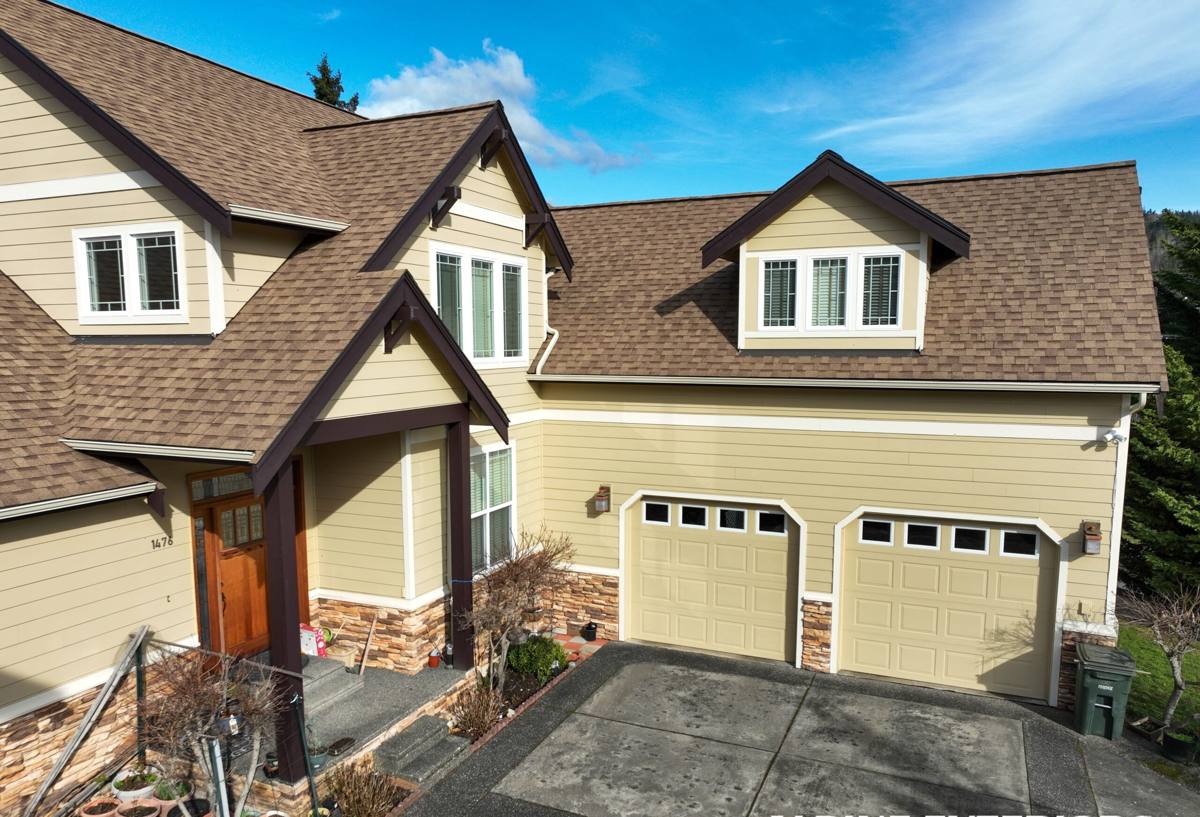
What Coastal Exposure Does to a Roof Over Time
Salt Air and Metal Fatigue
Airborne salt accelerates corrosion on any exposed metal — fasteners, flashing, valleys, and panel edges included. This doesn't mean metal roofing is a poor choice near the water; it means the specific metal, coating, and fastener hardware matter more here than they would on a home twenty miles inland. A panel and fastener system rated for coastal exposure will hold up for decades. The wrong combination can show surface corrosion within a handful of years, usually starting at cut edges and fastener heads first.
Wind-Driven Rain
Rain that's being pushed sideways doesn't respect gravity-only drainage assumptions. It can work backward under panel laps, around poorly sealed penetrations, and into any transition where the roof meets a wall, chimney, or dormer. Metal roofing's long, continuous panel runs actually help here by minimizing the number of horizontal seams — but every valley, vent pipe, and roof-to-wall detail still needs to be flashed for wind-driven conditions, not just standard runoff.
Moss and Algae Growth
The region's long wet season keeps roof surfaces damp far longer than drier climates do, and moss doesn't need much encouragement once it has moisture and a foothold. Metal sheds water fast and doesn't hold moisture in a porous surface the way shingles, cedar, or tile can, which makes it far less hospitable to sustained moss growth. It's not moss-proof — debris buildup in valleys or against a chimney can still create a damp pocket where growth starts — but a clean metal surface with good drainage is one of the least moss-friendly roofing surfaces available.
Metal Roofing Systems We Install
Not all metal roofing is the same product wearing different clothes. The system type changes how it performs against wind-driven rain, how long it holds up in salt air, and what it costs to install and maintain.
| System | How It's Fastened | Best Fit For |
|---|---|---|
| Standing seam | Concealed clips, no exposed fasteners on the field of the panel | Homes with heavy wind-driven rain exposure or long, low-slope roof sections |
| Screw-down (exposed fastener) | Fasteners driven through the panel face at intervals | Budget-conscious projects, outbuildings, simpler roof shapes with good pitch |
| Stone-coated steel | Interlocking panels with a granular coated surface | Homeowners who want the profile of shingle or tile with metal's underlying durability |
Standing seam is generally the better fit for the wettest, windiest sites because there are no exposed fastener heads for water or salt to attack over time, and the concealed-clip design allows the panel to expand and contract with temperature without stressing the fastener. Screw-down systems cost less up front and perform fine on the right roof, but every exposed fastener is a maintenance point — washers age, and in salt air they age faster. We'll walk through which system actually fits your roof's pitch, exposure, and budget rather than defaulting to one option for every job.
What a Correct Metal Roof Installation Actually Involves
The panels are the most visible part of a metal roof, but they're not what determines whether it stays watertight for the next 40-plus years. The details underneath and around them do.
- Underlayment: A high-temperature, self-adhering or synthetic underlayment gives you a real second line of defense if wind ever drives water past the panel laps.
- Fastener selection: Fasteners and clips need to be matched to the panel metal to avoid galvanic corrosion — mixing incompatible metals in a salt-air environment speeds up failure at exactly the points holding your roof together.
- Flashing at every transition: Valleys, chimneys, skylights, and wall intersections need flashing detailed for wind-driven rain, not just standard vertical runoff.
- Panel expansion allowance: Metal moves with temperature swings. Standing seam clips need to allow that movement without loosening or oil-canning the panel.
- Ventilation: A metal roof over an under-ventilated attic can trap moisture underneath, which undermines the whole point of a moisture-resistant roofing surface.
- Edge and rake detailing: Cut panel edges are the first place coastal corrosion shows up — clean, properly finished edges matter more here than in a dry inland climate.
Our Process, Start to Finish
- On-site assessment: We look at your current roof's condition, deck integrity, slope, and exposure to prevailing wind and rain direction — this is where we identify problem spots before they become part of the new roof.
- System recommendation: Based on that assessment, we recommend a panel system and gauge that fits your roof and budget, and explain the trade-offs plainly.
- Written estimate: A clear scope and price before any work starts — no surprise change orders for things we should have caught up front.
- Tear-off and deck inspection: Old roofing comes off and the deck gets inspected for rot or soft spots, especially in valleys and around penetrations, before anything new goes down.
- Underlayment and flashing installation: The parts of the job that don't show but do the most work against wind-driven rain.
- Panel installation: Installed to manufacturer spec for fastener spacing, seam engagement, and expansion allowance.
- Final walkthrough: We go over the finished roof with you, including how to spot early signs of wear and what routine maintenance looks like.
Metal Roofing Compared to Other Materials in This Climate
| Factor | Metal Roofing | Asphalt Shingles | Cedar Shake |
|---|---|---|---|
| Typical lifespan | 40–70 years | 15–30 years | 20–30 years, with regular maintenance |
| Moss resistance | High — sheds water quickly, low porosity | Moderate — algae/moss-resistant granules help but wear off | Low — porous surface holds moisture |
| Wind-driven rain performance | Strong, especially standing seam | Adequate with proper underlayment and flashing | Weaker at seams and butt joints over time |
| Upfront cost | Higher | Lowest | Moderate to high |
| Ongoing maintenance | Low | Moderate | High — regular treatment needed |
Metal roofing isn't automatically the right call for every home or every budget — asphalt shingles installed well still perform reasonably in this climate, and for some roof shapes or budgets that's the more sensible choice. Where metal earns its higher upfront cost is in long-term durability and low maintenance, which matters more the closer a home sits to open water and salt spray.
Maintenance That Actually Matters Here
A correctly installed metal roof doesn't need much, but "not much" isn't "nothing" in a marine climate. A short annual checklist catches most issues before they become repairs.
- Clear debris from valleys and around chimneys or vent penetrations — trapped organic matter holds moisture against the panel.
- Check fastener heads on screw-down systems for early signs of rust or a lifted washer.
- Look for any moss or algae starting in shaded, low-airflow sections and clear it before it spreads.
- Inspect flashing at wall and chimney transitions after major wind events.
- Confirm gutters are clear so water isn't backing up against the roof edge.
Why Hire a Crew That Already Works Oak Harbor
A lot of what determines whether a metal roof lasts 20 years or 60 comes down to decisions made before the first panel goes up — fastener compatibility, underlayment choice, flashing details at every transition. Those decisions look different on a home exposed to open water and salt spray than they do twenty miles inland, and a crew that hasn't worked this specific coastline regularly can miss that. Anacortes Exterior Co works this area routinely, which means we're not guessing at how a roof needs to be detailed for wind-driven rain and salt exposure — we're applying what we already know holds up here.
If you're weighing metal roofing for a home in Oak Harbor, we're glad to walk the roof with you and give you a straight, no-pressure estimate — including whether metal is actually the right fit for your specific roof, or whether another material makes more sense for your budget and timeline. There's a form below to get that conversation started.