 Anacortes Exterior
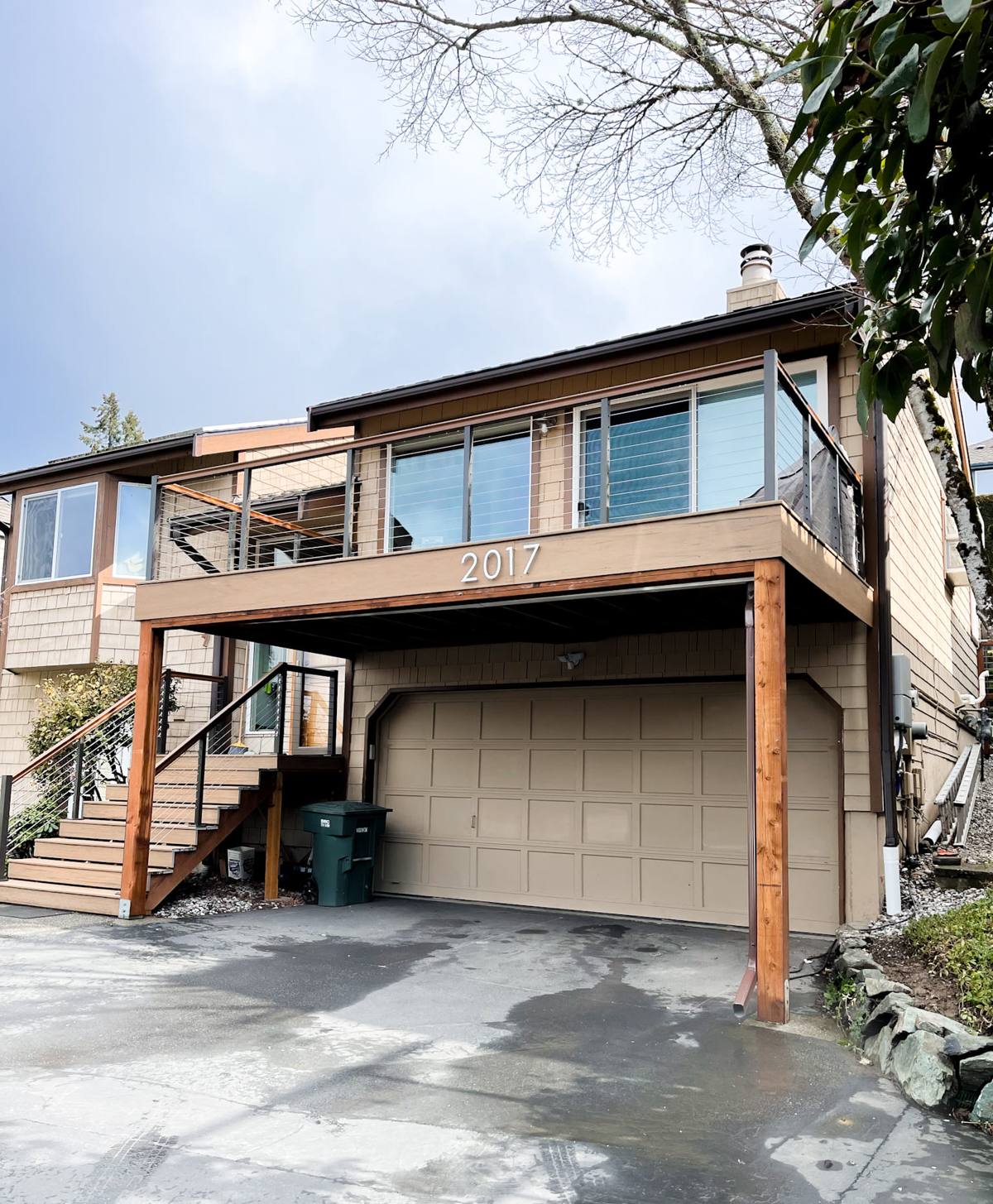
 Composite Decking for Mount Vernon: A Job That Has to Account for the Weather
Mount Vernon sits inland from Anacortes along the Skagit River, but it shares the same weather pattern that shapes every exterior project in this county: long stretches of overcast, rain that shows up in every month of the year, humidity that rarely fully clears out, and a moss season that can run from fall through spring. A deck built here isn't just a surface to walk on — it's an assembly that has to shed water, resist rot underneath, and hold up under freeze-thaw swings without cracking or heaving. Composite decking is a good fit for that climate when it's installed correctly. It's a poor fit when it's installed the way a lot of crews install wood — because composite doesn't forgive the same shortcuts.
We're based in Anacortes and work Mount Vernon regularly, which matters more than it sounds like. A deck built for a dry-summer climate somewhere else doesn't automatically work here. Ventilation gaps, fastener spacing, ledger flashing, and drainage slope all have to be sized for a place that stays wet for months at a stretch, not for a two-week rainy season.
What Composite Decking Actually Solves — and Where It Doesn't
Composite boards (a blend of wood fiber and plastic, capped or uncapped) solve the problems that show up fastest on wood decks in this climate: splintering, graying, cupping, and the annual sand-and-reseal cycle. A quality capped composite board won't absorb water into its surface the way wood does, so it resists the surface mildew staining and slow rot that wood decking picks up under a shaded, damp Skagit Valley canopy.
What composite doesn't solve is moisture underneath the deck. Composite boards are more dimensionally stable on top, but the framing, joists, ledger board, and fasteners below are still wood or metal, and those still need to breathe and drain. A composite deck built on an under-ventilated or poorly flashed substructure will look fine for a year or two and then develop the exact rot problems people buy composite to avoid — just hidden under boards that look perfect from above. This is the single biggest thing homeowners get wrong when comparing composite to wood: the visible surface isn't where the failure happens.
Where Composite Genuinely Pays Off Here
- Shaded decks under trees or on the north side of a house, where wood decking stays damp longest and grows moss fastest
- Decks near sprinkler zones or low spots where standing water is common after a storm
- Households that want a deck they don't have to strip, brighten, and reseal every year or two
- Homeowners planning to stay in the house long enough for the lower lifetime maintenance cost to offset the higher upfront material cost
Substructure: The Part Nobody Sees But Everything Depends On
Almost every composite deck failure we get called out to inspect traces back to the framing, not the boards. In a climate that stays wet as long as Skagit County's does, three things matter more than brand of decking:
Ledger Attachment and Flashing
Where the deck ties into the house is the single highest-risk point for water intrusion. A ledger board that isn't properly flashed and gapped will let water track behind it and into the house framing — a slow leak that can go unnoticed for years in a climate where a little extra dampness doesn't stand out. This is worth doing right the first time; it's expensive to fix after the siding and sheathing behind it are compromised.
Joist Protection
Joists and beams under a composite deck should be wrapped or capped, not left as bare, unprotected wood. In a dry climate this is a nice-to-have. Here, where the underside of a deck can stay damp for weeks after a wet stretch, it's what keeps the frame from rotting out from underneath a perfectly good composite surface.
Airflow and Drainage Under the Deck
Low decks with little clearance to grade are common on Mount Vernon lots, and they're also the ones most prone to trapping moisture underneath. Proper grading, gravel or drainage material under the joists, and enough clearance for air to move through are what keep that space from turning into a permanently damp pocket that breeds mold and rot below the living space of the deck.
Moss, Mildew, and What Actually Needs Maintenance
Composite decking is often marketed as "no maintenance," which oversells it. It's low maintenance compared to wood, but a Skagit Valley moss season doesn't skip composite boards just because they're synthetic. Moss and algae will still take hold on a shaded, consistently damp composite surface — the difference is that on composite it sits on top of the cap layer instead of soaking into open wood grain, which makes it far easier to remove without damaging the material.
What Composite Decks Still Need Here
- A seasonal wash-down (soft brush, mild soap, garden hose pressure — not a wand-tip pressure washer close to the surface) to clear moss and pollen before it embeds in the surface texture
- Keeping gutters and downspouts near the deck clear so runoff isn't dumping directly onto or under it
- Trimming back vegetation that keeps a section of decking shaded and damp longer than the rest
- Checking fastener lines and board ends each year, since these are where water intrusion typically starts even on composite
Composite Board Options: What Actually Changes the Price and the Performance
Not all composite decking is built the same way, and the differences matter more in a wet climate than a dry one. Here's how the main factors trade off:
| Factor | Lower-Cost Option | Higher-Cost Option | Why It Matters in This Climate |
|---|---|---|---|
| Cap type | Uncapped or partially capped composite | Fully capped composite (cap on all sides) | Full capping resists moisture absorption at cut ends and edges, which is where boards fail first in a wet climate |
| Board profile | Solid board | Grooved board for hidden fasteners | Hidden fastener systems reduce face penetrations where water can wick in, but grooves need to stay clear of debris |
| Color | Lighter, mixed-tone colors | Solid darker tones | Darker boards show less staining from moss and organic debris but run hotter in summer sun; lighter boards hide algae growth less well |
| Warranty structure | Shorter, prorated warranty | Longer, non-prorated warranty with fade/stain coverage | Fade and stain warranties matter here because of the moss/mildew exposure, not just sun fade |
| Substructure material | Standard treated lumber joists | Composite or capped joist framing | Upgraded framing costs more upfront but removes the weakest link in a wet-climate deck |
We'll walk through these trade-offs against your budget and how the deck will actually be used — a rarely-shaded deck that gets afternoon sun doesn't need the same spec as a shaded deck against a tree line.
Our Installation Process
The process is the same whether the deck is a small landing off a back door or a full-size entertaining deck:
- On-site assessment. We look at sun/shade exposure, grade and drainage, existing framing condition if this is a rebuild, and how the ledger ties into the house.
- Design and material selection. Board profile, color, railing system, and fastener method get chosen based on the site conditions, not just aesthetic preference.
- Permitting. Most deck rebuilds and new decks in Skagit County jurisdictions require a permit, particularly for anything attached to the structure or above a certain height. We handle this as part of the project rather than leaving it to the homeowner.
- Demolition (if applicable). Old decking and, where needed, compromised framing gets removed and hauled off.
- Framing and structural work. Ledger flashing, joist protection, and drainage/ventilation clearance get addressed before a single composite board goes down.
- Composite installation. Boards are installed to the manufacturer's spec for gapping and fastener spacing — spec that's written with expansion/contraction and drainage in mind, not just appearance.
- Final walkthrough. We go over care basics with you before we consider the job done.
Signs an Existing Deck Needs Attention, Not Just a New Coat of Something
- Soft or spongy spots when you walk across the deck
- Persistent moss or algae in the same spots every year despite cleaning
- Gaps or separation where the deck meets the house
- Visible staining or discoloration under the deck on the framing itself
- Fasteners that are loose, rusted, or backing out of the boards
- A ledger board area that feels damp or stays dark longer than the rest of the deck after rain
Any of these are worth a look before they turn into a full rebuild instead of a repair.
Why a Crew That Already Works Mount Vernon Matters
Deck work in this part of Skagit County isn't the same job as deck work in a dry climate, and it isn't identical from lot to lot either — a shaded, low-clearance deck near the river valley behaves differently than an open, sun-exposed deck on higher ground. A crew that regularly works Mount Vernon and the surrounding Anacortes area has already seen how local drainage, shade patterns, and the permitting process for this county play out, instead of learning it on your project. That translates into fewer surprises mid-job and a deck that's built for the actual conditions it'll sit in, not a generic spec sheet.
Ready to Talk Through Your Deck?
If you're weighing composite against other decking options, or you've got an existing deck that's showing its age, we're happy to take a look and talk through what actually makes sense for your site and budget — no pressure, no upsell. Fill out the form below for a free estimate.