 Anacortes Exterior
 Building a Deck That Actually Holds Up in La Conner
La Conner sits right up against tidal water in Skagit County, which means homes here deal with a version of "outdoor weather" that's tougher on decking than most inland Washington towns. Salt-laden air off the water accelerates corrosion on fasteners and hardware. Driving rain off Puget Sound and the Salish Sea drives moisture sideways into joints and end grain, not just straight down where it's easy to shed. And the region's long, wet, low-sun stretch from fall through spring means anything horizontal — decks, rails, stair treads — spends months growing moss and algae if it isn't detailed to dry out between rains. A deck built to a generic spec sheet, without accounting for any of that, tends to show problems within a few seasons: soft spots, streaking, loose boards, or hardware bleeding rust through the surface.
Composite decking is a good fit for this climate precisely because it doesn't absorb water and rot the way solid wood does. But composite is not maintenance-free or install-proof — it still needs the right substructure, the right fasteners, and the right ventilation underneath, or you just end up with a different set of problems instead of no problems.
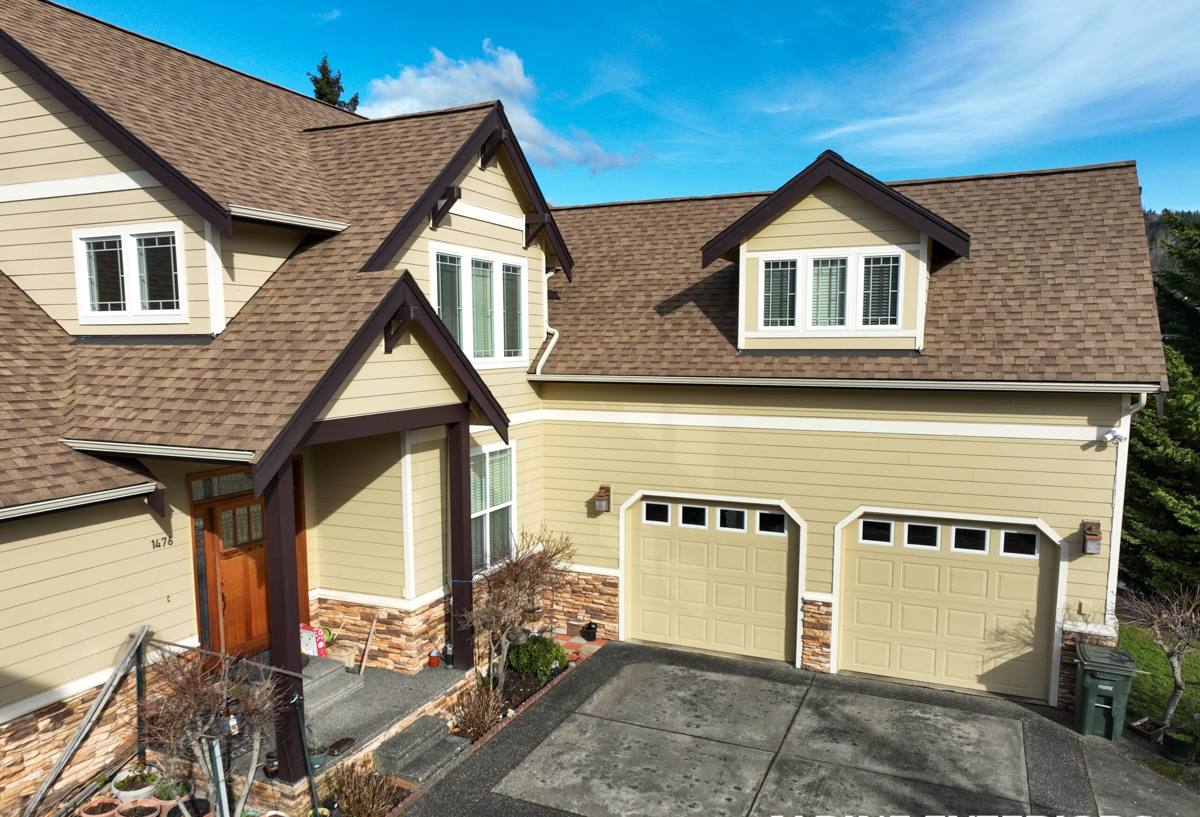
What La Conner's Climate Actually Does to a Deck
Salt air and hardware
Standard zinc-plated screws and brackets corrode faster this close to saltwater than they would twenty miles inland. Over a few years that shows up as rust streaks bleeding through composite boards around every fastener, and eventually as weakened connections at ledger boards, stair stringers, and railing posts — the parts of a deck that actually hold weight.
Driving rain and end grain
Wind-driven rain gets pushed into board ends, stair nosings, and any spot where a board butts against a house wall or post. Composite board faces resist moisture well, but exposed cut ends on cheaper composite products can still wick water if they aren't capped or treated, leading to swelling at the ends over time.
Moss, algae, and low winter sun
Shaded and north-facing decks in Skagit County stay damp for days after a storm, and moss will colonize any surface — wood or composite — that doesn't get airflow and occasional sun. The difference is what happens next: wood surfaces roughen and hold moisture as they age, giving moss more to grip. A quality composite cap layer stays smoother and sheds a simple wash-off much more easily, which matters a lot over a 15-20 year deck life.
What a Correctly Built Composite Deck Includes
The composite boards are the part everyone sees, but they're maybe a third of what determines whether the deck lasts. The rest is substructure work that's invisible once the boards go down — and it's where corners get cut on rushed jobs.
- Pressure-treated or better framing, sized and spaced per the manufacturer's span tables for your specific board profile — not just "what we usually use"
- Joist tape or a moisture barrier on top of every joist, so the framing isn't sitting in standing water every time it rains
- Stainless steel or coated composite-rated fasteners and hidden fastener systems rated for coastal/marine exposure, not generic exterior screws
- Proper flashing where the deck meets the house, so water is directed away from the ledger board and siding, not trapped behind it
- Adequate ventilation gaps under and around the deck so air can move and moisture doesn't sit
- Board gapping set correctly for the expected temperature swing, so boards aren't buckling in summer heat or gapping too wide in cold, wet months
- Properly capped or sealed cut ends on every board, especially at stair nosings and rail posts where end grain is exposed
Composite vs. Other Decking Materials for This Climate
| Material | Moisture behavior | Maintenance | Typical lifespan here |
|---|---|---|---|
| Capped composite | Resists absorption; cap layer sheds moss/algae well | Occasional wash-down; no staining or sealing | 20-30 years |
| Uncapped composite | More prone to surface moisture pickup over time | Periodic cleaning; watch for fading/staining | 15-20 years |
| Pressure-treated wood | Absorbs water readily; prone to warping and rot in this climate | Annual sealing/staining recommended | 10-15 years with upkeep |
| PVC decking | Fully water-resistant, no wood content | Very low; similar cleaning routine to composite | 25-30+ years |
We install composite as our standard recommendation for most La Conner homes because it strikes a practical balance: it handles the wet season and salt air far better than wood, costs less than full PVC systems, and looks like real wood grain rather than plastic. We'll talk through PVC as an option too if a homeowner wants the lowest possible maintenance and budget allows for it — there's no single right answer for every house.
Why we don't cut corners on fasteners here
It's tempting to use whatever hardware is cheapest and fastest to install, and on paper it looks the same under a composite board. The difference shows up two or three years later as rust bleed-through and loosening connections — right around when a cheaper contractor is long gone. We spec coastal-rated fasteners on every La Conner project as a standard, not an upsell, because replacing hardware under finished decking is a much bigger job than installing it correctly the first time.
Our Process for a La Conner Deck Project
- On-site assessment — we look at sun/shade exposure, drainage around the foundation, existing structure condition if it's a replacement, and how exposed the deck is to weather off the water
- Design and product selection — board profile, color, and railing system chosen based on your home and how much maintenance you actually want to do long-term
- Structural work — framing, ledger flashing, joist protection, and footings brought up to current code, whether that's new construction or a tear-off and rebuild
- Deck installation — boards, hidden fasteners, stairs, and railing installed with proper gapping and ventilation
- Final walkthrough — we go over cleaning recommendations and what to watch for, so you're not guessing at maintenance later
Maintaining a Composite Deck Through Skagit County's Wet Season
Composite decking cuts maintenance dramatically compared to wood, but "low maintenance" isn't "no maintenance" in a climate this wet. A simple seasonal routine keeps a composite deck looking new for its full lifespan:
- Sweep debris off regularly, especially in fall when leaves and needles trap moisture against the board surface
- Wash the deck with soap and water (or a composite-safe cleaner) once or twice a year, more often on shaded sections prone to moss
- Keep planters, mats, and furniture legs from sitting in one spot for months — trapped moisture underneath can encourage mildew even on composite
- Check railing posts and stair connections annually for any looseness, since hardware is the first thing to react to salt air exposure
- Clear debris from underneath the deck periodically so ventilation gaps stay open
Cost Factors for a La Conner Composite Deck
| Factor | Why it moves the price |
|---|---|
| Deck size and shape | More linear footage of board and framing; complex angles add labor |
| Board tier | Uncapped vs. capped composite vs. PVC pricing spread is significant |
| Height and stairs | Elevated decks need more substructure, railing, and stair work |
| Existing structure condition | Full tear-off and rebuild costs more than a resurface on sound framing |
| Railing system | Composite, aluminum, and cable railing all price differently |
| Site access | Waterfront and tight-lot conditions can affect material staging and labor time |
We'll give you real numbers for your specific project after a site visit — broad ranges from a website don't account for what your deck actually needs, and we'd rather quote it accurately than guess low and revise later.
Why Hire a Crew That Already Works in La Conner
A deck contractor who mostly builds inland, in drier microclimates around Skagit County, can still do competent work — but they may not default to coastal-rated fasteners, proper ledger flashing for wind-driven rain, or ventilation details that matter more here than elsewhere. Those aren't exotic techniques; they're just details that only become second nature when a crew sees the same salt-air, high-moisture conditions on project after project in the same area. We're based in Anacortes and work throughout the surrounding waterfront communities, so a La Conner deck gets built the same way we'd build our own — accounting for the specific weather it's going to sit in for the next two decades, not a generic spec.
Signs Your Current Deck Needs Attention
- Boards that feel spongy, springy, or noticeably different underfoot in one area
- Rust streaking around fastener heads or at metal railing connections
- Persistent moss or algae that returns within weeks of cleaning
- Gaps that have widened unevenly, or boards that have cupped or crowned
- Visible daylight or gaps at the house ledger connection
- Railing posts that flex or feel loose when pushed
Any of these on their own might just mean a repair. Several together, especially on an older wood deck, usually means it's time to talk about a full rebuild before a small problem becomes a safety issue.
If you're planning a new deck or replacing one that's past its prime, we're happy to walk the site with you and put together a straightforward, no-pressure estimate — just use the form below to get started.