 Anacortes Exterior
 Why More Mount Vernon Homeowners Are Looking at Metal Roofing
Mount Vernon sits in a part of Skagit County that gets hit from two directions: wet weather rolling off the Salish Sea and marine air, and long stretches of shade and moisture that never quite dry out between storms. A roof here doesn't just need to shed water once a week — it needs to shed it for months at a time without giving moss, algae, or corrosion a foothold. Metal roofing has become a popular answer to that problem because it handles sustained moisture differently than shingles do: less surface for organic growth to grip, faster runoff on a properly pitched panel, and a lot more resistance to the freeze-thaw and wind-driven rain cycles that wear down other materials.
That doesn't mean metal is automatically the right call for every house, or that any metal roof will perform well here. The material only delivers on its reputation when it's specified and installed correctly for this specific climate. That's the piece we focus on for Mount Vernon homes.
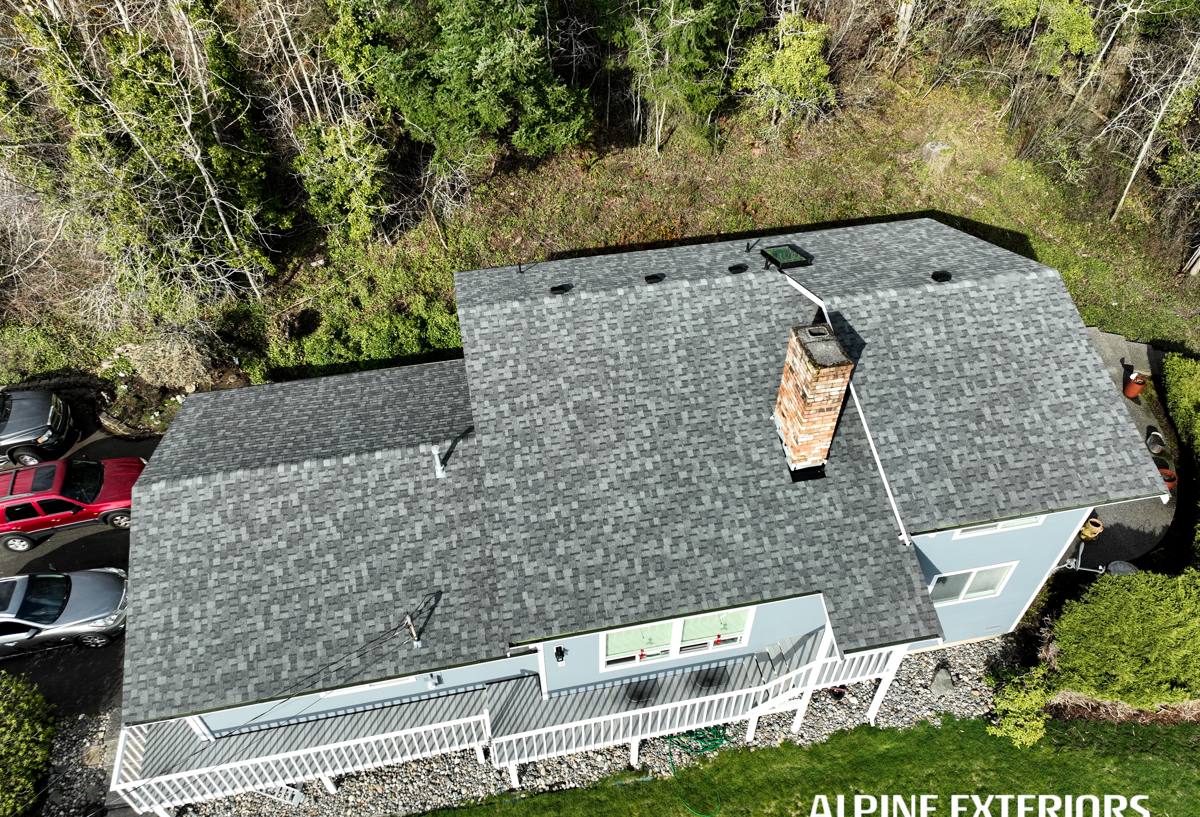
What Skagit County Weather Actually Does to a Roof
Driving rain and wind-blown moisture
Storms moving through this part of Washington rarely drop rain straight down — wind pushes it sideways, up under eaves, and into any gap in flashing or fastening. Roofs fail here less often from the field of the roof and more often at the seams: valleys, wall intersections, chimney and skylight flashing, and penetrations for vents and stacks. A metal roof is only as watertight as its weakest transition.
A long moss and algae season
Shaded lots, tree cover, and the extended damp period common in the valley give moss a long runway to establish itself. On asphalt shingles, moss roots into the granule surface and lifts it over time. On metal, there's no granule layer to root into, but moss and algae can still build up in valleys, at panel laps, and anywhere debris collects — which is why panel profile and roof design matter as much as the material itself.
Marine air and corrosion
Being close to Puget Sound and the Salish Sea means the air carries more salt and moisture than an inland roof ever deals with. Bare or poorly coated steel corrodes faster in this environment, and it shows up first at cut edges, fastener heads, and scratches in the coating — not across the whole panel. That's a materials and finish decision as much as an installation one, and it's one of the first things we walk through with homeowners.
Panel Types and Finishes: What Actually Holds Up Here
"Metal roofing" covers a range of products, and they don't all behave the same way in a wet, salt-influenced climate. Here's how the common options compare for a Mount Vernon home:
| Panel Type | Corrosion Resistance | Maintenance | Typical Lifespan |
|---|---|---|---|
| Standing seam (concealed fastener) | Very good — no exposed fastener heads to corrode or back out | Low | 40-60+ years |
| Exposed-fastener panel | Good, but depends on gasket condition at each screw | Moderate — gaskets and fasteners need periodic checking | 25-40 years |
| Stone-coated steel | Good, coating protects the substrate | Low to moderate | 30-50 years |
Standing seam tends to be our default recommendation for homes closer to the water or fully exposed to weather, simply because it removes the most common long-term failure point — exposed fasteners working loose or their gaskets hardening and cracking after years of UV and moisture cycling. Exposed-fastener panels can still be a sound, more budget-friendly choice on the right roof, as long as the homeowner understands the maintenance that comes with it.
Finish matters as much as the base metal
The paint or coating system on a metal panel is what actually faces the weather day to day. Higher-grade PVDF-based finishes hold color and chalk resistance far longer than basic polyester coatings, which matters in an area that gets a lot of UV in summer and near-constant moisture the rest of the year. We'll walk through finish options and their warranty terms as part of any estimate — the paint warranty and the weathertightness warranty are two different things, and it's worth knowing which one covers what.
What a Correct Metal Roof Installation Actually Involves
Metal roofing has a reputation for durability, but that reputation only holds if the install underneath the panels is done right. A lot of the water problems we get called out to inspect on older metal roofs trace back to shortcuts taken during installation, not a flaw in the material itself.
- Deck inspection and repair — any soft, rotted, or delaminated sheathing gets replaced before anything goes down, not covered up
- Synthetic underlayment across the full roof, with self-adhered ice-and-water membrane at eaves, valleys, and around penetrations where wind-driven rain is most likely to find a way in
- Proper panel layout and overlap matched to the actual roof pitch and exposure, not a one-size-fits-all spacing
- Correct fastening pattern — over-driven or under-driven screws are one of the most common causes of leaks on exposed-fastener panels
- Custom-formed flashing at every wall intersection, chimney, skylight, and valley, rather than relying on caulk to make up the difference
- Kick-out flashing where a roof edge meets a sidewall, so water is directed into the gutter instead of behind the siding
- Ventilation check — intake and exhaust venting sized correctly so moisture doesn't condense on the underside of the panels
That last point trips up a lot of metal roof installs in this climate specifically. A roof deck that's cold on top and humid underneath can develop condensation on the panel's underside, which looks and behaves like a leak even though the water is coming from inside, not outside. It's an easy thing to miss and an annoying thing to diagnose after the fact, so we account for it during planning rather than troubleshooting it later.
Our Process on a Mount Vernon Metal Roof Project
1. On-site inspection
We walk the roof, the attic or crawlspace where accessible, and the exterior wall-roof transitions. We're looking at deck condition, existing ventilation, current flashing details, and any signs of moss buildup or trapped moisture.
2. Straightforward written estimate
You get a scope that spells out panel type, underlayment, flashing details, and ventilation work — not just a single number. If tear-off is needed versus a possible overlay, we explain why.
3. Tear-off and deck prep (when needed)
Old roofing comes off, the deck gets inspected board by board, and anything compromised is replaced before underlayment goes down.
4. Underlayment, flashing, and panel installation
Ice-and-water membrane at vulnerable areas, synthetic underlayment across the field, custom flashing formed for your roof's actual geometry, then panels installed to the fastening and overlap spec for your pitch and exposure.
5. Ventilation and final details
Intake and exhaust venting confirmed or corrected, trim and accessories installed, and a full site cleanup — including a magnetic sweep for stray fasteners.
6. Walkthrough
We go over the finished roof with you, explain what maintenance (if any) it needs, and make sure you have your warranty paperwork in hand.
What Drives the Cost of a Metal Roof
Every roof is different, so we won't quote a number without seeing yours, but these are the main factors that move the price up or down:
| Factor | Effect on Cost |
|---|---|
| Panel type (exposed-fastener vs. standing seam) | Standing seam typically costs more upfront, less over the roof's life |
| Roof complexity (valleys, dormers, penetrations) | More cuts and flashing details mean more labor |
| Tear-off vs. overlay | Tear-off costs more upfront but avoids trapping moisture issues under new panels |
| Deck repair needed | Rot or delamination found during tear-off adds to scope |
| Ventilation upgrades | Adding or correcting intake/exhaust venting adds modest cost, prevents condensation problems |
| Finish/coating grade | Higher-grade paint systems cost more but hold color and resist chalking longer |
Maintenance and What to Watch For
Metal roofing is genuinely low-maintenance compared to shingles, but "low" isn't "none," especially in a climate that stays damp for long stretches.
- Clear debris from valleys and gutters at least twice a year — trapped leaves and needles hold moisture against the panel
- Check exposed-fastener panels every few years for backed-out screws or cracked gaskets
- Watch for moss or algae building up in shaded valleys and low-slope sections
- Have flashing at chimneys, skylights, and wall intersections checked after any major storm
- Keep an eye on gutter attachment points, since a sagging or clogged gutter can push water back under the roof edge
Why It Matters That We Already Work in Mount Vernon
A metal roof installed by a crew unfamiliar with this specific stretch of Skagit County is guessing at a lot of things a local crew already knows firsthand — how the wind typically drives rain on exposed roof faces here, which tree-shaded lots need extra attention to moss and algae, and how much marine-influenced moisture a coating needs to shrug off over the decades. We're not learning the local climate on your roof. We bring that knowledge to the inspection, the material recommendation, and the installation details that keep a metal roof performing the way it's supposed to for the long run.
If you're weighing metal roofing for a Mount Vernon home, we're happy to take a look and give you a straightforward, no-pressure estimate — just fill out the form below.