 Anacortes Exterior
 Windows Built for Mount Vernon's Wet Side of Washington
Homes in and around Mount Vernon sit in one of the wettest corners of Skagit County, where moisture-laden air off the Sound, long stretches of driving rain, and a moss season that seems to run most of the year all put steady pressure on a home's exterior. Windows take more of that punishment than almost any other component of the building envelope. Every seam, every joint, every piece of flashing around a window opening is a place where water is trying to get in, and in this climate it has a lot of chances to try.
A window installation that looks fine on day one but was rushed or under-flashed on the water-management details usually doesn't show problems until a wet winter or two has gone by — by then the damage is inside the wall, not just at the window. Our approach to window installation in Mount Vernon starts from that reality: the visible window is the easy part, and the flashing, sealing, and integration with the existing wall assembly is where a job is actually won or lost.
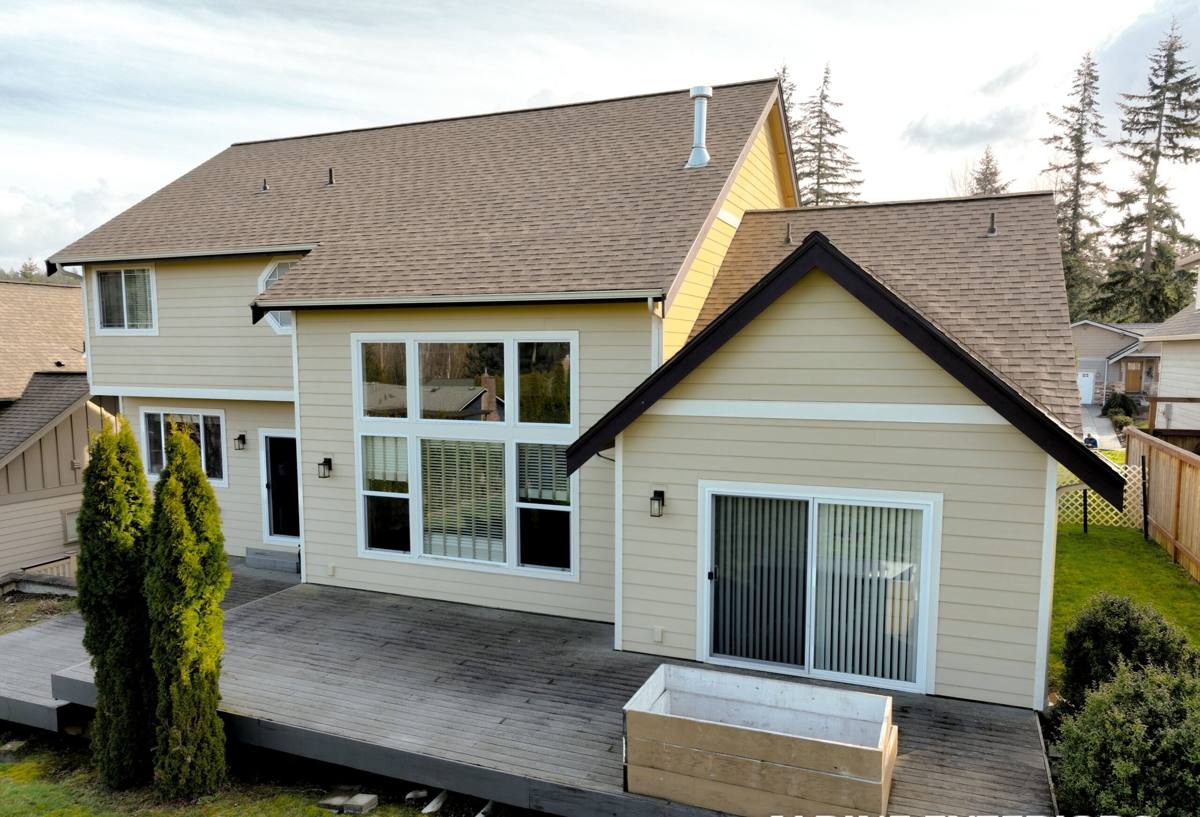
Signs a Mount Vernon Home Needs New Windows
Not every window problem means a full replacement, but in Skagit County's climate certain symptoms tend to point that direction rather than toward a simple repair:
- Visible moss, algae, or dark staining building up on or below the sill, especially on north- and west-facing walls
- Fogging or a persistent haze between panes of double-pane glass — a sign the seal has failed and the insulating gas has escaped
- Drafts you can feel near the frame on a windy, rainy day, even with the window latched shut
- Wood trim or sills that feel soft, spongy, or show paint that keeps bubbling and peeling no matter how often it's repainted
- Windows that are difficult to open, close, or lock — often a sign the frame has swollen, warped, or shifted
- Noticeably higher heating bills in the wet months compared to similar-sized homes nearby
If you're seeing more than one of these, it's worth having the windows and the wall around them looked at before deciding between a repair and a replacement.
What a Correct Window Installation Actually Involves
Swapping a window is straightforward. Installing one so it stays watertight through years of Skagit County rain is a different job, and it comes down to a handful of details that are easy to skip and expensive to skip.
Removal and Opening Inspection
Once the old window is out, the rough opening tells the real story. This is the point where hidden rot, old failed flashing, or water staining on the sheathing shows up. A careful installer stops here and addresses what's found rather than boxing a new window into a compromised opening.
Flashing and Weather Barrier Integration
Flashing is layered so that water is always directed outward and downward, shingle-style, tying into the home's existing weather-resistive barrier rather than just taping over it. This is the single most important step for long-term performance in a climate where wind-driven rain regularly hits window walls at an angle.
Setting, Shimming, and Sealing
The window gets set level, plumb, and square, shimmed at the correct points so the frame doesn't bind or bow, and sealed with the right sealant in the right locations — not everywhere, since trapping water behind a fully sealed exterior can be worse than leaving a designed drainage path open.
Interior and Exterior Finish
Insulation gets packed loosely around the frame (overpacking can bow the frame and cause operating problems), and trim is reinstalled or replaced so the finished look matches the rest of the home while keeping the water management underneath doing its job unseen.
Window Types and How They Hold Up Locally
Material choice matters more here than in a drier climate. The table below reflects how common window frame materials tend to perform under sustained damp conditions like Mount Vernon and the wider Skagit County area see most of the year.
| Frame Material | Moisture Performance | Maintenance | Typical Trade-Offs |
|---|---|---|---|
| Vinyl | Does not rot or corrode; handles moisture well | Low — occasional cleaning | Can't be repainted; seams and welds matter for long-term seal quality |
| Fiberglass | Very stable in wet/dry cycling, low expansion and contraction | Low | Higher upfront cost than vinyl |
| Wood | Attractive but vulnerable to prolonged moisture exposure without diligent upkeep | High — regular painting/sealing required | Best suited to homes where the owner is committed to ongoing maintenance |
| Wood-clad (wood interior, metal/vinyl exterior) | Exterior clad protects the wood from weather; interior keeps traditional look | Moderate | Clad seams need to be well-manufactured and well-flashed to avoid trapped moisture |
We don't install every option on this list on every job — for homes exposed to heavy wind-driven rain, we generally steer owners toward vinyl or fiberglass for the frame itself, not because painted wood windows can't look great, but because the maintenance schedule needed to keep bare wood watertight in this climate is a real, ongoing commitment, and a missed year or two of upkeep is where problems start.
Glass and Performance Options Worth Knowing About
Beyond the frame, a few glass and assembly choices make a real difference in a marine-influenced climate:
- Double or triple pane with argon fill — better insulating value, which matters for both comfort and condensation control on cold, damp mornings
- Low-E coatings — help manage heat loss in winter and heat gain on the rare hot summer day
- Warm-edge spacer systems — reduce cold spots at the glass edge, which is often where interior condensation first shows up
- Proper drainage/weep holes — allow any water that does get past the outer seal to drain back out rather than pool in the frame
Our Process, Start to Finish
- On-site assessment — we look at the existing windows, the wall assembly where accessible, and talk through what's actually causing the problems you're seeing
- Honest recommendation — repair, partial replacement, or full replacement, with the reasoning explained, not just a quote
- Written estimate — clear on materials, scope, and what's included in the flashing and sealing work, not just the window unit itself
- Scheduling around the weather — in Skagit County, timing openings to avoid leaving a wall exposed during a heavy rain system is part of doing the job right
- Installation — removal, opening inspection, flashing, setting, sealing, and finish work as outlined above
- Walkthrough — we go over the finished work with you, including how to operate and maintain the new windows
Cost Factors for Mount Vernon Window Installation
Every home is different, and we'd rather walk your property and give you real numbers than post a price that doesn't apply to your situation. In general, these are the factors that move the price up or down:
| Factor | Why It Matters |
|---|---|
| Number and size of window openings | More openings and larger units mean more material and labor |
| Frame material selected | Vinyl, fiberglass, and wood-clad carry different unit costs |
| Condition of the existing rough opening | Hidden rot or old failed flashing found during removal adds repair scope |
| Access and story height | Second-story or hard-to-access windows take more time and equipment |
| Retrofit vs. full-frame replacement | Full-frame replacement addresses the flashing and opening but involves more trim and siding work |
| Trim and interior finish work | Matching existing trim profiles or repainting adds to the scope |
Why a Crew That Already Works in Mount Vernon Matters
Window installation quality has as much to do with judgment as it does with materials. A crew that's already spent time on homes in Mount Vernon and around Skagit County has seen how the local weather actually behaves against different siding types, wall orientations, and older versus newer construction methods common in the area. That experience shows up in small decisions — how much of a gap to leave for drainage, which sealant holds up against this specific level of driving rain, when an opening needs extra flashing work versus when it doesn't. It also means we're not learning the local permitting and inspection process on your project; we already know what's expected.
Being Anacortes-based and working regularly in this part of the county also means we're not disappearing after the invoice is paid. If a question comes up a year or two later, we're a normal, reachable local call, not a crew that was passing through.
Keeping New Windows Performing in This Climate
A correct installation is most of the battle, but a little upkeep keeps it that way for years:
- Rinse pollen, salt residue, and grime off frames and glass a couple of times a year
- Check and clear weep holes along the bottom of the frame so drainage paths stay open
- Keep moss and algae from building up on sills and nearby trim, which holds moisture against the frame
- Inspect exterior caulk lines annually and touch up any that have cracked or pulled away
- Operate locks and hardware periodically, even on windows you rarely open, to catch binding early
If you're weighing window replacement or repair for a home in Mount Vernon or elsewhere in Skagit County, we're happy to take a look and give you a straight, no-pressure estimate — use the form below to get started.