 Anacortes Exterior
 Windows in La Conner Take a Different Kind of Beating
La Conner sits low, close to the water, and open to weather that moves through Skagit County with very little to slow it down. Homes here deal with a steady mix of salt-laden air off the channel, wind-driven rain that comes in sideways more often than straight down, and a wet season that stretches long enough for moss and algae to get a real foothold on anything that stays damp. Windows are one of the first parts of a house to show that wear — and one of the easiest places for water to find its way in if the installation wasn't done right the first time.
We're based in Anacortes and have worked on homes throughout this stretch of Skagit County, including La Conner, long enough to know which details matter here and which manufacturer specs are written for a drier climate and don't quite hold up. This page covers what we look at, what a correct installation actually involves, and what to expect if you're getting bids for window work on a La Conner home.
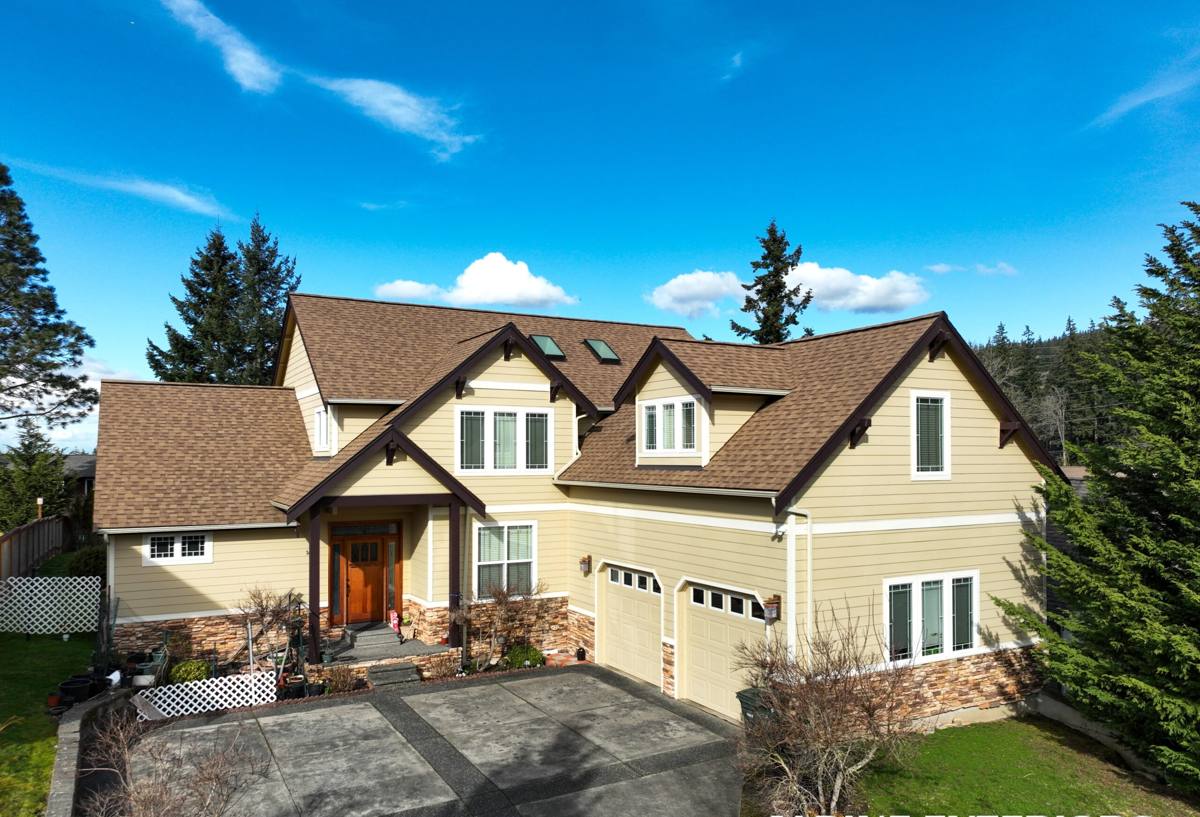
What Salt Air, Rain, and Moss Actually Do to a Window Over Time
Salt Air and Metal Components
Windows near tidal water are exposed to airborne salt even when the home isn't directly waterfront. Salt accelerates corrosion on hardware — hinges, locks, balance systems, and especially lower-grade aluminum or steel fasteners. Once corrosion starts on a window's moving parts, the window gets harder to open and close, and eventually the seal around it stops doing its job. This is one reason we're careful about which fastener and hardware grades we use on installations in this area.
Wind-Driven Rain
Rain that falls straight down is fairly easy for a window to shed. Rain that's being pushed sideways by wind off the water is a different problem — it gets forced up under trim, into gaps around the frame, and behind flashing that wasn't lapped correctly. A window can look fine and still leak for years before the damage shows up inside as soft trim, stained drywall, or a musty smell in an exterior wall.
Moss, Algae, and Sustained Moisture
Skagit County's wet season runs long, and anything that holds moisture against wood — old glazing putty, failing caulk, a sill that doesn't shed water — becomes a place for moss and algae to establish. Beyond looking bad, that sustained dampness is what actually rots wood sills and frames from the outside in, often faster than homeowners expect.
Signs Your La Conner Home's Windows Need Attention
Not every issue means a full replacement, but these are the signs worth taking seriously before they turn into a bigger repair:
- Visible gaps, soft spots, or discoloration in the wood trim or sill around a window
- Condensation forming between panes on a double- or triple-pane window (a sign the seal has failed)
- Windows that are difficult to open, close, or lock — often a sign of corroded or swollen hardware
- A persistent draft you can feel near the frame, even with the window fully closed
- Green or black growth building up on the sill or lower frame that keeps coming back after cleaning
- Paint that's peeling or bubbling specifically around the window opening, rather than the wider wall
- A noticeable rise in heating costs without any other explanation
Any one of these can be a minor fix. Several at once, especially on an older window, usually means the unit and the flashing around it are past the point where patching makes sense.
What a Correct Window Installation Actually Involves
The window itself is only part of the job. Most of the failures we get called out to fix started with the installation, not the product. Here's what we treat as non-negotiable.
Flashing and Water Management
Flashing has to be layered so that every piece sheds water onto the piece below it — sill pan first, then side flashing, then head flashing over the top, tied into the home's weather-resistive barrier. Skipping the sill pan or taping over gaps instead of properly lapping materials is the single most common shortcut we see, and it's the one most likely to cause a slow leak that doesn't show up for a year or two.
Air Sealing and Insulation
The gap between the window frame and the rough opening needs to be filled with an appropriate low-expansion foam or backer rod and sealant — not stuffed with fiberglass insulation alone, which does little to stop air movement. Poor air sealing here is a direct path to drafts and, over time, condensation inside the wall cavity.
Fastening and Structural Fit
The window needs to be shimmed level, plumb, and square before it's fastened, with fasteners placed where the manufacturer specifies — not just wherever is convenient. A window installed slightly out of square will bind, won't seal evenly, and puts uneven stress on the frame that shortens its working life.
Exterior Trim and Caulking
The last line of defense is exterior trim and caulk, but it should never be the only line of defense. If flashing was done correctly, the caulk is a backup, not the whole plan. We use sealants rated for exterior exposure and reapply where old caulk has failed rather than caulking over it.
Choosing Window Materials for This Climate
There's no single "best" window material for every home — it depends on your home's age, style, and how close you are to the water. Here's how the common options generally compare for a coastal Skagit County property:
| Material | Salt Air / Corrosion Resistance | Maintenance | Typical Fit |
|---|---|---|---|
| Vinyl | Good — won't corrode, minimal metal hardware exposure | Low | Most homes, budget-conscious replacements |
| Fiberglass | Very good — stable in temperature swings, resists moisture | Low to moderate | Homes wanting durability with a more refined look |
| Wood | Fair — needs a sound exterior clad or diligent upkeep near salt air | High | Historic or period-style homes where appearance matters most |
| Aluminum-clad wood | Moderate — depends heavily on clad quality and finish | Moderate | Homes wanting a wood interior with more weather protection outside |
For homes with direct water exposure, we generally steer clients away from bare wood exteriors unless the home's character genuinely calls for it, simply because the maintenance burden near salt air is real and ongoing. That's a maintenance trade-off, not a knock on wood as a material — plenty of well-maintained wood windows do fine here.
Older and Historic Homes in La Conner
La Conner has a number of older and character homes, and window replacement on these needs a different approach than a standard remodel. Original sightlines, muntin patterns, and trim profiles are often part of what gives the home its character, and a poorly matched replacement window can throw off the whole facade even if the installation itself is technically sound.
If your property is within La Conner's historic downtown core, check with the town before making exterior changes — some areas have design guidelines that affect what's allowed on street-facing elevations. We're happy to help you figure out what a compliant, well-matched window looks like, but that's a conversation to have with the town directly before work begins.
For historic or period homes outside any formal review area, we still recommend matching the original sightlines and profile as closely as possible. It typically costs little to nothing extra and preserves the home's value and character.
Our Process for a La Conner Window Installation
- On-site assessment. We look at the existing windows, the condition of the framing and sill underneath, and any signs of past water intrusion before quoting anything.
- Material and style selection. We walk through options based on your home's exposure, age, and budget — including what actually makes sense for this climate versus what just looks good on paper.
- Written estimate. A clear scope of work and price, so you know exactly what's included before we schedule anything.
- Removal and inspection. Once old windows come out, we check the rough opening and sheathing for hidden rot or damage — common in older coastal homes — and address it before the new window goes in.
- Installation. Sill pan, flashing, shimming, fastening, insulation, and trim, done in the sequence that actually keeps water out.
- Final check and cleanup. We test operation on every window, confirm seals, and clean up the work area before we call the job done.
What Affects Window Installation Cost in La Conner
Every home is different, so we don't quote sight unseen, but these are the main factors that move the price up or down:
| Factor | Why It Matters |
|---|---|
| Number and size of windows | More units and larger openings mean more material and labor |
| Material choice | Vinyl, fiberglass, wood, and clad options carry different price points |
| Condition of existing framing | Hidden rot or water damage found during removal adds repair work |
| Access and site conditions | Second-story or hard-to-reach windows take more time and equipment |
| Historic or custom profiles | Matching original sightlines or non-standard sizes can affect lead time and cost |
| New construction vs. retrofit | Retrofit into an existing opening is typically less invasive than a full-frame replacement |
As a general range, straightforward single-window replacements tend to run in the low thousands per opening, while whole-house projects, historic-profile matching, or jobs that turn up hidden framing damage cost more. We'll always walk you through what's driving your specific number before you commit to anything.
Why a Local Anacortes Crew Makes a Difference
A crew that already works this stretch of Skagit County isn't guessing about how a window will hold up here — we've seen how salt air, wind-driven rain, and a long moss season actually play out on real houses over years, not just in a manufacturer's spec sheet. That shows up in small decisions: which hardware grade we spec, how we detail flashing on a west-facing wall that takes the brunt of the weather, and when to flag a wood sill that needs replacing instead of just caulking over it.
It also means we're not far away if a question comes up after the job is done. We stand behind our installation work, and being local to Anacortes rather than a company that drives in from out of the area matters when it comes to follow-up, warranty questions, or simply getting a straight answer from someone who knows your home.
If your La Conner home has windows showing any of the signs above, or you're planning ahead for a replacement, we're glad to take a look and put together a free, no-pressure estimate. Fill out the form below and we'll get in touch to schedule a time that works.