 Anacortes Exterior
 Roofing Built for La Conner's Waterfront Climate
La Conner sits close enough to the water that homes here take a different kind of weather beating than roofs ten miles inland. The combination of salt-laden air, wind-driven rain off the Swinomish Channel and Puget Sound, and long stretches of shade and dampness through fall and winter puts real stress on a roof year after year. Asphalt shingles remain one of the most practical, cost-effective roofing options for this stretch of Skagit County, but only when they're installed with this specific climate in mind. A shingle roof that would hold up fine in a dry inland town can fail early here if the underlayment, ventilation, and flashing details aren't right.
This page covers what asphalt shingle roofing actually needs to hold up in La Conner, what a correct installation looks like, and how our process works for homeowners in this area.
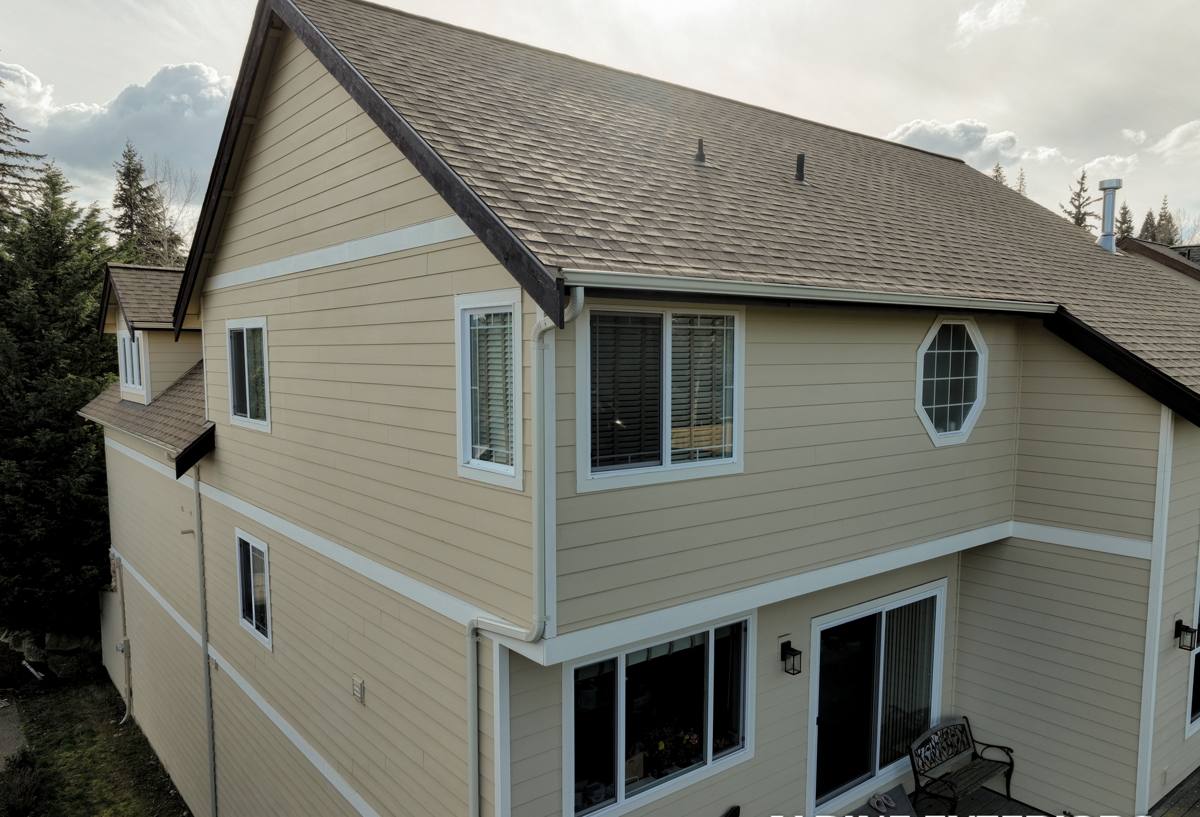
What Salt Air, Rain, and Moss Actually Do to a Roof
Every roofing material has a weak point, and for asphalt shingles near the water it's usually moisture management rather than the shingle itself failing outright. A few things stack up against a La Conner roof over time:
- Salt air accelerates corrosion on exposed metal — nail heads, flashing, and vent stacks age faster here than they would inland.
- Driving rain pushed sideways by wind off the water finds gaps at valleys, chimneys, and roof-to-wall transitions that would stay dry in a straight-down rain.
- Moss and algae take hold on shaded, north-facing slopes and anywhere debris collects, and once established they hold moisture against the shingle surface and lift edges over time.
- Shorter drying windows in fall and winter mean any moisture that does get trapped under a shingle or in an attic has less chance to evaporate before the next rain arrives.
None of this means asphalt shingles are the wrong choice — it means the installation details matter more here than they would somewhere drier.
Why Asphalt Shingle Roofing Still Makes Sense Here
Asphalt shingles are popular in La Conner and across Anacortes for good reasons: they're cost-effective compared to metal or tile, they come in styles that suit the area's mix of older homes and newer builds, and a properly installed asphalt roof has a long, well-understood track record in Pacific Northwest coastal conditions. The material itself isn't the issue — the risk comes from cutting corners on underlayment, ventilation, or flashing to save time or money. We install asphalt shingle systems the same way whether the home is a block from the water or further inland, because the extra prep work costs little compared to the price of an early failure.
Where Asphalt Shingles Make the Most Sense
Asphalt shingle roofing is a strong fit for most single-family homes, additions, and detached structures in La Conner. Homes directly exposed to open water and constant wind may benefit from extra attention to fastening patterns and edge details, which we address during the estimate rather than assuming a one-size-fits-all approach.
What a Correct Asphalt Shingle Installation Involves
A shingle roof is a system, not a single product. Skipping any one layer shortens the life of the whole roof, especially in a damp, salt-exposed climate. A correct job includes:
Deck Inspection and Repair
Before anything goes down, the roof deck gets checked for soft spots, rot, or delamination — common where past leaks went unnoticed. Bad decking gets replaced, not covered over.
Underlayment
A synthetic or felt underlayment goes down first as the roof's real waterproofing layer. In this climate we pay particular attention to ice-and-water shield style membrane at valleys, eaves, and any low-slope transitions where wind-driven rain is most likely to work its way underneath the shingles.
Flashing
Flashing around chimneys, skylights, vent pipes, and roof-to-wall junctions is where most leaks actually start, not in the open field of shingles. Corrosion-resistant flashing and correct step-flashing technique matter more here given the salt air's effect on lower-grade metal.
Ventilation
Proper intake and exhaust ventilation keeps attic moisture from condensing under the deck, which matters through Skagit County's long damp season. Poor ventilation shortens shingle life from underneath, where it's easy to miss until a re-roof reveals the damage.
Fastening and Shingle Layout
Correct nail placement and count — not staples, not over-driven or under-driven nails — keeps shingles locked down through winter wind events. Layout also affects how well water sheds at valleys and eaves.
Our Process, Start to Finish
- On-site inspection. We look at the existing roof, decking condition, ventilation setup, and any trouble spots specific to the home's exposure.
- Honest estimate. You get a clear scope of work and pricing before anything is scheduled — no surprise add-ons once we're on the roof.
- Tear-off and deck check. Old roofing comes off down to the deck so we can verify what's underneath rather than roofing over hidden problems.
- Underlayment and flashing installation. This is where most long-term performance is decided, and we don't rush it.
- Shingle installation. Installed to manufacturer specification for wind rating and nailing pattern.
- Ventilation check. Intake and exhaust venting confirmed or upgraded as needed.
- Cleanup and walk-through. Magnetic sweep for stray nails, debris hauled off, and a final walk-through so you know exactly what was done.
Shingle Options and Cost Factors
Homeowners usually choose between a few tiers of asphalt shingle, and the right one depends on budget, expected lifespan, and how exposed the roof is. The table below is a general guide, not a quote — actual pricing depends on roof size, pitch, tear-off scope, and access.
| Shingle Type | Typical Lifespan | Best Fit | Cost Factor |
|---|---|---|---|
| 3-tab asphalt | Shorter end of the asphalt range | Budget-conscious projects, secondary structures | Lowest |
| Architectural (laminate) | Mid-to-long range | Most La Conner homes; better wind resistance | Moderate |
| Premium/designer architectural | Longer end of the asphalt range | Homes wanting a heavier, dimensional look | Higher |
Beyond shingle grade, the biggest cost swings come from how many layers of old roofing need to be removed, deck repairs found during tear-off, roof complexity (valleys, dormers, skylights), and access for equipment and material staging.
Maintenance That Actually Matters in This Climate
A well-installed roof still needs some upkeep, especially with La Conner's moss season and salt exposure. Most of it is simple and doesn't require getting on the roof yourself.
- Keep gutters clear so water doesn't back up under the shingle edge during heavy rain.
- Have moss and algae growth treated before it spreads across a slope, rather than after it's established.
- Trim back overhanging branches that keep shaded areas of the roof damp longer than the rest.
- Check attic ventilation isn't blocked by insulation or storage, especially after any attic work.
- Have flashing around chimneys and vents inspected periodically, since that's where small leaks start long before they show up inside the house.
- Schedule a professional look after any major windstorm, even if nothing looks obviously wrong from the ground.
Signs Your La Conner Roof Needs Attention
Some warning signs are easy to miss until they've caused interior damage. Watch for granules collecting in gutters or downspouts, shingles that look cupped or curled at the edges, dark streaking from algae growth, moss buildup on shaded slopes, or any daylight visible at the roof deck from inside the attic. Interior water stains on ceilings are usually a late-stage sign — the leak has often been active for a while by the time it shows indoors.
Why a Local Crew Matters for This Job
Roofing crews who already work in and around Anacortes and La Conner have a practical feel for what this specific stretch of coastline does to a roof — which slopes see the most moss, where wind-driven rain tends to cause problems, and what flashing and fastening details hold up over years rather than just looking right on installation day. That local pattern recognition is different from general roofing knowledge, and it affects decisions on ventilation, underlayment placement, and material choice that a generic estimate might overlook. Working locally also means straightforward scheduling, easy follow-up if a question comes up after the job, and a crew that's accountable to the same community it works in.
What We Stand Behind
We install to manufacturer specifications so that material warranties stay valid, and we back our own workmanship separately from the shingle manufacturer's product warranty. Before any work starts, you'll know exactly what's covered, for how long, and what would void either warranty — no vague promises, just a clear written explanation.
If your La Conner home needs a new roof, a repair, or just an honest opinion on what shape your current one is in, we're glad to take a look. Reach out for a free, no-pressure estimate using the form below.