 Anacortes Exterior
 Building Decks for La Conner's Waterfront Conditions
La Conner sits right on the Swinomish Channel, and that proximity to tidal water is exactly what makes deck-building here different from a typical inland project. Salt-laden air moves through the area constantly, driving rain off Puget Sound storms hits exposed structures hard, and shaded, tree-lined lots keep moisture sitting on wood surfaces long after a storm passes. A deck built to a generic spec sheet from a big-box store rarely holds up to that combination for more than a few seasons. A deck built with this specific environment in mind can hold up for decades.
This page covers what we actually do differently when we build or rebuild a deck for a La Conner property, and why the details matter more here than they would twenty miles inland.
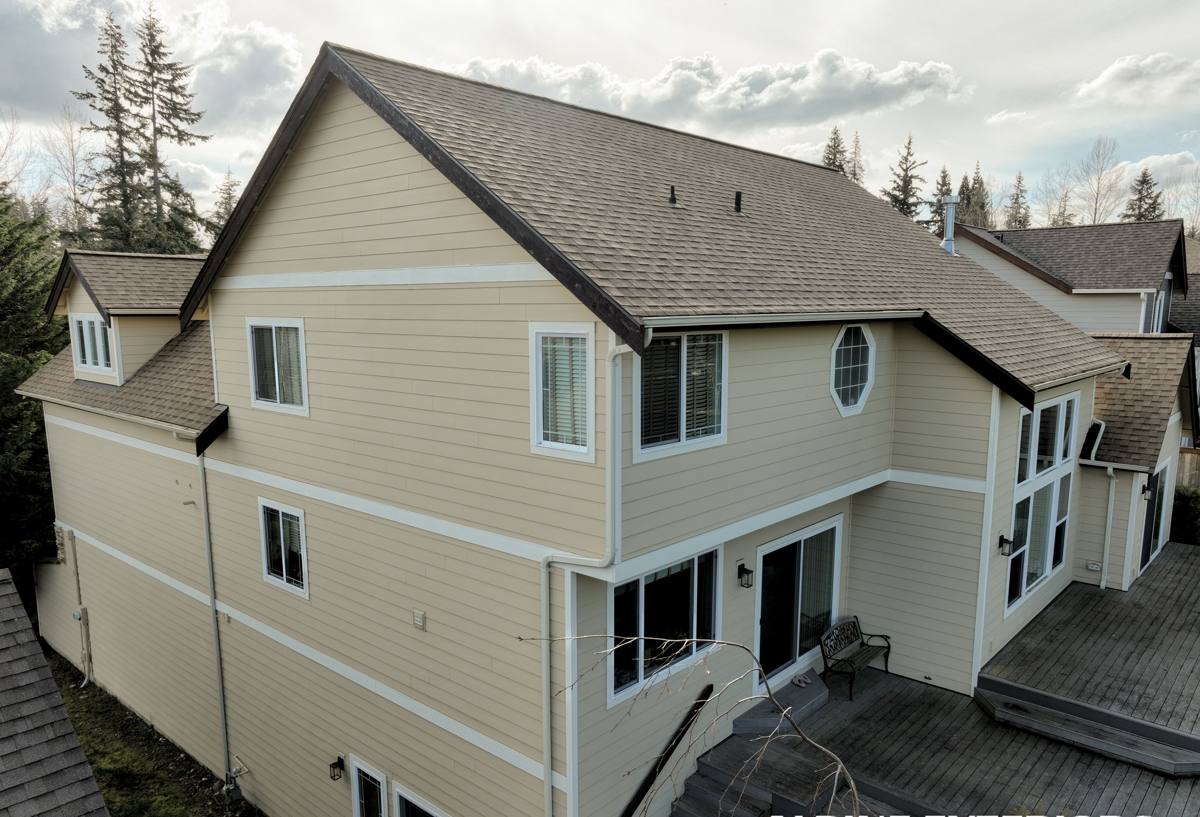
What Skagit County's Coastal Climate Does to a Deck
Three conditions do most of the damage to decks in this part of Skagit County, and they compound each other.
Salt Air and Corrosion
Airborne salt from the channel accelerates corrosion on any metal it touches — fasteners, joist hangers, post bases, railing brackets. Standard galvanized hardware that would last decades in a dry inland climate can start showing rust streaks and pitting within a few years this close to the water. Once a fastener corrodes, it loses holding strength long before it looks obviously bad, which is part of why we don't treat hardware grade as a place to save money.
Driving Rain and Moisture Intrusion
Storms coming off the water don't just rain down, they drive rain sideways into ledger boards, post connections, and any gap where water can find a path into wood. Once moisture gets behind decking or into a framing joint and can't dry out, rot starts even if the surface looks fine.
Shade, Tree Cover, and Moss Season
Many La Conner lots have mature trees or sit close enough to the water that decks stay damp for extended stretches, especially on north-facing or heavily shaded sections. That's the setup moss and algae need to take hold, and once established they hold moisture against the deck surface, making the wood underneath stay wet even longer.
What a Deck Built for This Environment Actually Requires
None of this means a deck in La Conner has to be over-built or unusually expensive. It means certain details that get treated as optional elsewhere need to be treated as standard here.
Fasteners and Structural Hardware
We use stainless steel or heavy-duty coated fasteners and connectors rated for coastal exposure rather than standard galvanized hardware, especially on ledger connections, joist hangers, and any hardware near ground contact or exposed to direct weather. It costs more up front. It's cheaper than replacing hardware — or the framing it's holding — in eight years.
Footings and Framing
Skagit County soils near the water can hold moisture longer than well-drained inland soil, so footing depth and drainage around posts matter more here. We frame with proper joist spacing and blocking for the decking material chosen, and we build in enough airflow underneath the deck so the structure can actually dry out between rain events instead of staying damp.
Ledger Board Flashing
Where a deck attaches to the house is the single most common failure point on any deck, coastal or not, but driving rain makes it worse here. Proper flashing — installed so water sheds away from the house rather than behind the ledger — is not a detail we skip to save time. A poorly flashed ledger is how homeowners end up with hidden rot behind their siding, which turns a deck problem into a siding and framing repair.
Decking Material and Spacing
Board spacing, orientation, and material all affect how fast a deck dries out after rain and how much moss it collects. Tighter spacing looks clean but traps debris and moisture; we set gaps that balance appearance with actual drainage.
Decking Material Comparison for This Climate
There's no single "best" decking material for every La Conner property — it depends on budget, sun exposure, and how much upkeep a homeowner wants to do. Here's how the common options actually perform under salt air, driving rain, and moss conditions.
| Material | Moisture Resistance | Moss/Algae Resistance | Maintenance |
|---|---|---|---|
| Cedar | Good if sealed regularly; naturally rot-resistant but not maintenance-free | Moderate — needs cleaning in shaded areas | Annual cleaning and re-sealing recommended |
| Pressure-Treated Fir/Pine | Fair — treatment protects against rot but end cuts and fasteners are vulnerable | Low — prone to moss in shade without upkeep | Regular sealing; watch for checking and splintering over time |
| Composite Decking | Very good — won't rot, but can trap surface moisture if not cleaned | Moderate — surface texture can hold organic debris | Low — periodic washing, no sealing or staining |
| PVC/Capped Decking | Excellent — fully moisture resistant | Good — smoother, harder surfaces shed debris better | Lowest — occasional rinsing |
We'll walk through these trade-offs honestly during an estimate rather than pushing whichever product has the best markup. A shaded, wooded La Conner lot and a bright open one right on the water often call for different answers even on the same street.
Moss and Algae: Dealing With a Long Wet Season
Skagit County's wet season runs long, and a shaded deck can stay damp for days after a storm. Moss doesn't just sit on the surface — it holds water against the boards, which is what actually causes the wood underneath to break down over time, and it makes the surface slick and genuinely dangerous underfoot.
Prevention beats treatment. Proper board spacing and airflow underneath the deck reduce how long moisture sits after rain, which is the single biggest factor in how much moss a deck grows. Beyond that:
- Trim back overhanging branches where possible to let more light and air reach the deck surface
- Sweep debris — leaves, needles, dirt — off the deck regularly rather than letting it build up in corners and against railings
- Clean the deck surface at least once a year, more often on heavily shaded sections
- Avoid pressure-washing wood decking at high pressure, which can damage the wood fibers and actually make future moss growth worse
- Reseal or restain wood decking on the schedule the product calls for — a failed sealer is an open invitation for moss
How We Approach a La Conner Deck Project
Our process is the same one we use across our Skagit County service area, adjusted for whatever the specific lot and structure need.
- On-site assessment. We look at sun exposure, existing structure (for rebuilds), soil conditions, and how close the deck sits to the water, since that affects how aggressive the salt exposure will be.
- Honest material and design conversation. We walk through decking and hardware options against your budget and how much maintenance you actually want to do, not just what looks good in a brochure.
- Permitting. We handle the permit process with the appropriate local jurisdiction before work begins.
- Demolition and framing (rebuilds). Old decking, hardware, and any rotted framing get removed and inspected — this is often where hidden ledger or post rot turns up.
- Structural build. Footings, framing, ledger flashing, and hardware go in to coastal-appropriate standards.
- Decking, railing, and finish work. Final surface material, railings, and any stairs are installed and finished.
- Walkthrough. We go over the finished deck and basic maintenance expectations with you before we consider the job done.
Permits and Local Considerations
Deck projects in and around La Conner typically require a permit from the applicable local building jurisdiction, and properties near the shoreline or tidal areas can also fall under additional shoreline management review depending on location and scope. Requirements vary by exact parcel and project size, so we confirm what applies to your property specifically rather than assuming — this is one of the areas where working with a crew that already navigates Skagit County permitting regularly saves homeowners real time and back-and-forth.
What Affects the Cost of a La Conner Deck
Every project is different, but the same handful of factors drive most of the cost difference between a simple deck and a more involved one. We won't quote a number without seeing the property, but here's what typically moves the price.
| Factor | Why It Matters |
|---|---|
| Size and shape | More square footage and complex shapes (angles, multiple levels) mean more framing and labor |
| Decking material | Composite and PVC cost more up front than wood but less in long-term maintenance |
| Height above grade | Taller decks need more substantial framing, railings, and often stairs |
| Existing structure condition | Rebuilds with hidden rot or undersized old framing cost more than a clean tear-off |
| Hardware grade | Coastal-rated stainless hardware costs more than standard galvanized but protects the investment |
| Permit and site requirements | Waterfront-adjacent lots can involve additional review, which adds time though not always cost |
Maintaining Your Deck Once It's Built
A well-built deck still needs seasonal attention in this climate — that's true of any material. This is the routine we recommend to clients around Anacortes and La Conner:
- Clear leaves, needles, and debris off the deck surface and out of gaps between boards regularly, especially in fall
- Inspect ledger flashing and railing connections once a year for signs of movement or water staining
- Check fasteners and visible hardware periodically for rust streaks, which can signal a coating starting to fail
- Clean moss and algae promptly rather than letting it establish, particularly on shaded sections
- Reseal or restain wood decking on schedule rather than waiting until it visibly needs it
- Confirm underdeck airflow paths stay clear of stored items or overgrown landscaping that blocks ventilation
Why It Matters That We Already Work in La Conner
A lot of deck problems we get called out to fix aren't from bad workmanship in general — they're from a deck built to a spec that made sense somewhere else. Standard hardware, standard flashing details, standard board spacing: all reasonable choices in a dry inland climate, and all shortcuts that catch up with a homeowner faster this close to Skagit Bay and the Swinomish Channel.
Working regularly in this specific area means we already know which details can't be treated as optional here, we're familiar with the local permitting process, and we've seen firsthand how salt air, driving rain, and a long moss season actually play out on real decks over time — not just in theory.
If you're planning a new deck or need to replace one that's showing its age, we're happy to take a look and talk through honest options for your property. Reach out for a free, no-pressure estimate using the form below.