 Anacortes Exterior
 Why La Conner Decks Wear Differently Than Decks Inland
La Conner sits close to the water, and that proximity shapes everything about how a deck ages here. Salt-laden air moves through the area constantly, settling into wood grain, metal fasteners, and any exposed end-cut. Add Skagit County's long wet season and the moss and algae growth that comes with it, and you have a combination that stresses decks faster than most homeowners expect. A deck that might go fifteen years without major issues in a drier inland climate can start showing structural problems in half that time here if it wasn't built or maintained with this specific environment in mind.
We've worked on enough decks around La Conner and the greater Anacortes area to know the failure patterns aren't random. They follow the weather. Ledger boards facing prevailing wet winds rot first. Fasteners near the waterline of splashback corrode ahead of schedule. Shaded sections under trees or on the north side of a house stay damp long after the rest of the deck has dried, and that's exactly where moss gets a foothold and starts working into seams and joints.
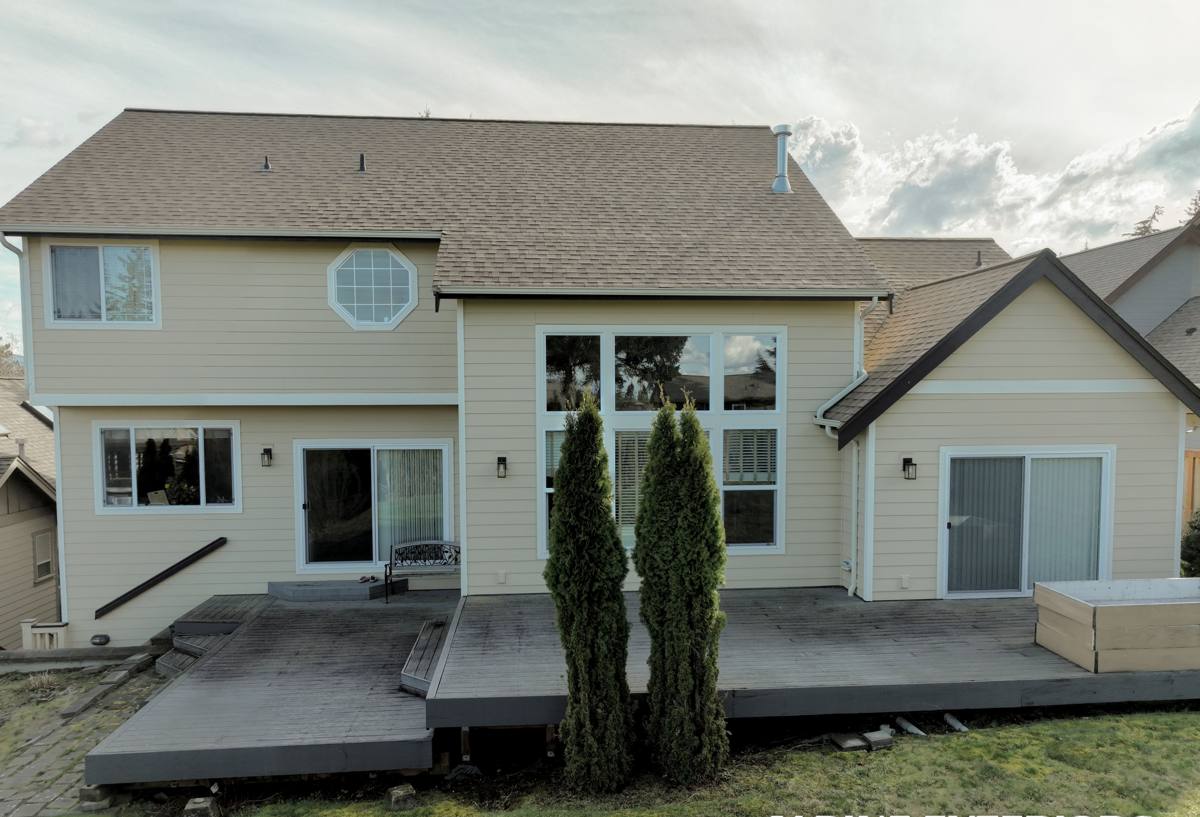
What Actually Causes Deck Damage in This Climate
Moisture That Never Fully Leaves
Driving rain doesn't just fall on a deck — it gets pushed sideways into joints, under boards, and into any gap where two pieces of wood or composite meet. In a marine climate like this, decks rarely get a long enough dry stretch to fully release the moisture they absorb during the wet months. That trapped moisture is the root cause behind rot, fastener corrosion, and the soft, spongy spots homeowners often describe when they call us.
Salt Air and Metal Fasteners
Salt accelerates corrosion on screws, joist hangers, bolts, and flashing. Once a fastener starts rusting, it loses holding strength long before it looks obviously bad from the surface. This is one of the most common issues we find during inspections — the decking looks fine, but the hardware underneath has been quietly failing for a couple of seasons.
Moss, Algae, and Surface Breakdown
Moss doesn't just look bad. It holds moisture directly against the wood or composite surface, blocks proper drying, and its root structure can work into small cracks and expand them over time. On painted or stained surfaces, moss and algae growth also breaks down the protective coating faster, leaving bare wood exposed to the next round of rain.
UV and Temperature Swings
Even with our region's overcast reputation, UV exposure during summer months dries out and cracks wood fibers and finishes. Combined with the freeze-thaw cycles of winter, this creates a push-pull effect on the wood that opens up small cracks — cracks that then become the entry point for the moisture problems above.
Signs Your La Conner Deck Needs Repair, Not Just Cleaning
- Soft or spongy spots when you walk across the deck, especially near the house or stair landings
- Boards that have visibly cupped, warped, or separated at the seams
- Rust streaks running down from screw heads or around joist hangers
- Railings or posts that wiggle more than they used to
- Persistent moss or algae that comes back within weeks of cleaning
- Gaps opening up where the deck meets the house (the ledger board connection)
- Visible daylight or gaps underneath the deck where support posts meet footings
- A musty smell coming from underneath or around the deck structure
Any one of these on its own might be minor. Two or three together usually means moisture has been working on the structure for a while, and it's worth having someone look at the framing, not just the visible boards.
What a Correct Deck Repair Actually Involves
A lot of deck "repairs" amount to swapping out a few obviously bad boards and calling it done. That approach misses the point in a climate like ours, because the board that failed is usually a symptom of something happening underneath — a ledger connection that's been absorbing water, joist hangers that have corroded, or drainage that's letting water pool instead of shed.
Our Inspection Process
We start below the surface. That means checking the ledger board attachment to the house (a common failure point and a safety issue if it's compromised), probing joists and beams for soft spots with an awl, inspecting fastener condition, and checking post bases and footings for movement or rot. Only after we understand the structural condition do we look at the decking surface itself — boards, railings, stairs, and finish.
Structural Repairs
Where we find compromised framing, we replace it with appropriately rated lumber and, where relevant, upgrade to corrosion-resistant fasteners and hardware suited for coastal exposure. This is not the place to reuse original hardware if it's showing early corrosion — the labor to access these connections is the expensive part, and cutting corners on the hardware itself makes no sense once everything is already opened up.
Surface and Finish Work
Depending on the deck material, this can mean replacing individual boards, refastening loose sections, sanding and refinishing wood surfaces, or addressing composite boards that have started to delaminate or fade unevenly. We also look at drainage — whether water is actually shedding off the deck surface and away from the house, or pooling in low spots that will just cause the same problem again.
Moss and Growth Treatment
Cleaning off moss and algae is only half the job. We also look at why that section of deck stays damp — overhanging vegetation, poor sun exposure, inadequate ventilation underneath — because treating the growth without addressing the cause just means it comes back next season.
Repair vs. Replacement: How We Help You Decide
| Factor | Favors Repair | Favors Replacement |
|---|---|---|
| Framing condition | Solid, isolated soft spots only | Widespread rot in joists, beams, or ledger |
| Age of structure | Under 15-20 years, built to code | Older, undersized, or non-conforming framing |
| Fastener condition | Localized corrosion | Widespread rust on hardware throughout |
| Surface material | Boards failing individually over time | Uniform failure across most of the deck |
| Footings and posts | Stable, no movement | Settling, heaving, or undersized footings |
| Budget goals | Extend usable life cost-effectively | Want a longer-term reset and possible layout changes |
Most decks we look at fall somewhere between these extremes, which is why an honest inspection matters more than a quick estimate over the phone. We'll tell you plainly if a repair will hold up for years, or if you're better off putting that money toward a rebuild instead of chasing recurring problems on an aging structure.
Why It Matters to Hire a Crew That Already Works in La Conner
Deck repair isn't identical everywhere in Skagit County, and a crew that mostly works drier, more sheltered sites can miss the details that matter near the water. We know which connections tend to fail first in this specific exposure, which fastener grades actually hold up against the salt air here, and how much drainage slope a deck really needs to shed our typical driving rain instead of letting it sit. That local pattern recognition is the difference between a repair that lasts and one you're revisiting in two years.
We also understand the practical side of working in this area — permitting expectations for structural deck work, realistic scheduling around our wet season, and material choices that make sense for a marine-influenced climate rather than a generic national recommendation. When we quote a repair, it's based on what actually works here, not a one-size-fits-all approach.
Maintenance That Extends Your Deck's Life Between Repairs
A repaired deck still needs regular attention in this climate to avoid ending up back in the same condition. A few habits make a real difference:
- Clean moss and algae off the surface at least once a year, ideally before the wet season sets in
- Keep gutters and downspouts clear so runoff isn't dumping extra water onto or near the deck
- Trim back vegetation that's shading sections of the deck and keeping them from drying out
- Reapply stain or sealant on schedule rather than waiting until it's visibly worn through
- Check fastener heads periodically for early rust and address it before it spreads
- Keep an eye on the ledger board connection to the house, since it's hidden but critical
None of this is complicated, but it's the kind of routine maintenance that gets skipped until a problem shows up. Catching small issues early is almost always cheaper than waiting for them to become structural.
What to Expect When You Call Us
We'll walk the deck with you, explain what we're seeing in plain terms, and give you an honest read on whether you're looking at a targeted repair or something more involved. You'll get a clear scope of work and pricing before anything starts, and we'll flag anything we find along the way rather than surprising you with add-ons later. If your deck just needs cleaning and minor upkeep rather than repair, we'll tell you that too.
If your deck in La Conner is showing soft spots, rust stains, persistent moss, or just feels less solid than it used to, it's worth having it looked at before another wet season adds to the damage. Reach out for a free, no-pressure estimate — we'll give you a straight answer about what your deck actually needs.