 Anacortes Exterior
 Windows in Ship Harbor Take a Different Kind of Beating
Ship Harbor sits close enough to the water that salt air is part of daily life, not an occasional nuisance. Add in Skagit County's long wet season, wind-driven rain off Rosario Strait, and the moss and algae growth that comes with months of shade and moisture, and you've got an environment that's genuinely hard on windows. Frames corrode faster near the water. Seals fail sooner when they're constantly wet and drying, wet and drying. Wood trim that would last decades in a drier climate can start showing rot in half that time if it wasn't detailed correctly on day one.
None of this means Ship Harbor is a bad place to own a home — it just means window installation here isn't a generic job. The materials, the flashing details, and the sealing methods that work fine in a dry inland climate aren't always the right call this close to the water. This page is about what window installation actually requires in this specific neighborhood, and what we do differently because of it.
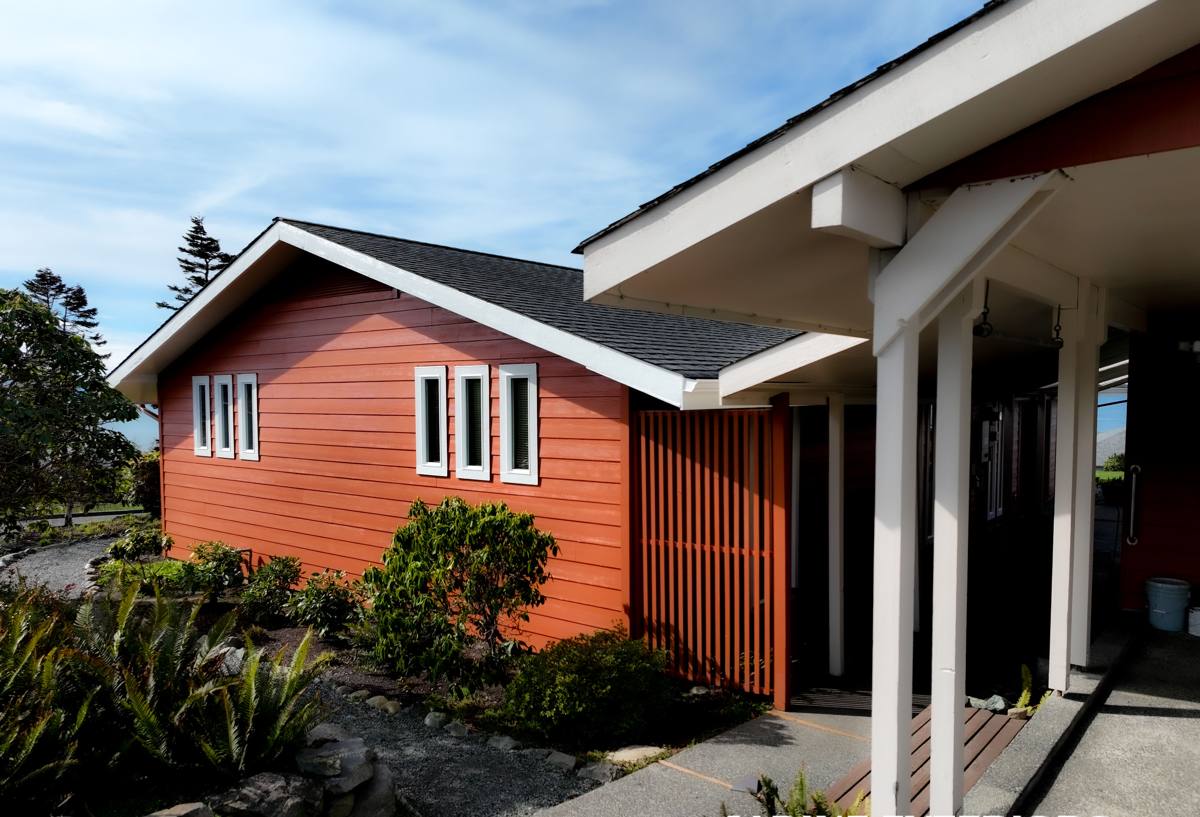
How Salt Air, Rain, and Moss Actually Damage Windows
Salt Air and Corrosion
Airborne salt accelerates corrosion on metal hardware — hinges, locks, balance systems, and aluminum-clad frames all age faster near the water. Cheaper hardware and unprotected aluminum components can start pitting or seizing up years before they should.
Driving Rain and Water Intrusion
Wind-driven rain doesn't just fall on a window, it gets pushed sideways into every gap, seam, and fastener hole. A window that's caulked but not properly flashed will often look fine for a year or two and then start leaking during the first real storm season that hits it at the wrong angle.
Moss, Algae, and Trapped Moisture
Shaded, damp conditions grow moss and algae on sills, trim, and siding around windows. That growth holds moisture against the surface far longer than open air ever would, which is exactly the condition that rots wood trim and breaks down sealants from the outside in.
Signs Your Current Windows Are Losing the Fight
Most window failures in this area don't happen all at once — they show up as small signs first. Worth checking for:
- Soft or discolored wood trim around the window frame, especially at the bottom sill
- Fogging or condensation between panes of double-pane glass (a sign the seal has failed)
- Drafts you can feel with a hand near the frame on a windy day
- Paint or finish that's bubbling, peeling, or chalky right at the window edges
- Hardware that's stiff, corroded, or hard to lock and unlock smoothly
- Visible moss, algae, or dark staining building up on sills or the trim below the window
- Higher heating bills without any other obvious explanation
Any one of these on its own might just need minor attention. Several at once, especially on the sides of the house facing the water or prevailing wind, usually means the windows are past patching and into replacement territory.
What Correct Window Installation Actually Involves
Window installation quality is decided almost entirely by what happens before the window is even set in the opening, and by the flashing and sealing work most homeowners never see once trim goes back on. Done right, a coastal-grade window install includes:
- Removing the old window and inspecting the rough opening for hidden rot, soft sheathing, or prior water damage before anything new goes in
- Repairing or replacing any compromised framing — never installing a new window into a damaged opening
- Installing a proper drainage plane and sill pan flashing so any water that does get past the window has somewhere to go besides your wall cavity
- Integrating window flashing correctly with the house wrap or building paper, shingle-style, so water is always directed outward and downward
- Setting the window level, plumb, and square, then securing it per the manufacturer's fastening schedule — not just a bead of caulk and a few screws
- Sealing and insulating the gap between the window frame and rough opening with a compatible, flexible material that won't harden and crack
- Finishing with exterior trim and sealant rated for direct weather exposure, not general-purpose caulk that breaks down in a season or two
Skip any one of these steps and the window may look fine for a while — but "fine for a while" isn't the standard we hold ourselves to on a site this close to the water.
Choosing Window Materials for a Coastal Skagit County Home
There's no single "best" window material for every home — it depends on your exposure, your budget, and how much maintenance you want to take on. Here's an honest comparison of the main options we work with for coastal-exposed homes:
| Material | Coastal Performance | Maintenance | Trade-offs |
|---|---|---|---|
| Vinyl | Good — won't corrode or rot, handles moisture well | Low | Frame color options are more limited; can flex slightly on very large sizes |
| Fiberglass | Excellent — very stable in wet, salty, temperature-swinging conditions | Low | Higher upfront cost than vinyl |
| Aluminum-clad wood | Good exterior protection, but interior wood still needs care | Moderate | Cladding seams and corners need careful sealing near salt air |
| Solid wood | Weakest for direct coastal exposure without diligent upkeep | High | We recommend this mainly for protected elevations, not exposed sides of the house |
For homes with direct exposure to wind and salt spray, we typically steer customers toward vinyl or fiberglass for the exposed elevations, and reserve wood or wood-clad options for sheltered sides of the house where they'll actually hold up. This isn't about one product being bad — it's about matching the material's real-world behavior to the specific conditions your home faces.
New Construction Windows vs. Replacement Windows
These are two different jobs with different techniques, and it's worth knowing which one you actually need:
New Construction Windows
Installed into a fully open rough opening, typically during a remodel or when siding is already off. This lets us install a complete flashing and drainage system from scratch, which is the more thorough and generally more durable approach when it's available.
Replacement (Retrofit) Windows
Installed into an existing frame without disturbing the surrounding siding or trim. Faster and less invasive, and often the right call for a straightforward swap — but it depends on the existing frame being in solid shape. If there's already hidden rot or a prior flashing failure, a retrofit install can trap that problem instead of fixing it, which is why we always inspect before recommending which route makes sense for your situation.
Our Installation Process
- On-site assessment — we look at each window's exposure, current condition, and any signs of water intrusion before recommending anything
- Material and product recommendation — matched to that window's exposure, not a one-size-fits-all pitch
- Opening inspection and prep — checking framing and sheathing condition once the old window is out
- Flashing and drainage installation — the part that actually determines whether the window stays dry for the next 20 years
- Window setting and fastening — level, plumb, square, and fastened to spec
- Sealing, insulating, and trim finish — weather-rated materials on the exterior, proper insulation at the frame gap
- Final walkthrough — operation check on every window, and a clear explanation of what was done
What Affects the Cost of a Window Installation
| Factor | Why It Matters |
|---|---|
| Window material | Vinyl, fiberglass, and wood-clad windows all sit at different price points, before installation is even factored in |
| New construction vs. retrofit | New construction installs involve more labor around flashing and siding but often deliver a more complete weatherproofing result |
| Number and size of openings | Larger windows and multi-window projects have different labor and material needs than a single small swap |
| Condition of the existing opening | Hidden rot or past water damage adds repair work before the new window can go in |
| Exposure and elevation | Windows facing direct wind and salt spray may warrant upgraded flashing or materials versus a sheltered side of the house |
We give straightforward, itemized estimates rather than vague ballpark numbers, because the honest answer is that cost depends on what we find once we're actually looking at your specific windows and openings.
Why It Matters to Hire a Crew That Already Works in Ship Harbor
A crew that mainly installs windows in drier, inland parts of Washington isn't necessarily wrong about window installation in general — they're just working from a different set of assumptions. Flashing details that are optional in a low-moisture climate aren't optional here. Material choices that hold up fine 20 miles inland can underperform on a home taking direct wind and salt exposure near the water.
Working regularly in Anacortes and around Skagit County means we're not guessing at how a given window and installation method will hold up against this specific climate — we're seeing the results on homes like yours, season after season. That's the difference between an installation that looks good at handoff and one that's still performing correctly after several winters of driving rain.
Get a Free, No-Pressure Estimate
If your windows are showing any of the wear signs above, or you're planning ahead for a remodel, we're happy to take a look and give you a straightforward assessment — no pressure, no upsell. Use the form below to request a free estimate for window installation in Ship Harbor.