 Anacortes Exterior
 Windows Built for the Similk Beach Environment
Similk Beach sits close enough to the water that homes here take a different kind of weathering than houses further inland in Skagit County. Salt-laden air drifts in off the water and settles on everything, including window frames, hardware, and glazing seals. Add in driving rain that comes sideways during winter storms and a moss season that can stretch from fall through spring, and you have an environment that is genuinely hard on windows. Frames corrode faster near the water. Seals that would last two decades in a dry inland climate can start failing in twelve or fifteen years here. Wood sashes that aren't properly finished and maintained take on moisture and start to soften around the sill.
None of this means Similk Beach homeowners need to over-build or over-spend. It means the window choice and the installation details have to match the actual conditions the house sits in, not a generic spec sheet. That's the difference between a window that performs for twenty-plus years and one that starts showing problems well before its warranty runs out.
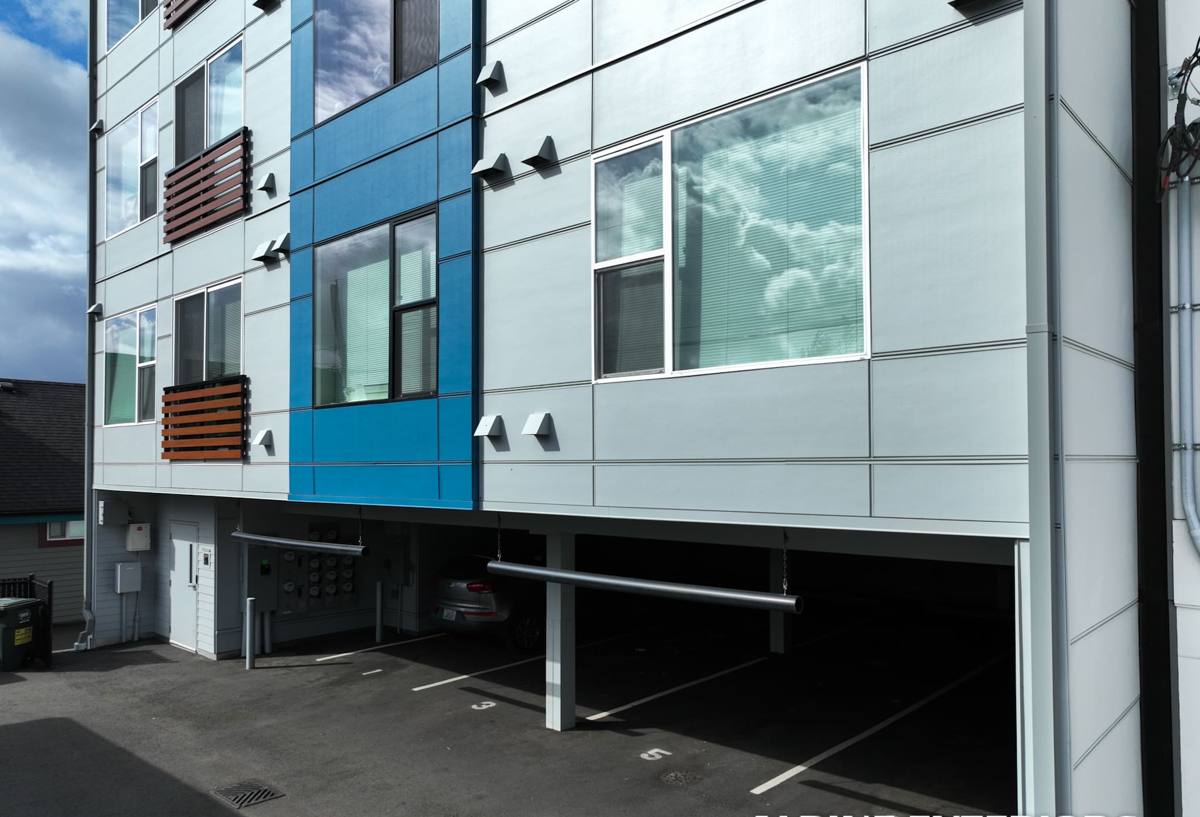
What "Energy-Efficient" Actually Means Here
Energy efficiency in a window comes down to a handful of measurable things: the U-factor (how much heat passes through the glass and frame), the Solar Heat Gain Coefficient, air leakage rating, and how well the unit is actually installed and sealed into the wall. In Western Washington's marine climate, we're less worried about blocking intense summer sun and more concerned with keeping conditioned air inside during our long cool, wet stretch of the year. A window with a low U-factor and tight air-leakage numbers will do more for a Similk Beach heating bill than a window optimized for hot, dry climates.
Just as important as the glass package is the frame material's ability to handle moisture and salt exposure without degrading. A window can have excellent energy ratings on paper and still underperform within a decade if the frame corrodes, the weatherstripping compresses and stops sealing, or the installation wasn't flashed correctly and water gets behind the frame.
The Frame Material Question
We install a mix of vinyl, fiberglass, and clad-wood windows depending on the home, the budget, and the specific exposure of that wall to wind-driven rain and salt air.
- Vinyl — good value, no painting required, and modern multi-chamber vinyl frames handle moisture well. It's a solid choice for most walls on a Similk Beach home.
- Fiberglass — more dimensionally stable across temperature swings, holds paint well if you want a custom color, and tends to outlast vinyl in high-exposure spots like a west-facing wall that catches the brunt of storms off the water.
- Clad-wood — gives you real wood on the interior with a protective exterior cladding, but it's the option most sensitive to installation quality. Any gap in the cladding or flashing is where moisture gets in, and once it does, wood trim is slower to dry out in our climate. We're honest with clients about this trade-off rather than steering everyone toward it for looks alone.
All-wood windows without cladding are something we generally steer clients away from on direct water-exposed walls in this area — not because wood windows are bad, but because the maintenance schedule needed to keep bare wood sealed against salt air and driving rain is more than most homeowners want to keep up with year after year.
Salt Air and Hardware Corrosion
One detail that's easy to overlook: it's not just the glass and frame that need to hold up, it's the hardware. Locks, hinges, balance systems, and screws are often the first thing to show wear in a salt-air environment. We spec corrosion-resistant hardware — stainless steel or coated fasteners rather than standard-grade — on installs near the water. It's a small cost difference up front and it's the kind of thing that determines whether a window still opens smoothly in year eight or starts binding and rusting at the hinges.
Moss, Drainage, and Why Sill Design Matters
A long moss season affects windows more than people expect. Moss and organic debris that collect on sills, in weep holes, and along exterior trim hold moisture against the frame far longer than open air would. Weep holes that get clogged with moss or debris stop draining properly, and water that should exit the frame ends up sitting against it instead. On a re-install or new window job, we make sure weep systems are clear and functioning, and we talk homeowners through the basic seasonal check — clearing sills and weep holes before the wet months settle in — as simple maintenance that protects the investment.
Our Installation Process
The window unit itself is maybe half of what determines performance. The other half is installation, and this is where most energy-efficiency problems actually originate — not from a bad window, but from a gap in the flashing, a missed sealant line, or insulation that wasn't packed correctly around the frame.
What a correct installation includes:
- Remove the old unit and inspect the rough opening and sheathing for hidden water damage or rot before anything new goes in.
- Repair or replace any compromised framing or sheathing — never install a new window over a wet or damaged opening.
- Install house wrap and flashing tape in proper shingle-lap order so water is directed out and down, never behind the new unit.
- Set the window level, plumb, and square, then fasten according to the manufacturer's specification.
- Insulate the gap between the frame and rough opening with low-expansion foam or fiberglass — never leave it empty, and never overpack it, since either mistake affects both energy performance and the frame's ability to sit correctly.
- Seal the exterior with a compatible, durable sealant rated for our climate, and finish interior trim.
- Walk the homeowner through operation, locks, and any maintenance specific to the frame material chosen.
We treat flashing and sealing as the part of the job that actually earns the "energy-efficient" label. A top-tier window installed with a shortcut on flashing will leak and underperform. A mid-range window installed correctly will often outperform it.
Signs Similk Beach Homeowners Should Watch For
- Drafts or cold spots near the window frame, especially during windstorms off the water
- Visible condensation forming between the panes of a double or triple-pane unit — a sign the seal has failed
- Frames that feel soft, discolored, or show bubbling paint or finish
- Difficulty opening, closing, or locking windows that used to operate smoothly
- Moss or dark staining building up on sills or exterior trim
- A noticeable rise in heating costs without another clear cause
Any one of these is worth a look. Several at once usually means it's time to talk about replacement rather than another repair.
Cost Factors to Understand
Every Similk Beach job is different depending on the home's age, how many openings are involved, and what condition the existing framing is in. Rather than quote a number that won't hold up house to house, here's what actually moves the price:
| Factor | Why It Matters |
|---|---|
| Frame material | Vinyl is typically the most affordable, fiberglass and clad-wood cost more up front but can offer longer service life in high-exposure locations |
| Number and size of openings | Larger picture windows and multi-unit combinations cost more than standard single openings |
| Condition of the rough opening | Hidden rot or water damage found during removal adds repair time before the new window can go in |
| Wall exposure | Walls facing prevailing wind and rain off the water may warrant upgraded flashing details or corrosion-resistant hardware |
| Glass package | Upgraded low-E coatings and gas fills improve U-factor but add cost per unit |
| Trim and finish work | Matching existing interior trim or custom exterior cladding colors adds labor |
We walk every home in person before quoting, because the honest price depends on what we find once we're actually looking at the opening — not a phone estimate based on square footage alone.
Why Local Experience with Similk Beach Homes Matters
A crew that's worked this specific stretch of Skagit County knows which walls tend to take the worst of the weather, what kind of rot patterns show up in homes of a certain age here, and which installation details actually matter versus which are optional upsells. That local pattern recognition saves homeowners money — we're not guessing at what your home needs, we're applying what we've already seen work and fail on similar homes nearby. It also means faster response if a problem shows up after installation, since we're not traveling in from out of the area to address it.
If you're weighing whether it's time to replace aging windows, dealing with drafts, or just want an honest read on what your home's specific exposure calls for, we're happy to come take a look. Reach out for a free, no-pressure estimate using the form below.