 Anacortes Exterior
 Board & Batten in La Conner: A Look That Fits the Town
La Conner has a visual identity most towns don't — a working waterfront, a historic core, and homes that lean into clean, simple lines rather than fussy trim. Board and batten siding fits that character naturally. The vertical board-and-strip pattern reads as classic Pacific Northwest, whether it's going on a cottage near the water or a newer build a few blocks back from the channel. It's a look homeowners choose on purpose here, not by default.
But a siding profile is only as good as the material behind it and the installation under it. La Conner sits close enough to open water that salt air, wind-driven rain, and shade-driven moss growth are part of daily life for any exterior surface. Board and batten done wrong in this environment shows its wear fast. Done right, with the correct material and correct install details, it's one of the most durable siding styles available.
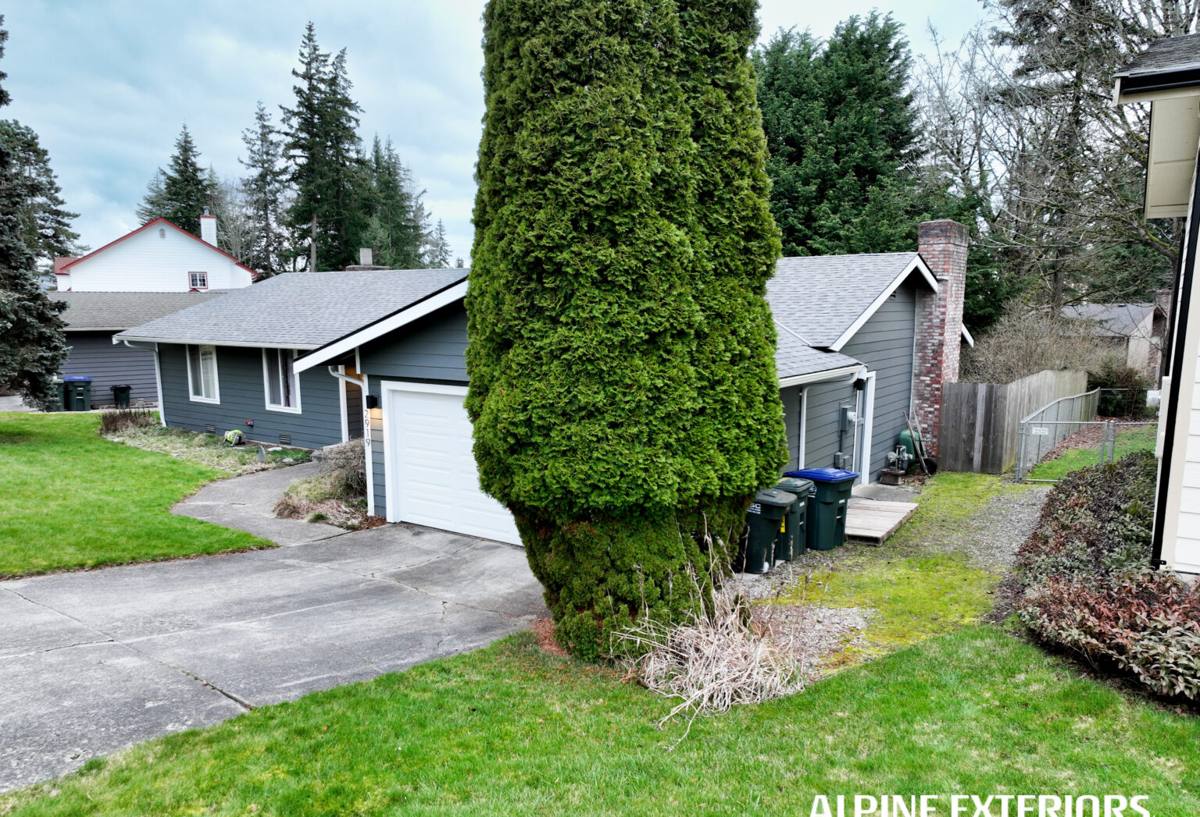
What La Conner's Climate Actually Does to Siding
Salt Air
Proximity to the Swinomish Channel and the broader Salish Sea means a steady low-level exposure to salt-laden moisture. Salt air accelerates corrosion of exposed fasteners and metal trim, and it breaks down cheaper paint films faster than inland exposure would. Any siding material that isn't dimensionally stable or isn't finished to handle coastal exposure will show chalking, fading, or fastener bleed years before it should.
Driving Rain
Storms coming off the water tend to arrive with wind behind them, which means rain doesn't just fall on a wall — it's driven sideways into every seam, joint, and batten gap. Board and batten has more vertical seams than horizontal lap siding, which makes flashing details and joint treatment more important, not less. A siding system that isn't built and installed to shed wind-driven rain will eventually let moisture behind the cladding.
Moss Season
Shaded, north-facing walls and anything tucked near mature trees or close plantings stay damp for extended stretches through the fall and winter. That damp, low-light environment is exactly what moss and mildew need to take hold. Materials that absorb moisture — or paint finishes that trap it against the substrate — feed that growth. Materials that don't absorb water and shed it properly starve it out.
What Correct Board & Batten Siding Actually Involves
Board and batten isn't a single product — it's a siding pattern that can be built several different ways. The pattern itself doesn't determine durability; the components underneath it do. A correct system includes:
- A weather-resistive barrier installed and lapped correctly behind the entire wall assembly
- Proper rainscreen or furring strategy where the wall assembly calls for a drainage gap
- Flashing at every horizontal transition — window and door heads, deck ledgers, roof-to-wall intersections
- Fasteners rated for the coastal exposure, driven at the correct spacing and depth
- Factory-finished panels and battens, rather than field-applied paint that will be the first thing to fail
- Correct joint and corner treatment so seams don't become water entry points
Skip any one of these and the siding pattern on the wall looks the same for a season or two — the difference only shows up later, in the form of trapped moisture, rot at the sheathing, or premature paint failure.
Why We Install Only James Hardie for This Application
We don't install LP SmartSide, vinyl board and batten, Cemplank, Allura, or primed wood — on any home, in any neighborhood we serve. That's a deliberate standard, not an oversight, and board and batten is actually one of the clearest cases for why.
Vertical board and batten has a lot of seams and exposed board edges compared to lap siding. Engineered wood products are wood-based at the core, which means any edge or fastener penetration that isn't sealed correctly becomes a moisture entry point — and in a climate with this much driven rain, edges get tested constantly. Vinyl board and batten is dimensionally unstable in temperature swings and isn't structural, so it flexes and gaps over time, which telegraphs through a pattern that's supposed to read as crisp, straight lines. Primed wood requires a paint maintenance cycle that most homeowners underestimate, and salt air shortens that cycle further.
James Hardie fiber cement is cement, sand, and cellulose fiber — it does not have a wood core to rot, it doesn't support combustion, and it's engineered specifically for the moisture behavior this region demands. Hardie's ColorPlus finish is baked on at the factory under controlled conditions, not brushed on at the jobsite, which means better adhesion and a finish that's built to handle UV and salt exposure from day one. It's also backed by a real, transferable manufacturer warranty on both the substrate and the finish — something none of the alternatives we walked away from can match as a package.
James Hardie HZ5 Product Line
Hardie engineers its HardieZone products for specific climate zones. HZ5 is the formulation built for the Pacific Northwest's wet, moderate climate — it's what we specify for La Conner and the rest of Skagit County. It's not a marketing label; it reflects a different moisture-management formulation than the HZ10 product sold in hot, dry regions.
How Board & Batten Options Compare
| Material | Moisture Behavior | Finish Durability in Salt Air | Maintenance | Our Position |
|---|---|---|---|---|
| James Hardie fiber cement | Non-combustible, engineered for wet climates, doesn't rot | Factory ColorPlus finish holds up well to UV and salt exposure | Occasional wash; no repainting cycle under normal conditions | What we install |
| Engineered wood (LP SmartSide, etc.) | Wood-fiber core; vulnerable at cut edges and fastener points | Field or factory finish, edge sealing is installation-dependent | Edge maintenance and periodic inspection required | Not installed |
| Vinyl board and batten | Doesn't rot, but not a moisture-managed wall system on its own | Can fade and become brittle with UV and temperature cycling | Low, but panels can warp or gap over time | Not installed |
| Primed cedar or spruce | Natural wood; absorbs moisture without diligent upkeep | Paint film is the only protection; salt air shortens repaint cycle | Regular repainting and moisture monitoring | Not installed |
Our Process for a La Conner Board & Batten Project
Assessment
We start by looking at the whole wall assembly, not just the visible siding — checking existing sheathing condition, current moisture damage, and how much sun or shade each elevation actually gets. A wall on the water side of a home needs different flashing attention than a shaded rear wall prone to moss.
Installation to Spec
We install to James Hardie's published installation guidelines, not a shortcut version of them. That means correct fastener schedules, correct clearances above grade and roofing, correct rainscreen application where called for, and flashing details at every penetration and transition.
Final Walkthrough
Before we call a job done, we walk the exterior with the homeowner, point out what was done and why, and go over the basic care the finish needs going forward.
Living with Board & Batten Siding in This Climate
Once it's installed correctly, board and batten in Hardie fiber cement is a low-maintenance choice — but "low-maintenance" doesn't mean "no maintenance," especially this close to the water. A simple seasonal routine keeps it performing the way it's designed to:
- Rinse the exterior periodically to clear salt residue, especially on water-facing walls
- Keep gutters and downspouts clear so runoff doesn't sheet down siding faces
- Trim back vegetation that keeps a wall shaded and damp longer than it needs to be
- Check caulking at trim and penetrations annually, particularly after the first heavy storm season
- Address any impact damage promptly rather than letting a chip sit through a wet winter
Why a Crew That Already Works La Conner Matters
Board and batten installed to spec in Anacortes proper and board and batten installed to spec in La Conner start from the same manufacturer guidelines — but the judgment calls change with the specific site. A crew that already works this stretch of Skagit County knows what a water-facing elevation needs versus a shaded, tree-lined one, has already seen how moss establishes itself on north walls locally, and isn't guessing at flashing details based on a climate zone that doesn't quite match this one. That familiarity shows up in the details that don't get skipped.
If you're weighing board and batten for a home in La Conner, we're glad to come take a look, walk the exterior with you, and put together a straightforward, no-pressure estimate — just fill out the form below.